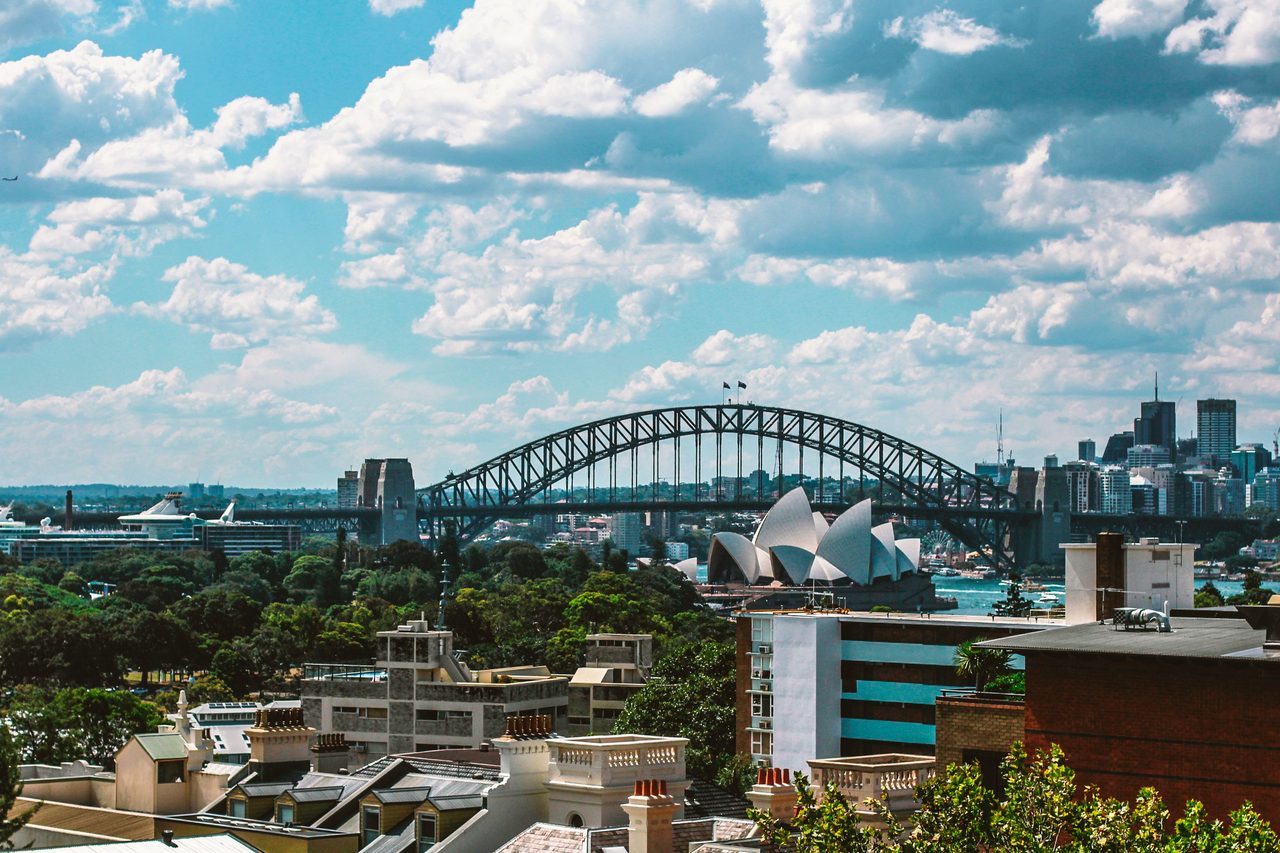
Sydney is Australia's oldest and largest city, built around one of the world's most beautiful natural harbours. Anchored by the Sydney Opera House and Harbour Bridge, the city blends a compact, walkable CBD with world-famous ocean beaches, a temperate climate, and easy access to the Blue Mountains and Hunter Valley wine country.
Sydney sits on a vast natural harbour on Australia's east coast, its skyline defined by the sail-like Opera House and the steel arch of the Harbour Bridge. The city centre (the CBD) is compact and walkable, ringed by Circular Quay, The Rocks' colonial-era lanes, and the green expanse of the Royal Botanic Garden and Domain. Beyond downtown, Sydney is a city of beaches: Bondi, Manly, Coogee, and dozens more line a coast served by ferries, buses, and coastal walking tracks. Sydney Trains, Sydney Metro, buses, ferries, and light rail are unified under the tap-and-go Opal fare system, making the city easy to navigate without a car. Within a two-hour drive lie the Blue Mountains World Heritage wilderness and the vineyards of the Hunter Valley, giving visitors an easy mix of harbour city, beach culture, and nature in a single trip.
The 16 destinations our editors recommend — from iconic landmarks to under-the-radar finds.
Sydney Opera House
The sail-shaped performing arts venue on Bennelong Point is Australia's most recognisable building and a UNESCO World Heritage Site. Beyond the iconic exterior, the Opera House hosts opera, ballet, theatre, and concerts across multiple halls, and offers guided tours through its interior.
Sydney Harbour Bridge & Pylon Lookout
Nicknamed 'the Coathanger', this steel arch bridge opened in 1932 and remains the widest long-span bridge in the world. Visitors can walk across it for free, climb to the summit with BridgeClimb, or ascend the South-East Pylon for harbour views at a fraction of the climb price.
Taronga Zoo Sydney
A harbourside zoo on the lower North Shore, Taronga is home to over 4,000 animals including koalas, platypus, Tasmanian devils, and a Sky Safari cable car with panoramic Opera House and skyline views over the enclosures.
The Rocks
Sydney's oldest urban area, settled in 1788, The Rocks is a maze of sandstone lanes, colonial-era pubs, and converted warehouses beneath the southern end of the Harbour Bridge, home to a famous weekend market and harbourfront dining.
Royal Botanic Garden Sydney
A 30-hectare harbourside garden adjoining the Opera House and the Domain, with themed plant collections, a colony of wild flying foxes, and Mrs Macquarie's Chair, the sandstone lookout carved in 1810 with the classic Opera House and Bridge view.
Bondi Beach
Australia's most famous beach: one kilometre of golden sand, consistent surf breaks, the ocean-side Bondi Icebergs swimming pool, and the start of the Bondi to Coogee coastal walk.
Recommended itineraries
Pick a length, follow the route. Each itinerary balances headline sights with breathing room.
5-Day Sydney Explorer
Day 1Arrive in Sydney, explore city center
Day 2Visit top attractions and museums
Day 3Day trip to nearby highlights
Day 4Local markets and hidden gems
Day 5Final sightseeing, departure
7-Day Classic Sydney
Days 1-2Sydney city highlights
Days 3-4Regional exploration
Days 5-6Cultural immersion and local experiences
Day 7Return and departure
14-Day Ultimate Sydney
Days 1-3Sydney comprehensive city tour
Days 4-6Northern region exploration
Days 7-9Eastern highlights
Days 10-12Southern attractions
Days 13-14Return to Sydney, departure
Where to stay in Sydney
Three tiers, every traveller covered — from cost-conscious to flagship hotels.
Budget AUD 110 (approx. USD 78)
Hostels, budget hotels, and guesthouses offer affordable stays without sacrificing experience.
Mid-range AUD 280 (approx. USD 199)
Boutique hotels and well-located accommodations provide comfort and convenience at reasonable prices.
Luxury AUD 700+ (approx. USD 497+)
World-class resorts and premium hotels deliver unforgettable experiences.
Park Hyatt Sydney
The Rocks, Sydney · $$$$
Low-rise luxury hotel directly beneath the Harbour Bridge with Opera House views from nearly every room and rooftop pool.
Sydney's public transport network — trains, the driverless Metro, buses, ferries, and light rail — is unified under the tap-and-go Opal fare system. A contactless bank card or phone wallet works exactly like an Opal card with the same fare caps, so most visitors never need to buy a physical card, and a car is unnecessary for a CBD-based trip.
Budget breakdown
Daily spend by tier in AUD, broken out by category.
Category
Budget
Mid-range
Luxury
Accommodation
AUD 45 (approx. USD 32)
AUD 160 (approx. USD 114)
AUD 450+ (approx. USD 320+)
Food (per day)
AUD 35 (approx. USD 25)
AUD 70 (approx. USD 50)
AUD 150 (approx. USD 107)
Transportation
AUD 15 (approx. USD 11)
AUD 20 (approx. USD 14)
AUD 40 (approx. USD 28)
Activities
AUD 15 (approx. USD 11)
AUD 30 (approx. USD 21)
AUD 60 (approx. USD 43)
Daily total
AUD 110 (approx. USD 78)
AUD 280 (approx. USD 199)
AUD 700+ (approx. USD 497+)
Best time to visit Sydney
Weather through the year in Australia
Best timeShoulderWorth avoiding
Average daytime temperature in °C. Figures are for Australia.
Sydney's mild climate makes it a genuine year-round destination, but spring and autumn deliver the best mix of comfortable weather, thinner crowds, and lower accommodation prices.
Vivid Sydney (late May-mid June) and the Sydney to Hobart Yacht Race start on Boxing Day both draw large crowds and should be booked well ahead if visiting during those windows.
Essential travel tips
Tap a contactless card or phone directly on Opal readers — there is no need to buy a physical Opal card for a short visit
Book Sydney Opera House tours and Harbour Bridge Climb online in advance, especially in summer
Ferries are the cheapest harbour cruise in the city — the Manly and Watsons Bay routes double as scenic tours
Sydney's CBD is very walkable; combine walking with the free L3 light rail loop and ferries rather than renting a car
Pack layers even in summer — evenings cool down quickly near the water
Hidden gems
Off-the-beaten-path corners most travellers miss.
Cockatoo Island
A former convict prison and shipyard on its own harbour island, reachable by ferry, with camping, industrial ruins, and free entry to explore
Sydney Harbour, Parramatta River
Wendy Whiteley's Secret Garden
A hidden community garden built on former rail land beneath the Harbour Bridge approach at Lavender Bay, free to enter and largely unknown to tourists
Lavender Bay, Sydney
Cremorne Point to Mosman Bay walk
A quiet 45-minute harbourside walking track with some of the best free Opera House and skyline views in the city, without the Bondi-walk crowds
Lower North Shore, Sydney
Grotto Point Lighthouse walk
A quiet bushland trail in Sydney Harbour National Park leading to a small lighthouse and Aboriginal rock engravings, rarely visited by tourists
Clontarf, Sydney
Safety information
INFO
Swim only between the red-and-yellow flags at patrolled beaches — surf lifesavers actively monitor rip currents and will call swimmers back if conditions turn dangerous
INFO
Use SPF50+ sunscreen, a hat, and sunglasses year-round; sunburn is the most common visitor health issue, even on overcast days
INFO
Keep bags zipped and belongings in sight on the T8 Airport Line and in crowded nightlife strips like Kings Cross and Oxford Street after midnight
INFO
Only use official taxis (blue/yellow plates) or the Uber, DiDi, or Ola apps for late-night transport rather than unmarked cars offering rides
INFO
Download the NSW Rural Fire Service 'Fires Near Me' app during December-February bushfire season for smoke and fire alerts
INFO
Emergency services number is 000 for police, fire, and ambulance; mobile SOS also reaches 112
Frequently asked questions
Do I need a visa to visit Sydney?
Entry requirements follow Australia rules. Most visitors need an ETA (subclass 601) or eVisitor (subclass 651) visa, both free and applied for online before arrival. Requirements vary by nationality, so check the official Australian Department of Home Affairs website before traveling.
What currency is used in Sydney?
The currency in Sydney is the Australian Dollar (AUD). ATMs are widely available across the city, and contactless card payment is accepted almost everywhere, including on public transport via the Opal fare system. Cash is rarely needed.
What language is spoken in Sydney?
English is the main language spoken in Sydney. As one of the world's most multicultural cities, many other languages are also widely spoken, but English is used in all tourism, transport, and official signage.
What are the top attractions in Sydney?
The top attractions in Sydney include the Sydney Opera House, Sydney Harbour Bridge, Bondi Beach, Taronga Zoo, and The Rocks historic quarter. Each offers a different side of the city, from performing arts and harbour views to beach culture and colonial history.
How many days do I need in Sydney?
Three to four days covers the essential CBD, Harbour, and Bondi sights. A full week allows time to add a Blue Mountains or Hunter Valley day trip, more beach suburbs, and a slower pace around the harbour.
Is Sydney expensive?
Sydney is one of the more expensive cities in the world for accommodation and dining, but public transport, beaches, and many parks and walks are free or low-cost, so budget travelers can still visit comfortably on around AUD 110 per day.