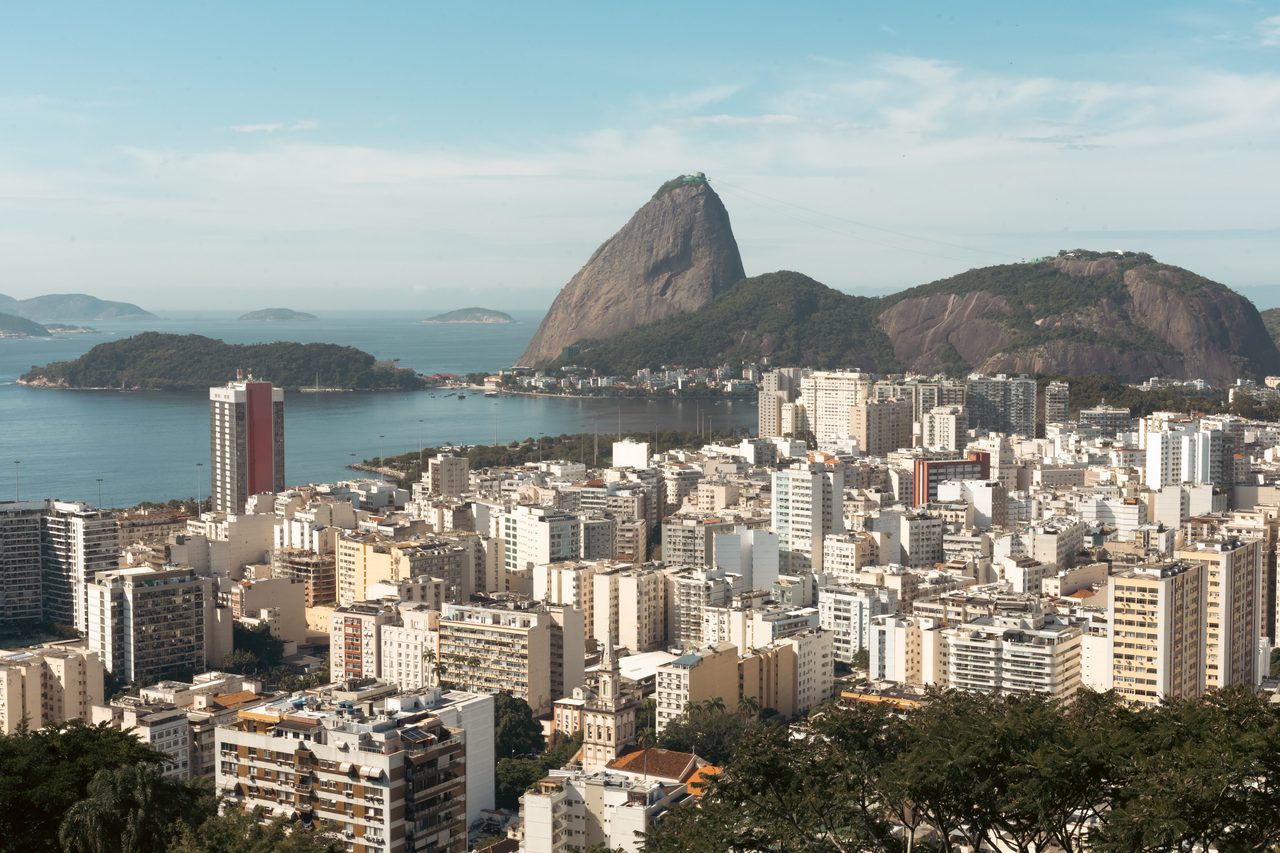
Rio de Janeiro is Brazil's most famous city, set between granite peaks, dense rainforest and the Atlantic Ocean. Home to roughly 6.2 million people, it combines Copacabana and Ipanema beaches, the Christ the Redeemer statue, samba, and one of the world's largest urban forests.
Rio de Janeiro was Brazil's capital from 1763 to 1960 and remains its cultural showcase. The city wraps around Guanabara Bay and Sugarloaf Mountain, with Corcovado, topped by Christ the Redeemer, rising above the Tijuca Forest National Park. The Zona Sul (South Zone) holds the famous beaches of Copacabana, Ipanema, Leblon and Arpoador, while the historic centre and Lapa preserve colonial churches, the Theatro Municipal, and the Santa Teresa hillside with its trams and artists' studios. The port district around Praça Mauá, revitalised for the 2016 Olympics, houses the Museum of Tomorrow and the Rio Art Museum. Carnival in February or March, Sunday samba, football at Maracanã, and beach kiosk culture define daily life. Visitors should plan for heat, sudden tropical showers and sensible urban-safety habits.
Capital
Brasília (national capital); Rio de Janeiro is the state capital of Rio de Janeiro state
Largest city
São Paulo (national); Rio de Janeiro is Brazil's second-largest city
Population
6,211,223 (2022 IBGE census, city proper)
Languages
Portuguese (official); English is spoken in major hotels and tourist areas but is not widespread
The 19 destinations our editors recommend — from iconic landmarks to under-the-radar finds.
Christ the Redeemer (Cristo Redentor)
The 30-metre Art Deco statue, inaugurated in 1931 and named one of the New Seven Wonders of the World in 2007, stands at 710 m on Corcovado peak. Its arms span 28 m and the summit gives views over Guanabara Bay, Sugarloaf and Copacabana.
Sugarloaf Mountain (Pao de Acucar)
Two-stage cable car (bondinho) climbs first to Morro da Urca (220 m) and then to Sugarloaf (396 m), running since 1912. Views cover Botafogo Bay, Christ the Redeemer and Copacabana.
Selaron Steps (Escadaria Selaron)
Chilean-born artist Jorge Selaron began covering 215 steps with tiles from more than 60 countries in 1990. The staircase links Lapa with Santa Teresa and is dominated by blue, yellow and green.
Tijuca National Park
One of the world's largest urban forests, replanted from the 1860s onward on former coffee land. Trails lead to waterfalls, Pico da Tijuca (1,021 m) and lookouts such as Vista Chinesa.
Maracana Stadium
Inaugurated in 1950 for the World Cup and rebuilt for 2014, this stadium hosted two World Cup finals and the 2016 Olympic ceremonies. The tour covers the pitch side, dressing rooms and the football hall of fame.
Rio de Janeiro Botanical Garden (Jardim Botanico)
Founded in 1808 by Prince Regent Joao VI, the garden covers 54 hectares and holds about 6,500 plant species. The Avenue of Royal Palms and the giant Victoria water lily pond are best known.
Recommended itineraries
Pick a length, follow the route. Each itinerary balances headline sights with breathing room.
5-Day Rio de Janeiro Explorer
Day 1Arrive in Rio de Janeiro, explore city center
Day 2Visit top attractions and museums
Day 3Day trip to nearby highlights
Day 4Local markets and hidden gems
Day 5Final sightseeing, departure
7-Day Classic Rio de Janeiro
Days 1-2Rio de Janeiro city highlights
Days 3-4Regional exploration
Days 5-6Cultural immersion and local experiences
Day 7Return and departure
14-Day Ultimate Rio de Janeiro
Days 1-3Rio de Janeiro comprehensive city tour
Days 4-6Northern region exploration
Days 7-9Eastern highlights
Days 10-12Southern attractions
Days 13-14Return to Rio de Janeiro, departure
Where to stay in Rio de Janeiro
Three tiers, every traveller covered — from cost-conscious to flagship hotels.
Budget R$165-360 / USD 32-70
Hostels, budget hotels, and guesthouses offer affordable stays without sacrificing experience.
Mid-range R$610-1,280 / USD 118-249
Boutique hotels and well-located accommodations provide comfort and convenience at reasonable prices.
Luxury R$2,250-6,600 / USD 437-1,282
World-class resorts and premium hotels deliver unforgettable experiences.
Copacabana Palace, A Belmond Hotel
Copacabana · R$2,800–9,000 (~$544–1748) per night
Rio's landmark 1923 Neoclassical beachfront palace with an outdoor pool, spa and three restaurants; +55 21 2548-7070.
Cafés, neighbourhood gems, and tasting menus worth the table reservation.
Confeitaria Colombo
Brazilian / Pastry / Cafe · R$60-150 (~$12-29)
A 1894 belle-epoque cafe in Centro, known for its Belgian mirrors, stained glass and glass cases of pastries. Locals and visitors come for afternoon tea and the traditional cakes.
Oro
Modern Brazilian · R$700-1200 (~$136-233) per person tasting menu
An elegant, modern Leblon restaurant where chef Felipe Bronze reimagines Brazilian cuisine through creative and technical tasting menus. It holds two MICHELIN stars.
Lasai
Contemporary / Farm-driven · R$600-1000 (~$117-194) per person
A small Botafogo restaurant in a house with a garden, led by chef Rafa Costa e Silva and holding a MICHELIN star. The menu follows the seasons and the restaurant's own farm produce.
Aprazível
Modern Brazilian · R$150-300 (~$29-58)
A terraced hillside restaurant in Santa Teresa with garden dining and views over the city. It serves modern Brazilian dishes and is listed in the MICHELIN Guide.
Bar do Mineiro
Mineira / Feijoada · R$60-120 (~$12-23)
A casual Minas Gerais-style botequim in Santa Teresa. Known for feijoada, bean fritters and cold beer, it is busy on weekends.
Bar do Omar
Brazilian / Bar Snacks · R$40-90 (~$8-17)
A neighbourhood bar in Santa Teresa serving classic petiscos and cold drinks. It suits a short stop while exploring the hilltop streets.
Rio combines a metro with three lines, BRT and city buses, VLT light rail in the centre and port, ferries to Niterói, and abundant ride-hailing. The metro is the fastest and safest way between Zona Sul and the centre, though it does not serve every neighbourhood.
Budget breakdown
Daily spend by tier in BRL, broken out by category.
Category
Budget
Mid-range
Luxury
Accommodation
R$70-150 / USD 14-29 (hostel dorm bed)
R$350-700 / USD 68-136 (3 to 4 star hotel in Copacabana, Ipanema or Botafogo)
Average daytime temperature in °C. Figures are for Rio de Janeiro.
May–October for dry, sunny weather with comfortable 23–27°C (73–81°F) days, lower humidity, and good hiking and viewpoint visibility; late April and early May are especially good, before winter school-holiday crowds
The 2027 Carnival falls on Friday, February 5 to Tuesday, February 9, ahead of Ash Wednesday on February 10, 2027. Main Sambadrome parades run on Sunday and Monday nights, and the Champions' Parade is held the following Saturday, February 13. Confirm the schedule and tickets with LIESA (liesa.globo.com) and the city's official calendar. Book accommodation for Carnival and Réveillon 4 to 8 months in advance; prices rise 100 to 300 percent and minimum stays apply.
Essential travel tips
Buy Christ the Redeemer tickets online in advance (about R$113 / ~$22 by train or official van from Cosme Velho); the Corcovado train runs from Cosme Velho station
Visit Sugarloaf around 16:00 to see both the daylight view and sunset; the cable car ticket is about R$190 / ~$37
Metro Rio connects Zona Sul to the centre and Barra da Tijuca; a single ride costs about R$7.90 / ~$1.50 and a rechargeable card is available at stations
Beach kiosks (quiosques) charge for chairs and umbrellas, typically R$20-40 / ~$4-8; agree the price before sitting
Tipping is not obligatory: restaurants usually add a 10% service charge (serviço) to the bill
Hidden gems
Off-the-beaten-path corners most travellers miss.
Safety information
INFO
Carry only the cash, one card, and ID copy that are needed; leave passports in the hotel safe and carry a photo copy or photo on the phone
INFO
Keep phones out of sight on the street and use them inside a shop or restaurant; switch to a front pocket and avoid using them at curbs
INFO
Use Uber or 99 for trips after dark and confirm the driver's plate and name before boarding
INFO
Avoid wearing watches, chains, and expensive cameras on the beach or in Centro
INFO
Beach: bring a small waterproof pouch or leave belongings with a trusted person; take cash for chairs and food rather than a wallet
INFO
Buy travel insurance covering theft, medical care, and evacuation before departure
INFO
Get the yellow fever vaccine at least 10 days before travel and use insect repellent during the day and evening
INFO
If robbed, hand over the phone or wallet calmly; do not resist, and report the loss at DEAT (Av. Afrânio de Melo Franco 159, Leblon) to obtain a police report for insurance
INFO
Check police-operation and traffic alerts in Portuguese via local news or apps such as Fogo Cruzado before heading to unfamiliar areas
INFO
Keep photocopies of the passport and entry stamp separate from the originals
Frequently asked questions
Is Rio de Janeiro safe to visit in 2026?
Millions of visitors enjoy Rio every year without incident, but petty theft and robbery are real risks, especially on beaches, at bus stops, around Centro after business hours, and during Carnival. Violent crime tied to organized crime concentrates in the north zone and some favela areas, and occasi
What is the best time to visit Rio de Janeiro?
The best time to visit Rio de Janeiro is May–October. Rio de Janeiro has a tropical savanna climate (Aw) moderated by the Atlantic and the surrounding mountains. Summers (December–March) are hot, humid, and stormy, with highs of 30–36°C (86–97°F) and hea
Do I need a visa to visit Rio de Janeiro?
Citizens of the US, Canada, Australia and most EU/Schengen states can enter Brazil visa-free for tourism for stays up to 90 days under current reciprocity rules; requirements change periodically, so travelers should confirm with the nearest Brazilian consulate before departure. Others require a Brazilian tourist visa (eVisa or consular) obtained in advance. Requirements vary by nationality, so check with your nearest embassy or the official immigration website before traveling.
What currency is used in Rio de Janeiro?
The currency in Rio de Janeiro is the Brazilian Real (BRL, R$) (BRL). ATMs are widely available in cities and tourist areas. Credit cards are accepted at most hotels and restaurants, but carry cash for markets and smaller establishments.
What language is spoken in Rio de Janeiro?
The main language(s) spoken in Rio de Janeiro: Portuguese (official); English is spoken in major hotels and tourist areas but is not widespread. In tourist areas, English is generally understood. Learning a few basic phrases in the local language is appreciated by locals.
What are the top attractions in Rio de Janeiro?
The top attractions in Rio de Janeiro include Christ the Redeemer (Cristo Redentor), Sugarloaf Mountain (Pao de Acucar), Selaron Steps (Escadaria Selaron), Tijuca National Park, and Maracana Stadium. Each offers a unique experience, from historic landmarks to natural wonders.