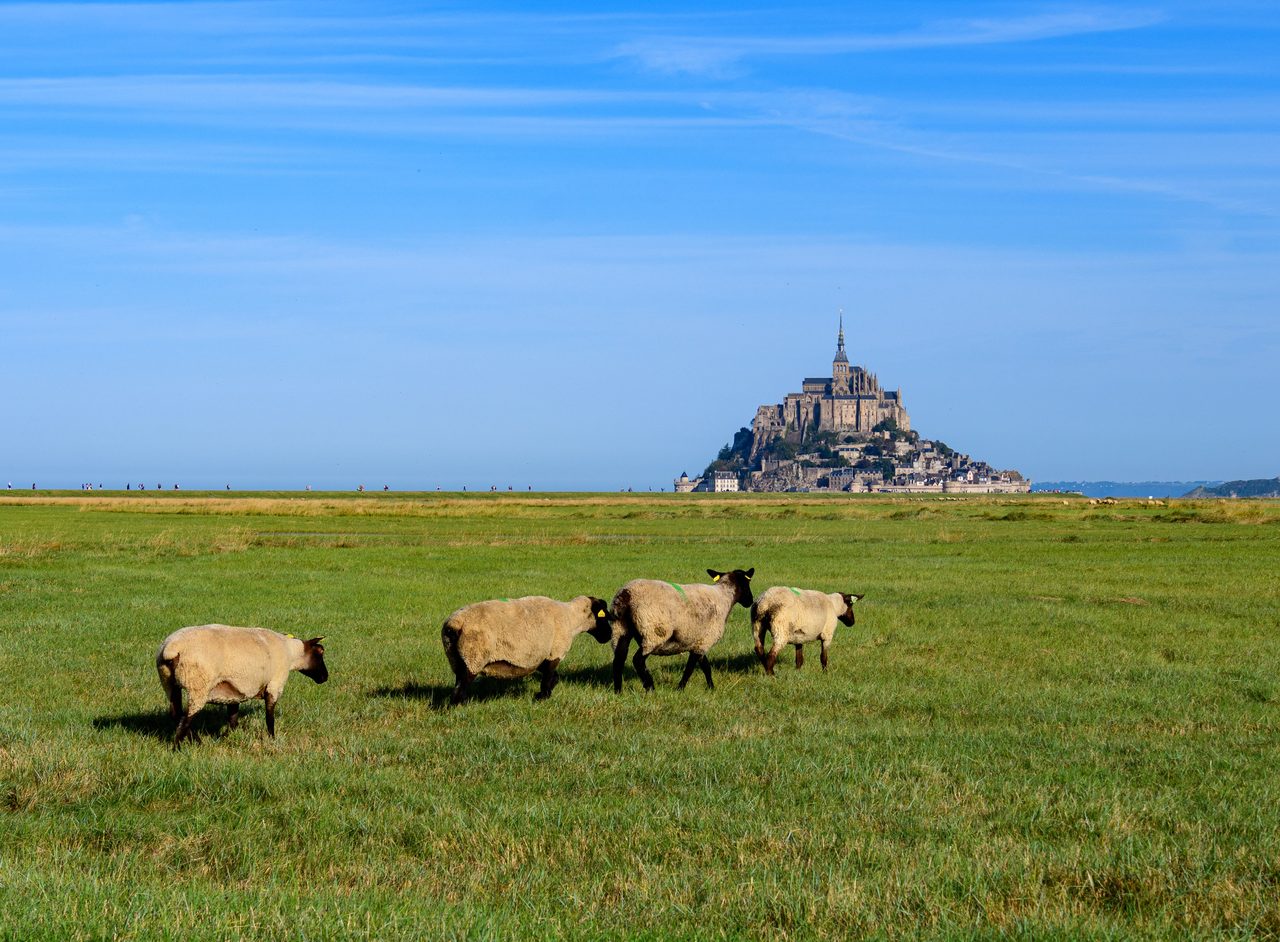
Brittany (Breizh) is France's westernmost peninsula — a Celtic heartland thrust into the Atlantic where granite cliffs, prehistoric megaliths, medieval walled cities, and 2,800 kilometres of coastline combine into one of Europe's most distinctive travel destinations.
Brittany occupies the north-western tip of France and remains one of the most culturally distinct regions in Western Europe. Its Celtic roots — a living language, UNESCO-listed fest-noz night festivals, an ancient megalithic landscape, and a maritime mythology — set it apart from every other French region. The coast oscillates between sheltered pink-granite coves and raw Atlantic headlands battered by some of the highest tides on earth. Inland, a network of bocage lanes links medieval towns, abbey ruins, and cider-producing farms. The food alone justifies the journey: oysters pulled that morning from the beds at Cancale, galettes made from local buckwheat, plateaux de fruits de mer piled with crabs, lobster, and clams, and Michelin-starred kitchens built entirely around what the sea delivers. Rennes — a university city of 225,000 — anchors the east; Brest anchors the far west; and between them lie Quimper, Vannes, Saint-Malo, and Dinan, each with a medieval core intact. Visitors who come for a weekend rarely leave having seen more than one corner of a region that rewards an entire week or more.
The 22 destinations our editors recommend — from iconic landmarks to under-the-radar finds.
Carnac Megalith Alignments
Over 3,000 standing stones run in parallel rows across the moorland outside Carnac, raised by Neolithic communities roughly 5,000 years ago for reasons still debated by archaeologists. The stones are grouped into distinct sets — Ménec, Kermario, and Kerlescan — with the largest menhirs near the western end and the rows tapering in size further east. Walking the perimeter paths gives you the scale of the site even without a guided tour, since the interior alignments are fenced off outside of visits to protect the turf and stone bases.
Saint-Malo Walled City and Ramparts
Saint-Malo's old town sits inside a complete circuit of granite ramparts built up over centuries to defend a port that once housed corsairs licensed by the French crown to raid enemy shipping. Much of the interior was rebuilt after near-total destruction in 1944, using the original stone and street layout, so the town looks medieval while many buildings are only decades old. Walking the full loop of the walls takes you above the rooftops and out over the tidal flats and offshore forts.
Pointe du Raz
This granite headland juts into the Atlantic at the western tip of the Cap Sizun peninsula, with cliffs dropping straight into water churned by strong currents where the Atlantic meets the Channel. It's one of the most exposed points on the Brittany coast, with a lighthouse visible offshore on the Île de Sein and, on clear days, views south to the Baie des Trépassés. The site was heavily eroded by uncontrolled foot traffic in the 20th century, so visitors now follow a managed path from the car park rather than crossing open grass to the edge.
Côte de Granit Rose (Pink Granite Coast)
This stretch of coastline around Ploumanac'h and Perros-Guirec is defined by pink-hued granite boulders, some weathered into rounded shapes large enough to dwarf a person, scattered along the shore and just inland. The rock's colour comes from its mineral content and shows most strongly at sunset or after rain, when the surface darkens and the pink tones intensify. The customs officers' path (sentier des douaniers) threads between the boulders and the sea for several kilometres, passing the Ploumanac'h lighthouse along the way.
Dinan Medieval Town
Dinan's old town climbs a hillside above the Rance river, with half-timbered houses lining Rue du Jerzual as it descends steeply to the old port, and a largely intact circuit of ramparts encircling the whole quarter. The château, a keep built by the Dukes of Brittany, anchors one corner of the walls and now houses the town museum. Unlike some restored Breton towns, much of Dinan's medieval fabric is original rather than rebuilt, which shows in the uneven street lines and overhanging upper floors.
Gulf of Morbihan (Golfe du Morbihan)
This near-enclosed inland sea is dotted with small islands — around forty are said to be inhabited or habitable — and its narrow mouth to the Atlantic creates tidal currents strong enough to affect boat handling and swimming. Boat tours from Vannes loop between islands such as Île aux Moines and Île-d'Arz, and several islets hold Neolithic monuments, including the passage tomb at Gavrinis with its carved stone panels. The gulf's character changes completely between high and low tide, when large mudflats emerge around the smaller islets.
Recommended itineraries
Pick a length, follow the route. Each itinerary balances headline sights with breathing room.
5-Day Brittany Explorer
Day 1Arrive in Brittany, explore city center
Day 2Visit top attractions and museums
Day 3Day trip to nearby highlights
Day 4Local markets and hidden gems
Day 5Final sightseeing, departure
7-Day Classic Brittany
Days 1-2Brittany city highlights
Days 3-4Regional exploration
Days 5-6Cultural immersion and local experiences
Day 7Return and departure
14-Day Ultimate Brittany
Days 1-3Brittany comprehensive city tour
Days 4-6Northern region exploration
Days 7-9Eastern highlights
Days 10-12Southern attractions
Days 13-14Return to Brittany, departure
Where to stay in Brittany
Three tiers, every traveller covered — from cost-conscious to flagship hotels.
Budget €50–€70 (~$54–$76)
Hostels, budget hotels, and guesthouses offer affordable stays without sacrificing experience.
Mid-range €120–€160 (~$130–$173)
Boutique hotels and well-located accommodations provide comfort and convenience at reasonable prices.
Luxury €300–€450 (~$324–$486)
World-class resorts and premium hotels deliver unforgettable experiences.
Cafés, neighbourhood gems, and tasting menus worth the table reservation.
Le Coquillage
Contemporary Breton Seafood · €255–€400/person (~$280–$440) tasting menu with optional wine pairing
This is the more relaxed dining room at Olivier Roellinger's Château Richeux property overlooking the Cancale oyster beds and the bay toward Mont-Saint-Michel. The kitchen builds around raw and lightly cooked shellfish, leaning on Roellinger's own spice blends developed from his years studying the old Saint-Malo spice trade routes. The room is a converted manor dining space with large windows facing the water rather than a formal, closed-in gastronomic setting.
This is the flagship sit-down restaurant of the Breizh Café group, founded by Bertrand Larcher, set on the Cancale quay facing the oyster port. The concept pairs Breton galette-making with Japanese technique and seasoning, a combination Larcher developed after years living in Japan before returning to open crêperies in Brittany. The dining room is simple and modern rather than rustic, with the quay and boats visible through the windows.
La Fontaine aux Perles
Contemporary French · €65–€110/person (~$70–$120)
Set in a 19th-century manor house on the edge of Rennes with its own garden, this restaurant pairs a formal French dining tradition with produce sourced from Brittany's coast and countryside. The cooking is structured around classic technique - sauces, precise plating - applied to Breton ingredients like Guilvinec langoustines and salt-meadow lamb. The dining rooms keep the manor's period detailing, and there's a terrace onto the garden for warmer months.
A long-established fine dining address in Lorient built around Breton shellfish and fish landed at the nearby Keroman fishing port, one of France's largest. The cooking sits in the modern-French register - reductions, careful saucing - applied to lobster, langoustine and scallops rather than the simpler grilled or steamed preparations found in the town's brasseries. The dining room is formal, with white tablecloths and a quieter, restrained decor.
Le Pressoir
Contemporary French · €45–€95/person (~$49–$103)
Located just outside Vannes in Saint-Avé, this restaurant works with fish and game from the Morbihan area, including pigeon and Atlantic bass, cooked with a modern-French sensibility rather than heavy classic sauces. Some dishes are finished over open fire, a technique used here specifically for the scallops rather than as a general house style. The setting is a converted house with a garden, quieter and more residential in feel than a town-center restaurant.
Brittany is served by TGV from Paris Montparnasse (Rennes 1h25, Brest 3h30, Quimper 3h50). Brittany Ferries connects Portsmouth and Plymouth directly to Saint-Malo and Roscoff. Within the region the BreizhGo network integrates trains, buses, and island ferries. A hire car is strongly recommended for exploring coastal Finistère, the Crozon Peninsula, and rural Morbihan.
Budget breakdown
Daily spend by tier in EUR, broken out by category.
Category
Budget
Mid-range
Luxury
Accommodation
€15–€25 (~$16–$27)
€70–€110 (~$76–$119)
€180–€350 (~$194–$378)
Food (per day)
€25–€37 (~$27–$40)
€38–€67 (~$41–$72)
€70–€180 (~$76–$194)
Transportation
€5–€10 (~$5–$11)
€15–€25 (~$16–$27)
€25–€50 (~$27–$54)
Activities
€5–€10 (~$5–$11)
€15–€20 (~$16–$22)
€30–€50 (~$32–$54)
Daily total
€50–€70 (~$54–$76)
€120–€160 (~$130–$173)
€300–€450 (~$324–$486)
Best time to visit Brittany
Weather through the year in France
Best timeShoulderWorth avoiding
Average daytime temperature in °C. Figures are for France.
Essential travel tips
Book Paris–Rennes TGV at least 3 weeks ahead on sncf-connect.com for Ouigo fares from €10
Hire a car from Rennes or Brest — Brittany's best coastal scenery (Crozon, Finistère, Pink Granite Coast) is very difficult without one
Carry €30–€50 in cash for crêperies, oyster markets, and farm cider stalls that operate cash-only
Pick up a free tide table (table des marées) at any tourist office or harbour before coastal walks
Book coastal hotels for July–August at least 4–6 months ahead — properties in Perros-Guirec, Carnac, and Cancale sell out entirely
Attend a fest-noz if one is happening — join the circle dances; Bretons welcome newcomers
Order cider (not wine) with your galette at any traditional crêperie — it is the culturally correct pairing
Say 'Demat' (hello in Breton) to any local — it generates a disproportionately warm response
Hidden gems
Off-the-beaten-path corners most travellers miss.
Pointe du Grouin (Cancale)
A 45-minute walk north of Cancale along the coastal path leads to this wild headland at the edge of the Baie du Mont-Saint-Michel — the point where the Breton coast meets the Normandy border. The panorama from the tip encompasses the Mont-Saint-Michel 25 km distant across the tidal bay and is far more dramatic than the view from within the abbey itself. Almost no tourist infrastructure; arrive at dawn for silence.
Vallée des Saints (Carnoët)
An open-air sculpture park near Carhaix containing 200+ monumental stone statues of Breton saints, each carved by a different artist in the Celtic standing-stone tradition. Growing at a rate of 20 new sculptures per year, the valley is described as the 'Breton Easter Island'. Free to visit, almost entirely unknown outside Brittany.
Gorges du Corong (Maël-Carhaix)
Hidden river gorges in the Monts d'Arrée cutting through ancient Breton bedrock — narrow paths follow the river between granite boulders and oak woodland. One of the least-known landscapes in Brittany; a 6 km circuit takes 2.5 hours and requires no specialist equipment.
Presqu'île de Crozon sunset circuit
The Crozon Peninsula in Finistère is ringed with spectacular cliffs and beaches yet receives a fraction of the Quiberon crowds. The circuit from Crozon town to Morgat, Plage de la Palue, and back via Cap de la Chèvre (35 km by car or full-day cycling) takes in the most dramatic Atlantic coastline in Brittany without a tour bus in sight.
Île de Sein
A flat granite island 8 km off the Pointe du Raz with no cars and a year-round population of 200. The island was the first in France to answer de Gaulle's June 1940 appeal — every able-bodied man left to join the Free French. A ferry crossing from Audierne gives 3 hours on the island: walk the perimeter (2 km), visit the Musée de l'Île de Sein (€3 (~$3.25)), and eat a fish soup at the quay café.
Safety information
INFO
Always obey beach flag warnings on Atlantic-facing beaches: green = supervised and safe, yellow = caution required, red = swimming prohibited. Rip currents (called 'bâche' in Brittany) can drag a swimmer 100 m offshore in under two minutes.
INFO
If caught in a rip current, do not fight it — swim parallel to the shore until the pull weakens, then angle back to the beach using the waves.
INFO
Check tide times before walking on any tidal flat or exposed rocks. Brittany's north coast (particularly Mont-Saint-Michel Bay and the Gulf of Saint-Malo) has tidal ranges up to 13 m — the incoming tide moves faster than walking pace.
INFO
Stay well back from cliff edges at Cap Fréhel, Pointe du Raz, and Crozon Peninsula — the cliff rock is fractured and falls occur without warning; stay on marked paths only.
INFO
Keep valuables secure and bags zipped in Rennes city centre (especially around Rue Saint-Michel and Place des Lices on market days) and on the ramparts of Saint-Malo during peak season.
INFO
Do not leave valuables or luggage visible in a parked car — break-ins targeting rental cars occur at car parks near Mont-Saint-Michel access roads and popular coastal car parks.
INFO
Swim only at beaches supervised by lifeguards (baignades surveillées), which are staffed between approximately 11:00 and 19:00 from late June to early September.
INFO
Observe coastal weather forecasts before kayaking, sailing, or stand-up paddleboarding — Brittany's Atlantic coast experiences rapid deterioration of conditions, particularly west of Brest.
INFO
Dial 196 (CROSS — Centre Régional Opérationnel de Surveillance et de Sauvetage) for all maritime emergencies; this number is monitored 24/7.
INFO
Drive carefully on Brittany's narrow bocage and coastal lanes — hedgerows limit visibility at junctions, and agricultural vehicles turn onto roads unexpectedly.
INFO
Cyclists should carry a basic repair kit and know the distance to the nearest town; some stretches of the Vélodyssée coastal route are many kilometres from mobile signal.
INFO
Use a money belt or keep a card in a front pocket when visiting crowded markets (Rennes, Quimper, Saint-Malo) and summer festivals.
INFO
Carry a waterproof layer on any coastal or moorland walk — even in summer, temperatures can drop sharply when Atlantic fog rolls in.
INFO
Dial 112 from any phone for all emergencies; English-speaking operators are available and the number works without mobile credit.
Frequently asked questions
Is Brittany safe to visit in 2026?
Brittany is one of the safest regions in France for visitors. Violent crime is rare and the overall crime rate is well below the French average. The main hazards for travellers are natural: powerful Atlantic rip currents on ocean-facing beaches, extreme tidal ranges on the north coast, cliff edges, Emergency services: police at 17 (Police nationale / Gendarmerie — emergencies).
What is the best time to visit Brittany?
Brittany has one of France's most distinctly Atlantic climates, shaped by the Gulf Stream and its exposure to westerly winds from the open ocean. Winters are mild and rarely freezing but persistently
What currency is used in Brittany?
The currency in Brittany is the Euro (€) (EUR). ATMs are widely available in cities and tourist areas. Credit cards are accepted at most hotels and restaurants, but carry cash for markets and smaller establishments.
What language is spoken in Brittany?
The main language(s) spoken in Brittany: French, Breton. In tourist areas, English is generally understood. Learning a few basic phrases in the local language is appreciated by locals.
What are the top attractions in Brittany?
The top attractions in Brittany include Carnac Megalith Alignments, Saint-Malo Walled City and Ramparts, Pointe du Raz, Côte de Granit Rose (Pink Granite Coast), and Dinan Medieval Town. Each offers a unique experience, from historic landmarks to natural wonders.