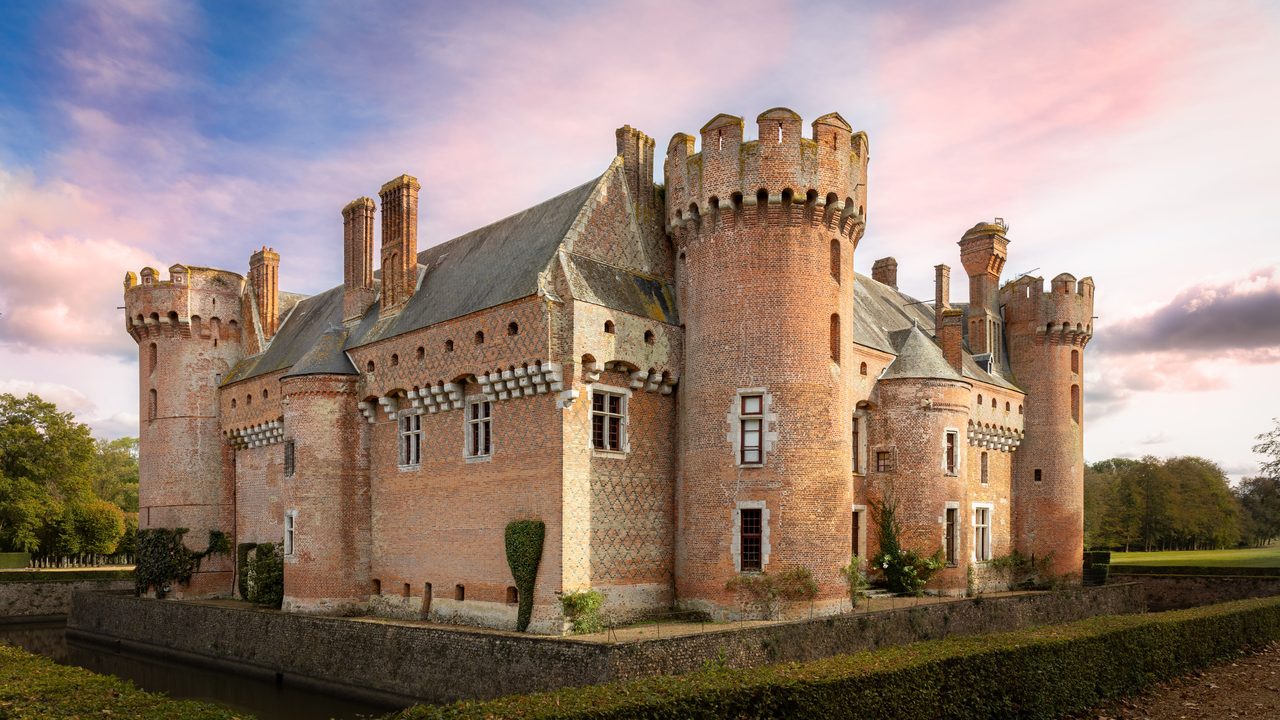
Centre-Val de Loire is the garden heart of France, home to the greatest concentration of Renaissance châteaux in the world, two UNESCO World Heritage Sites, and a wine tradition spanning six major appellations along the Loire River.
Centre-Val de Loire stretches across the middle Loire Valley from the Sologne forests in the east to the Anjou border in the west, encompassing some of Europe's most celebrated architectural and natural landscapes. The French kings chose this region as their preferred residence for more than two centuries, leaving behind Chambord, Chenonceau, Cheverny, Azay-le-Rideau, Villandry, and Amboise — a concentration of royal ambition and Renaissance artistry found nowhere else in France. In 2000, UNESCO designated the Loire Valley a World Heritage cultural landscape, recognising not only its châteaux but also its 300 kilometres of river banks, troglodyte cave villages, vineyards, and market gardens that earned the region its enduring title, the Jardin de France. The region also contains Chartres Cathedral (UNESCO, 1979) and the Cathédrale Saint-Étienne de Bourges (UNESCO, 1992), two of the greatest Gothic buildings in the world. Beyond the monuments, Centre-Val de Loire rewards slow travel: cycling the flat Loire à Vélo path between châteaux, tasting Vouvray and Sancerre whites and Chinon reds at domaine cellar doors, and drifting over the river in a hot-air balloon at dawn.
The 23 destinations our editors recommend — from iconic landmarks to under-the-radar finds.
Château de Chambord
Chambord is the largest château in the Loire Valley, built from 1519 under François I as a hunting lodge that ended up with 426 rooms and a roofline of turrets and chimneys resembling a small skyline. The design is credited in part to ideas associated with Leonardo da Vinci, most visibly in the double-helix staircase at the building's core, where two spiral flights wind around a single axis without meeting. Most rooms are unfurnished, so the visit is really about the architecture and the François I salamander emblem carved throughout, not period interiors.
Château de Chenonceau
Chenonceau is built directly over the Cher river on a series of arches, with a long gallery spanning the water that was used as a hospital ward during the First World War. It was shaped largely by women — Diane de Poitiers laid out the arched bridge and gardens, and Catherine de Médicis added the gallery above it after reclaiming the château from her. The interior keeps Renaissance furnishings and tapestries, and the château is flanked by two formal gardens on opposite banks.
Cathédrale Saint-Étienne de Bourges
Bourges cathedral is a Gothic building without transepts, giving it an unusually wide, uninterrupted nave flanked by double aisles on each side. It's known for its 13th-century stained glass, much of which survives in its original medieval state rather than as later restoration, and for the tiered flying buttresses visible from outside the east end. The astronomical clock inside dates from the 15th century.
Cathédrale Notre-Dame de Chartres
Chartres cathedral survived largely intact since the early 13th century, which is why it holds one of the most complete sets of original medieval stained glass anywhere, including the deep 'Chartres blue' used in windows like the Notre-Dame de la Belle Verrière. The two mismatched spires — one plain Gothic, one flamboyant and added later after a fire — mark the building's long construction history, and the labyrinth set into the nave floor is still walkable when not covered by chairs.
Château Royal d'Amboise
This château sits on a bluff above the Loire in the town of Amboise and was a principal residence of French kings from Charles VIII through François I, who grew up here. Leonardo da Vinci is buried in the small Chapelle Saint-Hubert on the grounds, a detail that links the château directly to nearby Clos Lucé. Much of the original royal complex was demolished after the Revolution, so what remains today is a reduced but still substantial section with formal gardens and wide views over the river and town.
Clos Lucé – Léonard de Vinci Museum
Clos Lucé is the manor house where Leonardo da Vinci lived his final three years, from 1516 until his death in 1519, at the invitation of François I, and it's a short walk from the Château Royal d'Amboise where the king resided. The house preserves rooms associated with Leonardo alongside models built from his sketches and notebooks, showing his engineering ideas rather than paintings. The grounds also include a park with additional working models of his machine designs displayed outdoors.
Recommended itineraries
Pick a length, follow the route. Each itinerary balances headline sights with breathing room.
5-Day Centre-Val de Loire Explorer
Day 1Arrive in Centre-Val de Loire, explore city center
Day 2Visit top attractions and museums
Day 3Day trip to nearby highlights
Day 4Local markets and hidden gems
Day 5Final sightseeing, departure
7-Day Classic Centre-Val de Loire
Days 1-2Centre-Val de Loire city highlights
Days 3-4Regional exploration
Days 5-6Cultural immersion and local experiences
Day 7Return and departure
14-Day Ultimate Centre-Val de Loire
Days 1-3Centre-Val de Loire comprehensive city tour
Days 4-6Northern region exploration
Days 7-9Eastern highlights
Days 10-12Southern attractions
Days 13-14Return to Centre-Val de Loire, departure
Where to stay in Centre-Val de Loire
Three tiers, every traveller covered — from cost-conscious to flagship hotels.
Budget €52–€70 (~$56–$76)
Hostels, budget hotels, and guesthouses offer affordable stays without sacrificing experience.
Mid-range €125–€165 (~$135–$178)
Boutique hotels and well-located accommodations provide comfort and convenience at reasonable prices.
Luxury €320–€500 (~$346–$540)
World-class resorts and premium hotels deliver unforgettable experiences.
Château de Noizay – Relais & Châteaux
Noizay, Indre-et-Loire · €230–€480 per night (~$249–$518)
Cafés, neighbourhood gems, and tasting menus worth the table reservation.
La Roche Le Roy
Modern French / Loire terroir · €€€€ — tasting menu €95–€145 (~$103–$157)
A gastronomic restaurant set in a 19th-century manor on the southern edge of Tours, with a formal dining room opening onto its own garden. The kitchen works Loire Valley ingredients into classical French technique, plating with the precision expected at this level.
L'Odéon
Contemporary French · €€€€ — lunch menu from €38, dinner from €75 (~$41 / ~$81)
An Art Deco brasserie-turned-fine-dining room facing Orléans's central square, known for a grand mirrored and mosaic-tiled interior dating to the 1920s. The cooking is contemporary French, built around seasonal market produce rather than heavy regional stodge.
A troglodyte restaurant carved into the tuffeau cliffs of Turquant, where fouées — small puffed breads — are baked in a wood-fired oven built into the rock and served for guests to split open and fill themselves. It's a communal, hands-on meal rather than a plated one.
Les Années 30
Traditional Touraine · €€€ — formule lunch €23–€32, dinner €38–€55 (~$25–$35 / ~$41–$59)
A bistro on Chinon's main street named for its 1930s decor, serving Touraine classics in a wood-paneled dining room. It's the kind of menu built around charcuterie and offal rather than modern reinvention.
La Maison de Cèdre
Berry regional / Modern French · €€€ — lunch formule €22–€35, dinner à la carte €45–€65 (~$24–$38 / ~$49–$70)
L'Évidence
Contemporary Loire bistronomie · €€€ — lunch from €28, dinner à la carte €45–€65 (~$30 / ~$49–$70)
Centre-Val de Loire is best reached from Paris by TGV high-speed train, with Tours just 1h10 from Paris Montparnasse and Vendôme only 44 minutes away. Orléans is served by Intercités from Paris Austerlitz in approximately 1h05. Within the region, a rental car is essential for visiting the Loire Valley châteaux—Chambord, Chenonceau, Cheverny, and Villandry are dispersed across the countryside with no direct public transport. The Loire à Vélo cycle network (800+ km between Orléans and Saumur) provides a scenic car-free alternative for château-to-château touring. Rémi regional TER trains and coaches link the main towns.
TGV High-Speed Train (Paris–Tours / Vendôme)
TGV INOUI and Ouigo budget services operate from Paris Montparnasse to Tours Saint-Pierre-des-Corps (1h05–1h15) and to Vendôme-Villiers-sur-Loir (44 min). Multiple departures daily; advance Prem's fares available. Ouigo runs the cheapest Paris–Tours fares when booked 4+ weeks ahead.
Intercités trains from Paris Austerlitz reach Orléans in approximately 1h05. No TGV serves Orléans directly; Intercités is the fastest option. Services run approximately every 1–2 hours from Paris Austerlitz station.
Cost: €10–30 Paris–Orléans (~$11–33 USD)
Rémi TER Regional Train
SNCF TER trains branded Rémi connect the region's cities: Tours–Blois (35–45 min), Tours–Amboise (25 min), Tours–Orléans (1h30), Orléans–Blois (45 min), Tours–Chinon (50 min), and Tours–Nantes (45 min). Tickets and timetables available at remi-centrevaldeloire.fr.
Cost: €4–18 depending on distance (~$4–20 USD)
Rémi Regional Coach
Regional coaches under the Rémi brand serve smaller towns and villages not reached by rail, including approaches to rural château areas. Tickets are integrated with TER fares; schedules available at remi-centrevaldeloire.fr.
Cost: €2–12 (~$2–13 USD)
Intercity Coach (FlixBus / BlaBlaCar Bus)
FlixBus operates between Tours, Orléans, and Paris at budget prices. BlaBlaCar Bus runs on the Paris–Tours and Paris–Orléans corridors. Both services depart from near central train stations.
Cost: €5–20 (~$5–22 USD)
Car Rental
Essential for visiting the Loire Valley châteaux cluster (Chambord, Cheverny, Chaumont-sur-Loire, Villandry, Azay-le-Rideau, Loches), which are 15–45 km from the nearest train station with no direct bus connections. Available at Tours Val-de-Loire Airport, Tours Saint-Pierre-des-Corps station, Orléans station, and Blois station.
Cost: €35–65/day compact car (~$38–71 USD) plus fuel and optional A10 toll
Loire à Vélo Cycling
The Loire à Vélo network (EuroVelo 6) offers 800+ km of waymarked cycling routes through Centre-Val de Loire between Orléans and the border with Pays de la Loire, passing Blois, Amboise, and Tours. Largely flat, family-friendly, and château-to-château. Bike rental stations are located in Tours, Amboise, Blois, and Orléans; one-way rentals with drop-off at a different station are available at many hire points.
Cost: €15–25/day bike rental (~$16–27 USD); electric bikes €25–40/day (~$27–44 USD)
Fil Bleu Tram and Bus (Tours)
Fil Bleu operates Tours Métropole's tram network (lines T1 and T2) and 30 bus routes. T1 crosses the city east–west; T2 connects Tours Saint-Pierre-des-Corps station north through the city centre. Tickets valid for 1 hour including transfers.
Cost: €1.60 single (~$1.75 USD); 10-trip carnet €13 (~$14 USD); day pass €4 (~$4.40 USD)
TAO Tram and Bus (Orléans)
Transports de l'Agglomération Orléanaise (TAO) operates tram lines A and B plus a city bus network. Line A runs east–west across Orléans; Line B connects the main train station to the south. Real-time arrivals available via the TAO app and at stop displays.
Cost: €1.70 single (~$1.85 USD); 10-trip carnet €14 (~$15 USD); day pass €4.60 (~$5 USD)
Budget breakdown
Daily spend by tier in EUR, broken out by category.
Category
Budget
Mid-range
Luxury
Accommodation
€20–€30 (~$22–$32)
€75–€110 (~$81–$119)
€190–€380 (~$205–$410)
Food (per day)
€23–€35 (~$25–$38)
€38–€65 (~$41–$70)
€95–€160 (~$103–$173)
Transportation
€5–€10 (~$5–$11)
€15–€25 (~$16–$27)
€30–€60 (~$32–$65)
Activities
€5–€10 (~$5–$11)
€18–€28 (~$19–$30)
€35–€60 (~$38–$65)
Daily total
€52–€70 (~$56–$76)
€125–€165 (~$135–$178)
€320–€500 (~$346–$540)
Best time to visit Centre-Val de Loire
Weather through the year in France
Best timeShoulderWorth avoiding
Average daytime temperature in °C. Figures are for France.
Essential travel tips
Book TGV Paris–Tours tickets on sncf-connect.com at least 3–6 weeks ahead for Ouigo fares from €10–€15
Pick up a free Pass Châteaux brochure at the Tours tourist office (78 Rue Bernard Palissy) — the three-site pass saves €15+ versus buying individually
Hire a car from Tours city centre rather than Paris — prices are significantly lower and all major châteaux are within 90 minutes
The Loire à Vélo path is virtually flat between Tours and Blois (60km) and thoroughly signposted — no navigation app required
Book timed entry to Chambord (chambord.org) and Chenonceau (chenonceau.com) at least 2–3 days ahead in peak season; both sell out same-day in July–August
Carry €30–€50 cash for market purchases, cave (cellar) tastings, and rural farm shops that are card-reluctant
The Bourges and Chartres cathedrals are free to enter — among the finest Gothic buildings in Europe at no cost
Wine estates in Vouvray, Chinon, and Bourgueil welcome visitors for tastings (free or €3–€8/~$3.25–$8.65) — phone or email ahead for small domaines
Hidden gems
Off-the-beaten-path corners most travellers miss.
Château de Montpoupon — The Unhurried Château
A privately owned 15th–16th century château between Chenonceau and Amboise (Céré-la-Ronde, 37460; 37 km from Tours). The intact noble apartments and hunting museum are displayed without roped-off barriers or crowds. Admission €9 (~$9.72). Open daily April–October.
Cave Martin Tasting Bar, Vouvray
The walk-in tasting bar at Cave Martin (19 Rue Victor Hugo, 37210 Vouvray; Mon–Sat 10:00–18:30) serves Vouvray Sec, Demi-Sec, and Mousseux by the glass (€4–€7/~$4.30–$7.55) from a tuffeau cave at constant 12°C. No booking required, no tour group pressure.
Troglodyte Village of Troo
A cave village carved into tuffeau cliffs in the Loir Valley (41800 Troo; 75 km northwest of Tours). Free public walking paths through inhabited troglodyte dwellings; the 12th-century collegiate church of Saint-Martin has free access to extraordinary Romanesque frescoes.
Domaine des Aubuisières Table d'Hôtes, Vouvray
A vineyard dinner at the Domaine des Aubuisières estate (10 Rue des Aubuisières, 37210 Vouvray; telephone only +33 2 47 52 61 85) — dinner served in the estate house with wine from vines visible through the window. €55–€75/person (~$59–$81). Capacity limited to 8–12 guests per sitting.
Lavardin — A French Most Beautiful Village
Listed among Les Plus Beaux Villages de France (41800 Lavardin; 70 km northwest of Tours). A free Romanesque church with intact 12th-century frescoes, a free ruined Plantagenet castle above the village, and a Loir riverbank walk. Almost never visited by Loire tourists.
Safety information
INFO
Never enter the Loire River for swimming — swimming has been banned since 1969 due to fatally unstable sandbars, powerful and unpredictable currents, and collapsing riverbanks. Violations carry a minimum fine of €11 per commune; more critically, the river has claimed swimmers who were strong in still water
INFO
If you wish to swim outdoors, use only designated supervised plages surveillées at permitted riverbank and lake sites — enquire at local tourist offices in Amboise (7 quai du Général de Gaulle), Tours (78-82 rue Bernard Palissy), or Orléans (2 place de l'Étape) for the current summer season supervised sites
INFO
France experienced a 135% increase in drowning incidents between mid-June and mid-July 2025 compared to the same period in 2024 — the Loire and its tributaries (Cher, Indre, Loir, Vienne) were among the most dangerous waterways
INFO
At popular château car parks — Chambord, Chenonceau, Amboise, Villandry, Azay-le-Rideau — do not leave any bags, luggage, or valuables visible inside parked cars; break-ins targeting tourists are the most common crime in the region
INFO
Keep bags closed and wear crossbody bags or use front-pocket wallets at busy market days: Saturday market in Blois (Place Louis XII), Tuesday and Sunday market in Tours (Les Halles), and château entrance queues where opportunistic pickpocketing can occur
INFO
Cyclists on the La Loire à Vélo and EuroVelo 6 routes should note that sections between châteaux share road space with cars on D-roads; ride single file, use front and rear lights, and wear high-visibility clothing outside town centres
INFO
Drivers should reduce speed significantly on narrow D-roads through vineyard and forest areas (particularly around Vouvray, Bourgueil, Chinon, Cheverny, and the Sologne forest); tractors and cyclists emerge from hidden junctions without warning and priorité à droite applies at unmarked crossings
INFO
France's blood alcohol limit is 0.05% — lower than the UK's 0.08%. Random breathalyser checkpoints are frequent on weekend evenings and after local wine festivals (Foire aux Vins de Tours, Foire de Bourgueil); do not drive after wine tastings
INFO
Check speed limits carefully: 80 km/h applies on all non-motorway, non-divided roads outside urban areas; fixed and mobile speed cameras are widespread throughout Centre-Val de Loire
INFO
During summer heat alerts (Météo-France orange or red canicule), avoid outdoor exertion between noon and 4 pm — the Loire Valley experiences intense summer heat with the Saône-valley continental climate; temperatures exceeded 35°C on multiple days in summer 2025
INFO
Châteaux and gardens can be extremely crowded in July and August, especially Chambord (≈800,000 visitors per year) and Chenonceau; book timed-entry tickets in advance at the respective château websites to avoid long exposed queues in the heat
INFO
Carry photocopies of your passport (or use a travel app) and leave the original in your accommodation safe where possible; a photocopy is sufficient for routine ID checks
INFO
Dial 112 from any mobile phone — including with no SIM credit — for all emergencies in France; English-speaking operators are available on this European standard number
INFO
In the Sologne forest (south of the Loire, covering much of Loir-et-Cher), mobile signal can be absent on minor tracks; carry a paper IGN map (1:25000 series) or download an offline map before hiking or cycling in this area
Frequently asked questions
Is Centre-Val de Loire safe to visit in 2026?
Centre-Val de Loire is one of France's safest regions for visitors. The Loire Valley châteaux corridor is peaceful, violent crime is rare, and the region is highly accustomed to international tourism. The primary hazards are environmental: the Loire River itself is extremely dangerous and swimming i Emergency services: police at 17 (Police Nationale in towns; Gendarmerie in rural areas — both reachable on 17), medical at 15 (SAMU — 24/7 medical emergency dispatch) or 112.
What is the best time to visit Centre-Val de Loire?
Centre-Val de Loire enjoys one of France's most pleasant continental-influenced climates — warmer and sunnier than the Atlantic coast, yet cooler and less extreme than the Mediterranean south. Summers
What currency is used in Centre-Val de Loire?
The currency in Centre-Val de Loire is the Euro (€) (EUR). ATMs are widely available in cities and tourist areas. Credit cards are accepted at most hotels and restaurants, but carry cash for markets and smaller establishments.
What language is spoken in Centre-Val de Loire?
The main language(s) spoken in Centre-Val de Loire: French. In tourist areas, English is generally understood. Learning a few basic phrases in the local language is appreciated by locals.
What are the top attractions in Centre-Val de Loire?
The top attractions in Centre-Val de Loire include Château de Chambord, Château de Chenonceau, Cathédrale Saint-Étienne de Bourges, Cathédrale Notre-Dame de Chartres, and Château Royal d'Amboise. Each offers a unique experience, from historic landmarks to natural wonders.