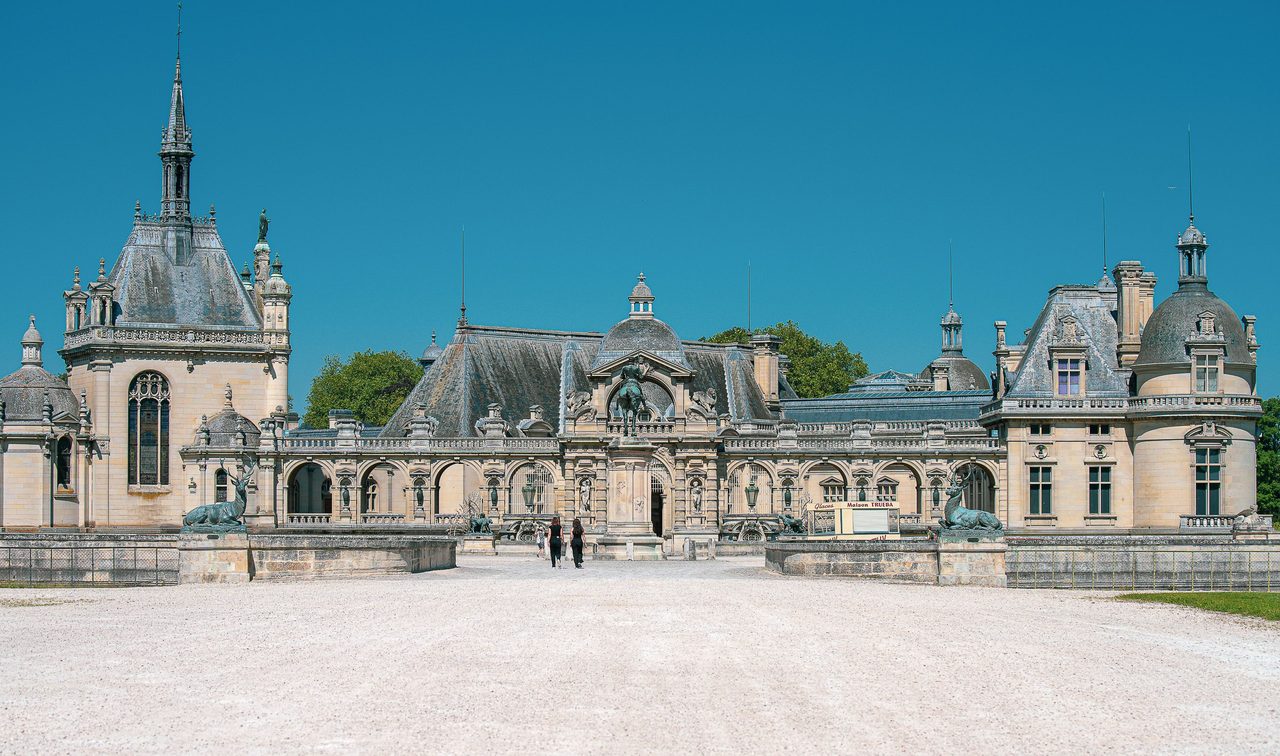
Hauts-de-France · 20 Places · Best May, June, September
Hauts-de-France
Hauts-de-France is northern France's dynamic region, forged from the historic provinces of Nord-Pas-de-Calais and Picardy. It is a land of soaring Gothic cathedrals, poignant WWI memorials, vibrant Flemish culture, and a rugged coastline along the Côte d'Opale. Lille, the cosmopolitan capital, anchors a region of surprising contrasts — from the underground citadels of Arras to the vast sandy beaches of Dunkirk and Boulogne-sur-Mer.
Hauts-de-France stretches from the Belgian border south to Picardy, encompassing the great industrial city of Lille, the Somme battlefields, the UNESCO-listed Amiens Cathedral, and the chalk cliffs of the Côte d'Opale. The region carries deep historical memory — from Agincourt to the Great War trenches — alongside a lively contemporary culture expressed in Lille's world-famous Braderie flea market, its Palais des Beaux-Arts, and the Louvre-Lens satellite museum. Flemish architectural heritage colours the grand market squares of Arras, Douai, and Lille itself.
The 20 destinations our editors recommend — from iconic landmarks to under-the-radar finds.
Amiens Cathedral (Cathédrale Notre-Dame d'Amiens)
This is the largest Gothic cathedral in France by volume, built mostly in the 13th century in a single sustained campaign, which gives the interior an unusual unity of style. The west facade carries hundreds of carved figures, including a scene of the Last Judgment, and the nave rises high enough that the building was used as a benchmark for restoring Notre-Dame de Paris after its fire. A stone labyrinth is set into the floor near the entrance, and a summer and winter light show projects the facade's original medieval paint scheme onto the stone after dark.
Louvre-Lens Museum
Opened in 2012 on the site of a former coal mine, this is a satellite of the Paris Louvre built to bring major collection pieces to a region with no comparable museum of its own. Its centerpiece, the Galerie du Temps, breaks from typical museum layout by displaying works from Mesopotamia to the 19th century side by side in one long glass-walled hall, grouped by date rather than by civilization or medium. The low, reflective aluminum-and-glass building itself, designed by the Japanese firm SANAA, sits in a landscaped park built over the old mining land.
Palais des Beaux-Arts de Lille
This is the second-largest fine arts museum in France outside the Louvre, built around a 19th-century core collection that was heavily reshaped by Napoleonic-era transfers from Northern European churches and collections. Its strength is Flemish and Dutch painting, including Rubens altarpieces, alongside a large group of Spanish works by Goya and a notable set of 19th-century French pieces. The building itself is a purpose-built 1892 palace with a domed central hall, later expanded with an underground wing.
Thiepval Memorial to the Missing of the Somme
Designed by Edwin Lutyens and completed in 1932, this brick-and-stone arch memorial carries the names of over 72,000 British and South African soldiers who died in the Somme sector between 1915 and 1918 and have no known grave. It stands on the site of a former German stronghold that was one of the last objectives taken during the 1916 Somme offensive, and the visitor centre below the memorial explains the battle using letters and objects from soldiers who are named on the arch above. A small Anglo-French cemetery sits directly behind the monument.
Arras Grand Place and Belfry
Arras has two connected squares, the Grand Place and the smaller Place des Héros, lined with Flemish Baroque townhouses whose gabled facades and arcaded ground floors were rebuilt to their original design after near-total destruction in the First World War. The belfry rising over the Place des Héros dates from the same rebuilding and is one of the Belfries of Belgium and France inscribed together as a UNESCO World Heritage group. The squares themselves are unusually large and uniform because they were laid out as a single planned market development centuries before the war damage.
Les Boves — Arras Underground Tunnels
These are medieval chalk quarries beneath the historic centre of Arras, originally dug to supply stone for the buildings above, and later expanded and connected by British and New Zealand tunnelling companies in 1916 to move troops safely toward the front for the Battle of Arras. Sections of the network are now open as the Carrière Wellington, with the underground galleries still showing wall graffiti and markings left by soldiers who sheltered there before the 1917 assault. The tour route runs at a constant cool temperature regardless of the season above ground.
Recommended itineraries
Pick a length, follow the route. Each itinerary balances headline sights with breathing room.
5-Day Hauts-de-France Explorer
Day 1Arrive in Hauts-de-France, explore city center
Day 2Visit top attractions and museums
Day 3Day trip to nearby highlights
Day 4Local markets and hidden gems
Day 5Final sightseeing, departure
7-Day Classic Hauts-de-France
Days 1-2Hauts-de-France city highlights
Days 3-4Regional exploration
Days 5-6Cultural immersion and local experiences
Day 7Return and departure
14-Day Ultimate Hauts-de-France
Days 1-3Hauts-de-France comprehensive city tour
Days 4-6Northern region exploration
Days 7-9Eastern highlights
Days 10-12Southern attractions
Days 13-14Return to Hauts-de-France, departure
Where to stay in Hauts-de-France
Three tiers, every traveller covered — from cost-conscious to flagship hotels.
Budget €60
Hostels, budget hotels, and guesthouses offer affordable stays without sacrificing experience.
Mid-range €140
Boutique hotels and well-located accommodations provide comfort and convenience at reasonable prices.
Luxury €350
World-class resorts and premium hotels deliver unforgettable experiences.
Cafés, neighbourhood gems, and tasting menus worth the table reservation.
Bloempot
Neo-bistro / Northern French · €€€ (mains €30–€45 / ~$32–$49)
Chef Florent Ladeyn's locavore restaurant occupies a converted garage-turned-greenhouse space near Rue des Bouchers, with an open kitchen and a stripped-back, plant-filled dining room. The cooking sources almost entirely from Flanders and the Nord-Pas-de-Calais region, built around a fixed or semi-fixed tasting-style menu that changes with what farms nearby are producing.
A long-running Lille brasserie built around mussels served Flemish-style, in a traditional dining room with the tiled floors and brass fittings common to the city's classic brasseries. The rest of the menu backs up the mussels with other northern French and Flemish staples.
La Laiterie
Creative French · €€€€ (tasting menu €85–€110 / ~$92–$119)
Florent Ladeyn's fine-dining outpost in Lambersart is set in a former dairy building, which gives the restaurant its name and an airy, high-ceilinged dining room. It's the more formal, tasting-menu-driven sibling to his Lille restaurant Bloempot, with the same commitment to Flemish and northern French produce but presented with more technique and polish.
La Chicorée
French / Northern · €€ (mains €15–€25 / ~$16–$27)
A landmark Lille brasserie right on Place Rihour, done up in classic dark-wood, brass and mirrored brasserie style, historically known for staying open into the small hours. The menu sticks to hearty northern French standards rather than seasonal experimentation.
Le Comptoir Volant
French Natural Wine · €€ (small plates €8–€15 / ~$9–$16)
Estaminet 't Rijsel
Flemish · €€ (mains €16–€26 / ~$17–$28)
A traditional Flemish estaminet tucked into a side street of Vieux-Lille, decorated in the cluttered, homely style typical of the genre — old advertising signs, mismatched furniture, board games on the shelves. The menu is squarely Flemish comfort food rather than refined bistro cooking.
Hauts-de-France has excellent rail connections. Lille is on the TGV network with fast links to Paris (1h), Brussels (38 min), and London (1h20 via Eurostar). Within the region, TER trains and buses connect major cities. A car is useful for WWI battlefield sites and Côte d'Opale villages.
TGV/Eurostar
Lille to Paris Gare du Nord in 1h; Brussels Midi in 38 min; London St Pancras in 1h20
Cost: €20–€100
TER Regional Train
Connects Lille–Amiens–Arras–Boulogne-sur-Mer and other cities
Cost: €10–€30
Car Rental
Best for WWI battlefields, Côte d'Opale villages, and countryside. Available at Lille Europe station and Lille Flandres station.
Cost: €35–€70/day
Ilévia (Lille metro/tram/bus)
Fully automated metro (M1, M2) plus trams and buses in Lille Métropole
Cost: €1.70 per trip, day pass €5.50
Budget breakdown
Daily spend by tier in EUR, broken out by category.
Category
Budget
Mid-range
Luxury
Accommodation
€25
€85
€220
Food (per day)
€18
€38
€90
Transportation
€10
€12
€25
Activities
€7
€15
€35
Daily total
€60
€140
€350
Best time to visit Hauts-de-France
Weather through the year in France
Best timeShoulderWorth avoiding
Average daytime temperature in °C. Figures are for France.
May–June offers the best balance of mild weather and fewer crowds. September sees the famous Braderie de Lille flea market.
Essential travel tips
The Lilliad and Ilévia apps are essential for navigating Lille's public transport
Buy a Hauts-de-France Pass at SNCF stations for discounts on regional rail (from €25)
Many museums in Lille (including Palais des Beaux-Arts) are free on the first Sunday of the month
Braderie de Lille (first weekend of September) fills every hotel — book 3+ months ahead
The Channel Tunnel makes day trips to London or Brussels easy from Lille
Hidden gems
Off-the-beaten-path corners most travellers miss.
Safety information
INFO
Keep valuables secure in crowded areas such as Lille's Wazemmes market and the Braderie de Lille
INFO
Be aware of traffic on busy roads near the Channel Tunnel terminal in Calais
INFO
Stick to marked paths at Cap Blanc-Nez and Cap Gris-Nez cliffs due to unstable edges
Frequently asked questions
Is Hauts-de-France safe to visit in 2026?
Hauts-de-France is a safe destination for international tourists. Lille is a lively university city with a very active street life; petty theft can occur in crowded markets and shopping areas. Calais near the Channel Tunnel terminal has some social tensions related to migration, but tourist areas ar
What is the best time to visit Hauts-de-France?
The best time to visit Hauts-de-France is May, June, September. Hauts-de-France has an oceanic climate influenced by the English Channel and North Sea. Summers are mild and pleasant (17–22°C / 63–72°F) with long daylight hours. Winters are cold and grey (2–7°C / 3
Do I need a visa to visit Hauts-de-France?
Entry follows France/Schengen rules. EU citizens need only a national ID; non-EU visitors may need a Schengen visa. US, UK, Canadian, and Australian citizens can stay up to 90 days without a visa. Requirements vary by nationality, so check with your nearest embassy or the official immigration website before traveling.
What currency is used in Hauts-de-France?
The currency in Hauts-de-France is the Euro (EUR). ATMs are widely available in cities and tourist areas. Credit cards are accepted at most hotels and restaurants, but carry cash for markets and smaller establishments.
What language is spoken in Hauts-de-France?
The main language(s) spoken in Hauts-de-France: French. In tourist areas, English is generally understood. Learning a few basic phrases in the local language is appreciated by locals.
What are the top attractions in Hauts-de-France?
The top attractions in Hauts-de-France include Amiens Cathedral (Cathédrale Notre-Dame d'Amiens), Louvre-Lens Museum, Palais des Beaux-Arts de Lille, Thiepval Memorial to the Missing of the Somme, and Arras Grand Place and Belfry. Each offers a unique experience, from historic landmarks to natural wonders.