Normandy is a historic region in northern France, renowned for its dramatic coastline, medieval architecture, and pivotal role in the D-Day landings of World War II. From the iconic Mont-Saint-Michel abbey to the solemn beaches of the Allied invasion, the region blends natural beauty with profound historical significance. Rolling green countryside, apple orchards, and charming market towns complete the picture of this quintessentially French destination.
Normandy stretches along the English Channel coast of northern France, encompassing lush bocage farmland, dramatic limestone cliffs, and historic cities. The region is famous for its Camembert cheese, apple cider, calvados brandy, and superb seafood. Visitors come to walk the D-Day beaches, marvel at the Gothic cathedral of Rouen, and make the pilgrimage to the magical island abbey of Mont-Saint-Michel.
The 27 destinations our editors recommend — from iconic landmarks to under-the-radar finds.
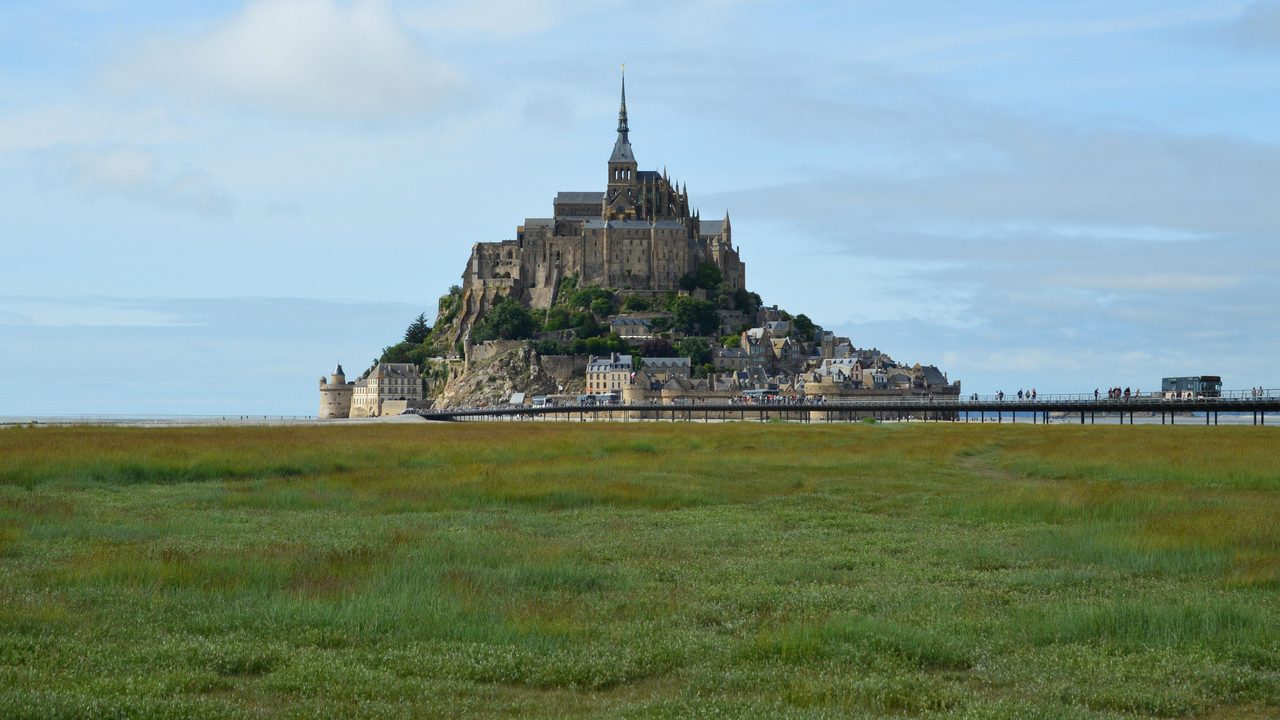
Mont-Saint-Michel
One of France's most iconic landmarks, this medieval island abbey rises dramatically from vast tidal flats on the border of Normandy and Brittany. The Benedictine abbey at the summit dates from the 8th century and was built on a rocky tidal island accessible only at low tide until a causeway was constructed. Today a modern bridge preserves tidal flow. The bay was declared a UNESCO World Heritage Site in 1979.
Omaha Beach & Normandy American Cemetery
The most famous of the D-Day landing beaches, Omaha Beach was the site of the deadliest Allied assault on 6 June 1944. The adjacent Normandy American Cemetery at Colleville-sur-Mer contains 9,388 white marble crosses and Stars of David, set on a bluff overlooking the beach. The visitor center tells the stories of the soldiers who fought and fell here. One of the most moving sites in all of France.
Bayeux Tapestry (Musée de la Tapisserie de Bayeux)
An extraordinary 70-meter-long embroidered cloth depicting the events leading up to the Norman Conquest of England in 1066, including the Battle of Hastings. Created in the 1070s, it is one of the most important surviving medieval artworks. The museum provides excellent context with replica panels and audio guides in multiple languages. Bayeux itself was the first French town liberated on D-Day.
Rouen Cathedral (Cathédrale Notre-Dame de Rouen)
Rouen's magnificent Gothic cathedral was immortalized by Claude Monet, who painted more than 30 studies of its west facade at different times of day between 1892 and 1894. Construction began in 1030 and continued into the 16th century, resulting in a stunning mix of Gothic styles. The cathedral's spire was the tallest structure in the world from 1876 to 1880. The nave, ambulatory, and treasury are all spectacular.
Étretat Cliffs & Les Jardins d'Étretat
The white chalk cliffs of Étretat on the Alabaster Coast are among the most photographed in France. Three natural arches — the Falaise d'Aval with its detached needle, the Falaise d'Amont, and the Manneporte — rise from the English Channel. The clifftop gardens, Les Jardins d'Étretat, are eco-art gardens with dramatic sculptures and topiaries overlooking the Falaise d'Aval arch.
Mémorial de Caen
One of the finest WWII museums in Europe, the Mémorial de Caen provides an immersive, chronological account of the road to war, the German occupation of France, the D-Day landings, and the liberation of Europe. Opened in 1988 on the 44th anniversary of D-Day, the museum also addresses the Cold War and international peacekeeping. Exhibitions are multilingual and suitable for all ages.
Recommended itineraries
Pick a length, follow the route. Each itinerary balances headline sights with breathing room.
5-Day Normandy Explorer
Day 1Arrive in Normandy, explore city center
Day 2Visit top attractions and museums
Day 3Day trip to nearby highlights
Day 4Local markets and hidden gems
Day 5Final sightseeing, departure
7-Day Classic Normandy
Days 1-2Normandy city highlights
Days 3-4Regional exploration
Days 5-6Cultural immersion and local experiences
Day 7Return and departure
14-Day Ultimate Normandy
Days 1-3Normandy comprehensive city tour
Days 4-6Northern region exploration
Days 7-9Eastern highlights
Days 10-12Southern attractions
Days 13-14Return to Normandy, departure
Where to stay in Normandy
Three tiers, every traveller covered — from cost-conscious to flagship hotels.
Budget €55
Hostels, budget hotels, and guesthouses offer affordable stays without sacrificing experience.
Mid-range €130
Boutique hotels and well-located accommodations provide comfort and convenience at reasonable prices.
Luxury €350
World-class resorts and premium hotels deliver unforgettable experiences.
Hôtel de Bourgtheroulde
Rouen · €€€€
A spectacular 5-star hotel occupying a 15th-century Renaissance palace in the heart of Rouen's old town. The 78 rooms blend historic grandeur with contemporary luxury. Features an outstanding indoor pool with medieval vaulted ceilings, spa, gourmet restaurant, and lounge bar. Steps from the Gros-Horloge and a 5-minute walk from the cathedral.
The grande dame of Deauville, this iconic Anglo-Norman style hotel has welcomed royalty, film stars, and the Parisian elite since 1912. With 291 rooms and suites, 2 restaurants, tennis courts, a large spa, and an outdoor pool, it is the definitive Deauville luxury experience. Directly on the beach promenade.
An 18th-century château hotel set in 30 hectares of parkland between Caen and Bayeux, ideally positioned for D-Day beach excursions. The 29 rooms and suites are individually decorated with antiques. The Michelin-recognised restaurant serves refined Norman cuisine and the grounds include formal gardens and a heated outdoor pool.
An elegant 18th-century manor house hotel set in woodland between Bayeux and the D-Day beaches. The 29 rooms are decorated in refined country house style. The restaurant is one of the finest in Normandy, with a focus on local seafood and Norman produce. The secluded garden setting and swimming pool make it a perfect retreat.
Cafés, neighbourhood gems, and tasting menus worth the table reservation.
Restaurant Gill
Gastronomic Norman · €€€€
Normandy's flagship fine dining restaurant with two Michelin stars. Chef Gilles Tournadre has been transforming Norman ingredients into exceptional cuisine since 1984. The Seine-side setting is elegant and the wine list exceptional. Menus celebrate local lobster, scallops, sole, and Pays d'Auge dairy with refined modern French technique.
SaQuaNa
Creative Norman seafood · €€€€
Chef Alexandre Bourdas holds a Michelin star for his inventive, seasonally-driven menu celebrating Normandy's coast and countryside. SaQuaNa (Saveurs-Qualité-Nature) is housed in an elegant Honfleur townhouse near the port. The cuisine is creative but grounded in premium Norman produce, from Isigny butter to Cotentin oysters.
Ivan Vautier
Modern Norman · €€€€
Chef Ivan Vautier's eponymous Michelin-starred restaurant is Caen's finest dining destination. The cuisine is modern and refined, drawing on the finest Norman produce — Isigny cream, Cotentin lamb, Channel seafood. The wine list is excellent and the service impeccable. Set in a boutique hotel.
La Lieutenance
Norman seafood · €€€
One of Honfleur's most atmospheric restaurants, set in a 16th-century building opposite the wooden Église Sainte-Catherine. Excellent seafood including moules, sole, scallops, and daily catch, with a good Norman cheese board. The terrace is perfect for warm evenings.
Le Bouchon du Vaugueux
Traditional Norman · €€
A beloved neighbourhood bistro in Caen's historic Vaugueux quarter, known for hearty Norman classics — tripes à la mode de Caen, andouille, moules, and tarte normande. Warm atmosphere, good Norman cider and calvados selection. A genuine local favourite.
Brasserie Paul
French Brasserie · €€
Classic French brasserie with the best view in Rouen — tables on the cathedral square facing the Gothic west facade. Reliable brasserie food: moules-frites, steak tartare, omelettes, and Norman cheese plates. The summer terrace is one of the most coveted spots in the city.
Daily spend by tier in EUR, broken out by category.
Category
Budget
Mid-range
Luxury
Accommodation
€25
€80
€220
Food (per day)
€15
€35
€90
Transportation
€10
€10
€20
Activities
€5
€15
€30
Daily total
€55
€130
€350
Best time to visit Normandy
Weather through the year in France
Best timeShoulderWorth avoiding
Average daytime temperature in °C. Figures are for France.
Essential travel tips
Book Mont-Saint-Michel guided tours in advance during summer
Rent a car for the D-Day beach circuit — public transport is limited
Visit markets on weekend mornings for fresh Norman produce
Try calvados brandy and local Camembert cheese at every opportunity
Hidden gems
Off-the-beaten-path corners most travellers miss.
Beuvron-en-Auge
One of France's most beautiful villages, a perfectly preserved ensemble of half-timbered Norman houses around a central market square
Calvados, Pays d'Auge
Abbaye de Saint-Wandrille
A living Benedictine monastery in the Seine valley where Gregorian chant can be heard at daily services open to visitors
Seine-Maritime
Granville old town
Fortified upper town on a rocky headland with views to the Channel Islands, charming cobbled streets, and excellent seafood restaurants
Manche coast
Safety information
INFO
Keep valuables secure and bags closed in busy tourist sites such as Mont-Saint-Michel, Étretat, and D-Day museums during peak season
INFO
Check tide tables before walking on tidal sandflats around Mont-Saint-Michel — the tides are extremely fast and dangerous; always stay on the marked causeway
INFO
Stay well back from cliff edges at Étretat and along the Alabaster Coast — the chalk rock crumbles and falls are fatal; do not climb beyond marked paths
INFO
Drive carefully on narrow bocage country lanes — hedgerows limit visibility and tractors pull out unexpectedly
INFO
Observe 80km/h rural speed limits on non-motorway routes; speed cameras are common throughout Normandy
INFO
Be aware of strong currents when swimming on open beaches; swim only at supervised beaches with lifeguards (patrolled July–August)
INFO
The English Channel coast can have dangerous rip currents, especially at Deauville and Étretat; observe warning flags
INFO
In Rouen and Caen city centres, be alert to pickpockets on trams and at busy markets, particularly during the tourist season
INFO
Do not leave valuables visible in parked cars — break-ins targeting tourists' luggage occur occasionally in car parks near D-Day sites
INFO
Carry a photocopy of your passport and travel insurance documents; original passport should be left in hotel safe when possible
INFO
Check weather forecasts before coastal hikes — the Normandy coast can be foggy and cliff paths become slippery in rain
INFO
Mont-Saint-Michel: the bay is dangerous for those exploring off the designated paths; always use official guided walks when venturing onto the sand
INFO
Carry a basic first aid kit when cycling rural areas — some lanes are many kilometres from the nearest town
INFO
Dial 112 for any emergency — English-speaking operators available on the European emergency number
Frequently asked questions
Is Normandy safe to visit in 2026?
Normandy is one of the safest regions in France for tourists. Violent crime is rare. The main risks for visitors are petty theft in busy tourist areas, road safety on narrow rural roads, and natural hazards at the coast (tides, cliff edges). The region is family-friendly and welcoming to all types of travellers.
What is the best time to visit Normandy?
Normandy has a mild, maritime climate influenced by the English Channel and Atlantic Ocean. Summers are cool and pleasant, winters are mild but grey and wet. Rain falls year-round — Normandy is notabl
Do I need a visa to visit Normandy?
Entry requirements follow France/Schengen rules. EU citizens need only a national ID; non-EU visitors may need a Schengen visa. US, UK, Canadian, and Australian citizens can stay up to 90 days without a visa. Requirements vary by nationality, so check with your nearest embassy or the official immigration website before traveling.
What currency is used in Normandy?
The currency in Normandy is the Euro (EUR). ATMs are widely available in cities and tourist areas. Credit cards are accepted at most hotels and restaurants, but carry cash for markets and smaller establishments.
What language is spoken in Normandy?
The main language(s) spoken in Normandy: French. In tourist areas, English is generally understood. Learning a few basic phrases in the local language is appreciated by locals.
What are the top attractions in Normandy?
The top attractions in Normandy include Mont-Saint-Michel, Omaha Beach & Normandy American Cemetery, Bayeux Tapestry (Musée de la Tapisserie de Bayeux), Rouen Cathedral (Cathédrale Notre-Dame de Rouen), and Étretat Cliffs & Les Jardins d'Étretat. Each offers a unique experience, from historic landmarks to natural wonders.
How do I get around Normandy?
Normandy is best explored by car, especially for the D-Day beaches, cider country, and rural villages. The major cities (Rouen, Caen, Le Havre) are well connected by SNCF trains from Paris. Regional buses fill gaps but are infrequent. Ferries from England arrive at Caen (Ouistreham) and Cherbourg.