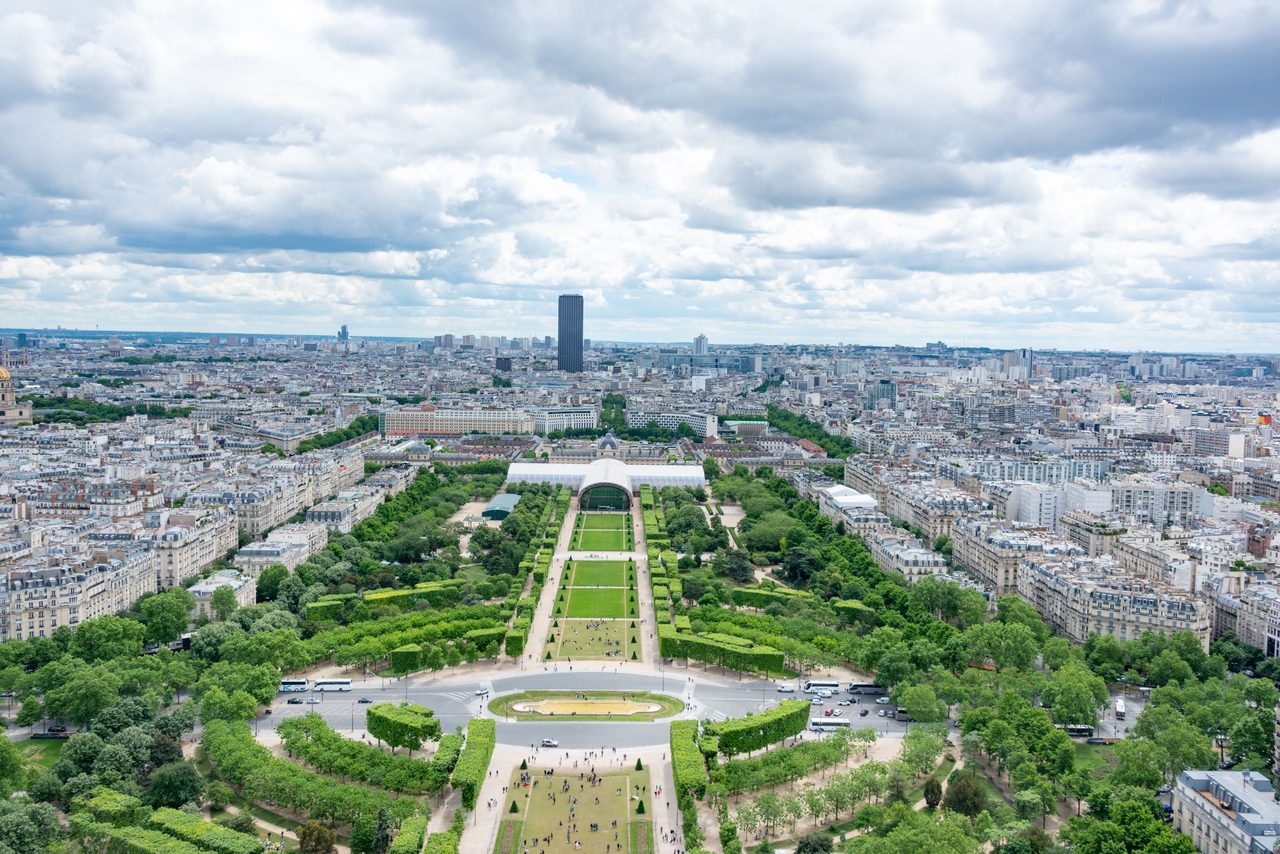
Île-de-France is France's most populous and economically powerful region, home to Paris and an extraordinary concentration of world-class museums, châteaux, gardens, and culinary experiences. Surrounding the French capital, the region stretches across the Seine and Marne river valleys, encompassing the palaces of Versailles and Fontainebleau, the medieval streets of Provins, and vast forests perfect for cycling and hiking.
From the Eiffel Tower's iron lacework to Monet's water-lily gardens at Giverny, Île-de-France holds more UNESCO World Heritage Sites and internationally recognized landmarks than almost any other region on Earth. Paris's 20 arrondissements offer neighborhoods that shift dramatically in character — Montmartre's cobblestoned artists' quarter, the Marais's vibrant LGBTQ+ scene, Saint-Germain-des-Prés's literary cafés, and the business towers of La Défense. Beyond Paris, the royal palace at Versailles, the Gothic cathedral at Chartres (day-trip distance), and Disneyland Paris round out a region suited to every travel style and budget.
The 24 destinations our editors recommend — from iconic landmarks to under-the-radar finds.
Eiffel Tower
Gustave Eiffel's 1889 iron tower was built as the entrance arch for that year's World's Fair and was meant to stand for only twenty years before demolition. It remains the defining silhouette of Paris, with three visitor levels reached by lift or, for the lower two, by stairs. The structure itself, exposed rivets and lattice girders visible up close, is as much the attraction as the views over the Seine and the Champ de Mars below.
Louvre Museum
Once the fortress and royal palace of French kings before Versailles, the Louvre is now the world's largest art museum, its collection spanning ancient Egyptian and Mesopotamian artifacts through to French painting of the 19th century. I.M. Pei's glass pyramid, added in 1989, sits in the main courtyard above the underground entrance hall that now funnels most visitors into the museum. The building alone, room after room of former royal apartments, is part of what you're seeing.
Palace of Versailles
Louis XIV moved the seat of French government here in 1682, turning a hunting lodge into a palace built to project absolute royal power, and it stayed the political center of France until the Revolution. The Hall of Mirrors, where the 1919 treaty ending World War I was signed, runs the length of the garden facade with seventeen mirrored arches facing the windows. The formal gardens, laid out by André Le Nôtre, extend for miles and include the fountains and the Grand and Petit Trianon retreats.
Notre-Dame de Paris
The cathedral on the Île de la Cité, begun in 1163, is a foundational work of French Gothic architecture and was the setting for events from Napoleon's coronation to Victor Hugo's novel that helped save it from 19th-century decay. It reopened in December 2024 after the 2019 fire that destroyed the roof and spire, with the interior stonework and stained glass restored close to their pre-fire appearance. The flying buttresses around the apse, visible from the riverside gardens behind the building, show the engineering that let the nave walls rise so high with such large windows.
Musée d'Orsay
Housed in a former Beaux-Arts railway station built for the 1900 World's Fair, the Musée d'Orsay holds the world's largest collection of Impressionist and Post-Impressionist paintings, filling the gap between the Louvre's older holdings and the Centre Pompidou's modern art. The building's great glass barrel-vaulted hall, once the train shed, is now the main exhibition space, with the old station clock still visible at one end. Works by Monet, Degas, Van Gogh, and Cézanne are arranged across the former platform level and upper galleries.
Sacré-Cœur Basilica
Built between 1875 and 1914 on Montmartre's hilltop as a national penance project after France's defeat in the 1870 Franco-Prussian War, the basilica's white travertine stone self-cleans in rain, which is why it still looks pale despite over a century of Paris pollution. Its Romano-Byzantine design, with a large central dome, sets it apart from the Gothic and Beaux-Arts styles more common elsewhere in the city. The terrace steps in front are a gathering spot in their own right, looking out over the rooftops toward the Seine.
Recommended itineraries
Pick a length, follow the route. Each itinerary balances headline sights with breathing room.
5-Day Île-de-France Explorer
Day 1Arrive in Île-de-France, explore city center
Day 2Visit top attractions and museums
Day 3Day trip to nearby highlights
Day 4Local markets and hidden gems
Day 5Final sightseeing, departure
7-Day Classic Île-de-France
Days 1-2Île-de-France city highlights
Days 3-4Regional exploration
Days 5-6Cultural immersion and local experiences
Day 7Return and departure
14-Day Ultimate Île-de-France
Days 1-3Île-de-France comprehensive city tour
Days 4-6Northern region exploration
Days 7-9Eastern highlights
Days 10-12Southern attractions
Days 13-14Return to Île-de-France, departure
Where to stay in Île-de-France
Three tiers, every traveller covered — from cost-conscious to flagship hotels.
Budget €63–€135/day (~$69–$147)
Hostels, budget hotels, and guesthouses offer affordable stays without sacrificing experience.
Mid-range €215–€395/day (~$235–$431)
Boutique hotels and well-located accommodations provide comfort and convenience at reasonable prices.
Luxury €690–€2,400/day (~$752–$2,616)
World-class resorts and premium hotels deliver unforgettable experiences.
Hôtel de Crillon, A Rosewood Hotel
Place de la Concorde, 8th arrondissement, Paris · €800–€3,000/night (~$872–$3,270)
A narrow, glass-roofed dining room near Rue de Charonne where chef Bertrand Grébaut runs a tight, single-menu operation built around whatever is peak at the market that week. The cooking favors clean, acid-driven combinations and light use of fermentation over heavy sauces, and the pared-back industrial-meets-wood interior matches the food's restraint.
Le Grand Véfour
Classic French Haute Cuisine · €€€€€ — tasting menu €320 (~$349)
An 18th-century dining room under the arcades of the Palais-Royal, with painted panels and mirrors largely unchanged since Napoleon and Victor Hugo sat there, which is part of the draw as much as the kitchen. The cooking is classical haute cuisine, built on rich stocks and precise technique rather than seasonal informality.
Bouillon Chartier Grands Boulevards
Classic French Bistro · € — average €15–€25/person (~$16–$27)
A cavernous Belle Époque dining hall from 1896, with brass coat racks, mirrored walls, and waiters who still scrawl your order directly on the paper tablecloth. It's a working-class Paris institution serving simple, old-fashioned bistro cooking at prices that haven't followed the rest of the city upward.
Frenchie
Modern French with Anglo-American influences · €€€€ — dinner tasting menu €95–€140 (~$104–$153)
A tiny former butcher's shop on Rue du Nil that launched the bistronomy wave in Paris, run by a chef who trained in New York and London kitchens before bringing those influences home. The space is small and casual-feeling despite the ambition of the cooking, with counter seating that puts you close to the pass.
L'Ami Jean
Southwestern French / Basque · €€€ — €40–€70/person (~$44–$76)
A packed, noisy bistro near the Champ de Mars where chef Stéphane Jégo cooks hearty Basque and southwestern French food — think pork, seafood stews, and bold seasoning rather than delicate plating. The room is tight, close-packed tables with a rugby-club energy that fits the portion sizes.
A Saint-Germain-des-Prés café that has been serving the same green-and-cream Art Deco interior since the 1920s, once a haunt of Sartre and de Beauvoir who used it as a place to write. The food is straightforward French café fare rather than a destination in itself — the point is the room and the address.
Paris and Île-de-France are served by the Métro, RER, Transilien, Tramway, bus, and Noctilien night bus — all bookable via the Île-de-France Mobilités app (iOS/Android) or at any station. The Navigo card provides integrated access to all modes.
Budget breakdown
Daily spend by tier in EUR (€), broken out by category.
Category
Budget
Mid-range
Luxury
Accommodation
€25–€60/night (~$27–$65)
€120–€220/night (~$131–$240)
€400–€1,500/night (~$436–$1,635)
Food (per day)
€20–€35/day (~$22–$38)
€50–€90/day (~$55–$98)
€150–€400/day (~$163–$436)
Transportation
€8–€15/day (~$9–$16)
€15–€25/day (~$16–$27)
€60–€200/day (~$65–$218)
Activities
€10–€25/day (~$11–$27)
€30–€60/day (~$33–$65)
€80–€300/day (~$87–$327)
Daily total
€63–€135/day (~$69–$147)
€215–€395/day (~$235–$431)
€690–€2,400/day (~$752–$2,616)
Best time to visit Île-de-France
Weather through the year in France
Best timeShoulderWorth avoiding
Average daytime temperature in °C. Figures are for France.
Essential travel tips
Purchase a Navigo Liberté+ card (reloadable, works on all RATP/SNCF lines in zones 1–5) or weekly Navigo pass for unlimited travel
Book the Louvre and Eiffel Tower online in advance — same-day queues can be 2+ hours
Many national museums offer free entry on the first Sunday of each month
Restaurant lunch menus (formule déjeuner) typically cost 30–50% less than dinner
Hidden gems
Off-the-beaten-path corners most travellers miss.
Coulée Verte René-Dumont
An elevated linear park on a converted 19th-century railway viaduct stretching 4.5 km from Bastille (Avenue Daumesnil, 75012) to the Bois de Vincennes. Completely free, entirely traffic-free, and missed by the vast majority of first-time visitors. The viaduct arches below house artisan workshops (Viaduc des Arts). Best on a clear morning.
Arènes de Lutèce
A complete 1st-century Roman amphitheatre hidden in the 5th arrondissement, once seating 17,000 spectators. Today a free public garden used by local pétanque players and children. Extraordinarily atmospheric and almost entirely tourist-free.
Passage des Panoramas
Paris's oldest surviving covered arcade (1799), retaining original Victorian shop-fronts and gas-lamp-style lighting. Philatelist shops, vintage poster dealers, and the Bistrot Vivienne restaurant inside. An authentic slice of 19th-century Paris commerce.
Institut du Monde Arabe ninth-floor terrace
The 9th-floor rooftop terrace of the Institut du Monde Arabe (1 Rue des Fossés Saint-Bernard, 75005) is free to access and offers an extraordinary eye-level view across the Seine to Notre-Dame — a perspective rarely seen in tourist photography.
Safety information
INFO
Keep passport and travel documents in hotel safe; carry a photo of your passport rather than the original
INFO
Use inside-zip pockets or a flat money belt under clothing for cash, bank cards, and phone in crowded tourist areas
INFO
Book timed-entry tickets for major sites (Louvre, Eiffel Tower, Versailles) — this reduces time spent in pickpocket-heavy queue areas
INFO
On the Métro, stand with your back to the doors or face outward — shoulder bag openings should face your body
INFO
At outdoor cafés and restaurants, loop bag straps around chair legs or keep bags on your lap
INFO
Download the official French emergency app: SAIP (Système d'Alerte et d'Information aux Populations) for real-time security alerts
INFO
Note the address of your accommodation before leaving — it simplifies police reports and taxi returns if your phone is stolen
Frequently asked questions
Is Île-de-France safe to visit in 2026?
Île-de-France is one of Europe's most visited regions and is safe for the vast majority of travellers. The primary risks are opportunistic petty crime (pickpocketing, bag-snatching) concentrated around major tourist sites and on busy Métro lines, and terrorism-related vigilance maintained under Fran
What is the best time to visit Île-de-France?
Île-de-France has a temperate oceanic climate (Köppen Cfb) with warm summers, cool winters, and moderate rainfall year-round. Paris averages 640 mm annual rainfall distributed fairly evenly across the
Do I need a visa to visit Île-de-France?
France is a Schengen Area member. Citizens of the USA, Canada, Australia, New Zealand, and the UK can enter for up to 90 days within any 180-day period without a visa. EU/EEA and Swiss citizens may enter and stay freely. Visitors from visa-exempt countries will need an ETIAS travel authorisation once the system is operational. Nationals of other countries should check the Schengen short-stay visa requirements with the French consulate before travel. Requirements vary by nationality, so check with your nearest embassy or the official immigration website before traveling.
What currency is used in Île-de-France?
The currency in Île-de-France is the Euro (EUR) (EUR). ATMs are widely available in cities and tourist areas. Credit cards are accepted at most hotels and restaurants, but carry cash for markets and smaller establishments.
What language is spoken in Île-de-France?
The main language(s) spoken in Île-de-France: French. In tourist areas, English is generally understood. Learning a few basic phrases in the local language is appreciated by locals.
What are the top attractions in Île-de-France?
The top attractions in Île-de-France include Eiffel Tower, Louvre Museum, Palace of Versailles, Notre-Dame de Paris, and Musée d'Orsay. Each offers a unique experience, from historic landmarks to natural wonders.
Explore Île-de-France by city
The cities below have their own guides — hotels, attractions and where to eat, in depth.