
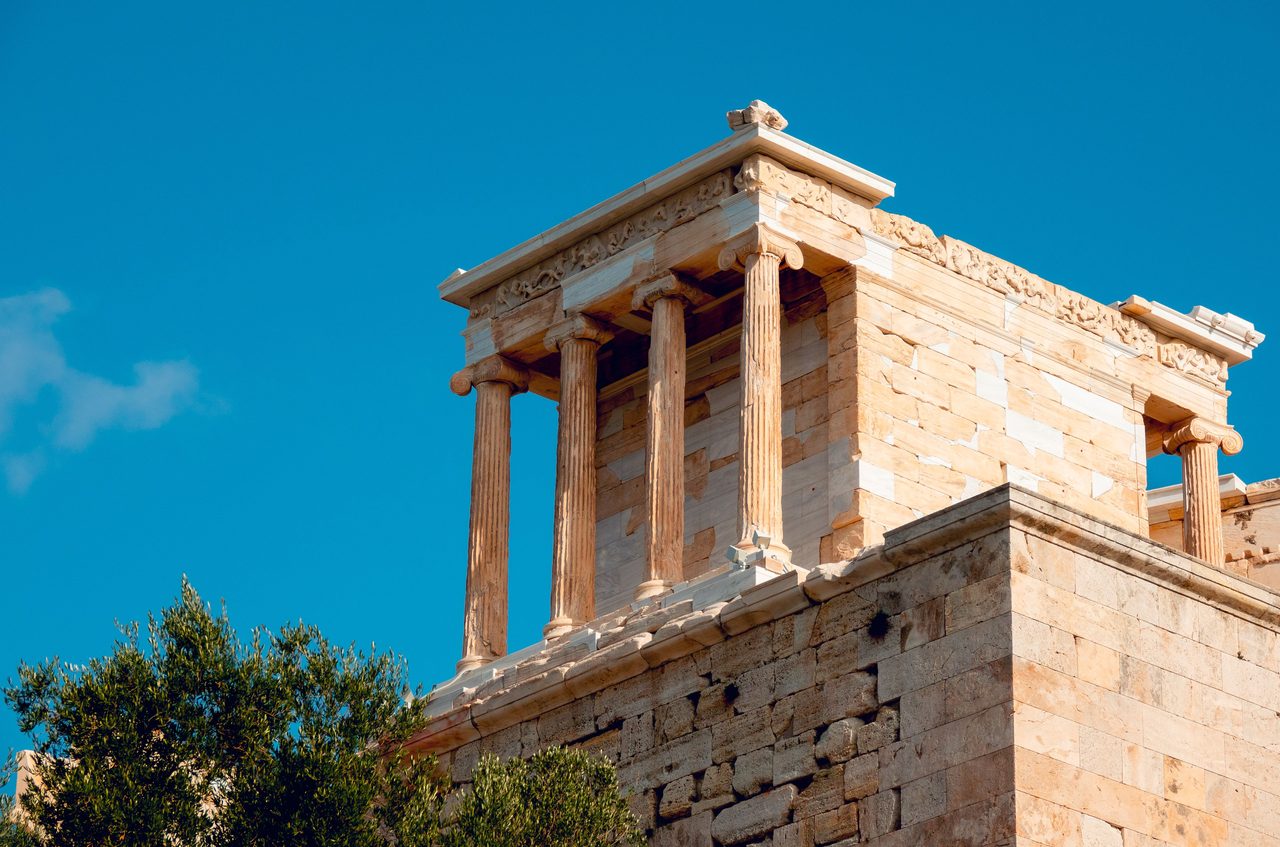
This world-class museum houses over 4,000 artifacts from the Acropolis, including the stunning Parthenon Marbles and Caryatids. The modern glass building offers breathtaking views of the Acropolis itself.
The Acropolis Museum stands at Dionysiou Areopagitou 15 in Athens, about 300 metres southeast of the Parthenon. Designed by Bernard Tschumi and opened in 2009, the building was created to house the finds from the Acropolis, and it holds a collection of several thousand objects from the sacred rock, from the Archaic period through Roman times. The glass-and-concrete structure is built above an excavated Athenian neighbourhood, which visitors can see through glass floors in the entrance level and from walkways beneath the building. The collection is arranged by period. The ground-floor gallery of the slopes holds finds from the hillside sanctuaries, while the Archaic gallery displays painted korai, the standing female statues that once lined the sanctuary of Athena. The highlight is the top floor Parthenon Gallery, a glass hall oriented to match the temple itself and rotated to the angle of the monument visible through the windows. Here the frieze, metopes and pediment sculptures are shown at eye level; where original pieces are in the British Museum in London, plaster casts fill the gaps, a deliberate display that frames the long-running debate over their return. The original Caryatids from the Erechtheion are shown in a dedicated gallery with natural light. A full visit takes two to three hours, although a focused tour of the main galleries can be done in ninety minutes. A rooftop-level restaurant and a café offer views of the Acropolis, and the ground floor includes a shop and an area for temporary exhibitions. Short films in the Parthenon Gallery explain the history of the monument and its sculptures. Crowds are heaviest in mid-morning and early afternoon, particularly when cruise ships are in port. Late afternoon and the later opening hours on some evenings are quieter, and the Parthenon Gallery is especially atmospheric as light changes over the Acropolis. Visitors who tour the museum first often arrive at the Parthenon with a clearer idea of what once stood there, while those who go afterwards can compare the casts and originals. Photography is permitted in most galleries without flash, with some restrictions in the Parthenon Gallery that staff will point out. The museum is within walking distance of Acropolis metro station, along the pedestrianised Dionysiou Areopagitou street in the Makrygianni district of Athens, Greece.
| Admission | Adult $17 · Child Free under 18 |
|---|---|
| Hours | 9:00 AM - 5:00 PM (winter), 8:00 AM - 8:00 PM (summer) |
| Typical visit | 2-3 hours |
| Address | Dionysiou Areopagitou 15, Athens 117 42, Greece |
Good to know
- Best for
- history enthusiasts, art lovers, families, couples
Location
Dionysiou Areopagitou 15, Athens 117 42, Greece
37.9684, 23.7283 View on map
Highlights
- Parthenon Gallery with frieze, metopes and pediments displayed at eye level
- Original Caryatids from the Erechtheion
- Glass floors above the excavated ancient neighbourhood
- Archaic korai statues
Tips for visiting
- Glass floor reveals archaeological excavations below
- Top floor restaurant has spectacular Acropolis views
- Free admission on March 25 and October 28
- Friday evening hours until 10 PM in summer
When to visit
Visit in the late afternoon or on an evening opening to avoid cruise-ship crowds. It is a good choice in midsummer, when the air-conditioned galleries offer relief from the heat.
Accessibility
The museum is fully accessible, with elevators between floors, step-free routes through the galleries and accessible facilities. Wheelchairs are available on request at the entrance.
Visit, book or contact
Frequently asked questions
How long does a visit take?
Two to three hours is typical for the main galleries and the excavation level. A short visit focused on the Parthenon Gallery takes around ninety minutes.
Is it worth it for kids?
Interactive and visual displays, glass floors and the Caryatids tend to engage children, though long galleries can tire very young visitors.
Is photography allowed?
Photography without flash is generally permitted in most galleries, with some restrictions in the Parthenon Gallery. Tripods and professional equipment require permission.
Does the museum have free admission days?
Free admission is offered on certain public holidays, including March 25 and October 28, and to some visitor categories such as young EU residents.
Tours and tickets
Acropolis Museum
See guided tours and ticketsWe may earn a commission from bookings made through this link.