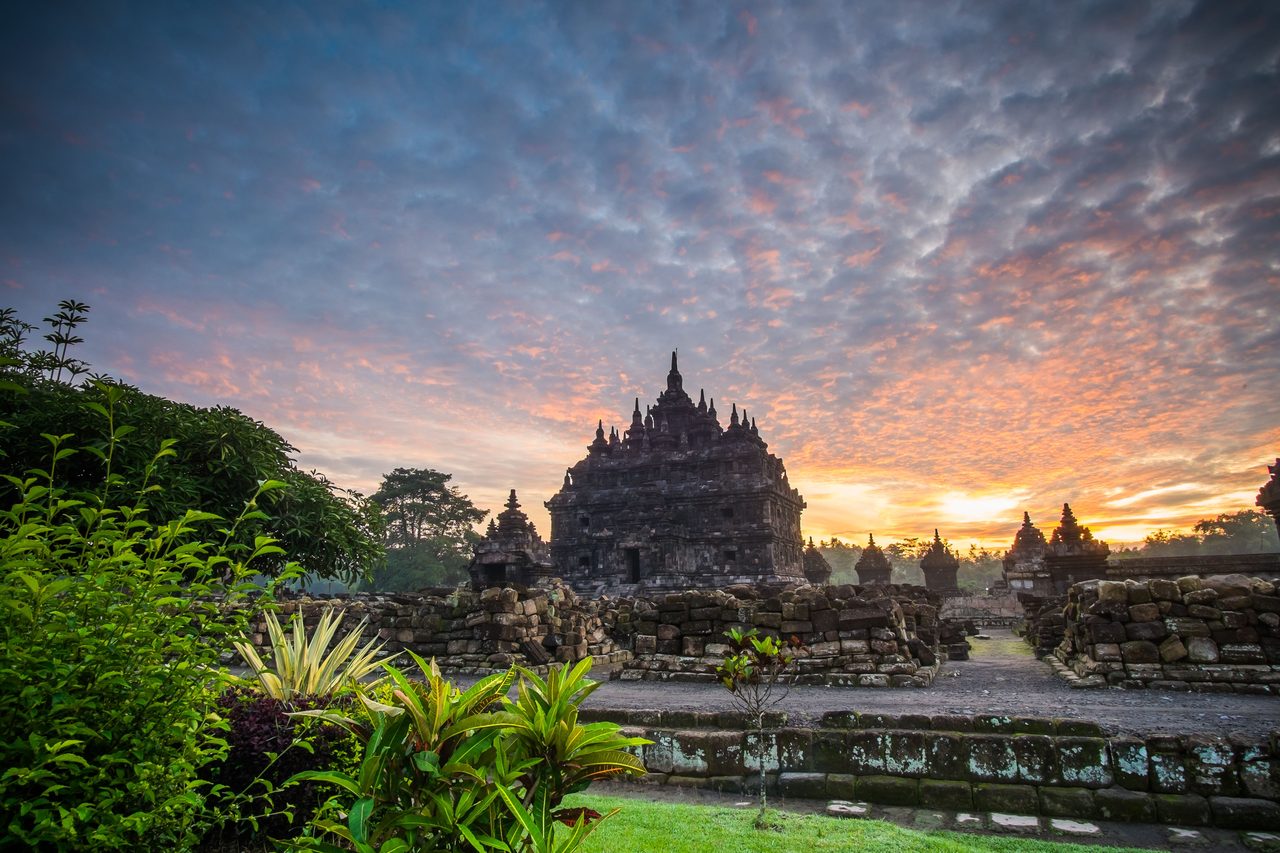
Yogyakarta · 26 Places · Best May, June, July, August, September
Yogyakarta
Yogyakarta, known locally as 'Jogja', is a vibrant cultural and artistic hub on the island of Java in Indonesia. Home to two UNESCO World Heritage Sites—Borobudur and Prambanan temples—and the storied Kraton royal palace, it is considered the spiritual heart of Javanese culture. The region blends ancient history, living traditions, volcanic landscapes, and a thriving contemporary arts scene into one of Southeast Asia's most compelling destinations.
Yogyakarta is Indonesia's foremost cultural destination, famous for its royal heritage, traditional batik textiles, and Wayang puppet theatre. The city sits in the shadow of Mount Merapi, one of the world's most active volcanoes, which adds dramatic scenery to the landscape. Surrounded by fertile rice paddies, ancient temples, and a dramatic southern coastline along the Indian Ocean, Yogyakarta rewards every type of traveler. The city's university population and thriving arts community give it an energetic, youthful atmosphere.
The 26 destinations our editors recommend — from iconic landmarks to under-the-radar finds.
Borobudur Temple
The world's largest Buddhist temple and a UNESCO World Heritage Site, Borobudur is a 9th-century Mahayana Buddhist monument built during the Sailendra dynasty. The stepped pyramid features 2,672 relief panels and 504 Buddha statues arranged around 10 terraces, culminating in a central stupa at the summit with panoramic views over the Kedu Plain.
Prambanan Temple Complex
A magnificent 9th-century Hindu temple compound dedicated to the Trimurti (Brahma, Vishnu, Shiva), Prambanan is the largest Hindu temple site in Indonesia and a UNESCO World Heritage Site. The tallest Shiva temple reaches 47 meters and the complex originally contained 240 temples spread across the Prambanan Plain.
Kraton (Sultan's Palace)
The living royal palace of the Yogyakarta Sultanate, the Kraton has been the seat of Javanese power since 1755. Built by Sultan Hamengkubuwono I, the sprawling complex contains museums, pavilions, batik workshops, and regular Gamelan and Wayang performances, all within ornate Javanese architecture.
Taman Sari Water Castle
Built in 1758 as the royal garden and pleasure palace of Sultan Hamengkubuwono I, Taman Sari features beautiful bathing pools, an underground mosque, and a network of tunnels. The site has been beautifully restored and offers fascinating glimpses into 18th-century royal Javanese life.
Malioboro Street
The legendary main boulevard of Yogyakarta, Malioboro is lined with hundreds of batik shops, souvenir stalls, street food vendors, and local warungs. The street is the commercial and cultural heartbeat of the city and most vibrant in the evenings when street performers and night market stalls set up.
Mount Merapi Volcano
One of the world's most active volcanoes, Mount Merapi (Fire Mountain) dominates the northern Yogyakarta skyline at 2,930 meters. Visitors can take jeep lava tours to the 2010 eruption zone, visit the Sisa Hartaku Museum of volcanic relics, or attempt the full summit trek (when safe levels permit).
Recommended itineraries
Pick a length, follow the route. Each itinerary balances headline sights with breathing room.
5-Day Yogyakarta Explorer
Day 1Arrive in Yogyakarta, explore city center
Day 2Visit top attractions and museums
Day 3Day trip to nearby highlights
Day 4Local markets and hidden gems
Day 5Final sightseeing, departure
7-Day Classic Yogyakarta
Days 1-2Yogyakarta city highlights
Days 3-4Regional exploration
Days 5-6Cultural immersion and local experiences
Day 7Return and departure
14-Day Ultimate Yogyakarta
Days 1-3Yogyakarta comprehensive city tour
Days 4-6Northern region exploration
Days 7-9Eastern highlights
Days 10-12Southern attractions
Days 13-14Return to Yogyakarta, departure
Where to stay in Yogyakarta
Three tiers, every traveller covered — from cost-conscious to flagship hotels.
Budget $20
Hostels, budget hotels, and guesthouses offer affordable stays without sacrificing experience.
Mid-range $60
Boutique hotels and well-located accommodations provide comfort and convenience at reasonable prices.
Luxury $200
World-class resorts and premium hotels deliver unforgettable experiences.
Royal Ambarrukmo Yogyakarta
Sleman/Airport Corridor · $$$$
Yogyakarta's most prestigious hotel, set within the historic Ambarrukmo Palace complex originally built for Sultan Hamengkubuwono VII. The 237-room property blends royal Javanese heritage with modern luxury, featuring stunning palace gardens, three restaurants, a world-class spa, and an outdoor pool.
A sprawling 5-star resort set within a 22-hectare tropical forest on the northern edge of Yogyakarta city. The resort features a massive free-form pool, 18-hole golf course, tennis courts, a full-service spa, and multiple dining venues with views of Mount Merapi.
A stunning contemporary luxury hotel in the heart of Yogyakarta city, connected to a high-end mall. The property features sleek modern rooms with Javanese design accents, a rooftop infinity pool overlooking the city, award-winning restaurants, and an exceptional spa.
A gracious 5-star resort occupying 5 hectares in east Yogyakarta, blending colonial architecture with tropical gardens and Javanese décor. The resort has a beautiful lagoon pool, an authentic Javanese spa called Mustika Ratu, and direct access to cultural performances.
Cafés, neighbourhood gems, and tasting menus worth the table reservation.
Bale Raos
Javanese Royal · $$$
Located within the Kraton palace grounds, Bale Raos serves authentic recipes from the royal kitchen of the Yogyakarta Sultanate, some of which have never been available to the public until the restaurant opened. The experience of dining among palace gardens with Gamelan music is unmatched.
House of Raminten
Javanese · $$
Possibly Yogyakarta's most famous restaurant, House of Raminten is an atmospheric institution serving traditional Javanese food while waitstaff in full traditional Javanese dress burn incense and Gamelan music fills the air. Open very late, it's a beloved local institution.
Jejamuran Restaurant
Indonesian/Mushroom Specialty · $$
A one-of-a-kind restaurant near Prambanan where every single dish is made from mushrooms (jamuran). From mushroom satay to mushroom rendang and mushroom burgers, this beloved local institution serves creative and delicious Javanese food with a unique twist.
Via Via Jogja
International/Indonesian · $$
A Belgian-founded traveler institution in Prawirotaman that has been serving excellent food since 1995. Via Via offers a daily changing menu of Indonesian and international dishes, hosts cooking classes, runs responsible travel tours, and has an inviting open terrace.
Sate Ratu
Javanese/Satay · $
Famous across Yogyakarta for exceptional pork satay with a unique spicy peanut sauce recipe that has been passed down through generations. Sate Ratu is a simple open-air warung with plastic chairs that consistently draws long queues of locals and food-savvy tourists.
Milas Vegetarian Restaurant
Indonesian Vegetarian · $$
Yogyakarta's best vegetarian restaurant, Milas serves beautifully prepared plant-based Javanese and Indonesian cuisine in a serene garden setting in Prawirotaman. The menu features creative dishes using local organic produce and traditional herbs.
Yogyakarta has good regional transport connections. The new Yogyakarta International Airport (YIA) in Kulonprogo serves domestic and some international routes. Within the city and region, options include the TransJogja bus network, Gojek/Grab ride-hailing apps, becak (cycle rickshaws), andong (horse-drawn carriages), and motorbike rentals.
TransJogja Bus
City bus network covering Yogyakarta city and parts of Sleman and Bantul regencies with air-conditioned buses and fixed stops
Cost: $0.25
Gojek/Grab
Ride-hailing apps offering motorcycle (ojek) and car rides with upfront metered pricing
Cost: $0.50-8
Becak
Traditional cycle rickshaws ideal for short trips in the Malioboro/Kraton area; negotiate fare before boarding
Cost: $1-3 per trip
Andong
Traditional horse-drawn carriage for scenic rides near the Kraton; popular with tourists
Cost: $3-6 per trip
Motorbike Rental
Self-drive motorbikes available throughout the city; ideal for exploring Gunungkidul and Bantul
Cost: $5-10/day
Car Rental with Driver
Full-day car hire with licensed local driver; most practical for temple circuits and beach days
Cost: $35-60/day
Taxi (metered)
Express metered taxis; use Gojek/Grab apps for transparency
Cost: $2-10 typical city fare
Train
Intercity trains from Yogyakarta Tugu and Lempuyangan stations to Jakarta, Surabaya, Bandung, Bali ferry
Cost: $5-50+ depending on class and distance
Budget breakdown
Daily spend by tier in IDR, broken out by category.
Category
Budget
Mid-range
Luxury
Accommodation
$8
$30
$120
Food (per day)
$6
$15
$50
Transportation
$3
$8
$20
Activities
$3
$7
$10
Daily total
$20
$60
$200
Best time to visit Yogyakarta
Weather through the year in Yogyakarta
Best timeShoulderWorth avoiding
Average daytime temperature in °C. Figures are for Yogyakarta.
Essential travel tips
Hire a local guide for Borobudur sunrise tours—book in advance
Bargain politely at Malioboro Street markets
Dress modestly when visiting temples and the Kraton
The Prambanan Ramayana Ballet at sunset is unmissable
Hidden gems
Off-the-beaten-path corners most travellers miss.
Bukit Panguk Kediwung for misty valley views
Kalibiru pre-dawn light on reservoir
Kopi Klotok riverside warung at dawn
Gudeg Pawon midnight meals
Angkringan Lik Man near Tugu for authentic kopi joss
Skip overpriced Malioboro souvenir vendors → Buy batik at Jl. Tirtodipuran boutiques instead
Always check Mount Merapi's volcanic alert level (BPPTKG) before trekking or visiting the northern slopes—do not visit Level 3 or 4 zones
INFO
Never swim at Parangtritis, Parangkusumo, or other open Indian Ocean beaches in Yogyakarta—rip currents are extremely powerful and claim lives every year
INFO
Use Gojek or Grab apps for transportation—avoid hailing unmarked taxis on Malioboro Street which may use fixed (inflated) rates
INFO
Keep bags and belongings secure in crowds around Malioboro Street, Beringharjo Market, and bus terminals—pickpocketing does occur in tourist areas
INFO
Buy your own SIM card with mobile data before exploring remote areas—Gunungkidul caves and beaches have limited connectivity
INFO
Dress modestly (covered shoulders and knees) when visiting the Kraton, mosques, and temples to avoid unwanted attention and respect local customs
INFO
Be cautious of friendly strangers who offer unsolicited help at Prambanan and Borobudur—some lead you to overpriced batik or souvenir shops
INFO
Verify taxi/driver prices and confirm routes in advance when using non-app transportation; some unlicensed drivers at tourist sites quote inflated prices
INFO
Carry a copy of your passport and visa—Indonesian police occasionally conduct ID checks in tourist areas
INFO
Drink only bottled or filtered water throughout Yogyakarta—tap water is not safe for drinking anywhere in the region
INFO
Wear sunscreen and stay hydrated when visiting outdoor temples—Borobudur and Prambanan involve extensive open-air walking and the equatorial sun is intense
INFO
Store valuables in hotel safes—room burglaries are rare but do occur at budget guesthouses
INFO
Be aware of batik shop scams near the Kraton—friendly 'students' may offer to guide you to government batik exhibitions which are actually commission-based tourist shops
INFO
Be aware that Merapi jeep tours operate up to the exclusion zone boundary; reputable operators follow all safety regulations
Frequently asked questions
Is Yogyakarta safe to visit in 2026?
Yogyakarta is one of Indonesia's safest destinations for tourists, with a generally low crime rate and welcoming local population. The main safety concerns are natural hazards (Mount Merapi volcanic activity and dangerous Indian Ocean currents) rather than crime, though petty theft and tourist scams require normal vigilance. Emergency services: police at 110, medical at 118 / 119.
What is the best time to visit Yogyakarta?
The best time to visit Yogyakarta is May, June, July, August, September. Yogyakarta has a tropical monsoon climate with two distinct seasons: a dry season (May–October) and a wet season (November–April). Temperatures are consistently warm throughout the year, averaging 24–
Do I need a visa to visit Yogyakarta?
Entry requirements follow Indonesia rules. Most nationalities receive a free Visa on Arrival (VoA) for 30 days, extendable once for 30 days. E-visas are available for eligible nationalities. Citizens of ASEAN countries and select other nations may enter visa-free. Requirements vary by nationality, so check with your nearest embassy or the official immigration website before traveling.
What currency is used in Yogyakarta?
The currency in Yogyakarta is the Indonesian Rupiah (IDR). ATMs are widely available in cities and tourist areas. Credit cards are accepted at most hotels and restaurants, but carry cash for markets and smaller establishments.
What language is spoken in Yogyakarta?
The main language(s) spoken in Yogyakarta: Javanese, Indonesian. In tourist areas, English is generally understood. Learning a few basic phrases in the local language is appreciated by locals.
What are the top attractions in Yogyakarta?
The top attractions in Yogyakarta include Borobudur Temple, Prambanan Temple Complex, Kraton (Sultan's Palace), Taman Sari Water Castle, and Malioboro Street. Each offers a unique experience, from historic landmarks to natural wonders.