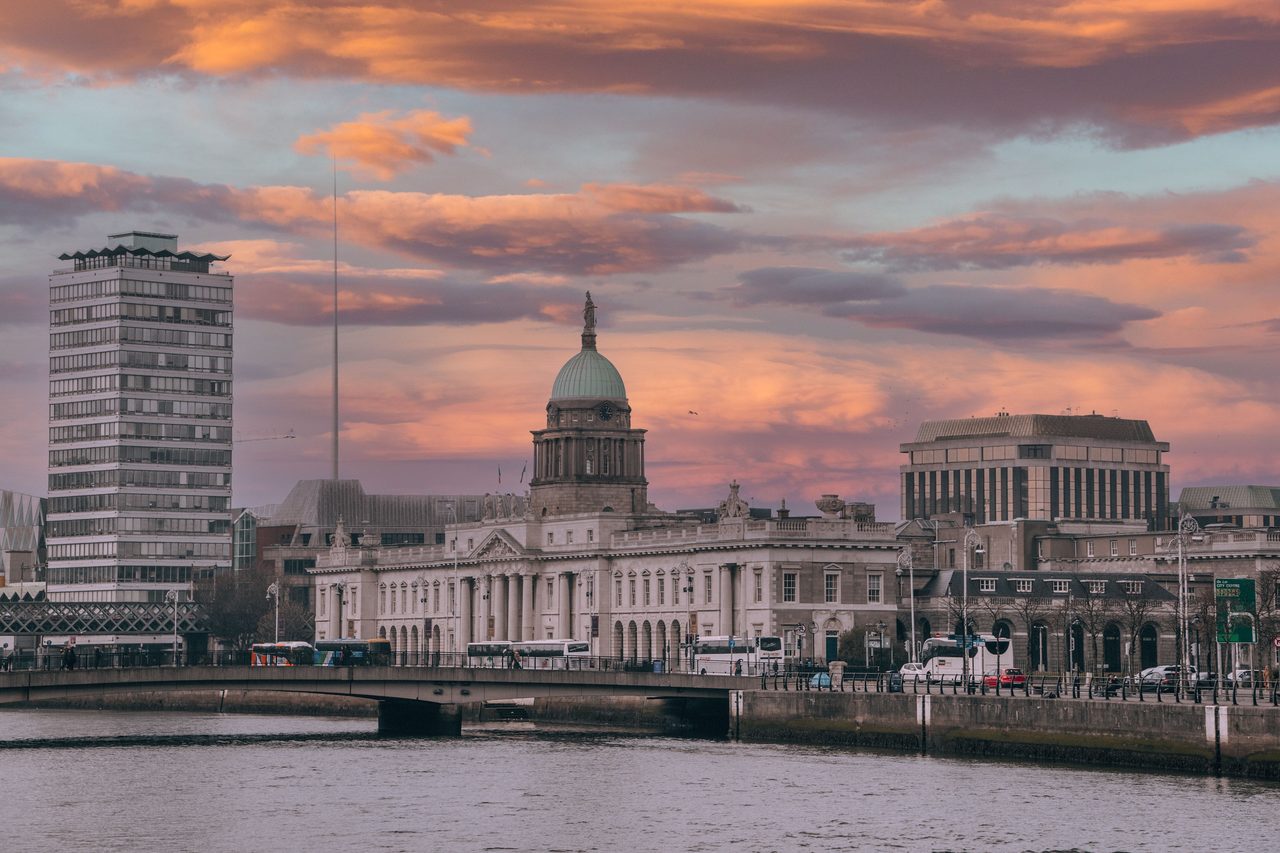
Leinster is Ireland's eastern province, home to the capital Dublin and encompassing 12 counties stretching from the rolling Wicklow Mountains to the ancient passage tombs of the Boyne Valley. It blends vibrant urban culture with prehistoric monuments, medieval castles, and some of Ireland's most dramatic coastal and mountain scenery.
Leinster is the most populous and culturally rich of Ireland's four provinces, anchored by Dublin — a city of Georgian squares, world-class museums, and legendary pub culture. Beyond the capital, Leinster offers Newgrange (one of the world's oldest buildings), the monastic ruins of Glendalough, the Norman splendour of Kilkenny, sweeping Wicklow mountain trails, and miles of Atlantic-facing beaches. The province rewards slow exploration: day-trip distance from Dublin connects travellers to Bronze Age tombs, Viking-era towns, and quiet country estates.
The 26 destinations our editors recommend — from iconic landmarks to under-the-radar finds.
Newgrange Passage Tomb
This engineered mound at Brú na Bóinne predates Stonehenge and the Egyptian pyramids, built around 3200 BC by Neolithic farmers to house cremated remains and mark the solar year. Access is only by guided tour, gathering visitors at the Donore visitor centre before a bus takes you to the monument itself. Inside, a narrow stone passage opens into a corbelled chamber where guides recreate the winter solstice light effect with an artificial beam.
Trinity College Dublin & Book of Kells
Ireland's oldest university, founded in 1592, whose cobbled squares sit in the middle of Dublin's shopping streets. The main draw is the Old Library's Long Room, a barrel-vaulted hall of dark oak shelving that has become one of the most photographed interiors in Ireland, paired with the illuminated medieval manuscript itself displayed under glass beforehand. The queue and exhibition space feel very different from the hushed Long Room that follows.
Glendalough Monastic Site
A sixth-century monastic settlement founded by St Kevin, set between two lakes in a glaciated Wicklow valley. The round tower and ruined cathedral cluster near the entrance, while a lakeside path continues past the Upper Lake to quieter ruins and trailheads into the surrounding hills. Because the monastic core is free and unfenced, it works as either a short historical stop or the start of a longer walk.
Kilkenny Castle
A Norman stronghold rebuilt and remodelled over centuries by the Butler family, who occupied it until the 20th century, giving its interiors a Victorian country-house character rather than a medieval one. The state rooms and the long picture gallery with its painted timber ceiling are the highlight of the guided route through the building. Its grounds run down toward the River Nore and are open and free to walk even without a castle ticket.
Powerscourt Estate & Gardens
A grand Palladian estate in the Wicklow hills, its terraced formal gardens laid out in the 19th century with statuary, a walled garden, and views toward the Sugar Loaf mountain. The waterfall, at over 120 metres one of Ireland's tallest, sits on a separate section of the estate a short drive away and requires its own ticket and entrance. The house itself was gutted by fire in 1974 and is not part of the visit — only the ground-floor shops and café occupy it now.
Phoenix Park
Recommended itineraries
Pick a length, follow the route. Each itinerary balances headline sights with breathing room.
5-Day Leinster Explorer
Day 1Arrive in Leinster, explore city center
Day 2Visit top attractions and museums
Day 3Day trip to nearby highlights
Day 4Local markets and hidden gems
Day 5Final sightseeing, departure
7-Day Classic Leinster
Days 1-2Leinster city highlights
Days 3-4Regional exploration
Days 5-6Cultural immersion and local experiences
Day 7Return and departure
14-Day Ultimate Leinster
Days 1-3Leinster comprehensive city tour
Days 4-6Northern region exploration
Days 7-9Eastern highlights
Days 10-12Southern attractions
Days 13-14Return to Leinster, departure
Where to stay in Leinster
Three tiers, every traveller covered — from cost-conscious to flagship hotels.
Budget €58–€115/day (~USD 63–125)
Hostels, budget hotels, and guesthouses offer affordable stays without sacrificing experience.
Mid-range €180–€315/day (~USD 195–345)
Boutique hotels and well-located accommodations provide comfort and convenience at reasonable prices.
Luxury €510–€1,170/day (~USD 555–1,275)
World-class resorts and premium hotels deliver unforgettable experiences.
Cafés, neighbourhood gems, and tasting menus worth the table reservation.
Chapter One
Modern Irish / Tasting Menu · €100–€130 tasting menu (~USD 109–142)
A Michelin-starred dining room set in the vaulted basement beneath the Dublin Writers Museum on Parnell Square. The kitchen, long associated with chef Mickael Viljanen, builds tasting menus around Irish produce with Scandinavian-influenced technique and plating. The space itself is formal and quiet, with stone walls and a literary theme that nods to its setting.
Glovers Alley
Modern Irish · €95–€120 tasting menu (~USD 104–131)
Restaurant Patrick Guilbaud
French-Irish · €220–€270 for dinner including wine pairing (~USD 240–295)
Dublin's longest-running high-end French restaurant, set near Merrion Square with a formal, white-tablecloth dining room. The cooking pairs classical French technique with Irish ingredients, and the wine list and pairing programme are a central part of the experience. Service is traditional and paced for a long dinner rather than a quick meal.
Campagne
French-Irish · €65–€85 set dinner (~USD 71–93)
A French-Irish restaurant in Kilkenny set in a converted arched building near the city centre, run around chef Garrett Byrne's cooking. The food favours French technique with Kilkenny and regional Irish produce, served in a room with exposed stone and the arch structure visible overhead. It functions as one of the county's main destinations for a set-menu dinner rather than a casual meal.
The Strawberry Tree
Modern Irish / Certified Organic · €75–€95 set dinner (~USD 82–104)
Ireland's only certified organic restaurant, located inside the BrookLodge Hotel in the small village of Macreddin in County Wicklow. The kitchen builds set menus around foraged, wild and certified organic ingredients, reflecting the hotel's own farm and wild-food sourcing on site. The dining room is set within the countryside hotel rather than a town centre, so the meal is typically paired with an overnight stay.
Delahunt
Modern Irish · €35–€55 for dinner (~USD 38–60)
A modern Irish restaurant on Camden Street Lower set inside a restored Victorian grocer's shop, with the original shopfront and fittings still part of the room. The menu is seasonal modern Irish, built around simpler plates than the tasting-menu fine-dining places elsewhere in the city. The ground floor keeps some of the old grocery's cabinetry and tiling, giving the room a distinct period character.
Dublin Airport (DUB) is the main gateway with direct transatlantic and European flights. Within Leinster, Dublin's public transport (DART rail, Luas tram, Dublin Bus) is comprehensive. Intercity Bus Éireann and Irish Rail serve towns like Kilkenny, Wexford, and Drogheda. Renting a car is the best option for rural Wicklow, Meath, and Wexford.
Budget breakdown
Daily spend by tier in EUR, broken out by category.
Category
Budget
Mid-range
Luxury
Accommodation
€25–€50/night (hostel dorm or budget B&B)
€100–€180/night (3-star hotel or quality B&B)
€280–€600+/night (5-star or country house hotel)
Food (per day)
€20–€35/day (supermarket, cafés, lunch specials)
€45–€70/day (sit-down lunch, casual dinner)
€120–€250/day (Michelin dining, wine)
Transportation
€8–€15/day (Leap Card bus/DART)
€15–€25/day (taxis + Leap Card)
€50–€120/day (private hire, Uber)
Activities
€5–€15/day (many attractions free or low-cost)
€20–€40/day
€60–€200/day (private tours, golf, spa)
Daily total
€58–€115/day (~USD 63–125)
€180–€315/day (~USD 195–345)
€510–€1,170/day (~USD 555–1,275)
Best time to visit Leinster
Weather through the year in Ireland
Best timeShoulderWorth avoiding
Average daytime temperature in °C. Figures are for Ireland.
Ireland's weather is famously changeable year-round. May–June offers long daylight hours (up to 17 hours), lush green landscapes, and fewer crowds than summer. September brings mild temperatures, harvest festivals, and quieter roads. July–August are warmest but busiest; book accommodation weeks in advance.
Essential travel tips
Buy a Leap Card (€10 deposit + credit) for discounted bus, DART, and Luas travel in Dublin
Book Trinity College Book of Kells tickets online in advance — queues can be 1+ hour without pre-booking
Newgrange winter solstice slots (Dec 19–23) are allocated by lottery — apply at bru-na-boinne.ie
Many national museums in Dublin are free: National Museum, National Gallery, Natural History Museum
The Wild Wicklow Tour (wildwicklowtours.ie) departs Dublin daily for Glendalough — a good option without a car
Hidden gems
Off-the-beaten-path corners most travellers miss.
Safety information
INFO
Keep valuables secure in busy Temple Bar and O'Connell Street areas
INFO
Use Leap Card on public transport to avoid overpaying
INFO
Carry a waterproof layer at all times — Irish weather changes rapidly
INFO
Driving on the left; rural roads can be very narrow — drive slowly
Frequently asked questions
Is Leinster safe to visit in 2026?
Leinster is an extremely safe destination. Ireland ranks 13th on the 2024 Global Peace Index. Violent crime against tourists is extremely rare. Petty theft (bag snatching, pickpocketing) occurs in busy Dublin areas like Temple Bar, O'Connell Street, and on public transport — standard urban precautio
What is the best time to visit Leinster?
The best time to visit Leinster is May–June and September. Leinster has a cool oceanic climate (Köppen Cfb). Temperatures rarely exceed 25°C (77°F) in summer or fall below -2°C (28°F) in winter. The east coast of Ireland receives less rainfall than the west —
What currency is used in Leinster?
The currency in Leinster is the Euro (EUR). ATMs are widely available in cities and tourist areas. Credit cards are accepted at most hotels and restaurants, but carry cash for markets and smaller establishments.
What language is spoken in Leinster?
The main language(s) spoken in Leinster: English, Irish (Gaeilge). In tourist areas, English is generally understood. Learning a few basic phrases in the local language is appreciated by locals.
What are the top attractions in Leinster?
The top attractions in Leinster include Newgrange Passage Tomb, Trinity College Dublin & Book of Kells, Glendalough Monastic Site, Kilkenny Castle, and Powerscourt Estate & Gardens. Each offers a unique experience, from historic landmarks to natural wonders.
Explore Leinster by city
The cities below have their own guides — hotels, attractions and where to eat, in depth.