Ma'an · 26 Places · Best March-May and September-November
Ma'an
Ma'an Governorate is Jordan's largest governorate by area, encompassing the legendary rose-red city of Petra, the dramatic desert landscapes of Wadi Rum, and the historic market town of Ma'an city. This southern region is home to some of the ancient world's most extraordinary monuments, carved by the Nabataean civilization over two millennia ago. From rugged desert canyons to Crusader-era castles, Ma'an offers an unparalleled journey through layers of human history set against spectacular natural scenery.
Ma'an Governorate sprawls across southern Jordan covering over 32,000 km², making it the country's largest governorate. It is anchored by the ancient Nabataean city of Petra — a UNESCO World Heritage Site and one of the New Seven Wonders of the World — alongside the UNESCO-listed Wadi Rum desert. The region blends Bedouin heritage, Crusader history, and extraordinary geological formations into one of the Middle East's most rewarding travel experiences. Visitors can explore rock-carved temples, camp under star-filled desert skies, and discover hidden canyons that few tourists ever reach.
The 26 destinations our editors recommend — from iconic landmarks to under-the-radar finds.
Petra — The Treasury (Al-Khazneh)
The iconic façade of Petra, carved directly into rose-red sandstone cliffs by the Nabataeans around the 1st century BC. Standing 43 metres tall, Al-Khazneh emerges dramatically at the end of the 1.2km Siq canyon and is one of the most photographed monuments on earth. The name 'Treasury' comes from a Bedouin legend that an Egyptian pharaoh hid his wealth in the urn at the top.
The Siq — Petra's Entrance Canyon
A natural gorge 1.2km long and up to 80m deep that serves as the dramatic entrance passage to Petra. The canyon walls display vivid layers of red, purple, and orange sandstone sculpted by wind and water over millions of years. Along the route, visitors pass ancient Nabataean water channels, votive niches, and the faint outlines of carved reliefs.
The Monastery (Ad-Deir)
Petra's largest monument, the Monastery is a colossal rock-cut structure measuring 50 metres wide and 45 metres tall — even larger than the Treasury. The 45-minute hike from Petra's city centre involves 800 rock-cut steps, rewarded with spectacular views and far fewer crowds than the Treasury. The monument was likely a Nabataean royal tomb later converted into a Byzantine church.
Little Petra (Siq al-Barid)
A miniature version of Petra located 8km north of the main site, Little Petra is a narrow sandstone gorge filled with Nabataean temples, painted dining rooms, and rock-carved façades. Unlike main Petra, admission is completely free. The Painted House inside Siq al-Barid features rare surviving Nabataean frescoes with vine motifs and figures.
The Royal Tombs — Petra
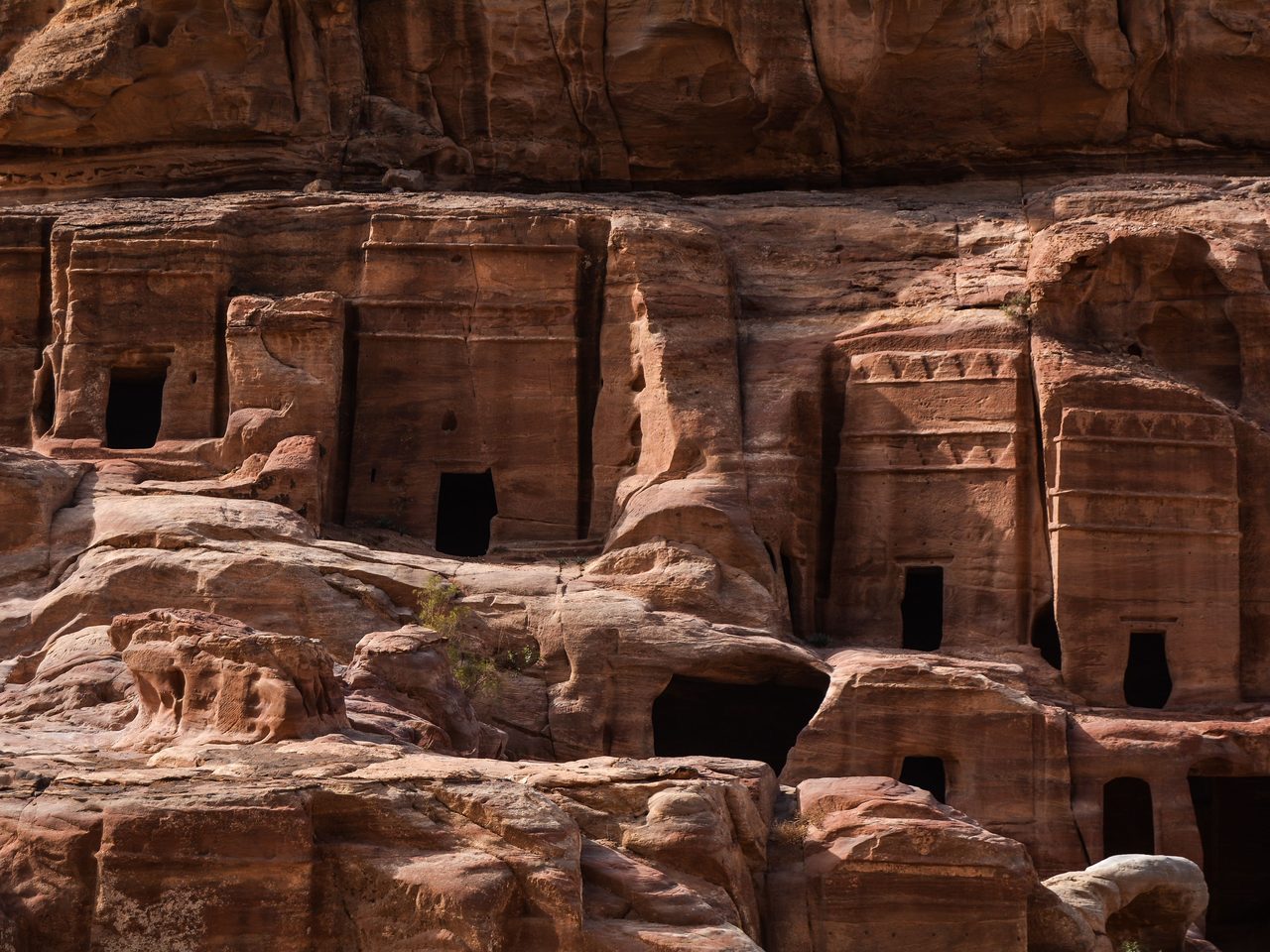
A series of impressive Nabataean tombs carved high into the cliff face east of Petra's city centre, including the Urn Tomb, Silk Tomb, Corinthian Tomb, and Palace Tomb. The Urn Tomb is the largest and best-preserved, with a huge vaulted forecourt and Byzantine inscription recording its conversion to a church in 447 AD. The terrace above offers sweeping views across the entire Petra basin.
High Place of Sacrifice (Zibb Atuf)
A mountaintop Nabataean sacrificial altar reached by 45 minutes of climbing from Petra's street of façades. The site features two obelisks, ritual basins, channels carved into the rock for draining blood, and stunning panoramic views over Petra and the surrounding mountains. The descent through Wadi Farasa canyon passes Lion Fountain, Garden Temple, and Roman Soldier's Tomb.
Recommended itineraries
Pick a length, follow the route. Each itinerary balances headline sights with breathing room.
5-Day Ma'an Explorer
Day 1Arrive in Ma'an, explore city center
Day 2Visit top attractions and museums
Day 3Day trip to nearby highlights
Day 4Local markets and hidden gems
Day 5Final sightseeing, departure
7-Day Classic Ma'an
Days 1-2Ma'an city highlights
Days 3-4Regional exploration
Days 5-6Cultural immersion and local experiences
Day 7Return and departure
14-Day Ultimate Ma'an
Days 1-3Ma'an comprehensive city tour
Days 4-6Northern region exploration
Days 7-9Eastern highlights
Days 10-12Southern attractions
Days 13-14Return to Ma'an, departure
Where to stay in Ma'an
Three tiers, every traveller covered — from cost-conscious to flagship hotels.
Budget $40
Hostels, budget hotels, and guesthouses offer affordable stays without sacrificing experience.
Mid-range $120
Boutique hotels and well-located accommodations provide comfort and convenience at reasonable prices.
Luxury $350
World-class resorts and premium hotels deliver unforgettable experiences.
Movenpick Resort Petra
Wadi Musa (Petra Entrance) · $$$
The most prestigious hotel in the Petra region, the Movenpick sits directly at the entrance to Petra making it the most convenient base for exploring the ancient city. The property features beautiful Arabian architecture, landscaped gardens, multiple dining options, a rooftop terrace with panoramic views, and a full spa.
A five-star property perched high above Wadi Musa with stunning panoramic views across the valley and surrounding mountains. The Marriott offers spacious rooms with Jordanian décor, an outdoor pool, multiple restaurants, and an expert concierge team for organising Petra tours and day trips.
A charming resort complex set within a restored traditional Jordanian village, featuring stone-built accommodation around a central garden. Hayat Zaman blends Petra's Nabataean heritage with modern comfort, offering a pool, spa, traditional Jordanian dining, and organised cultural experiences for guests.
A boutique luxury property built around a traditional Jordanian village aesthetic with individual stone cottages and a central courtyard. The hotel features an outdoor pool, traditional hammam, and gourmet Jordanian restaurant, providing an intimate alternative to the larger resort hotels near Petra.
Cafés, neighbourhood gems, and tasting menus worth the table reservation.
Cave Bar
International / Jordanian · $$
One of the world's most unique drinking and dining venues, the Cave Bar is set inside a 2,000-year-old Nabataean tomb carved into rose-red sandstone at the Petra Guest House. Stone walls, candlelight, and ancient carved niches create an unforgettable atmosphere for evening drinks, Jordanian mezze, and light meals.
Al Qantarah Restaurant
Jordanian · $$
A well-regarded restaurant near the Petra entrance serving generous portions of traditional Jordanian food including mansaf, maqluba, and grilled meats. The friendly service and authentic recipes make it a favourite with both locals and tourists seeking a genuine taste of Jordanian hospitality.
Petra Kitchen
Jordanian (cooking class) · $$$
A unique dining experience in which guests participate in cooking their own Jordanian meal alongside local women from the Wadi Musa community. The evening begins with an introduction to Jordanian spices and ingredients, followed by a hands-on session preparing traditional dishes, culminating in a shared meal around a communal table.
Red Cave Restaurant
Jordanian / Arabic · $$
A popular mid-range restaurant in the heart of Wadi Musa serving a broad menu of Jordanian classics, grilled meats, and international dishes. The terrace seating offers pleasant views over the town and the restaurant stays open late, making it ideal for post-Petra dinners when many other establishments have closed.
Wranglers Pub & Restaurant
International / Pub Food · $$
The liveliest evening venue in Wadi Musa, Wranglers serves burgers, pasta, and snacks alongside a full bar with local Jordanian beer, arak, and imported spirits. Popular with tour guides, expat workers, and travellers seeking a familiar atmosphere after long Petra days. The pool table and sports TV add to the convivial feel.
Basin Restaurant — Inside Petra
Jordanian / International Buffet · $$
The only full-service restaurant inside the Petra Archaeological Park, the Basin is located at the far end of the colonnaded street near Qasr al-Bint. It serves a daily buffet lunch including Jordanian salads, stews, grilled items, and desserts, making it convenient for visitors deep inside the site who do not want to walk back to the entrance.
Ma'an Governorate has no airport and no rail service. The main access point is by road from Amman (3-4 hours) via the King's Highway or Desert Highway. Within the governorate, taxis and minibuses connect Wadi Musa (Petra), Ma'an city, Shoubak, and Dana. A rental car provides the most flexibility for exploring the region's remote sites.
JETT Bus
Direct air-conditioned bus from Amman South Station to Wadi Musa (Petra), departing daily. Most reliable public transport option.
Cost: JOD 7 (~$10)
Local Minibus
Minibuses connect Ma'an city with Wadi Musa, Shoubak, and Aqaba. Slower and cheaper than direct bus.
Cost: JOD 1-3
Service Taxi (Shared)
Shared taxis operate between Ma'an, Wadi Musa, Shoubak, and along the King's Highway. Departure when full.
Cost: JOD 2-8
Private Taxi
Taxis for hire throughout the region. Negotiate a fixed price before departure. Reliable for day trips and airport transfers.
Cost: JOD 10-50
Rental Car
Best option for exploring Dana, Humayma, and remote areas. International driving license required. Roads are generally good.
Cost: JOD 25-45/day ($35-63)
Budget breakdown
Daily spend by tier in JOD, broken out by category.
Category
Budget
Mid-range
Luxury
Accommodation
$15
$60
$200
Food (per day)
$10
$25
$80
Transportation
$8
$20
$40
Activities
$7
$15
$30
Daily total
$40
$120
$350
Best time to visit Ma'an
Weather through the year in Ma'an
Best timeShoulderWorth avoiding
Average daytime temperature in °C. Figures are for Ma'an.
Essential travel tips
Buy the Jordan Pass in advance to save on Petra entry and visa
Start Petra walks at dawn before heat and crowds build
Stay at least 2 nights near Petra to explore properly
Hidden gems
Off-the-beaten-path corners most travellers miss.
Khubtha Summit
Above the Treasury — aerial view of Al-Khazneh from directly above
Um al-Biyara summit
The highest point in Petra with 360-degree views — almost no visitors reach here
Um Sayhoun Village Kitchen
The Bdoul community kitchen — authentic and rarely visited by tourists
Shoubak Castle at dawn
The local caretaker often arrives at sunrise — a quiet private visit before tour groups
Khubtha Summit above the Treasury
Dana canyon rim from village terrace
Shoubak Castle hilltop
Monastery (Ad-Deir) mountain viewpoint
Shoubak Castle battlements
Wadi Musa hotel rooftops
Safety information
INFO
Ma'an Governorate is one of Jordan's safest tourist regions — Petra and Wadi Musa have a heavy tourist police presence
INFO
Always carry a photocopy of your passport and Jordan Pass when visiting Petra — originals can be left securely at the hotel
INFO
Carry at least 2 litres of water per person for full days inside Petra — dehydration is the most common medical issue for visitors
INFO
Wear sun protection (sunscreen SPF 50+, hat, long sleeves) — the desert sun is intense year-round and UV levels are very high
INFO
Stay on marked trails inside Petra — the terrain beyond the paths can be unstable and dangerous
INFO
Do not attempt remote canyon hikes (Wadi Sabra, Jabal Haroun) without a licensed guide
INFO
Flash flooding can occur in wadis (canyons) after rain — never enter a canyon during or after rainfall
INFO
Agree on taxi prices before getting in the car — always negotiate upfront to avoid disputes
INFO
Keep valuables in your hotel safe — petty theft is rare but possible in crowded tourist areas
INFO
Be respectful of Islamic customs: dress modestly (cover shoulders and knees) when visiting any non-beach location
INFO
Avoid purchasing ancient artefacts from street vendors — it is illegal to export antiquities from Jordan
INFO
In the unlikely event of political unrest, monitor your country's travel advisory and contact your embassy
INFO
Do not photograph Jordanian military installations, checkpoints, or security personnel
INFO
Horse and camel operators at Petra are regulated but always agree on price and duration before boarding
INFO
Emergency services (911) response times may be slower in remote areas — inform someone of your hiking plans before setting out
Frequently asked questions
Is Ma'an safe to visit in 2026?
Ma'an Governorate, including the Petra region, is considered safe for tourists with a Level 1 or Level 2 advisory from most Western governments. Jordan maintains strong internal stability, and the main risks for visitors are environmental (heat, sun, dehydration) rather than security-related. Emergency services: police at 911, medical at 911 / Wadi Musa Health Center: +962 3 215 6900.
What is the best time to visit Ma'an?
The best time to visit Ma'an is March-May and September-November. Ma'an Governorate has a hot desert climate (BWh) — extremely hot, dry summers and mild winters with occasional cold snaps and rare snow in the highest areas around Shoubak and Dana. The region receive
Do I need a visa to visit Ma'an?
Entry requirements follow Jordan rules. Most nationalities can obtain a visa on arrival at Queen Alia International Airport or border crossings. The Jordan Pass (from JOD 70) includes a visa and entry to over 40 attractions including Petra. Requirements vary by nationality, so check with your nearest embassy or the official immigration website before traveling.
What currency is used in Ma'an?
The currency in Ma'an is the Jordanian Dinar (JOD). ATMs are widely available in cities and tourist areas. Credit cards are accepted at most hotels and restaurants, but carry cash for markets and smaller establishments.
What language is spoken in Ma'an?
The main language(s) spoken in Ma'an: Arabic, English (widely spoken in tourist areas). In tourist areas, English is generally understood. Learning a few basic phrases in the local language is appreciated by locals.
What are the top attractions in Ma'an?
The top attractions in Ma'an include Petra — The Treasury (Al-Khazneh), The Siq — Petra's Entrance Canyon, The Monastery (Ad-Deir), Little Petra (Siq al-Barid), and The Royal Tombs — Petra. Each offers a unique experience, from historic landmarks to natural wonders.