World · 28 Places · Best April–May and September–October
Amsterdam
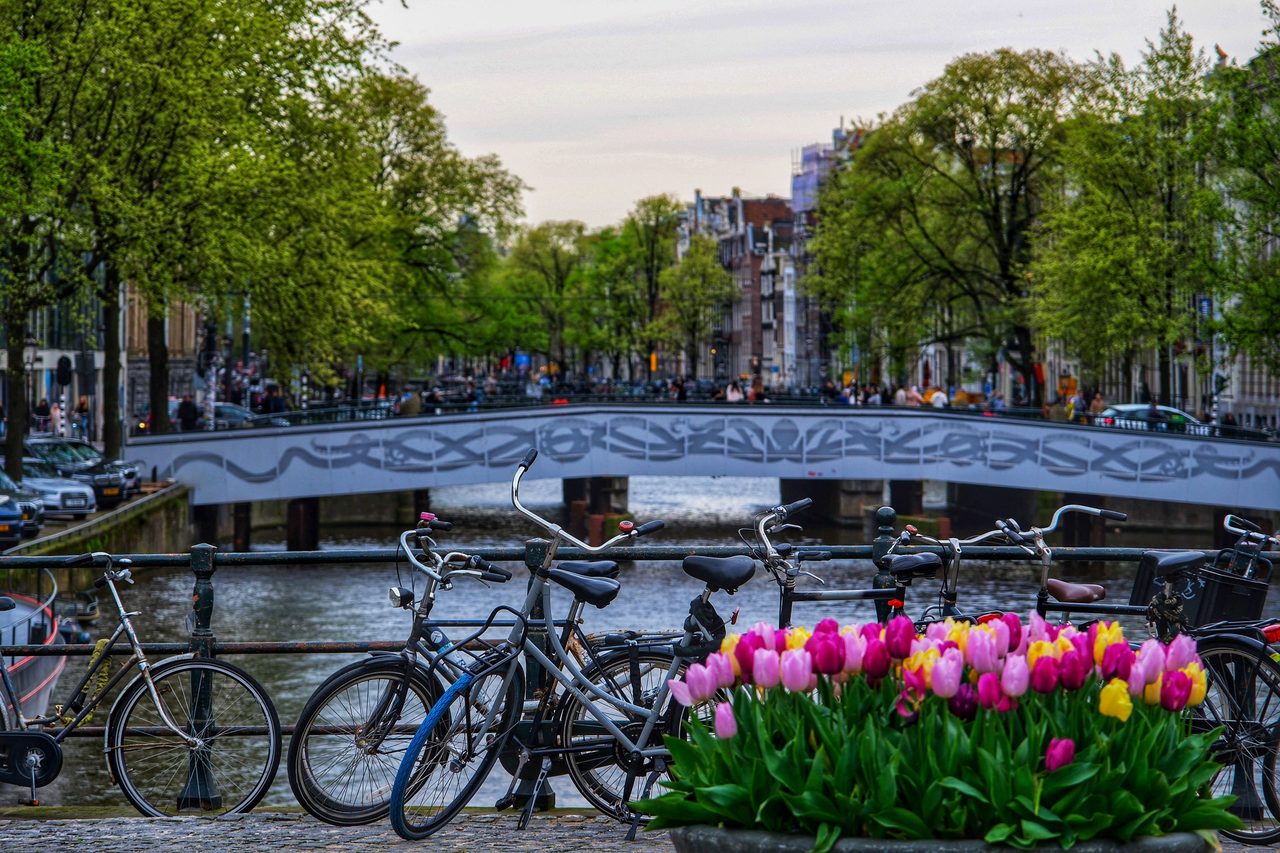
Amsterdam is the capital and most populous city of the Netherlands, renowned for its historic canal ring, world-class museums, vibrant cycling culture, and liberal atmosphere. Built on a grid of 17th-century canals lined with narrow gabled merchant houses, the city blends Golden Age heritage with contemporary art, cutting-edge food, and one of Europe's most energetic nightlife scenes.
Amsterdam sits at the confluence of the Amstel river and IJ bay in the western Netherlands, about 20 km from the North Sea coast. With roughly 921,000 residents in the city proper and 1.1 million in the metropolitan area, it is the financial and cultural heart of the Netherlands. The historic canal district (Grachtengordel) is a UNESCO World Heritage Site, and the city hosts more than 50 museums, hundreds of art galleries, and a cycling infrastructure that carries over 880,000 bicycle trips per day. Amsterdam is consistently ranked among Europe's most welcoming cities for LGBTQ+ travelers, solo visitors, and international tourists.
The 28 destinations our editors recommend — from iconic landmarks to under-the-radar finds.
Rijksmuseum
The Netherlands' national museum holds the country's largest collection of Dutch Golden Age art, including work by Rembrandt and Vermeer, inside a purpose-built 19th-century building on Museumplein. The collection spans furniture, ship models, and Delftware alongside paintings, tracing Dutch history from medieval times to the 20th century. Most visitors spend two to three hours moving through the Gallery of Honour before branching into the side wings.
Van Gogh Museum
This museum holds the largest collection of Van Gogh's paintings and letters anywhere, donated by his family and arranged to follow his life from early dark Dutch canvases through the bright palette of his final years in France. The building groups works chronologically across several floors, pairing paintings with letters he wrote to his brother Theo. It gives a fuller picture of his development than seeing isolated paintings in other museums.
Anne Frank House
The canal house where Anne Frank and her family hid for over two years during the Nazi occupation is preserved with the movable bookcase entrance to the Secret Annex still in place. The rooms are kept largely unfurnished, as they were left after the arrest, which makes the space itself the exhibit rather than reconstructed period rooms. Anne's original diary pages are displayed alongside the family's story.
Royal Palace on Dam Square (Koninklijk Paleis)
Built in the 17th century as Amsterdam's city hall during the Dutch Golden Age, this building on Dam Square was converted into a royal palace under Louis Napoleon and is still used by the Dutch royal family for state functions today. The interior centers on the Citizens' Hall, a vast marble room lined with sculpture referencing Amsterdam's trading power. Because it remains a working palace, it's only open to visitors when not in royal use.
Stedelijk Museum
Amsterdam's museum for modern and contemporary art sits next to the Van Gogh Museum on Museumplein, housed partly in a 19th-century building and partly in a distinctive white extension known locally as 'the bathtub.' The collection covers modern movements from Mondrian and De Stijl through postwar and contemporary work, plus design and applied art. It's a lighter, faster visit than its Museumplein neighbors.
NEMO Science Museum
Housed in a green, ship-hull-shaped building above Amsterdam's Oosterdok, NEMO is a hands-on science museum built for kids and families rather than passive viewing, with exhibits on chemistry, physics, and technology arranged across several floors. Nearly everything is designed to be touched, operated, or experimented with. The building's sloped roof also functions as a public terrace.
Recommended itineraries
Pick a length, follow the route. Each itinerary balances headline sights with breathing room.
5-Day Amsterdam Explorer
Day 1Arrive in Amsterdam, explore city center
Day 2Visit top attractions and museums
Day 3Day trip to nearby highlights
Day 4Local markets and hidden gems
Day 5Final sightseeing, departure
7-Day Classic Amsterdam
Days 1-2Amsterdam city highlights
Days 3-4Regional exploration
Days 5-6Cultural immersion and local experiences
Day 7Return and departure
14-Day Ultimate Amsterdam
Days 1-3Amsterdam comprehensive city tour
Days 4-6Northern region exploration
Days 7-9Eastern highlights
Days 10-12Southern attractions
Days 13-14Return to Amsterdam, departure
Where to stay in Amsterdam
Three tiers, every traveller covered — from cost-conscious to flagship hotels.
Budget €63–€112/day
Hostels, budget hotels, and guesthouses offer affordable stays without sacrificing experience.
Mid-range €205–€355/day
Boutique hotels and well-located accommodations provide comfort and convenience at reasonable prices.
Luxury €580–€1,380+/day
World-class resorts and premium hotels deliver unforgettable experiences.
Waldorf Astoria Amsterdam
Canal Ring (Herengracht) · €500–€1,200/night (~$545–$1,310)
Cafés, neighbourhood gems, and tasting menus worth the table reservation.
Ciel Bleu
French-Dutch fusion · €€€€ (tasting menu €175/person ~$191, excl. wine)
Amsterdam's best-known two-Michelin-starred dining room sits on the 23rd floor of the Hotel Okura, with floor-to-ceiling windows looking out over the southern edge of the city. The kitchen works in a French-rooted register with Dutch and Asian touches worked into individual courses, built around multi-course tasting menus rather than an a la carte list. The room is formal, with white tablecloths, wide spacing between tables, and a level of service that matches the price point.
Restaurant Vermeer
Modern European · €€€€ (tasting menu €110–€145/person ~$120–$158)
A restaurant built inside a restored 1926 municipal nursery greenhouse in the Frankendael area, with an open kitchen and a menu that changes daily based on what's ready in the restaurant's own gardens and greenhouse beds. The cooking is produce-led Dutch-Mediterranean, served as a fixed multi-course menu rather than a choice of mains. The dining room keeps the tall glass-and-steel structure of the original greenhouse, so tables sit under a lot of natural light and hanging plants.
Ron Gastrobar
Modern Dutch / International · €€€ (sharing dishes €8–€22 each; ~$8.70–$24)
Moeders
Dutch home cooking · €€ (mains €16–€26 ~$17.40–$28.35)
A long-running De Baarsjes-adjacent Jordaan spot built around home-style Dutch cooking, named 'Mothers' and decorated with a wall of framed photos of diners' own mothers that regulars have contributed over the years. The food is stick-to-your-ribs Dutch classics like stamppot and hutspot rather than refined plating, served in a cluttered, mismatched-chairs dining room that leans into a lived-in, domestic feel rather than polish.
Sama Sebo
Indonesian · €€€ (rijsttafel €35–€45/person ~$38–$49)
A long-established Indonesian restaurant just off PC Hooftstraat, in the museum quarter, known for its rijsttafel format of many small dishes served together rather than a single plated main. The room is small and informal, with woven mats and dark wood, a contrast to the upscale shopping street outside. It's one of the older names in Amsterdam's rijsttafel tradition, a format that grew out of the Netherlands' colonial ties to Indonesia.
Amsterdam's transport is centered on the GVB (Gemeentelijk Vervoerbedrijf) network operating trams, buses, and metro, plus free IJ ferries to Noord. The OV-chipkaart is the universal smart card for all public transport in the Netherlands. The NS national rail network connects Amsterdam Centraal to all Dutch cities and international destinations.
Budget breakdown
Daily spend by tier in EUR, broken out by category.
Category
Budget
Mid-range
Luxury
Accommodation
€25–€45/night (hostel dorm)
€120–€220/night (3-star hotel)
€350–€900+/night (5-star hotel)
Food (per day)
€20–€35/day
€45–€70/day
€120–€200+/day
Transportation
€8–€12/day (GVB day ticket or bike rental)
€10–€15/day
€30–€80/day (private taxi/boat)
Activities
€10–€20/day (free parks, discounted museums)
€30–€50/day
€80–€200/day (exclusive experiences)
Daily total
€63–€112/day
€205–€355/day
€580–€1,380+/day
Best time to visit Amsterdam
Weather through the year in Netherlands
Best timeShoulderWorth avoiding
Average daytime temperature in °C. Figures are for Netherlands.
April brings tulip season, King's Day (27 April), and pleasant temperatures. May offers the best weather before peak summer crowds. September and October have mild temperatures, beautiful autumn canal reflections, and far fewer tourists. December is atmospheric for Christmas markets despite cold and dark conditions.
Essential travel tips
Buy the I amsterdam City Card for free museum entry and unlimited public transport
Rent a bicycle — it is the fastest and most local way to get around
Book the Anne Frank House and Van Gogh Museum online months in advance
Most Amsterdam residents speak excellent English
Tipping is appreciated but not mandatory — rounding up or 10% is standard
The GVB OV-chipkaart works on all trams, buses, and metro; load it at any station
Hidden gems
Off-the-beaten-path corners most travellers miss.
Begijnhof
A secret medieval courtyard inhabited by a community of women since the 14th century, tucked behind an inconspicuous door off Spui square.
Het Schip Museum
A spectacular Amsterdam School architecture masterpiece in the Spaarndammerbuurt neighborhood, rarely visited by tourists.
Oudemanhuispoort Book Market
A covered 18th-century arcade lined with secondhand book stalls, connecting Oudezijds Achterburgwal and Kloveniersburgwal.
A'DAM Lookout Sky Swing
Europe's highest swing sits atop the A'DAM Tower in Noord, offering 360-degree views over Amsterdam's rooftops.
Hortus Botanicus
One of the oldest botanical gardens in the world (1638), home to a 300-year-old Eastern Cape cycad — one of the oldest potted plants on Earth.
Safety information
INFO
Use inside pockets or a secure cross-body bag in crowded tourist areas — Dam Square, Centraal Station, and busy trams are prime pickpocket locations
INFO
Never leave belongings unattended on café terraces or in bicycle baskets
INFO
Watch for cyclists and trams before crossing any road — they have priority and move fast
INFO
Always lock rental bicycles using both locks provided — U-lock through the frame, chain to a fixed rack
INFO
Do not photograph people in the Red Light District windows — it is illegal and disrespectful
INFO
Drink alcohol responsibly — the Red Light District and Leidseplein areas see occasional drink-spiking at very late-night venues
INFO
Keep photocopies of your passport separate from the original; a phone photo of the data page is acceptable at most places
INFO
Tap water is safe to drink throughout Amsterdam
INFO
If something is stolen, report it to the police at politie.nl for an official police report (required for insurance claims)
Frequently asked questions
Is Amsterdam safe to visit in 2026?
Amsterdam consistently ranks among the safest major European cities. Violent crime against tourists is rare. The primary risks are petty theft (pickpocketing and bicycle theft), scams near the Red Light District and Centraal Station, and traffic hazards from fast-moving cyclists and trams. The city
What is the best time to visit Amsterdam?
The best time to visit Amsterdam is April–May and September–October. Amsterdam has a temperate oceanic climate (Köppen Cfb) influenced by the North Sea. Winters are mild and wet; summers are warm with occasional heat waves but rarely extreme. Rain falls throughout the
Do I need a visa to visit Amsterdam?
Entry requirements follow Netherlands/Schengen rules. EU/EEA citizens enter with ID card; most others need a Schengen visa or ETIAS (from 2025) for stays up to 90 days. Requirements vary by nationality, so check with your nearest embassy or the official immigration website before traveling.
What currency is used in Amsterdam?
The currency in Amsterdam is the Euro (EUR) (EUR). ATMs are widely available in cities and tourist areas. Credit cards are accepted at most hotels and restaurants, but carry cash for markets and smaller establishments.
What language is spoken in Amsterdam?
The main language(s) spoken in Amsterdam: Dutch, English (widely spoken). In tourist areas, English is generally understood. Learning a few basic phrases in the local language is appreciated by locals.
What are the top attractions in Amsterdam?
The top attractions in Amsterdam include Rijksmuseum, Van Gogh Museum, Anne Frank House, Royal Palace on Dam Square (Koninklijk Paleis), and Stedelijk Museum. Each offers a unique experience, from historic landmarks to natural wonders.