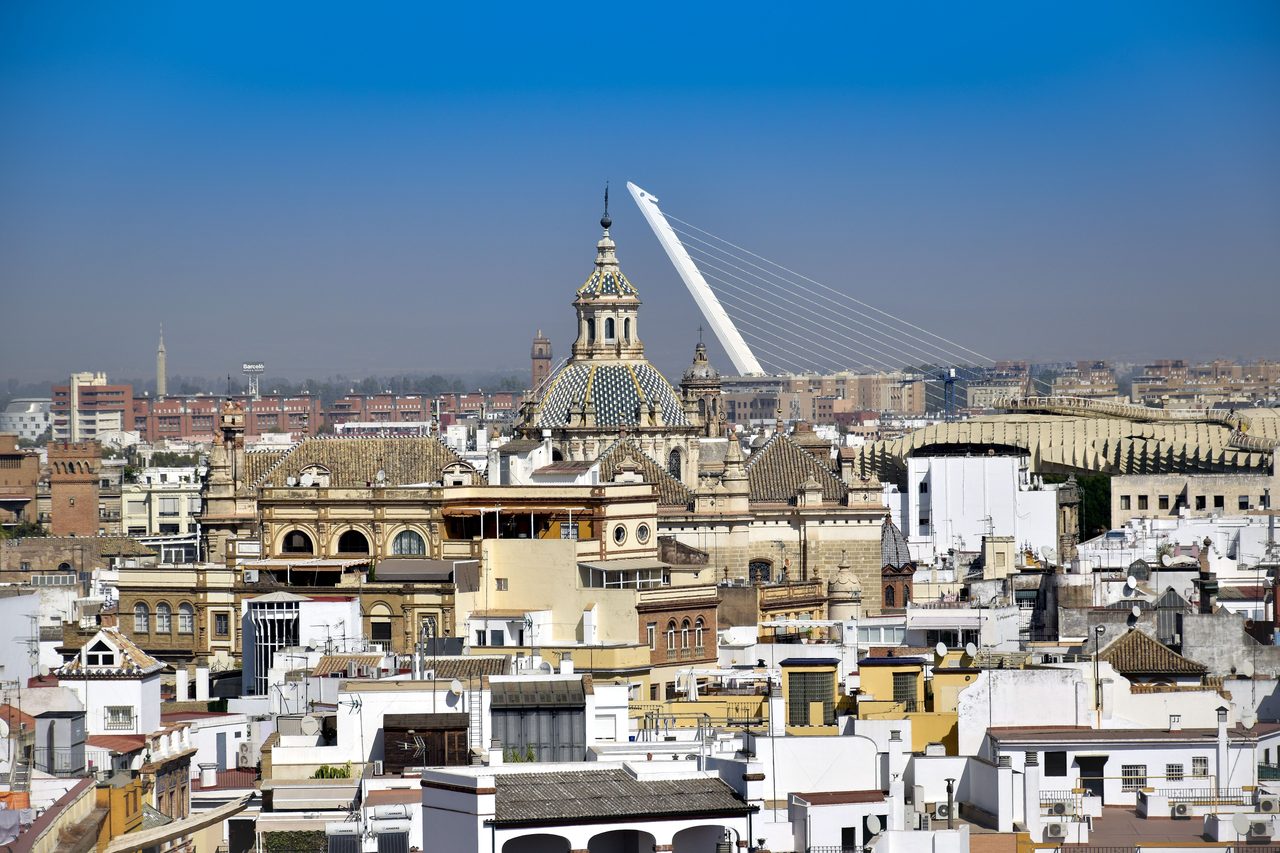
Andalusia is Spain's southernmost autonomous community, renowned for its rich Moorish heritage, stunning Baroque architecture, and vibrant flamenco culture. Home to iconic cities like Seville, Granada, and Córdoba, the region blends centuries of history with sun-soaked Mediterranean beaches and dramatic natural landscapes.
Andalusia captivates visitors with its magnificent Moorish palaces, whitewashed hilltop villages, and some of Europe's finest cuisine. The region's eight provinces — Seville, Granada, Córdoba, Málaga, Cádiz, Huelva, Almería, and Jaén — each offer distinct landscapes from the Sierra Nevada mountains to Costa del Sol beaches. Andalusia's deep cultural roots, passionate arts scene, and warm Mediterranean climate make it one of Spain's most beloved travel destinations.
The 12 destinations our editors recommend — from iconic landmarks to under-the-radar finds.
La Alhambra
The most visited monument in Spain and one of the finest preserved medieval palace complexes in the world. The Nasrid Palaces (Comares Palace, Court of the Lions), Generalife gardens, and Alcazaba fortress together form an unmissable whole. Book the Nasrid Palaces entry specifically — this is timed and the key experience.
Mezquita-Catedral de Córdoba
One of the most extraordinary buildings on earth — a Great Mosque built from 784 onwards, later transformed by a cathedral built inside it in 1523. The forest of 856 columns and candy-striped arches of the mosque is astounding; the Gothic cathedral rising from its midst is a jarring but historically profound superimposition.
Real Alcázar de Sevilla
Seville's magnificent royal palace — one of the oldest continuously inhabited royal palaces in Europe. The Pedro I Palace is the finest example of Mudéjar architecture anywhere, built by Christian King Pedro I using Muslim craftsmen and artisans. The gardens are extraordinary.
Catedral de Sevilla y Giralda
The largest Gothic cathedral in the world — built on the site of the Great Mosque of Seville, retaining its minaret as the famous Giralda bell tower. Christopher Columbus's tomb is inside. The ramp up the Giralda (no steps) gives Seville's best views.
Barrio de Santa Cruz
Seville's enchanting former Jewish quarter — a labyrinth of white-painted narrow alleyways, orange-tree courtyards, and flower-draped balconies surrounding the cathedral and Real Alcázar. Some of the most atmospheric urban space in Europe.
Albaicín (Albayzín)
Granada's ancient Moorish hill quarter — a UNESCO World Heritage neighbourhood of whitewashed streets, Moorish houses (cármenes), and neighbourhood mosques stretching up the hill opposite the Alhambra. The Mirador de San Nicolás viewpoint gives the most famous view of the Alhambra and Sierra Nevada.
Recommended itineraries
Pick a length, follow the route. Each itinerary balances headline sights with breathing room.
5-Day Andalusia Explorer
Day 1Arrive in Andalusia, explore city center
Day 2Visit top attractions and museums
Day 3Day trip to nearby highlights
Day 4Local markets and hidden gems
Day 5Final sightseeing, departure
7-Day Classic Andalusia
Days 1-2Andalusia city highlights
Days 3-4Regional exploration
Days 5-6Cultural immersion and local experiences
Day 7Return and departure
14-Day Ultimate Andalusia
Days 1-3Andalusia comprehensive city tour
Days 4-6Northern region exploration
Days 7-9Eastern highlights
Days 10-12Southern attractions
Days 13-14Return to Andalusia, departure
Where to stay in Andalusia
Three tiers, every traveller covered — from cost-conscious to flagship hotels.
Budget €50
Hostels, budget hotels, and guesthouses offer affordable stays without sacrificing experience.
Mid-range €120
Boutique hotels and well-located accommodations provide comfort and convenience at reasonable prices.
Luxury €350+
World-class resorts and premium hotels deliver unforgettable experiences.
Hotel Alfonso XIII
Seville · $$$$
Seville's most iconic hotel, a grand neo-Mudéjar palace commissioned by King Alfonso XIII for the 1929 Ibero-American Exposition. The stunning courtyard, Moorish archways, and azulejo-tiled interior make it one of Spain's most photographed hotels. World-class service, three restaurants, and a stunning pool. Steps from the Real Alcázar.
The only hotel inside the Alhambra grounds, housed in a former 15th-century Franciscan convent where Queen Isabella and Christopher Columbus's remains once lay. Waking up to Alhambra views and access to the complex before gates open to the public is an unforgettable privilege. Book months in advance.
Málaga's grandest hotel, a restored Belle Époque palace facing the Mediterranean, originally built in 1926 as the Palacio del Comercio. 200 rooms and suites across a stunning neo-Gothic Venetian building. Stunning rooftop pool with sea views, award-winning spa, and two restaurants. The best address in Málaga.
A magnificent 16th-century Renaissance palace with Roman archaeological remains visible in the courtyard. 53 beautifully appointed rooms and suites surrounding a central patio. The Senzone restaurant is among Córdoba's finest. The hotel seamlessly blends historic palatial architecture with modern luxury — Roman ruins visible under glass floors.
Cafés, neighbourhood gems, and tasting menus worth the table reservation.
Eslava
Modern Andalusian Tapas · $$
Consistently voted one of Seville's best tapas bars, Eslava has won Spain's prestigious 'best tapa' award multiple times. Its signature tapa — slow-cooked egg yolk on spinach cream with caramelised onion — is legendary. Expect queues; arrive early or at opening.
El Rinconcillo
Traditional Sevillano Tapas · $$
Seville's oldest bar, established in 1670 and still serving tapas over its original zinc counter. Barmen chalk your bill directly onto the wooden bar. Classic Sevillano tapas including espinacas con garbanzos (spinach and chickpeas), jamón, and salmorejo. The atmosphere is irreplaceable.
La Azotea
Creative Modern Tapas · $$
Creative contemporary tapas with quality ingredients in a stylish setting. Has multiple locations across Seville. Known for inventive combinations of local produce, outstanding natural wine list, and buzzing atmosphere. Advance booking strongly recommended.
Bar Alfalfa
Classic Sevillano Tapas · $
A beloved, perpetually busy classic tapas bar on the corner of the Alfalfa plaza. No-frills but excellent quality traditional tapas at honest prices. Standing room mostly, with outdoor tables in summer. Gets very busy on weekend evenings — that's part of the charm.
El Último Mono
Juice & Brunch · $
A popular juice bar and brunch spot in central Seville, beloved by locals and visitors alike for its fresh-pressed juices, excellent coffee, avocado toasts, and healthy breakfasts. One of Seville's best spots to start the day.
Bodegas Campos
Traditional Cordoban · $$
Córdoba's most celebrated restaurant, established in 1908 in a converted wine bodega. Multiple dining rooms decorated with wine barrels, antiques, and autographed photos of celebrity visitors. Classic Cordoban dishes — salmorejo, rabo de toro, berenjenas con miel — prepared with exceptional quality. A Córdoba institution.
Andalusia is well-connected by AVE high-speed trains between major cities, with buses serving smaller towns
AVE High-Speed Train
Connects Seville, Córdoba, Granada, and Málaga
Cost: €20-60
Bus (ALSA)
Serves all provinces and smaller towns
Cost: €5-25
Rental Car
Best for exploring rural areas and Costa de la Luz
Cost: €25-50/day
Budget breakdown
Daily spend by tier in EUR, broken out by category.
Category
Budget
Mid-range
Luxury
Accommodation
€20
€70
€200+
Food (per day)
€15
€30
€80
Transportation
€8
€10
€40
Activities
€7
€10
€30
Daily total
€50
€120
€350+
Best time to visit Andalusia
Weather through the year in Spain
Best timeShoulderWorth avoiding
Average daytime temperature in °C. Figures are for Spain.
Essential travel tips
Lunch is the main meal (2-4 PM), many restaurants closed for siesta
Tapas are often free with drinks in Granada
Book the Alhambra at least 3 weeks in advance
Avoid driving in old city centers — use park-and-ride
Hidden gems
Off-the-beaten-path corners most travellers miss.
Setenil de las Bodegas
Village built into rock overhangs in Cádiz province
Cádiz
Baeza
Renaissance city and UNESCO World Heritage Site in Jaén
Jaén
Cabo de Gata
Volcanic coastline with pristine beaches in Almería
Almería
Safety information
INFO
Be vigilant against pickpockets in crowded tourist areas — Seville's historic centre (especially around the Cathedral and Santa Cruz), Granada's Albaicín and Sacromonte, and Málaga's port area have the highest concentration of pickpocket activity.
INFO
Bag snatching by moped or bicycle is a risk in some urban areas, particularly in Seville. Don't hang bags on the back of chairs at outdoor restaurants or carry bags on the traffic-side of pavements.
INFO
Leave nothing visible in rental cars. Car break-ins targeting tourists are a persistent problem at popular viewpoints (miradores) and car parks near attractions.
INFO
Seville and Córdoba are the hottest cities in Europe — temperatures regularly exceed 40°C in July and August, with recorded highs above 47°C in Seville. Heat exhaustion and heatstroke are genuine risks.
INFO
Summer hiking in Andalusia's mountains and gorges carries serious heat risks. Never start long hikes after 10 AM in summer. The Caminito del Rey and Sierra Nevada can have sudden weather changes.
INFO
The Alhambra's extreme popularity has created a market for ticket touts and online scams. Only book directly through the official Alhambra website (alhambra-patronato.es). Third-party sites charge inflated prices, and touts sometimes sell invalid tickets.
INFO
Use licensed official taxis (white cabs with green light) or download Uber/Bolt apps. Unlicensed taxi touts operate around Málaga airport, Seville railway station, and major tourist areas.
INFO
The Costa de la Luz (Atlantic coast in Cádiz and Huelva) can have strong currents, undertows, and powerful waves, particularly at beaches exposed to Atlantic swells and Levante/Poniente winds.
INFO
Andalusia is generally safe and welcoming for LGBTQ+ travellers. Spain was among the first countries to legalise same-sex marriage (2005). Major cities — particularly Seville, Málaga, and Granada — have active LGBTQ+ communities and venues.
INFO
In Granada's Albaicín and Sacromonte, and around Seville's Cathedral, women sometimes approach tourists offering 'free' flowers or rosemary then aggressively demand payment or attempt to read your palm (and distract while an accomplice pickpockets).
INFO
During Seville's Feria de Abril, Semana Santa (Holy Week), and Córdoba's Feria, crowds are enormous. Pickpockets are active during these events.
INFO
Wild boar (jabalí) are present in Doñana, Sierra de Cazorla, and Sierra Nevada. They are generally shy but can become aggressive if they have young.
INFO
As in all tourist nightlife destinations, drink spiking has been reported in Málaga's Soho nightlife district and parts of Seville's Alameda de Hércules.
Frequently asked questions
Do I need a visa to visit Andalusia?
Entry requirements follow Spain/EU Schengen rules. EU citizens need only a national ID. Non-EU visitors may need a Schengen visa for stays over 90 days. Requirements vary by nationality, so check with your nearest embassy or the official immigration website before traveling.
What currency is used in Andalusia?
The currency in Andalusia is the Euro (EUR). ATMs are widely available in cities and tourist areas. Credit cards are accepted at most hotels and restaurants, but carry cash for markets and smaller establishments.
What language is spoken in Andalusia?
The main language(s) spoken in Andalusia: Spanish, Andalusian Spanish. In tourist areas, English is generally understood. Learning a few basic phrases in the local language is appreciated by locals.
How do I get around Andalusia?
Andalusia has excellent transport connections between major cities via AVE high-speed trains and ALSA buses. Rental cars are recommended for rural areas, white villages, and coastal routes. All major cities have local bus networks, taxis, and ride-hailing apps.
Explore Andalusia by city
The cities below have their own guides — hotels, attractions and where to eat, in depth.