Balearic Islands · 25 Places · Best May, June, September, October
Balearic Islands
The Balearic Islands are an archipelago of four main islands — Mallorca, Menorca, Ibiza, and Formentera — set in the western Mediterranean off the eastern coast of Spain. Renowned for their crystalline turquoise waters, dramatic limestone mountains, and a stunning array of hidden coves, the islands attract everyone from beach lovers and hikers to world-class clubbers and luxury travelers. Each island has its own distinct character: Mallorca offers the most variety with its Gothic capital Palma, the UNESCO-listed Tramuntana mountains, and a world-class food scene; Menorca is a UNESCO Biosphere Reserve celebrated for its prehistoric monuments and pristine wild beaches; Ibiza is globally famous for its nightlife and bohemian spirit; and tiny Formentera offers some of the Mediterranean's most extraordinary beach scenery.
The Balearic Islands offer an unparalleled combination of natural beauty, history, and lifestyle. Mallorca's Serra de Tramuntana mountain range, a UNESCO World Heritage Site, provides dramatic scenery for hikers and cyclists, while the island's Gothic capital Palma has an outstanding food and culture scene. Menorca's prehistoric megalithic monuments and near-pristine coastline make it the quieter, more culturally rich destination. Ibiza's world-famous party scene coexists with bohemian artisan markets and stunning natural landscapes, while Formentera's extraordinary clarity of water rivals the Maldives in beauty.
The 25 destinations our editors recommend — from iconic landmarks to under-the-radar finds.
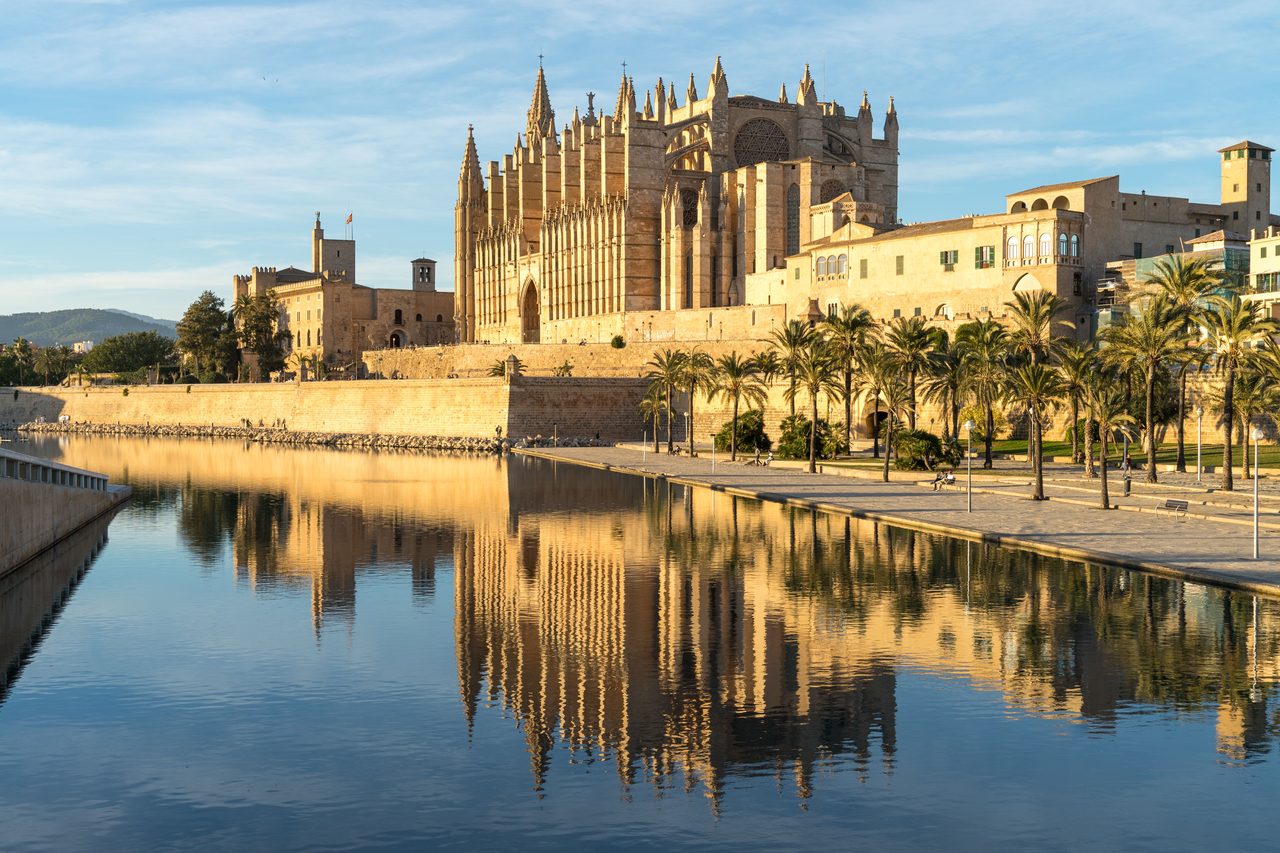
Cathedral La Seu, Palma
One of the greatest Gothic cathedrals in Europe, Palma's Cathedral rises dramatically from the waterfront with soaring buttresses and some of the world's largest stained glass windows. The interior was partially redesigned by Antoni Gaudí, who added the unusual wrought-iron canopy over the altar between 1904-1914. The rose window with its 1,236 pieces of colored glass floods the interior with ethereal golden light on winter afternoons.
Serra de Tramuntana (UNESCO World Heritage Site)
The Tramuntana mountain range running along Mallorca's northwest coast was declared a UNESCO World Heritage Cultural Landscape in 2011 for its ancient agricultural terracing, olive groves, and historic stone architecture. Stretching 90km from Andratx to Pollença, the mountains reach 1,445m at Puig Major and offer spectacular scenery of rugged peaks plunging into the deep blue Mediterranean. The MA-10 scenic road through the mountains is one of Europe's most beautiful drives.
Dalt Vila (Old Town of Ibiza) - UNESCO World Heritage
Ibiza's fortified old city of Dalt Vila is a UNESCO World Heritage Site and one of the best-preserved Renaissance fortifications in the Mediterranean. The hilltop citadel is surrounded by imposing 16th-century walls up to 25m high, enclosing a labyrinth of whitewashed medieval streets leading to the Cathedral of Eivissa at the summit. The views from the bastion walls over the harbor and surrounding islands are exceptional, particularly at sunset.
Naveta des Tudons, Menorca
The Naveta des Tudons is the oldest megalithic monument in the Balearic Islands and one of the best-preserved prehistoric buildings in all of Europe, dating to approximately 1200-1000 BC. This inverted-boat-shaped stone chamber was used as a collective ossuary, containing the bones of over 100 individuals. Standing nearly 4 meters tall and built from precisely fitted limestone blocks without mortar, it is a remarkable feat of Bronze Age engineering.
Cala Macarella & Macarelleta, Menorca
Widely considered the most beautiful beach in Menorca and one of the finest in the entire Mediterranean, Cala Macarella is a pristine horseshoe-shaped cove of turquoise water enclosed by towering pine-clad limestone cliffs. Its smaller sibling Macarelleta, a 10-minute walk away, is even more secluded with naturist bathing. The extraordinary water clarity and dramatic natural setting make this one of the most photographed beaches in Spain.
Real Cartuja de Valldemossa
The Royal Charterhouse of Valldemossa is a former Carthusian monastery set dramatically in the Tramuntana mountains, famous worldwide as the winter residence of composer Frédéric Chopin and writer George Sand in 1838-39. The beautifully preserved complex includes the monks' private cells, apothecary, and gardens, plus a dedicated museum containing Chopin's actual piano and handwritten musical manuscripts. The surrounding village of Valldemossa is one of Mallorca's most picturesque.
Recommended itineraries
Pick a length, follow the route. Each itinerary balances headline sights with breathing room.
5-Day Balearic Islands Explorer
Day 1Arrive in Balearic Islands, explore city center
Day 2Visit top attractions and museums
Day 3Day trip to nearby highlights
Day 4Local markets and hidden gems
Day 5Final sightseeing, departure
7-Day Classic Balearic Islands
Days 1-2Balearic Islands city highlights
Days 3-4Regional exploration
Days 5-6Cultural immersion and local experiences
Day 7Return and departure
14-Day Ultimate Balearic Islands
Days 1-3Balearic Islands comprehensive city tour
Days 4-6Northern region exploration
Days 7-9Eastern highlights
Days 10-12Southern attractions
Days 13-14Return to Balearic Islands, departure
Where to stay in Balearic Islands
Three tiers, every traveller covered — from cost-conscious to flagship hotels.
Budget €60
Hostels, budget hotels, and guesthouses offer affordable stays without sacrificing experience.
Mid-range €160
Boutique hotels and well-located accommodations provide comfort and convenience at reasonable prices.
Luxury €500+
World-class resorts and premium hotels deliver unforgettable experiences.
Belmond La Residencia
Deià, Tramuntana Mountains · €€€€
Mallorca's most legendary luxury hotel occupies two beautifully restored 16th and 17th-century manor houses in the artistic village of Deià. Set against the dramatic backdrop of the Tramuntana mountains with views to the sea, this intimate 69-room retreat offers world-class service, two pools, a spa, tennis courts, and the Michelin-recommended El Olivo restaurant.
An extraordinary conversion of a 19th-century military fortress on a private rocky peninsula south of Palma, with just 24 uniquely designed rooms carved into the stone caverns and ramparts. The sea-level infinity pool, Michelin-starred A Table restaurant, and complete privacy make this one of the most distinctive luxury hotels in the world.
Opened in 1929 on Mallorca's most spectacular beach, Hotel Formentor has hosted royalty, celebrities, and heads of state for nearly a century. The elegant 5-star resort sits on the pristine Platja de Formentor beach surrounded by pine forests, with multiple pools, a kids club, and the finest beach setting on the island.
Perched 180 meters above the sea on Ibiza's dramatic wild northwest coast, this landmark hotel offers an experience unlike any other on the island with cascading seawater terraced pools, stunning panoramic views, and the finest spa on the island. The architecture is inspired by traditional Ibizan farmhouses and is entirely adult-oriented.
Cafés, neighbourhood gems, and tasting menus worth the table reservation.
Marc Fosh Restaurant
Modern Mediterranean · €€€€
Michelin-starred restaurant in the elegant Convent hotel in Palma's historic center. Chef Marc Fosh creates inventive Mediterranean dishes using locally sourced Mallorcan ingredients in a beautiful converted cloister setting.
Adrián Quetglas Restaurant
Creative Mediterranean · €€€€
One of Mallorca's most celebrated fine dining experiences, serving highly creative cuisine with Russian and Mediterranean influences from acclaimed chef Adrián Quetglas. Elegant setting in Palma's old town.
Es Racó d'es Teix
Mediterranean French · €€€€
Romantic Michelin-starred restaurant in Deià with a terrace overlooking the mountain village and valley. Chef Josef Sauerschell creates exquisite Mediterranean cuisine using produce from his own garden.
Ca n'Alfredo
Traditional Menorcan · €€€
A beloved Mahón institution since 1938, Ca n'Alfredo is where locals come for authentic Menorcan cuisine in a no-nonsense setting. Their caldereta de llagosta (lobster stew) is considered the island's best.
Es Rebost de Can Faustino
Traditional Mallorcan · €€
Rustic restaurant in a restored Mallorcan cellar in the old town, serving hearty traditional dishes including tumbet (layered vegetable bake), llom amb col (pork with cabbage), and excellent local wines.
Mercat de l'Olivar (Food Hall)
Various · €-€€
Palma's main covered market is the best place to taste multiple Mallorcan specialties under one roof. Dozens of stalls offer fresh seafood, charcuterie, cheeses, sobrassada, and local produce alongside tapas bars.
The Balearic Islands are served by three international airports (Palma, Mahón, Ibiza) and connected to mainland Spain and each other by ferry. Within each island, public buses, taxis, and car rentals are the main transport options.
Ferry (inter-island)
Baleàlia Lines and Trasmediterranea ferries connect all four islands; fast ferries take 35-90 minutes
Cost: €25-50 per person
Flight (inter-island)
Air Europa and Iberia Express offer 30-minute flights between islands; good for tight schedules
Cost: €30-80
Bus (TIB)
Balearic Islands public bus network (TIB) covers major towns and beaches on each island
Cost: €1.75-5
Taxi
Available at airports, town centers, and by phone; metered but island-specific rates
Cost: €10-25 typical fare
Car Rental
Essential for exploring remote beaches and countryside; all major companies at airports
Cost: €30-70/day
Scooter/Motorbike
Popular in Formentera and Ibiza; many rental shops near ports and town centers
Cost: €30-50/day
Bicycle
Excellent in Formentera (flat) and around coastal towns; cycling routes in Menorca
Cost: €10-20/day rental
Budget breakdown
Daily spend by tier in EUR, broken out by category.
Category
Budget
Mid-range
Luxury
Accommodation
€25
€100
€350+
Food (per day)
€18
€40
€100+
Transportation
€10
€12
€30
Activities
€7
€18
€50+
Daily total
€60
€160
€500+
Best time to visit Balearic Islands
Weather through the year in Balearic Islands
Best timeShoulderWorth avoiding
Average daytime temperature in °C. Figures are for Balearic Islands.
Essential travel tips
Visit in May-June or September-October to avoid peak crowds and prices
Book ferries between islands weeks in advance in summer
Rent a car to reach the best hidden beaches
Try the menú del día for excellent value lunches
Learn a few words of Catalan - locals appreciate it
Hidden gems
Off-the-beaten-path corners most travellers miss.
Cala Varques, Mallorca
Unmarked wild beach with sea caves, accessible only via 40-minute forest walk from a rough car park. No facilities, no crowd management - one of Mallorca's last genuinely wild beaches.
East Mallorca, near Porto Cristo
Cap de Cavalleria, Menorca
The windswept northernmost point of Menorca with Roman ruins, a 19th-century lighthouse, and dramatic views across open sea. Almost always uncrowded.
North Menorca, near Es Mercadal
Benirràs Beach Sunday Drum Circle, Ibiza
Every Sunday evening in summer, Ibiza's bohemian hippy culture comes alive at Benirràs beach with spontaneous drum circles around the Es Cap des Falcó rock at sunset - free, authentic, and magical.
North Ibiza, near Sant Joan
Binibèquer Vell, Menorca
A 1970s artificial fishing village in southern Menorca built to look centuries old, with impossibly picturesque whitewashed passages, steps, and overhanging buildings around a tiny cove.
South Menorca, near Sant Lluís
Cala Figuera, Mallorca
One of Mallorca's most authentic and unspoilt fishing villages, where traditional llaüts (wooden fishing boats) still moor in the narrow fjord-like inlet and fishermen mend their nets on the quay.
Southeast Mallorca, near Santanyí
Safety information
INFO
Use high-factor sunscreen (SPF 50+) year-round - the Mediterranean sun is intense even in spring and autumn
INFO
Never leave valuables, passports, or electronics visible or unattended on beaches
INFO
Watch for pickpockets in Palma's busy markets, tourist areas, and at Ibiza's nightlife venues
INFO
Only use licensed taxis or ride-hailing apps; avoid unofficial taxis at airports and clubs
INFO
Drink water frequently - heatstroke is a real risk in summer when temperatures exceed 35°C
INFO
When swimming, check for jellyfish warnings (bandera medusa signs) before entering the water
INFO
Respect beach flag warnings: red flag means no swimming; yellow means caution; green is safe
INFO
If hiking in the Tramuntana, always carry water, tell someone your route, and bring a map
INFO
In Ibiza and Palma nightlife areas, keep your drink in sight and don't accept drinks from strangers
INFO
Be cautious of drink spiking in Ibiza clubs - symptoms can feel like alcohol intoxication
INFO
Watch for opportunistic theft from rental cars, especially when parked at beach access points
INFO
Apply insect repellent in rural and wetland areas, especially near s'Albufera nature reserve
INFO
The Tramuntana mountain roads are narrow and winding - drive carefully, especially in rain
INFO
Check sea conditions before kayaking or water sports - afternoon winds can be strong
INFO
Keep emergency numbers and your hotel address written down in case your phone battery dies
Frequently asked questions
Is Balearic Islands safe to visit in 2026?
The Balearic Islands are one of Spain's safest tourist destinations with low levels of violent crime. Standard precautions regarding petty theft and sun/sea safety are the main concerns for most visitors. Emergency services: police at 091 (National Police) or 112 (Emergency), medical at 112 (Emergency) or 061 (Medical Emergency).
What is the best time to visit Balearic Islands?
The best time to visit Balearic Islands is May, June, September, October. The Balearic Islands enjoy a classic Mediterranean climate with hot, dry summers and mild, wetter winters. Annual sunshine exceeds 2,700 hours. Sea temperatures range from 14°C in winter to 27°C in Au
Do I need a visa to visit Balearic Islands?
Entry requirements follow Spain and EU Schengen rules. EU/EEA citizens need only a valid passport or national ID. Non-EU visitors should check Schengen visa requirements for their nationality. US, UK, Canadian, and Australian citizens can visit for up to 90 days without a visa. Requirements vary by nationality, so check with your nearest embassy or the official immigration website before traveling.
What currency is used in Balearic Islands?
The currency in Balearic Islands is the Euro (EUR). ATMs are widely available in cities and tourist areas. Credit cards are accepted at most hotels and restaurants, but carry cash for markets and smaller establishments.
What language is spoken in Balearic Islands?
The main language(s) spoken in Balearic Islands: Catalan (Balearic dialect), Spanish (Castilian). In tourist areas, English is generally understood. Learning a few basic phrases in the local language is appreciated by locals.
What are the top attractions in Balearic Islands?
The top attractions in Balearic Islands include Cathedral La Seu, Palma, Serra de Tramuntana (UNESCO World Heritage Site), Dalt Vila (Old Town of Ibiza) - UNESCO World Heritage, Naveta des Tudons, Menorca, and Cala Macarella & Macarelleta, Menorca. Each offers a unique experience, from historic landmarks to natural wonders.