Basque Country · 25 Places · Best June to September
Basque Country
The Basque Country (Euskadi) is an autonomous community in northern Spain nestled between the Cantabrian mountains and the Bay of Biscay, celebrated worldwide for its extraordinary gastronomy, avant-garde architecture, and fiercely proud cultural identity. Home to Bilbao's transformative Guggenheim Museum and San Sebastián's legendary pintxos bars, the region blends industrial heritage with breathtaking coastal scenery and lush green valleys. With more Michelin stars per capita than almost anywhere on earth, the Basque Country offers travelers a uniquely sophisticated yet deeply authentic Spanish experience.
The Basque Country is one of Spain's most prosperous and culturally distinct regions, occupying the southwestern corner of the Bay of Biscay. The region encompasses three provinces — Álava, Gipuzkoa, and Bizkaia — each offering distinct experiences from cosmopolitan Bilbao to elegant San Sebastián to the green interior. Basque culture, with its unique language (Euskara), traditions, and cuisine, sets this region apart from the rest of Spain and makes it one of Europe's most intriguing destinations.
The 25 destinations our editors recommend — from iconic landmarks to under-the-radar finds.
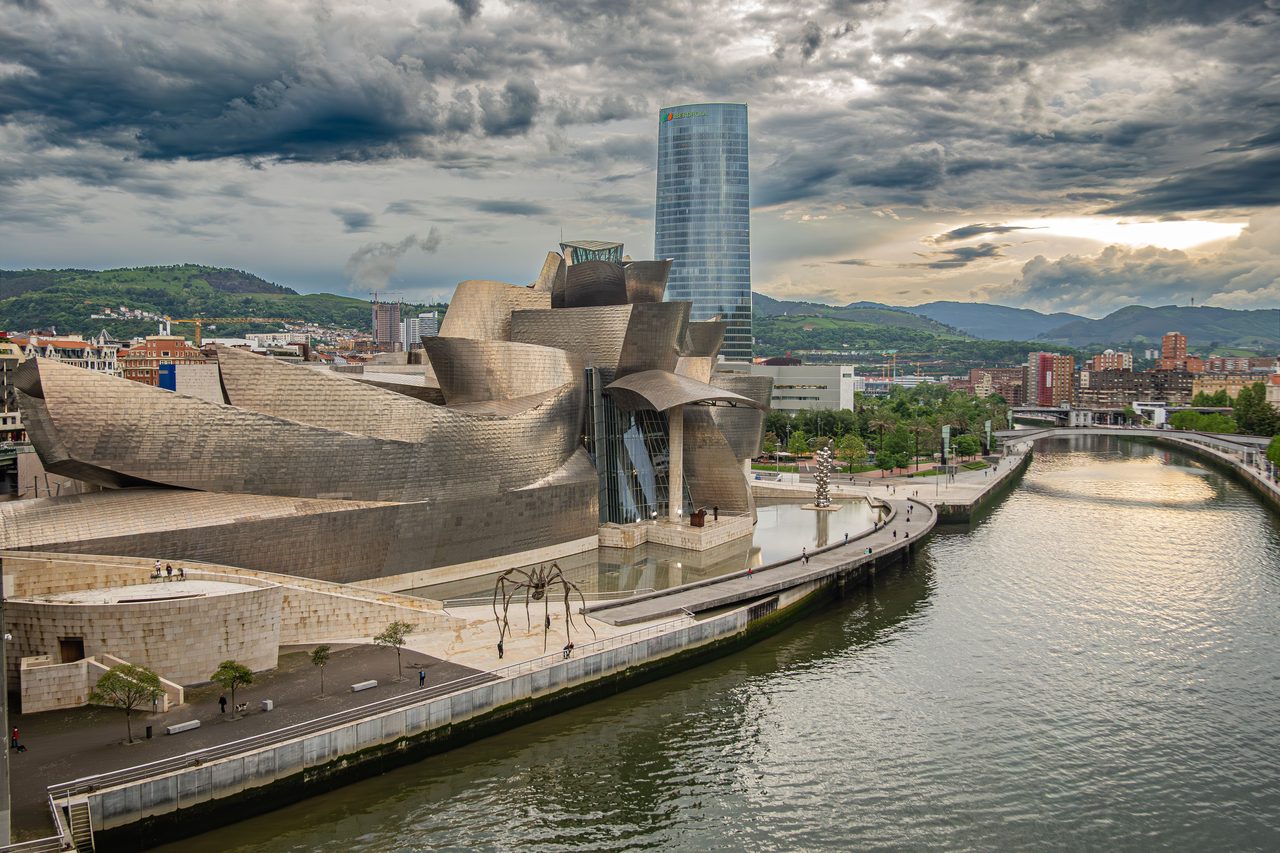
Guggenheim Museum Bilbao
Frank Gehry's iconic titanium-clad masterpiece is one of the most important modern art museums in Europe and a landmark of 20th-century architecture. The building itself is a work of art, with its undulating curves and shimmering titanium panels reflecting the Nervión River. Inside, the permanent collection spans modern and contemporary art from the 1950s to the present.
La Concha Beach
Consistently ranked among Europe's most beautiful urban beaches, La Concha is a perfect crescent of golden sand sheltered by the islands of Santa Clara and framed by elegant Belle Époque promenades. The calm, shallow waters make it ideal for swimming, while the sweeping views of Monte Urgull and Monte Igueldo are spectacular. The adjacent Paseo de La Concha boulevard is perfect for a morning stroll.
San Juan de Gaztelugatxe
This dramatic islet rising from the Bay of Biscay is connected to the mainland by a winding stone causeway with 241 steps leading to a 10th-century hermitage dedicated to St. John the Baptist. The breathtaking clifftop views and the sound of crashing Atlantic waves make this one of the most spectacular natural sites in northern Spain. The location gained international fame as a filming location in Game of Thrones.
Casco Viejo (Old Town) Bilbao
Bilbao's medieval old quarter, known as the Siete Calles (Seven Streets), is a labyrinth of narrow lanes filled with pintxos bars, traditional shops, and historic churches. Founded in the early 14th century, the Casco Viejo retains much of its original character with lively squares, the soaring Santiago Cathedral, and the iconic Art Nouveau Mercado de la Ribera on the riverside. It's the social heart of Bilbao and the best place to experience local life.
Parte Vieja (Old Town) San Sebastián
San Sebastián's old quarter is the epicentre of the city's legendary pintxos culture, where over 100 bars crowd narrow medieval streets serving the most creative and delicious bar snacks in Spain. The Plaza de la Constitución, once used as a bullring, is surrounded by numbered balcony apartments and lined with café terraces. The Basílica de Santa María del Coro dominates the skyline with its elaborate Baroque façade.
Monte Urgull
Rising behind San Sebastián's Parte Vieja, Monte Urgull is a wooded hill topped by the Castillo de la Mota fortress and a giant statue of Christ (Sagrado Corazón de Jesús) that watches over the city. The free park offers scenic walking trails through pine forests with spectacular views of La Concha bay, the city rooftops, and the distant mountains. The castle houses a military museum tracing San Sebastián's turbulent history.
Recommended itineraries
Pick a length, follow the route. Each itinerary balances headline sights with breathing room.
5-Day Basque Country Explorer
Day 1Arrive in Basque Country, explore city center
Day 2Visit top attractions and museums
Day 3Day trip to nearby highlights
Day 4Local markets and hidden gems
Day 5Final sightseeing, departure
7-Day Classic Basque Country
Days 1-2Basque Country city highlights
Days 3-4Regional exploration
Days 5-6Cultural immersion and local experiences
Day 7Return and departure
14-Day Ultimate Basque Country
Days 1-3Basque Country comprehensive city tour
Days 4-6Northern region exploration
Days 7-9Eastern highlights
Days 10-12Southern attractions
Days 13-14Return to Basque Country, departure
Where to stay in Basque Country
Three tiers, every traveller covered — from cost-conscious to flagship hotels.
Budget €55
Hostels, budget hotels, and guesthouses offer affordable stays without sacrificing experience.
Mid-range €130
Boutique hotels and well-located accommodations provide comfort and convenience at reasonable prices.
Luxury €400
World-class resorts and premium hotels deliver unforgettable experiences.
Hotel María Cristina
San Sebastián City Centre · $$$$
San Sebastián's most iconic hotel, this Belle Époque landmark opened in 1912 and faces the Urumea River with views of the Teatro Victoria Eugenia. A Luxury Collection property, it has hosted royalty, heads of state, and film stars attending the San Sebastián Film Festival for over a century.
This stylish design hotel stands directly opposite the Guggenheim Museum, offering guests front-row views of Frank Gehry's titanium masterpiece. The hotel features contemporary design by Javier Mariscal, a rooftop terrace, and a restaurant with panoramic views over the museum.
A San Sebastián institution since 1949, this elegant seafront hotel sits on the promenade above La Concha beach with unbeatable views of the bay. The belle époque building retains its grand character while offering modern comforts, and its prime location is unrivalled.
Set in a 10th-century castle within the walled old town of Hondarribia, this parador is one of the most atmospheric in Spain. Emperor Charles V used the fortress in the 16th century, and today guests sleep in stone-walled rooms with views over the Bidasoa estuary to France.
Cafés, neighbourhood gems, and tasting menus worth the table reservation.
Arzak
New Basque · $$$$
Arzak has held three Michelin stars since 1989, making it one of Spain's most enduring temples of gastronomy. Father-daughter duo Juan Mari and Elena Arzak blend Basque culinary tradition with avant-garde innovation in a family house in the outskirts of San Sebastián.
Mugaritz
Creative/Experimental · $$$$
Andoni Luis Aduriz's legendary restaurant in Rentería consistently ranks among the world's top 10 restaurants. Mugaritz pushes boundaries between cooking and conceptual art, offering a 20+ course experience designed to surprise, challenge, and delight.
Azurmendi
New Basque · $$$$
Three-Michelin-star chef Eneko Atxa's stunning restaurant in the hills above Bilbao is housed in a beautiful building incorporating a working greenhouse and txakoli winery. The experience begins with a tour of the garden and kitchen before the exceptional tasting menu.
Martin Berasategui
Modern Basque · $$$$
Renowned chef Martin Berasategui holds three Michelin stars at this beautifully rustic restaurant in the hills behind San Sebastián. Berasategui's cooking is classical yet creative, with an extraordinary precision that has made him one of Spain's most decorated chefs.
Etxebarri
Basque Grill · $$$$
Victor Arguinzoniz's legendary restaurant in the mountain village of Axpe is considered by many the best restaurant in the world, consistently ranking in the World's 50 Best list. The concept is deceptively simple — all cooking is done over wood fire in custom-made grills — but the results are transcendent.
La Viña
Basque/Pintxos · $$
Famous throughout the food world for its legendary burnt Basque cheesecake (tarta de queso), La Viña is an essential stop on any San Sebastián pintxos tour. The bar also serves excellent fresh fish dishes and traditional pintxos in a lively, no-frills setting in the old town.
The Basque Country has excellent public transport infrastructure. Bilbao has a modern metro, tram, and extensive bus network. San Sebastián is served by trams, buses, and EuskoTren. Vitoria-Gasteiz has an award-winning tram system. The three provincial capitals are well connected by ALSA coaches and RENFE trains, and the EuskoTren narrow-gauge railway links coastal towns between Bilbao and San Sebastián.
Bilbao Metro
Modern two-line metro designed by Norman Foster connecting Bilbao city and neighbouring towns; runs from 6 AM – midnight (2 AM weekends)
Cost: €1.70–2.50 depending on zones
EuskoTren
Narrow-gauge regional railway connecting coastal Basque towns from Bilbao to San Sebastián via Gernika, Lekeitio, and the coast
Cost: €2–10 depending on distance
Bilbao Tram (EuskoTran)
City tram running through central Bilbao connecting Atxuri station, Guggenheim, and the Ensanche
Cost: €1.70
San Sebastián Tram
Two tram lines connecting Amara station, city centre, and Gros neighbourhood
Cost: €1.75
ALSA/Pesa Bus
Comprehensive inter-city and regional bus services connecting all major Basque towns
Cost: €5–20 depending on route
RENFE Train
High-speed and regional trains connecting Bilbao and San Sebastián with Madrid and other Spanish cities
Cost: €10–90 depending on destination and class
Taxi/Rideshare
Taxis widely available; Cabify and MyTaxi apps work in Bilbao and San Sebastián
Cost: €8–15 for typical city ride
Budget breakdown
Daily spend by tier in EUR, broken out by category.
Category
Budget
Mid-range
Luxury
Accommodation
€25
€90
€250
Food (per day)
€15
€25
€100
Transportation
€8
€10
€25
Activities
€7
€15
€25
Daily total
€55
€130
€400
Best time to visit Basque Country
Weather through the year in Basque Country
Best timeShoulderWorth avoiding
Average daytime temperature in °C. Figures are for Basque Country.
Essential travel tips
Learn a few words in Euskara — locals greatly appreciate the effort
Pintxos bars are busiest Thursday–Sunday evenings
Book Michelin-starred restaurants months in advance
The Bilbao Metro is the easiest way to get around the city
Hidden gems
Off-the-beaten-path corners most travellers miss.
Funicular de Artxanda summit, Bilbao
Monte Urgull north face, San Sebastián
Calle Ledesma cocktail bars, Bilbao
Bar Bergara, Gros, San Sebastián
Skip the tourist pintxos bars near hotels; instead go to Gros for local favourites
Monte Urgull, San Sebastián
Monte Artxanda, Bilbao
Monte Igueldo, San Sebastián
Peine del Viento, San Sebastián
San Juan de Gaztelugatxe
Safety information
INFO
The Basque Country is one of the safest regions in Spain — exercise the same common-sense precautions you would in any European city
INFO
Keep an eye on your belongings in crowded pintxos bars, especially in the Parte Vieja (San Sebastián) and Casco Viejo (Bilbao) on busy weekend evenings
INFO
Use only licensed taxis or reputable apps like Cabify — rogue taxis are rare but unlicensed operators occasionally operate near tourist sites
INFO
Be cautious at night on isolated clifftop paths and coastal trails — the Basque coast can be treacherous with wet rocks and sudden waves
INFO
Respect red flag warnings on beaches — the Atlantic can produce powerful rip currents and sudden swells, particularly at surf beaches like Zurriola and Mundaka
INFO
San Juan de Gaztelugatxe requires advance reservations in summer — visiting without a reservation may result in being turned away at the car park
INFO
Mountain trails and coastal paths can be slippery, especially after rain — wear proper footwear and check weather forecasts before hiking
INFO
Pickpocketing can occur in crowded tourist areas; keep valuables in inside pockets or a money belt in busy pintxos bars
INFO
Road safety: The N-634 coastal road and mountain roads in the interior are winding and can be icy in winter — drive carefully
INFO
Emergency number 112 is free and available in English, Spanish, and Basque throughout the region
INFO
The Ertzaintza (Basque Police) are generally helpful to tourists; their tourist assistance number is 945 002 055
INFO
Swimming conditions vary significantly between beaches — La Concha is calm and safe while Zurriola and Laga can have strong currents
INFO
Tap water is safe to drink throughout the entire Basque Country
INFO
Travel insurance is strongly recommended to cover medical expenses, trip cancellation, and theft
Frequently asked questions
Is Basque Country safe to visit in 2026?
The Basque Country is a very safe destination for travelers with low levels of violent crime. The main risks are opportunistic pickpocketing in crowded tourist areas and natural hazards on the rugged Atlantic coastline. Emergency services: police at 112 (general) / 092 (local Basque police / Ertzaintza), medical at 112 (emergency) / 944 007 000 (Hospital de Basurto, Bilbao).
What is the best time to visit Basque Country?
The best time to visit Basque Country is June to September. The Basque Country has a temperate oceanic (Atlantic) climate, characterised by mild temperatures throughout the year, relatively high rainfall, and lush green landscapes. Coastal areas receive the mo
Do I need a visa to visit Basque Country?
Entry requirements follow Spain/EU rules. EU citizens enter freely; US, Canadian, Australian, and UK citizens can stay up to 90 days without a visa under the Schengen Agreement. Requirements vary by nationality, so check with your nearest embassy or the official immigration website before traveling.
What currency is used in Basque Country?
The currency in Basque Country is the Euro (EUR). ATMs are widely available in cities and tourist areas. Credit cards are accepted at most hotels and restaurants, but carry cash for markets and smaller establishments.
What language is spoken in Basque Country?
The main language(s) spoken in Basque Country: Spanish (Castilian), Basque (Euskara). In tourist areas, English is generally understood. Learning a few basic phrases in the local language is appreciated by locals.
What are the top attractions in Basque Country?
The top attractions in Basque Country include Guggenheim Museum Bilbao, La Concha Beach, San Juan de Gaztelugatxe, Casco Viejo (Old Town) Bilbao, and Parte Vieja (Old Town) San Sebastián. Each offers a unique experience, from historic landmarks to natural wonders.