Castile and León · 22 Places · Best April–June and September–October
Castile and León
Castile and León is Spain's largest autonomous community, a vast plateau region of golden plains, medieval fortresses, and UNESCO World Heritage cities. Home to Salamanca's university quarter, Segovia's Roman aqueduct, Ávila's ancient walls, and Burgos's Gothic cathedral, the region rewards slow travel with extraordinary depth of history and culture.
Stretching across the northern Meseta, Castile and León encompasses nine provinces—Salamanca, Burgos, Segovia, Ávila, Valladolid, León, Zamora, Palencia, and Soria—each anchored by a cathedral city. The region gave birth to the modern Spanish language and served as the political heartland of medieval Castile. Pilgrims have walked the Camino Francés through its towns for over a thousand years. Today visitors come to tour UNESCO-listed heritage zones, taste Ribera del Duero wines and lechazo (roast milk-fed lamb), and hike in the Sierra de Gredos and Picos de Europa.
The 22 destinations our editors recommend — from iconic landmarks to under-the-radar finds.
Salamanca Old City
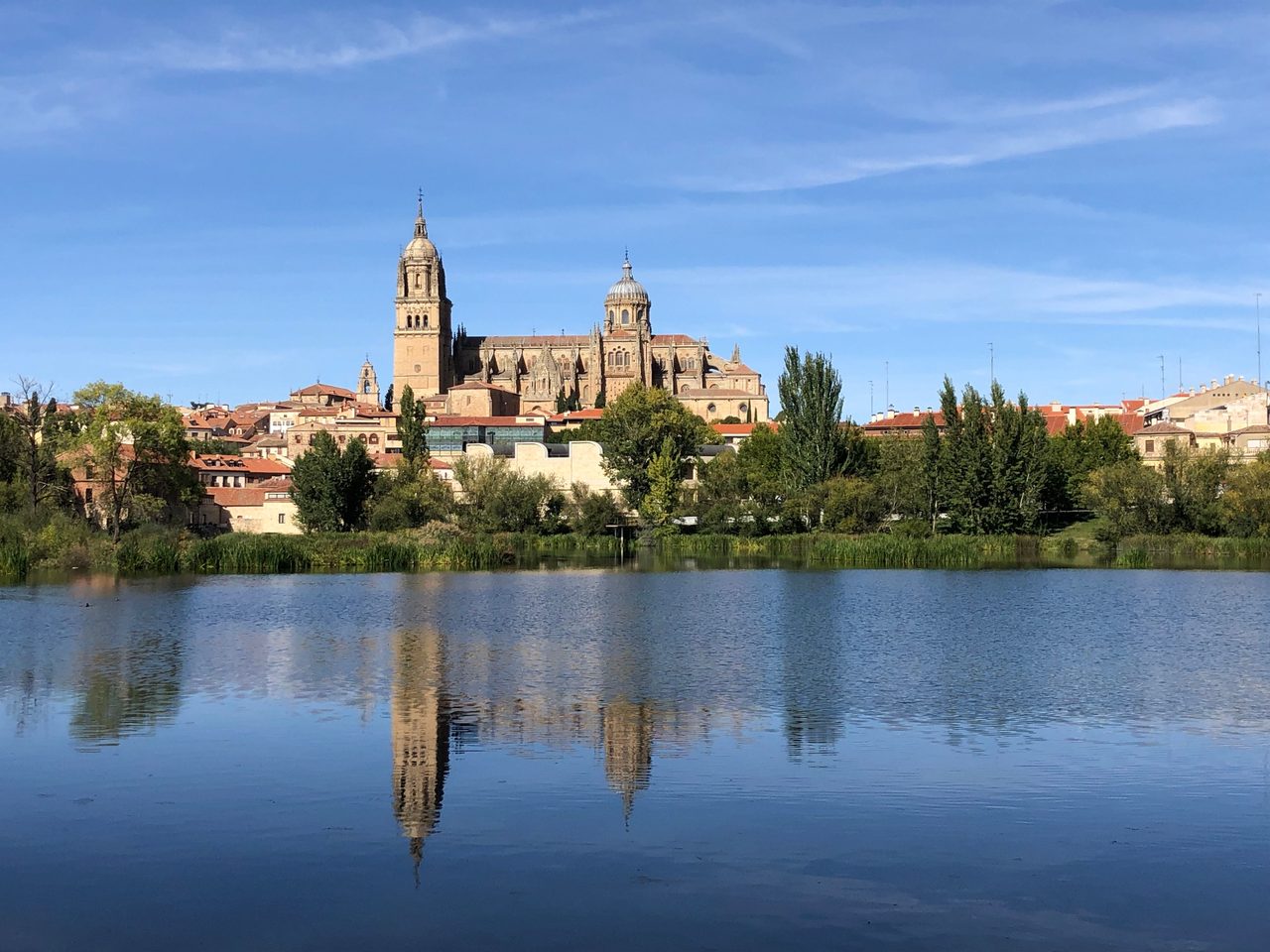
The historic core of Salamanca is built almost entirely from golden sandstone, which is why the light here changes the town's colour through the day. Its Plaza Mayor, an enclosed 18th-century square ringed by arcaded buildings, is the social hub, and the surrounding lanes connect the two cathedrals, the university district and a run of Renaissance and Baroque facades. It's a compact centre, so most of it is covered comfortably on foot in a day.
Segovia Roman Aqueduct
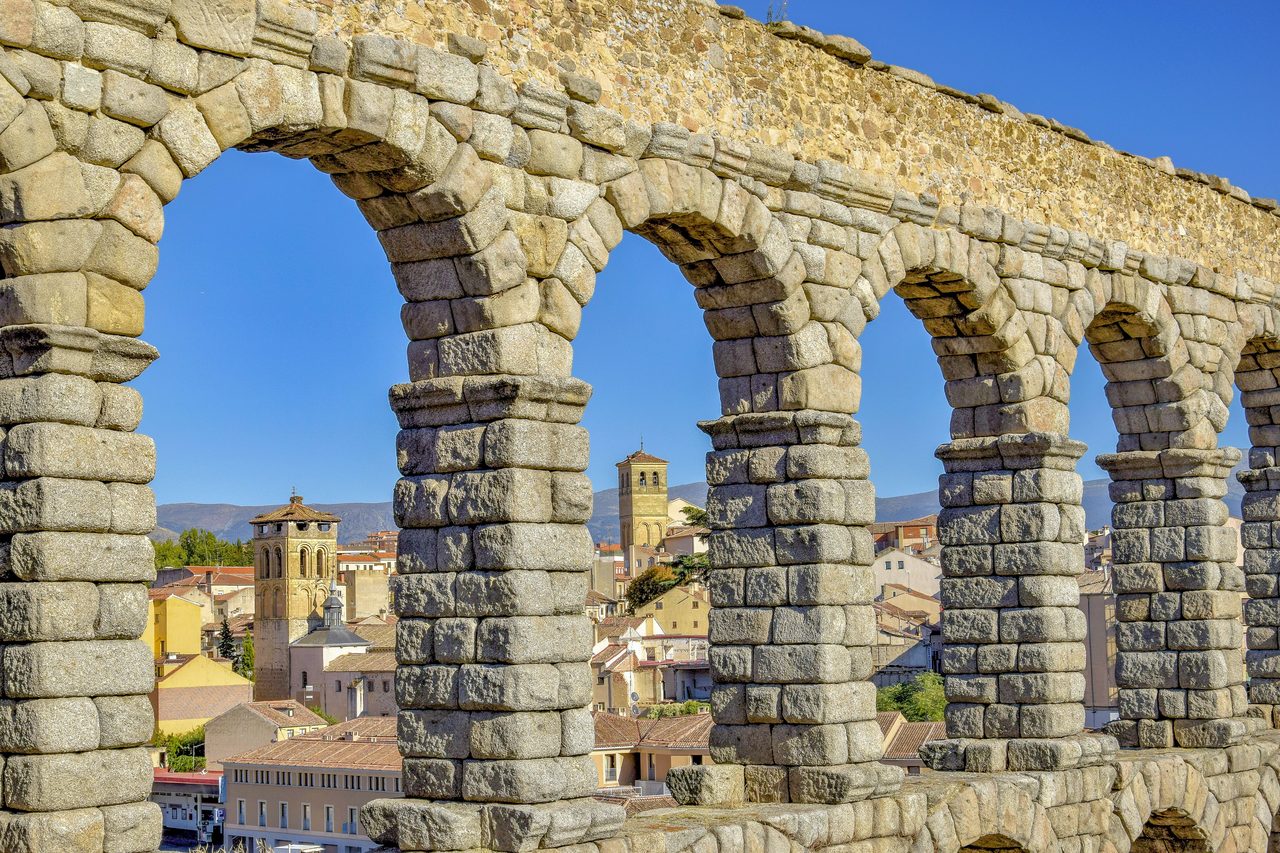
This double-tiered aqueduct bridge, over 800 metres of exposed granite blocks fitted together without mortar, carried water into Segovia from the Frío River until the 20th century. It crosses directly through the Plaza del Azoguejo, so the monument is not fenced off in a park but stands in the middle of everyday city life, cafes and buses passing beneath its arches. The tallest arches near the plaza give the clearest sense of its scale.
Alcázar of Segovia
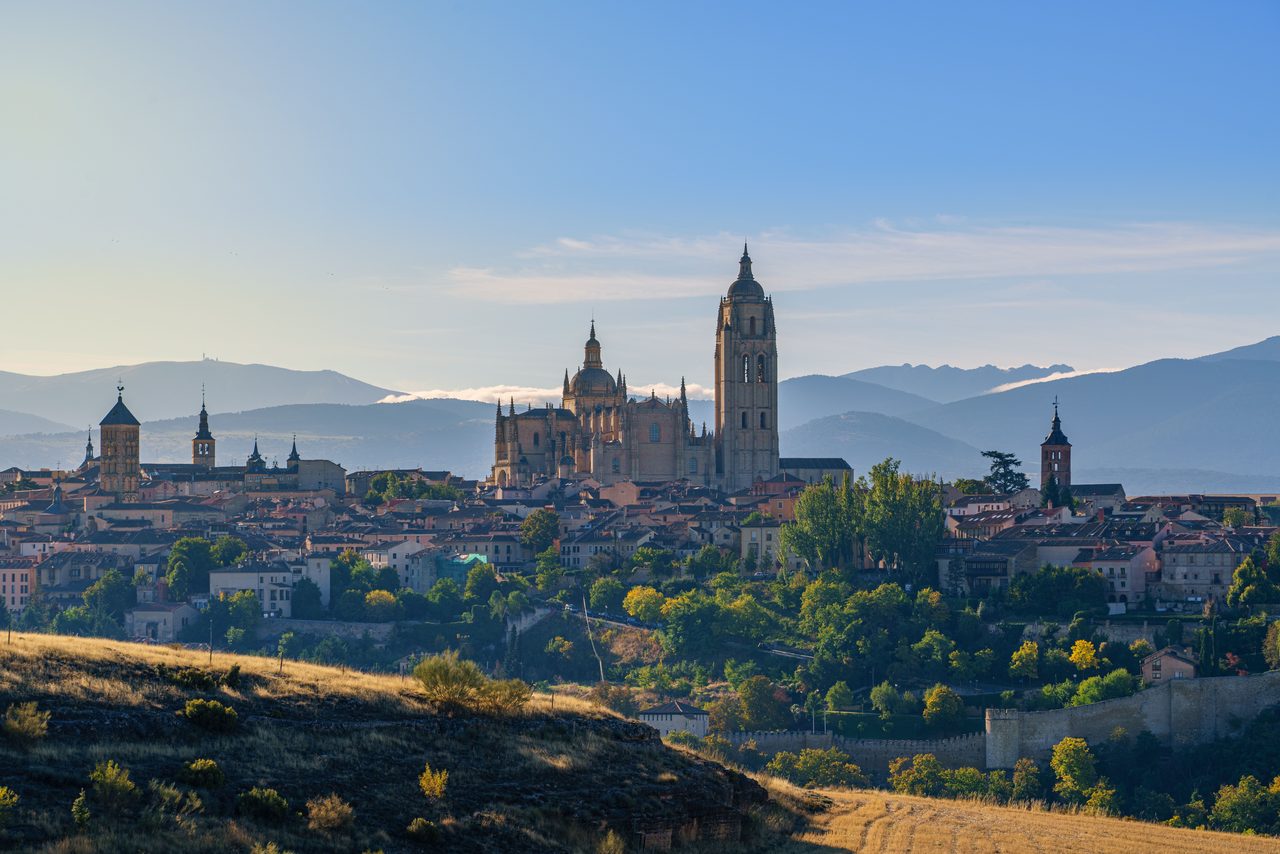
A fortified royal palace on a rocky spur above the confluence of two rivers, with a silhouette of turrets and a slate-roofed tower that is often cited as an influence on castle imagery in popular culture. It began as an Arab fortress, was expanded by the Castilian monarchy, and later housed a military academy after a 19th-century fire led to its reconstruction. Inside, the throne room, armoury and painted ceilings give a sense of its royal use.
Ávila Medieval City Walls
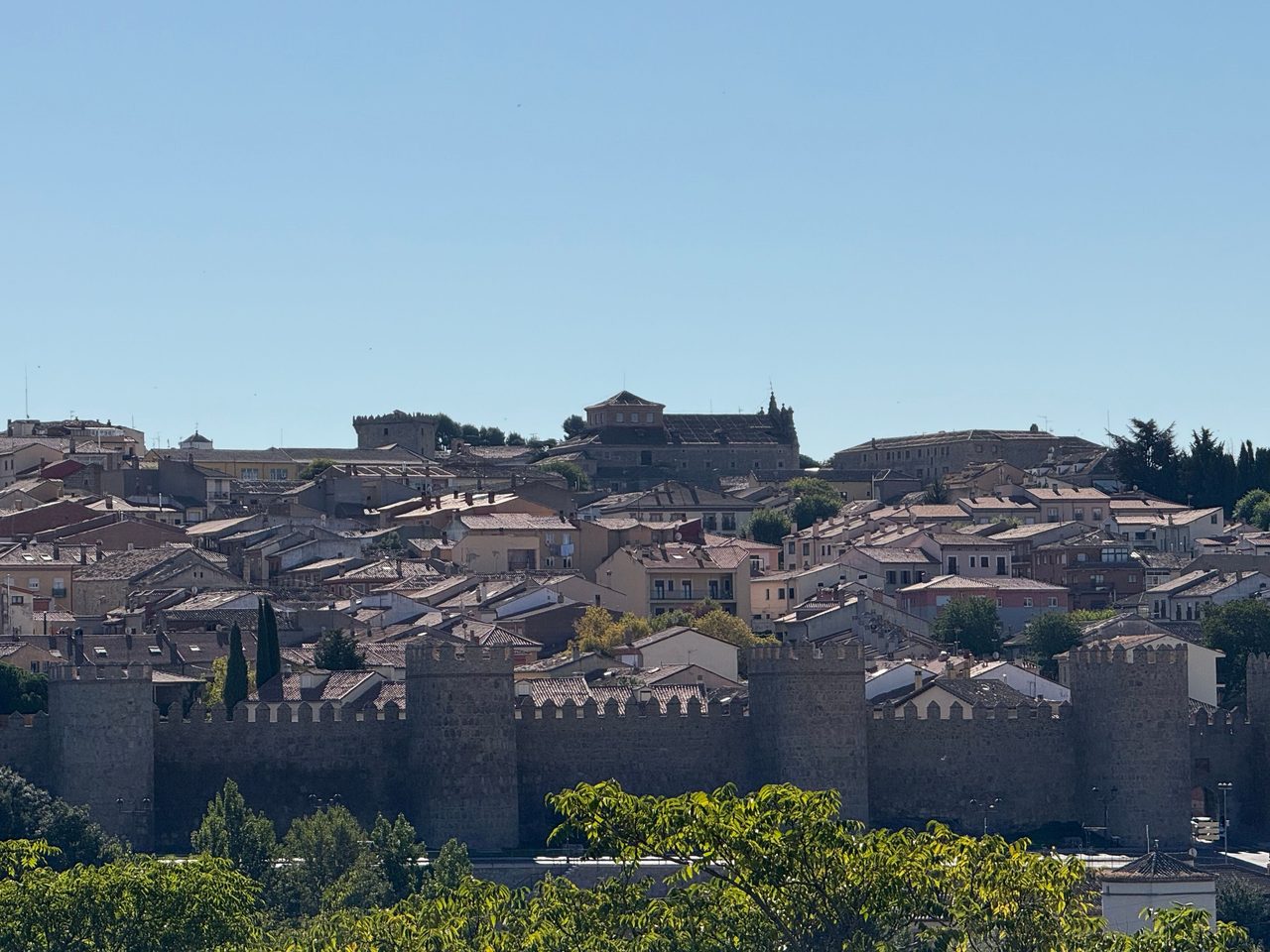
Ávila's walls form one of the most complete circuits of medieval fortification surviving in Spain, built from granite in the late 11th and 12th centuries with dozens of semicircular towers along their length. Only a portion of the walkway is open to visitors, running along the top between crenellations with views down into the old town on one side and out toward open country on the other. The walls entirely enclose the historic centre, so they're visible from almost anywhere in town.
Burgos Cathedral
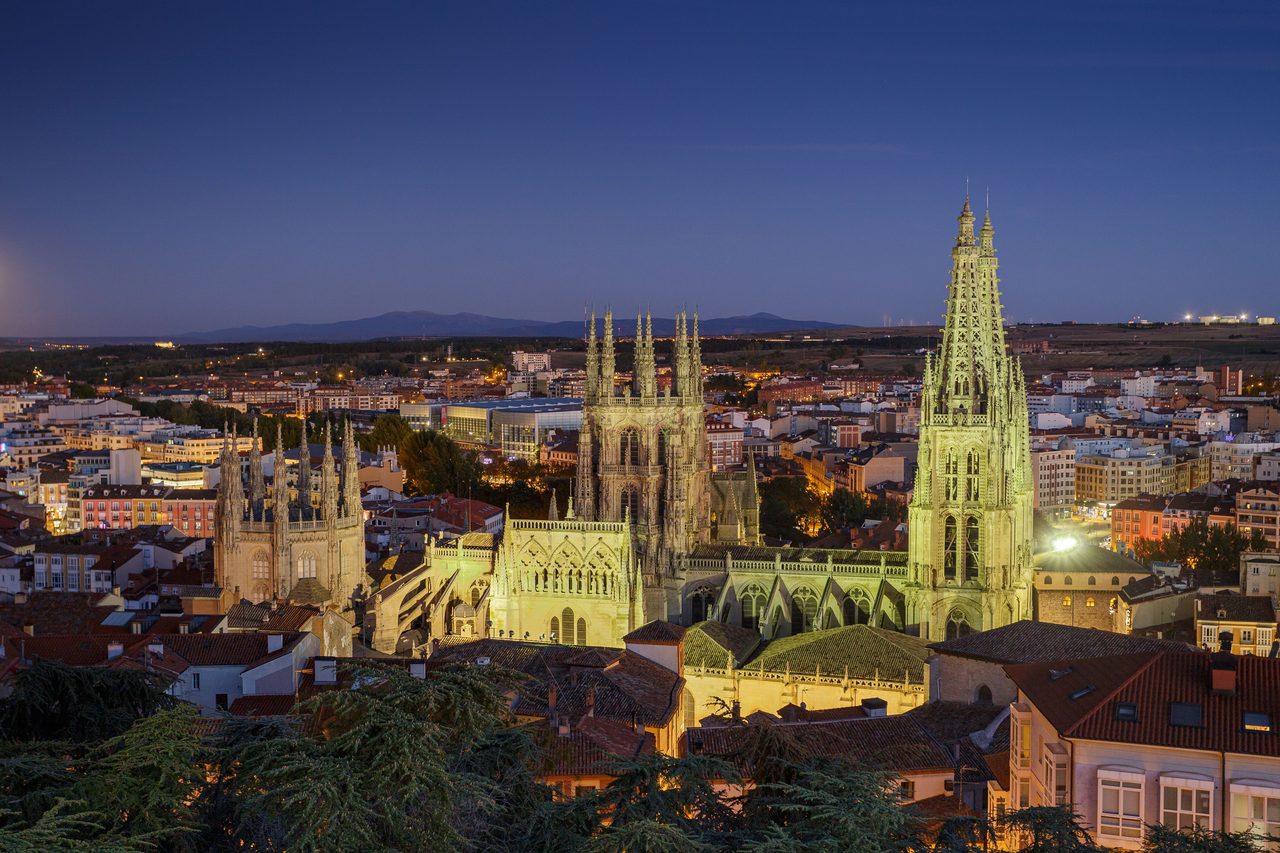
A UNESCO-listed Gothic cathedral begun in the 13th century, distinguished by its openwork spires and the star-ribbed lantern tower (cimborrio) over the crossing, added later as engineering and decorative styles evolved. El Cid, Castile's medieval military figure, is buried beneath the crossing along with his wife. The interior holds an unusually large number of side chapels, each with its own tombs and altarpieces, so it rewards slow walking rather than a quick pass-through.
Las Médulas
Las Médulas is the site of a Roman open-air gold mine that used hydraulic force to wash away hillsides, leaving behind a landscape of jagged red-orange sandstone peaks now covered in chestnut trees. It's less a single monument than a large area of trails through this reshaped terrain, with the mining history explained at the visitor centre before you walk out into the site itself. The colour of the rock is most vivid in low light.
Recommended itineraries
Pick a length, follow the route. Each itinerary balances headline sights with breathing room.
5-Day Castile and León Explorer
Day 1Arrive in Castile and León, explore city center
Day 2Visit top attractions and museums
Day 3Day trip to nearby highlights
Day 4Local markets and hidden gems
Day 5Final sightseeing, departure
7-Day Classic Castile and León
Days 1-2Castile and León city highlights
Days 3-4Regional exploration
Days 5-6Cultural immersion and local experiences
Day 7Return and departure
14-Day Ultimate Castile and León
Days 1-3Castile and León comprehensive city tour
Days 4-6Northern region exploration
Days 7-9Eastern highlights
Days 10-12Southern attractions
Days 13-14Return to Castile and León, departure
Where to stay in Castile and León
Three tiers, every traveller covered — from cost-conscious to flagship hotels.
Budget €45–€90/day (~$49–$98)
Hostels, budget hotels, and guesthouses offer affordable stays without sacrificing experience.
Mid-range €120–€205/day (~$131–$224)
Boutique hotels and well-located accommodations provide comfort and convenience at reasonable prices.
Luxury €280–€580/day (~$305–$632)
World-class resorts and premium hotels deliver unforgettable experiences.
Cafés, neighbourhood gems, and tasting menus worth the table reservation.
Mesón de Cándido
Castilian · €35–€55/person (~$38–$60)
Set in a stone building right under the Roman aqueduct, this is the restaurant that put Segovian cochinillo on the map nationally, founded by Cándido López, who was named an official 'tourist guide' by the Spanish government. The kitchen works from a small, fixed repertoire of roast-oven dishes rather than a large menu, and the dining rooms keep dark wood beams and old photographs of the founder carving suckling pig at the table.
Casa Duque
Castilian · €30–€50/person (~$33–$55)
A family-run Segovia asador a short walk from Cándido, operating from a wood-fired oven for its roasts since the 1890s. The interior is a warren of small, low-ceilinged rooms rather than one large dining hall, which gives it a quieter feel than its more famous neighbor even though the menu covers the same core Segovian repertoire.
A Michelin-starred restaurant in Salamanca's old town run by chef Víctor Gutiérrez, who built his reputation on pairing Castilian ingredients with techniques and flavor combinations picked up during years working in Peru. The dining room is contemporary and pared-back rather than rustic, putting the focus on plated tasting courses instead of shared roasts.
La Fábula
Creative Spanish · €70–€100/person (~$76–$109)
A Michelin-starred restaurant in León's old quarter run by chef Juanjo Pérez, focused on a tasting-menu format that reworks León-province ingredients, including produce from the Bierzo growing region, into contemporary plates. The space is small and modern rather than a traditional dining hall, reflecting its tasting-menu-only format.
Castile and León is best explored by car or a combination of trains and regional buses. The main cities (Salamanca, Burgos, Valladolid, León, Segovia) are connected by Renfe trains and ALSA buses. Segovia and Ávila are accessible from Madrid by fast train in under 30 minutes. Renting a car is strongly recommended for rural castles, wine routes, and Las Médulas.
Budget breakdown
Daily spend by tier in EUR, broken out by category.
Category
Budget
Mid-range
Luxury
Accommodation
€20–€40/night (~$22–$44) — hostels and basic guesthouses
€60–€100/night (~$65–$109) — 3-star hotels and paradores
€150–€300/night (~$163–$327) — paradores and boutique hotels
Food (per day)
€15–€25/day (~$16–$27) — set menus (menú del día) and tapas bars
€30–€50/day (~$33–$54) — sit-down restaurants and wine
€60–€120/day (~$65–$131) — fine dining and Michelin restaurants
Transportation
€5–€12/day (~$5–$13) — regional buses and occasional trains
€15–€25/day (~$16–$27) — trains, taxis, car rental
€30–€80/day (~$33–$87) — private transfers and car hire
Activities
€5–€15/day (~$5–$16) — museum entry and walking tours
€15–€30/day (~$16–$33) — guided tours and tastings
Average daytime temperature in °C. Figures are for Spain.
Spring and autumn offer mild temperatures, blooming countryside, and fewer crowds. Holy Week (Semana Santa) in Zamora and Valladolid draws large crowds but is culturally unmissable.
Essential travel tips
The menú del día (set lunch) at €10–€15 ($11–$16) is excellent value at most restaurants, typically including starter, main, dessert, bread, and wine.
Most small towns observe a siesta from 14:00–17:00; shops and some attractions close during this time.
Book Parador hotels months in advance for summer weekends—they fill quickly.
The Bono Turístico (tourist pass) in Salamanca covers entry to major monuments; available at the tourism office at Casa de las Conchas, Calle Compañía 2, 37001 Salamanca.
Pilgrims on the Camino de Santiago can obtain a credencial (pilgrim passport) at any cathedral or pilgrim hostel.
Salamanca's university life means the city stays lively year-round, even in winter.
Hidden gems
Off-the-beaten-path corners most travellers miss.
El Burgo de Osma
A tiny medieval town in Soria province with a magnificent 12th-century cathedral and virtually no tourists.
Soria
Pedraza
A perfectly preserved walled medieval village perched on a rocky spur with one of Spain's most striking medieval plazas.
Segovia province
La Alberca
Spain's first National Monument village, a labyrinth of stone houses in the Sierra de Francia foothills.
Salamanca province
Atapuerca Caves
UNESCO-listed archaeological sites near Burgos containing the oldest known human remains in Europe, dating back 1.2 million years.
Burgos province
Safety information
INFO
Keep valuables out of sight, especially around Salamanca's Plaza Mayor and Segovia's aqueduct.
INFO
Carry a copy of your passport; Spanish law requires ID be available.
INFO
Driving through rural areas: petrol stations can be sparse; fill up before long journeys.
INFO
In summer, carry water on hikes; the Meseta sun is intense.
Frequently asked questions
Is Castile and León safe to visit in 2026?
Castile and León is one of Spain's safest regions. Violent crime is rare; the main concerns are opportunistic petty theft in tourist areas and standard road safety on rural roads. Salamanca and Segovia attract large crowds in summer and around university events, when pickpocket activity increases sl
What is the best time to visit Castile and León?
The best time to visit Castile and León is April–June and September–October. Castile and León has a continental Mediterranean climate characterised by extremes: hot, dry summers (often above 35°C/95°F on the Meseta) and cold winters (frequently below 0°C/32°F with frost and sn
Do I need a visa to visit Castile and León?
Spain is part of the Schengen Area. EU/EEA citizens need only a national ID card. US, Canadian, Australian, and UK citizens may stay up to 90 days in any 180-day period without a visa. South American and most Asian nationals should check Spain's Ministry of Foreign Affairs website for current requirements. Requirements vary by nationality, so check with your nearest embassy or the official immigration website before traveling.
What currency is used in Castile and León?
The currency in Castile and León is the Euro (EUR). ATMs are widely available in cities and tourist areas. Credit cards are accepted at most hotels and restaurants, but carry cash for markets and smaller establishments.
What language is spoken in Castile and León?
The main language(s) spoken in Castile and León: Spanish (Castilian), Leonese (minority). In tourist areas, English is generally understood. Learning a few basic phrases in the local language is appreciated by locals.
What are the top attractions in Castile and León?
The top attractions in Castile and León include Salamanca Old City, Segovia Roman Aqueduct, Alcázar of Segovia, Ávila Medieval City Walls, and Burgos Cathedral. Each offers a unique experience, from historic landmarks to natural wonders.