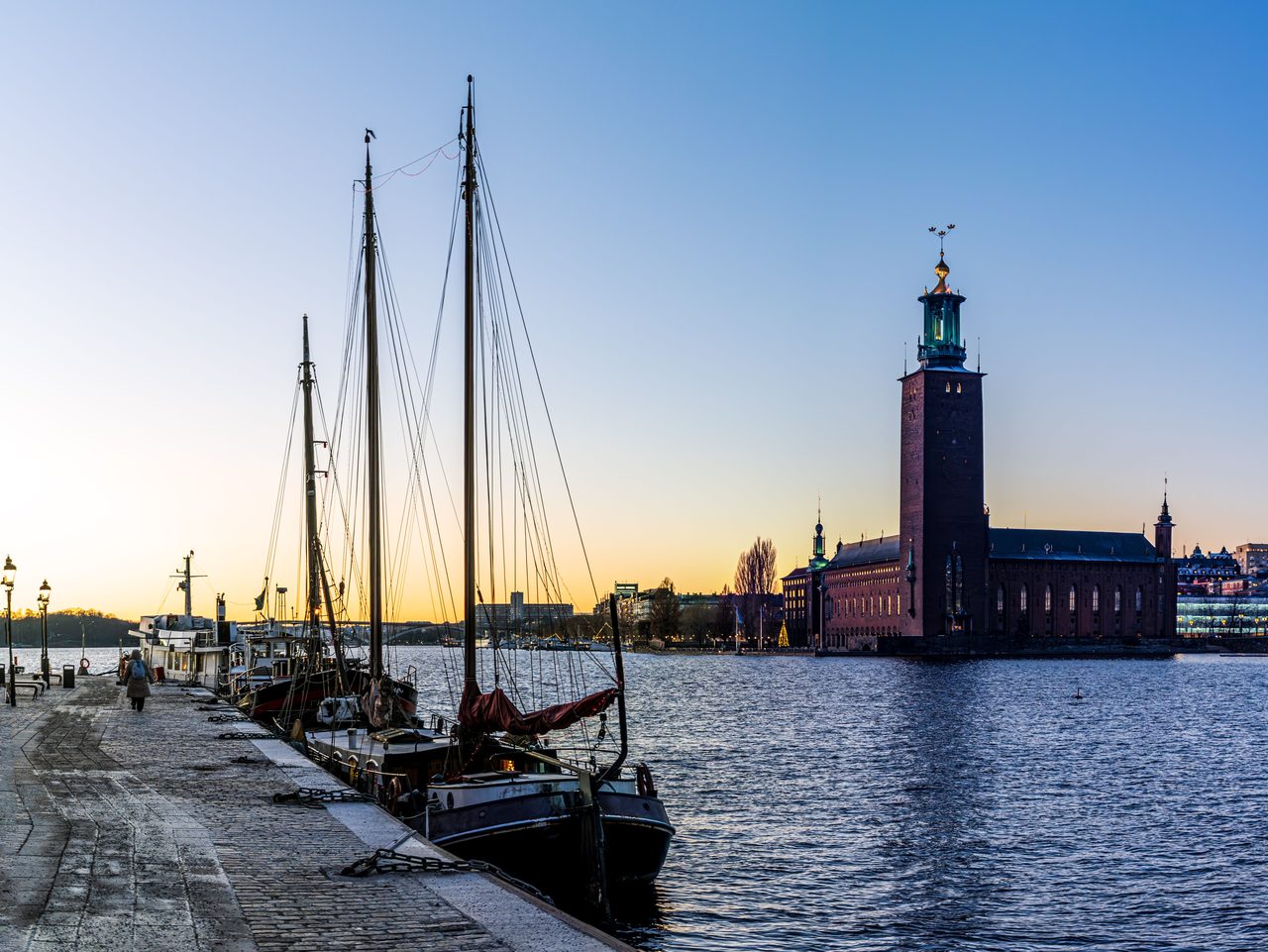
Stockholm, Sweden's stunning capital, spans 14 islands where Lake Mälaren meets the Baltic Sea, creating a city of breathtaking waterways, medieval history, and state-of-the-art design. As Scandinavia's largest city, it blends royal palaces and Viking heritage with a thriving food scene and world-class museums.
Stockholm County encompasses Sweden's dynamic capital and the surrounding archipelago of over 30,000 islands. The city is home to royal palaces, world-famous museums including the Vasa Museum, and a Michelin-starred restaurant scene. Gamla Stan (Old Town) preserves medieval cobblestone streets while Södermalm and Östermalm offer bohemian cafés and upscale boutiques. The county's natural landscape of forests, lakes, and archipelago islands makes it an unmatched urban-nature destination.
The 26 destinations our editors recommend — from iconic landmarks to under-the-radar finds.
Vasa Museum
The Vasa Museum houses the world's only preserved 17th-century warship, the Vasa, which sank on her maiden voyage in 1628 and was raised from Stockholm harbour in 1961. Extraordinarily well-preserved, the ship is decorated with hundreds of carved sculptures and is one of Scandinavia's most visited attractions.
Gamla Stan (Old Town)
Stockholm's medieval old town is one of Europe's best-preserved city centres, occupying its own island with narrow cobblestone alleyways, colourful ochre-washed buildings and charming squares dating back to the 13th century. Stortorget (the main square) is the heart of Gamla Stan, surrounded by merchant houses and the Nobel Museum.
Skansen Open-Air Museum
Skansen is the world's first open-air museum, founded in 1891, showcasing over 150 historic buildings moved from across Sweden to recreate traditional Swedish life spanning five centuries. The museum also houses a Nordic zoo with moose, bears, wolves, lynx and other Scandinavian wildlife.
Royal Palace (Kungliga Slottet)
The Royal Palace is one of the world's largest palaces still in use as an official royal residence, with 1,430 rooms. Built in Baroque style and completed in 1760, it contains five museums including the Royal Apartments, Treasury with Crown Jewels, and the fascinating Museum Tre Kronor depicting the medieval castle that burned in 1697.
ABBA The Museum
ABBA The Museum is an interactive experience dedicated to Sweden's most beloved pop group, featuring original costumes, gold records, handwritten lyrics and immersive digital installations where visitors can sing and dance with holograms of the band. It captures the magic of ABBA's extraordinary journey from 1970s Stockholm to global superstardom.
Fotografiska
Fotografiska is one of the world's leading photography museums, housed in a converted early 20th-century industrial building on the Södermalm waterfront with sweeping views over Stockholm's harbour. The museum hosts major international photography exhibitions, a renowned restaurant on the top floor, and an excellent bookshop.
Recommended itineraries
Pick a length, follow the route. Each itinerary balances headline sights with breathing room.
5-Day Stockholm Explorer
Day 1Arrive in Stockholm, explore city center
Day 2Visit top attractions and museums
Day 3Day trip to nearby highlights
Day 4Local markets and hidden gems
Day 5Final sightseeing, departure
7-Day Classic Stockholm
Days 1-2Stockholm city highlights
Days 3-4Regional exploration
Days 5-6Cultural immersion and local experiences
Day 7Return and departure
14-Day Ultimate Stockholm
Days 1-3Stockholm comprehensive city tour
Days 4-6Northern region exploration
Days 7-9Eastern highlights
Days 10-12Southern attractions
Days 13-14Return to Stockholm, departure
Where to stay in Stockholm
Three tiers, every traveller covered — from cost-conscious to flagship hotels.
Budget $88
Hostels, budget hotels, and guesthouses offer affordable stays without sacrificing experience.
Mid-range $185
Boutique hotels and well-located accommodations provide comfort and convenience at reasonable prices.
Luxury $420
World-class resorts and premium hotels deliver unforgettable experiences.
Grand Hôtel Stockholm
Blasieholmen · $$$$
Stockholm's most iconic hotel since 1874, located on the waterfront directly opposite the Royal Palace with panoramic views of Gamla Stan. Home to the Mathias Dahlgren restaurants (Michelin-starred), a stunning spa and 270 individually designed rooms.
A striking design hotel in the heart of Stockholm with gallery-quality art throughout its interiors and a buzzing lobby bar that doubles as a cultural hub. Rooms are spacious with curated Scandinavian interiors and the hotel hosts rotating art exhibitions.
A sophisticated five-star hotel in a converted 19th-century bank building on Norrmalmstorg, with a lively cocktail bar and brasserie. The hotel exudes understated Nordic elegance with rich materials and a warm, welcoming atmosphere.
An Art Nouveau gem on the elegant Strandvägen boulevard overlooking the inner harbour, just steps from Östermalm's finest shops and restaurants. The rooftop bar and terrace offer spectacular views over the water.
Cafés, neighbourhood gems, and tasting menus worth the table reservation.
Frantzén
Nordic Fine Dining · $$$$
Sweden's only three Michelin-starred restaurant, led by chef Björn Frantzén, offering an extraordinary multi-course tasting menu that blends Nordic ingredients with Japanese and French techniques. One of the most sought-after reservations in Northern Europe.
Oaxen Krog
Nordic · $$$$
A two Michelin-starred restaurant on Djurgården in a beautifully converted shipyard building, focusing on local Swedish produce prepared with precision and creativity. Chef Magnus Ek creates seasonal menus that celebrate Swedish terroir.
Ekstedt
New Nordic · $$$$
Chef Niklas Ekstedt's acclaimed restaurant cooks everything over open fire, birch wood and hay — no electricity in the kitchen. The dramatic cooking technique produces extraordinary smoky, primitive flavours in an elegant dining room.
Operakällaren
French-Swedish · $$$$
One of Stockholm's most storied dining institutions since 1787, located in the Royal Opera House with opulent Belle Époque interiors. Serves a sophisticated menu of classic French-influenced Swedish cuisine alongside an extraordinary wine cellar.
Gastrologik
New Nordic · $$$$
A Michelin-starred restaurant in Östermalm with a daily-changing menu based entirely on what seasonal ingredients chefs Jacob Holmström and Anton Bjuhr can source that morning. No fixed menu — complete trust in the kitchen's creative journey.
Restaurant TAK
Japanese-Nordic Fusion · $$$
A stunning rooftop restaurant on the 13th and 14th floors of Brunkebergstorg with breathtaking 360-degree views over Stockholm and an inventive menu blending Japanese and Nordic flavours. The views alone are worth the trip.
Stockholm has an outstanding public transport network (SL — Storstockholms Lokaltrafik) covering the entire county with metro, buses, trams, commuter trains and local ferries all on one integrated ticket system. The city is also extremely walkable and cycle-friendly.
Tunnelbana (Metro)
Three colour-coded lines (red, green, blue) with 100 stations across Stockholm. Fast, frequent and art-filled — many stations are called 'the world's longest art gallery'.
Cost: 42 SEK per trip (75-minute validity)
SL Bus
Extensive bus network covering all areas of Stockholm County not served by metro, plus night buses running after midnight.
Cost: 42 SEK per trip
Tram
Several tram lines including the popular Line 7 (Djurgårdslinjen) to Djurgården museums from Sergels Torg.
Cost: 42 SEK per trip
Pendeltåg (Commuter Train)
SL commuter rail connecting Stockholm Central with suburbs and surrounding municipalities.
Cost: 42 SEK per trip (within Zone A)
SL Ferry
Local ferry services to Djurgården and some archipelago stops, included in SL passes.
Cost: 42 SEK per trip
Arlanda Express
Private high-speed train from Arlanda Airport to Stockholm Central in 18 minutes. Not included in SL passes.
Cost: 340 SEK one-way (adult)
Flygbussarna Airport Bus
Airport bus from Arlanda to Stockholm City Terminal at Cityterminalen, journey 45 minutes.
Cost: 119 SEK one-way
Taxi / Uber
Taxis and Uber widely available; use licensed operators or app-based services to avoid overcharging.
Cost: 95-150 SEK base + per km
Budget breakdown
Daily spend by tier in SEK, broken out by category.
Category
Budget
Mid-range
Luxury
Accommodation
$38
$100
$280
Food (per day)
$25
$55
$100
Transportation
$10
$17
$35
Activities
$15
$30
$60
Daily total
$88
$185
$420
Best time to visit Stockholm
Weather through the year in Stockholm
Best timeShoulderWorth avoiding
Average daytime temperature in °C. Figures are for Stockholm.
Essential travel tips
Purchase an SL Access card (20 SEK) for unlimited public transport
Consider the Stockholm Pass for free museum entry and public transport
Book Arlanda Express tickets in advance for discounts
Many museums are free including Moderna Museet and Nationalmuseum
Hidden gems
Off-the-beaten-path corners most travellers miss.
Skinnarviksberget (highest natural point in Stockholm)
Fjällgatan cliffside street
Monteliusvägen clifftop walkway
Drop Coffee on Södermalm
Rosendals Trädgård organic garden
Hornstull Marknad summer market
Stortorget in Gamla Stan
Fjällgatan
Riddarholmen waterfront
Monteliusvägen walkway
Skinnarviksberget
Strandvägen
Safety information
INFO
Keep wallets and phones out of back pockets on the Tunnelbana (metro), especially at busy stations like T-Centralen and Gamla Stan
INFO
Use only licensed taxis or app-based services like Uber and Bolt — avoid unlicensed drivers offering rides near Central Station or tourist areas
INFO
Be alert for pickpockets in Gamla Stan's narrow alleyways, Sergels Torg, and during major events and festivals
INFO
Avoid suburban areas like Rinkeby, Husby and Tensta after dark — these are residential areas far from tourist sights but have higher crime rates
INFO
Emergency number for police, fire and ambulance is 112 — memorise this single number for all emergencies
INFO
In non-emergency situations, contact the police on 114 14 to report theft or minor crimes
INFO
Keep a photocopy of your passport separately from the original — report passport theft immediately to police and your embassy
INFO
Stockholm water is among the cleanest in the world — drink from the tap, avoid buying plastic water bottles
INFO
Be cautious of the 'distraction scam' — one person distracts you while another takes your bag or wallet
INFO
At night, stick to well-lit streets in tourist areas; Södermalm and Östermalm are generally safe after midnight
INFO
Watch your drink in bars and clubs — drink spiking, while rare, does occur in busy nightlife areas
INFO
Store valuables in your accommodation's safe rather than carrying them during sightseeing
INFO
Beware of aggressive panhandling or card scams near ATMs in central tourist areas
INFO
Sweden has strict drink-driving laws — blood alcohol limit is 0.02% (effectively zero) — always use public transport after drinking
Frequently asked questions
Is Stockholm safe to visit in 2026?
Stockholm is one of Europe's safest capitals and a generally very welcoming city for tourists. The main concerns are petty theft in crowded tourist areas and public transport; violent crime against visitors is extremely rare. Emergency services: police at 112 (emergency); 114 14 (non-emergency), medical at 112 (emergency ambulance); 1177 (health advice line).
What is the best time to visit Stockholm?
The best time to visit Stockholm is June to August. Stockholm has a humid continental climate with warm summers and cold, often snowy winters. The city sits at a high latitude meaning dramatic seasonal variations in daylight — from 18+ hours in midsumm
Do I need a visa to visit Stockholm?
Entry requirements follow Sweden and EU Schengen Area rules. EU/EEA citizens need only a valid ID; most others require a Schengen visa or may enter visa-free for up to 90 days (e.g. US, Canada, Australia, UK). Requirements vary by nationality, so check with your nearest embassy or the official immigration website before traveling.
What currency is used in Stockholm?
The currency in Stockholm is the Swedish Krona (SEK). ATMs are widely available in cities and tourist areas. Credit cards are accepted at most hotels and restaurants, but carry cash for markets and smaller establishments.
What language is spoken in Stockholm?
The main language(s) spoken in Stockholm: Swedish, English widely spoken. In tourist areas, English is generally understood. Learning a few basic phrases in the local language is appreciated by locals.
What are the top attractions in Stockholm?
The top attractions in Stockholm include Vasa Museum, Gamla Stan (Old Town), Skansen Open-Air Museum, Royal Palace (Kungliga Slottet), and ABBA The Museum. Each offers a unique experience, from historic landmarks to natural wonders.