World · 21 Places · Best April–June and September–October
Edirne
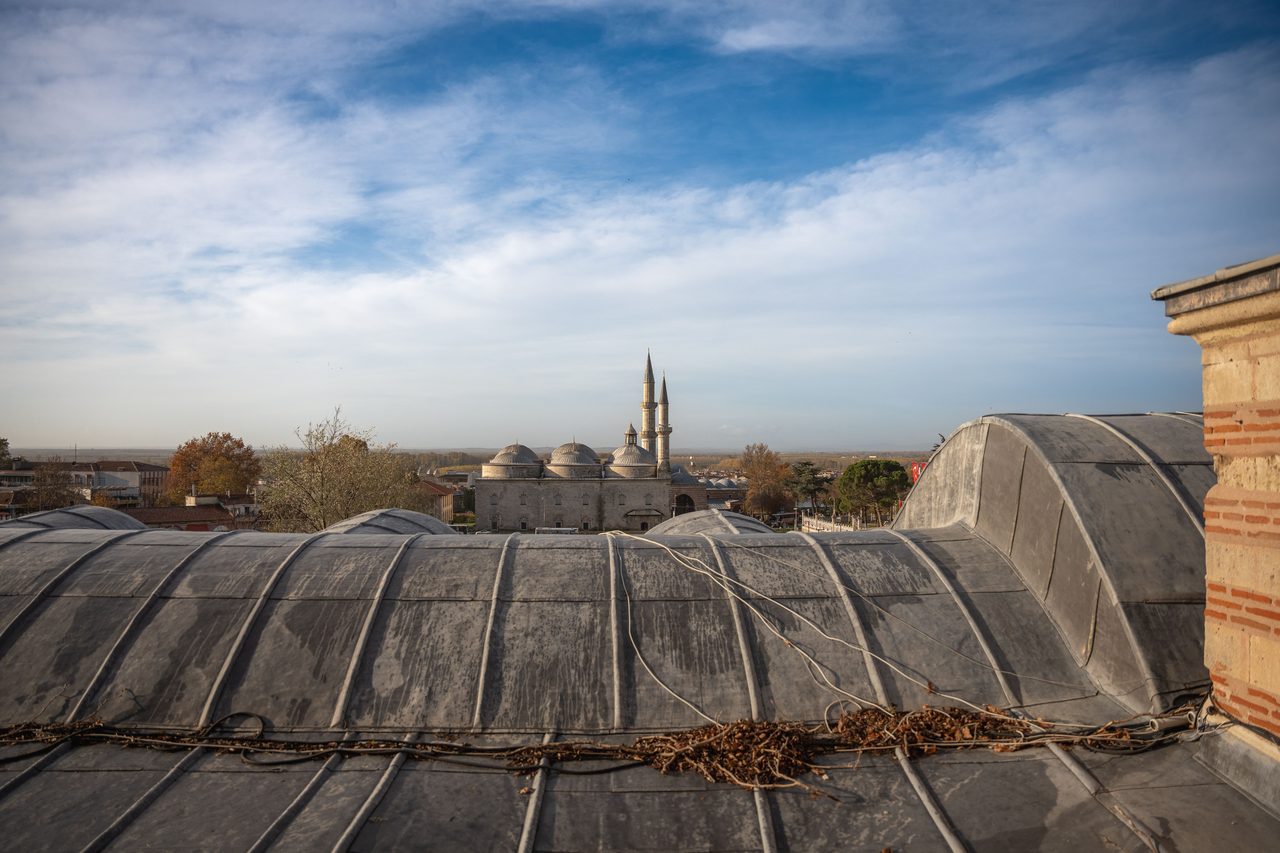
Edirne is a historic city in northwestern Turkey, situated at the confluence of the Tunca and Meriç rivers near the borders with Greece and Bulgaria. Once the Ottoman capital known as Adrianople, Edirne served as the empire's most important city from 1369 to 1453 before Mehmed II conquered Constantinople. Today the city is celebrated for the UNESCO-listed Selimiye Mosque — architect Mimar Sinan's acknowledged masterpiece — alongside a remarkable cluster of Ottoman mosques, bazaars, and palace ruins. Edirne hosts the Kırkpınar Oil Wrestling Festival, one of the world's oldest sporting events, held annually for over 660 years at the riverside Sarayiçi grounds.
Edirne stands where Europe and Asia meet, sharing borders with Greece and Bulgaria and preserving one of the densest concentrations of Ottoman imperial architecture anywhere in the world. The city's skyline is dominated by the four minarets of Selimiye Mosque, completed in 1575 and considered by Sinan himself to be his greatest work. Within walking distance stand the Eski Cami with its giant calligraphy, the multi-minaret Üç Şerefeli Mosque, and the ruins of the vast Edirne Palace. The Beyazıt II Complex — a 15th-century külliye whose medical school pioneered treatment through music and water — is now a museum of Ottoman medicine. Edirne's cuisine is distinctive: tava ciğer (pan-fried liver) and Edirne beyaz peyniri (white cheese) are produced nowhere else with the same character. The city is far less visited than Istanbul yet only 230 km distant, making it an easy and deeply rewarding detour.
The 21 destinations our editors recommend — from iconic landmarks to under-the-radar finds.
Selimiye Mosque
Designed by the Ottoman architect Mimar Sinan and completed in 1575, this is widely regarded as his masterwork and the structural culmination of classical Ottoman mosque architecture. Its single vast dome, supported on eight pillars, rises higher than the Hagia Sophia's, and the four slender minarets mark the Edirne skyline from miles across the surrounding plain. It is a UNESCO World Heritage Site, and the building remains an active mosque as well as a monument.
Beyazıt II Complex (Külliye)
Built in the late 15th century on the bank of the Tunca River, this külliye combines a mosque with what was once one of the Ottoman Empire's most advanced hospital and medical-teaching complexes, treating patients partly with music and water-sound therapy. Several of its rooms now house the Health Museum, with reconstructed scenes and instruments illustrating Ottoman-era medical practice. Its riverside setting, away from the town center, gives it a quieter, more spread-out feel than Edirne's central mosque sites.
Eski Cami (Old Mosque)
Completed in 1414, this is the oldest of Edirne's major Ottoman mosques and represents an earlier, more compact style than the later Selimiye or Üç Şerefeli — a square, multi-domed hall rather than one soaring central dome. Its walls carry large-scale calligraphic inscriptions of Allah, Muhammad, and the early caliphs' names painted in bold black script, unusually prominent for a mosque of this age. It sits right in the commercial heart of town, next to the covered bazaars.
Üç Şerefeli Mosque
Completed in 1447, this mosque takes its name ("three balconies") from one of its four minarets, which has three separate balconies at different heights and was a technical first for Ottoman architecture at the time. It marks a transitional moment between earlier Ottoman mosque design and the fully centralized-dome style Sinan would later perfect at Selimiye a century later, with a wide open courtyard preceding the prayer hall. Each of its four minarets was built with a different spiral pattern.
Edirne Archaeological and Ethnographic Museum
This museum sits beside the Selimiye Mosque complex and covers the region's history in two strands: an archaeological collection with finds from Thrace and the ancient city of Hadrianopolis (Roman-era Edirne), and an ethnographic section with Ottoman-period costumes, embroidery, and household items tied to the city's craft traditions. It's a modest-sized museum rather than a major national collection, suited to an hour rather than a half-day visit.
Edirne Palace Ruins (Saray-ı Cedîd-i Âmire)
These are the scattered remains of what was once one of the largest Ottoman imperial palace complexes, built up over the 15th to 17th centuries as a secondary seat of the sultanate outside Istanbul. Much of it was destroyed by explosions and later conflict in the 19th and early 20th centuries, so what's left today is fragmentary — foundations, arches, and isolated walls spread across the Sarayiçi river island rather than an intact building. It rewards visitors more interested in the history and setting than in a polished monument.
Recommended itineraries
Pick a length, follow the route. Each itinerary balances headline sights with breathing room.
5-Day Edirne Explorer
Day 1Arrive in Edirne, explore city center
Day 2Visit top attractions and museums
Day 3Day trip to nearby highlights
Day 4Local markets and hidden gems
Day 5Final sightseeing, departure
7-Day Classic Edirne
Days 1-2Edirne city highlights
Days 3-4Regional exploration
Days 5-6Cultural immersion and local experiences
Day 7Return and departure
14-Day Ultimate Edirne
Days 1-3Edirne comprehensive city tour
Days 4-6Northern region exploration
Days 7-9Eastern highlights
Days 10-12Southern attractions
Days 13-14Return to Edirne, departure
Where to stay in Edirne
Three tiers, every traveller covered — from cost-conscious to flagship hotels.
Budget 850–1,500 TRY/day (~$26–45 USD)
Hostels, budget hotels, and guesthouses offer affordable stays without sacrificing experience.
Mid-range 2,000–4,000 TRY/day (~$60–120 USD)
Boutique hotels and well-located accommodations provide comfort and convenience at reasonable prices.
Luxury 4,700–9,400 TRY/day (~$141–282 USD)
World-class resorts and premium hotels deliver unforgettable experiences.
Rüstempaşa Kervansaray Hotel
Old Town, Edirne · 2,000–4,000 TRY/night (~$60–120 USD)
Edirne has no airport; the city is reached primarily by intercity bus from Istanbul (3 hours) or by car via the TEM motorway. Within the city, the historic core is walkable in 20–30 minutes. Minibuses (dolmuş) serve outer districts. Taxis are plentiful and inexpensive.
Budget breakdown
Daily spend by tier in TRY, broken out by category.
Category
Budget
Mid-range
Luxury
Accommodation
500–800 TRY/night (~$15–24 USD)
1,200–2,500 TRY/night (~$36–75 USD)
3,000–6,000 TRY/night (~$90–180 USD)
Food (per day)
200–400 TRY/day (~$6–12 USD)
500–900 TRY/day (~$15–27 USD)
1,000–2,000 TRY/day (~$30–60 USD)
Transportation
50–100 TRY/day (~$1.50–3 USD)
100–200 TRY/day (~$3–6 USD)
300–600 TRY/day (~$9–18 USD)
Activities
100–200 TRY/day (~$3–6 USD)
200–400 TRY/day (~$6–12 USD)
400–800 TRY/day (~$12–24 USD)
Daily total
850–1,500 TRY/day (~$26–45 USD)
2,000–4,000 TRY/day (~$60–120 USD)
4,700–9,400 TRY/day (~$141–282 USD)
Best time to visit Edirne
Weather through the year in Turkey
Best timeShoulderWorth avoiding
Average daytime temperature in °C. Figures are for Turkey.
April–June and September–October for mild weather and fewer crowds
Spring brings wildflowers to the Thracian plain; autumn has golden light on the mosques
Essential travel tips
The Müze Kart (Museum Card) covers entry to Selimiye, Beyazıt II Complex, and the Archaeological Museum — buy at any of these venues
Friday prayers 12:30–13:30 restrict non-worshipper access to mosques; plan around this
Edirne's old city is compact — a single day can cover all major mosques on foot
Try tava ciğer (liver cooked with peppers in a copper pan) — the dish Edirne is most famous for
Local cheese shops along Saraçlar Caddesi sell fresh beyaz peynir (white cheese) and kaşar for picnics
Bus to Istanbul departs from Edirne Otogar on Londra Asfaltı; buy tickets on site or via obilet.com
Hidden gems
Off-the-beaten-path corners most travellers miss.
Safety information
INFO
Keep photocopies of your passport — border proximity means police checkpoints are common
INFO
Carry small TRY bills for markets and taxis; ATMs abundant in the city centre
INFO
During Kırkpınar festival (late June/July), accommodation fills weeks in advance — book early
INFO
Traffic is heavy on the D-100 highway through the city — use pedestrian crossings
Frequently asked questions
Is Edirne safe to visit in 2026?
Edirne is a small, conservative, and generally very safe city. Petty crime (pickpocketing, bag-snatching) is rare compared to Istanbul. The border proximity means police and Gendarmerie are visible throughout the city and on approach roads. Standard urban travel precautions apply. The main risks are
What is the best time to visit Edirne?
The best time to visit Edirne is April–June and September–October. Edirne has a humid continental climate influenced by its proximity to the Aegean and the Thracian plain. Summers (June–August) are hot and dry with temperatures reaching 35–38°C. Winters (December–Feb
Do I need a visa to visit Edirne?
Citizens of the USA, UK, EU, Canada, and Australia require an e-Visa obtained at evisa.gov.tr before arrival. Cost approximately $50 USD. Some nationalities receive visa-free entry for up to 90 days. Verify current requirements at evisa.gov.tr or the nearest Turkish consulate before travel. Requirements vary by nationality, so check with your nearest embassy or the official immigration website before traveling.
What currency is used in Edirne?
The currency in Edirne is the Turkish Lira (TRY). ATMs are widely available in cities and tourist areas. Credit cards are accepted at most hotels and restaurants, but carry cash for markets and smaller establishments.
What language is spoken in Edirne?
The main language(s) spoken in Edirne: Turkish. In tourist areas, English is generally understood. Learning a few basic phrases in the local language is appreciated by locals.
What are the top attractions in Edirne?
The top attractions in Edirne include Selimiye Mosque, Beyazıt II Complex (Külliye), Eski Cami (Old Mosque), Üç Şerefeli Mosque, and Edirne Archaeological and Ethnographic Museum. Each offers a unique experience, from historic landmarks to natural wonders.