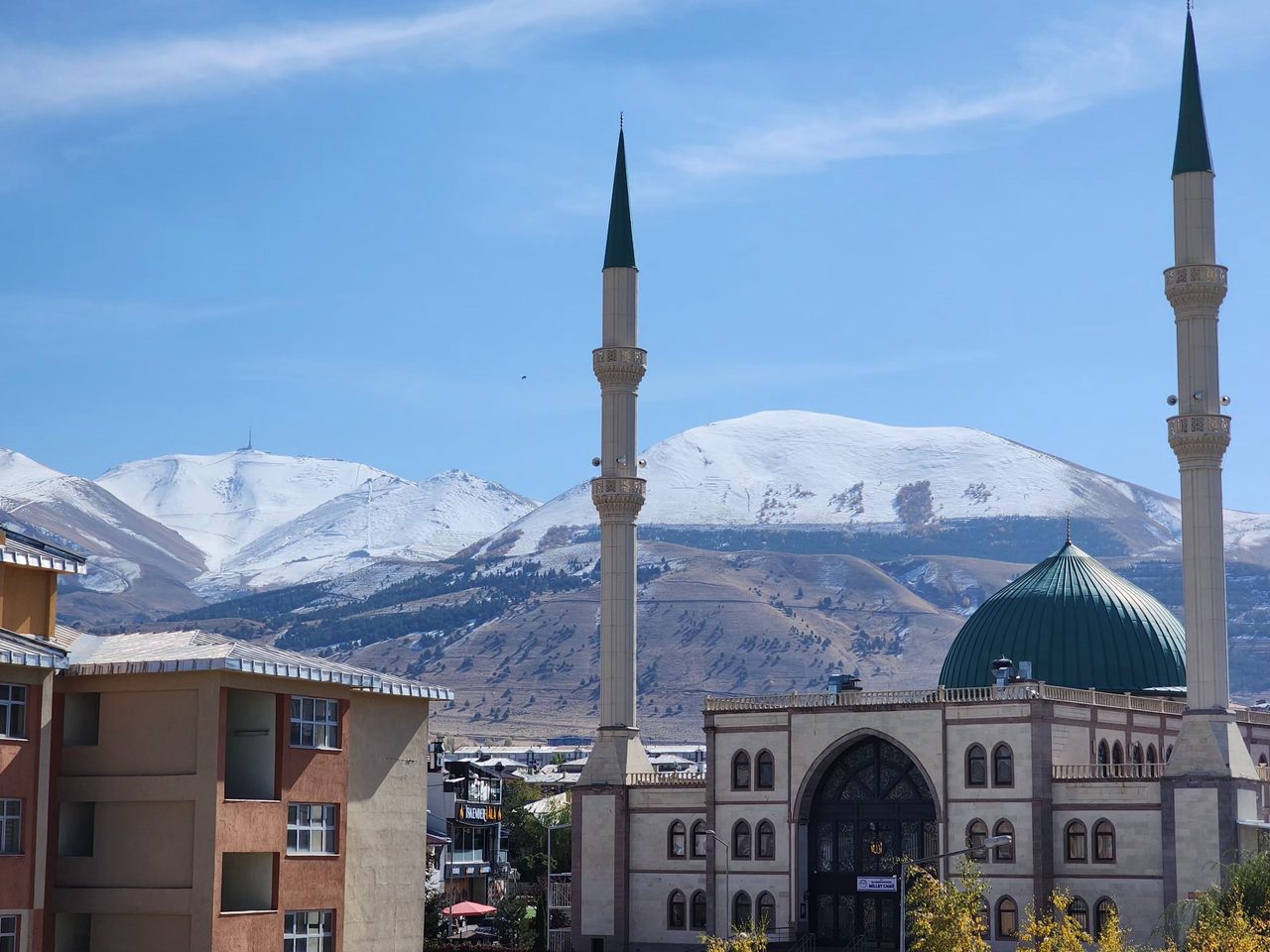
Erzurum is a historic city at 1,890 metres elevation in northeastern Turkey, commanding the high plateau where ancient Silk Road caravans once crossed. The city holds one of Turkey's finest concentrations of Seljuk and Mongol architecture — the Çifte Minareli Medrese, Yakutiye Medresesi and Üç Kümbetler tombs stand beside an Ottoman castle with sweeping panoramas. Fifteen kilometres from the centre, Palandöken mountain hosts one of the Middle East's premier ski resorts. Erzurum is the birthplace of cağ kebabı, the horizontally-spit-roasted lamb unique to the region, and the origin of oltu taşı jet-stone jewellery.
Erzurum rewards travellers with an authentic eastern Anatolian experience largely off the main tourist circuit. The city served as a major base in the 1919 Erzurum Congress where Atatürk forged the foundation of the Turkish War of Independence, and the Atatürk Congress and Ethnography Museum preserves that legacy. Winter brings skiers from across Turkey and the Gulf to Palandöken's long runs and reliable snow from November to May. Summer opens the surrounding highlands for trekking, while Tortum Lake and its waterfall, Uzundere canyon and the medieval fortress town of İspir make excellent day trips. Atatürk University — one of Turkey's largest — keeps the city lively year-round.
The 20 destinations our editors recommend — from iconic landmarks to under-the-radar finds.
Çifte Minareli Medrese
This 13th-century Seljuk theological school is fronted by two fluted brick minarets rising above an elaborately carved stone portal, the feature that gives the building its name ("Twin Minaret Madrasa"). It was built under the Seljuks of Anatolia and later associated with the Mongol-era Ilkhanid period in the region, and its courtyard plan with four iwans is typical of Seljuk religious schools. Inside, the large domed hall at the rear (traditionally linked to Hunat Hatun) and the geometric and floral relief carving on the portal are the main things to look at, since the interior rooms are otherwise bare.
Yakutiye Medresesi
Built in the early 14th century under Mongol Ilkhanid rule, this madrasa has a single elegant minaret decorated with turquoise-glazed tiles set in a herringbone brick pattern, distinguishing it from the plainer stonework of Çifte Minareli Medrese nearby. The building now houses a museum of Turkish-Islamic art and regional ethnography, with rooms arranged around the original domed courtyard. The exhibits of Erzurum-area costumes, weapons and calligraphy give the stone shell a practical use rather than leaving it an empty monument.
Erzurum Castle (Kale)
This fortress sits on high ground at the center of the old city and has been rebuilt and reinforced repeatedly, from early Byzantine and Armenian fortifications through Seljuk and Ottoman additions, reflecting Erzurum's long role as a frontier garrison town on the eastern Anatolian plateau. A minaret-like clock tower was added on top of one of the towers in the Ottoman period, and climbing the internal stairs to the battlements gives a clear view over the surrounding grid of the old quarter. The walls themselves are plain and functional rather than decorative, so the main draw is the panorama rather than architectural detail.
Üç Kümbetler (Three Tombs)
This small cluster of conical-roofed stone tombs (kümbet) dates from the Seljuk and early Beylik period and belongs to the same architectural family as the octagonal tomb towers found elsewhere in eastern Anatolia and Iran. Each tomb has a plain drum-shaped or polygonal base topped by a pointed cone, with the largest traditionally associated with a Seljuk ruler, though attributions for the individual tombs are not firmly settled. They sit in a quiet open plot next to the Çifte Minareli Medrese, making them easy to see without a special detour.
Atatürk Congress and Ethnography Museum
This building housed the 1919 Erzurum Congress, the meeting where Mustafa Kemal Atatürk and other delegates laid early groundwork for the Turkish national resistance movement before the Republic was founded. The ground floor preserves the congress hall much as it was, with period furniture and documents relating to the meeting, while other rooms hold an ethnography collection of regional textiles, jewelry and household items. It's a smaller, single-building museum rather than a sprawling complex, so a visit is relatively short and focused.
Ulu Cami (Great Mosque)
This 12th-century mosque was built under the Saltukid Turkmen dynasty that ruled Erzurum before the Seljuks of Anatolia took control, making it one of the older surviving Islamic buildings in the city. Its interior is a wide forest of stone piers supporting a flat wooden roof pierced by small domes and skylights, a hypostyle layout closer to early Anatolian mosque design than the later Ottoman single-dome style. The plain exterior gives little hint of the repetitive, almost maze-like columned interior.
Recommended itineraries
Pick a length, follow the route. Each itinerary balances headline sights with breathing room.
5-Day Erzurum Explorer
Day 1Arrive in Erzurum, explore city center
Day 2Visit top attractions and museums
Day 3Day trip to nearby highlights
Day 4Local markets and hidden gems
Day 5Final sightseeing, departure
7-Day Classic Erzurum
Days 1-2Erzurum city highlights
Days 3-4Regional exploration
Days 5-6Cultural immersion and local experiences
Day 7Return and departure
14-Day Ultimate Erzurum
Days 1-3Erzurum comprehensive city tour
Days 4-6Northern region exploration
Days 7-9Eastern highlights
Days 10-12Southern attractions
Days 13-14Return to Erzurum, departure
Where to stay in Erzurum
Three tiers, every traveller covered — from cost-conscious to flagship hotels.
Budget 600–1500 TRY / $18–45
Hostels, budget hotels, and guesthouses offer affordable stays without sacrificing experience.
Mid-range 1900–4300 TRY / $57–129
Boutique hotels and well-located accommodations provide comfort and convenience at reasonable prices.
Luxury 5300–14200 TRY / $159–426
World-class resorts and premium hotels deliver unforgettable experiences.
Dedeman Palandöken Ski Lodge
Palandöken Ski Resort, 15 km south of Erzurum · 4000–8000 TRY / $120–240 per night
Erzurum is reachable by air, intercity coach and train. The city's own Erzurum Airport has daily connections to Istanbul and Ankara. Intercity coaches serve all major Turkish cities. The Doğu Ekspresi (Eastern Express) train from Ankara (18–24 hrs) is a popular scenic journey. City transport relies on municipally-operated buses and minibuses (dolmuş).
Budget breakdown
Daily spend by tier in TRY, broken out by category.
Category
Budget
Mid-range
Luxury
Accommodation
400–800 TRY / $12–24
1200–2500 TRY / $36–75
3500–8000 TRY / $105–240
Food (per day)
150–350 TRY / $4.50–10
350–800 TRY / $10–24
800–2000 TRY / $24–60
Transportation
50–150 TRY / $1.50–4.50
150–400 TRY / $4.50–12
400–1200 TRY / $12–36
Activities
0–200 TRY / $0–6
200–600 TRY / $6–18
600–3000 TRY / $18–90
Daily total
600–1500 TRY / $18–45
1900–4300 TRY / $57–129
5300–14200 TRY / $159–426
Best time to visit Erzurum
Weather through the year in Turkey
Best timeShoulderWorth avoiding
Average daytime temperature in °C. Figures are for Turkey.
June–September (summer sightseeing) or December–March (skiing)
Erzurum has two distinct peak seasons. Winter (December–March) brings heavy snowfall ideal for skiing at Palandöken. Summer (June–September) is the best time to explore the city's historic monuments and take day trips to Tortum Lake. Spring thaw (April–May) can be messy but wildflowers bloom on the surrounding plateaus.
Essential travel tips
Try cağ kebabı for breakfast — Erzurum locals eat it from 7 am; Güzelyurt Cağ Kebap and Çekirdeksiz are the best-known spots
Buy oltu taşı (jet stone) jewellery from the Kapalı Çarşı bazaar basement workshops — the stone is only found near Oltu, 100 km away
The Doğu Ekspresi (Eastern Express) from Ankara is a 24-hour scenic train ride beloved by Turkish travellers; book tickets on tcdd.gov.tr
Palandöken ski resort is only 15 km from the city centre — a taxi costs around 150–200 TRY / $4.50–6
Erzurum city altitude is 1,890 m — visitors from sea level may feel mild altitude effects the first day; hydrate well
Hidden gems
Off-the-beaten-path corners most travellers miss.
Safety information
INFO
Dress modestly in the city centre — Erzurum is conservative; women should cover shoulders and knees near mosques
INFO
In winter, carry thermal layers; windchill can make -10°C feel like -25°C
INFO
Mountain roads to day-trip destinations may be icy from October to May — drive carefully or hire a local driver
INFO
Keep emergency cash in TRY; ATMs in rural areas around Erzurum can be unreliable
Frequently asked questions
Is Erzurum safe to visit in 2026?
Erzurum is one of Turkey's safer cities for tourists. Violent crime against foreigners is very rare. The primary safety concern is the severe winter climate — temperatures can drop to -30°C / -22°F and road conditions outside the city can be dangerous from November to April. The city is conservative
What is the best time to visit Erzurum?
The best time to visit Erzurum is June–September. Erzurum sits at 1,890 metres on a high plateau in eastern Anatolia, giving it Turkey's coldest continental climate. Winters are long and severe, with reliable snowfall from November to April — ideal f
What currency is used in Erzurum?
The currency in Erzurum is the Turkish Lira (TRY). ATMs are widely available in cities and tourist areas. Credit cards are accepted at most hotels and restaurants, but carry cash for markets and smaller establishments.
What language is spoken in Erzurum?
The main language(s) spoken in Erzurum: Turkish, Kurdish. In tourist areas, English is generally understood. Learning a few basic phrases in the local language is appreciated by locals.
What are the top attractions in Erzurum?
The top attractions in Erzurum include Çifte Minareli Medrese, Yakutiye Medresesi, Erzurum Castle (Kale), Üç Kümbetler (Three Tombs), and Atatürk Congress and Ethnography Museum. Each offers a unique experience, from historic landmarks to natural wonders.