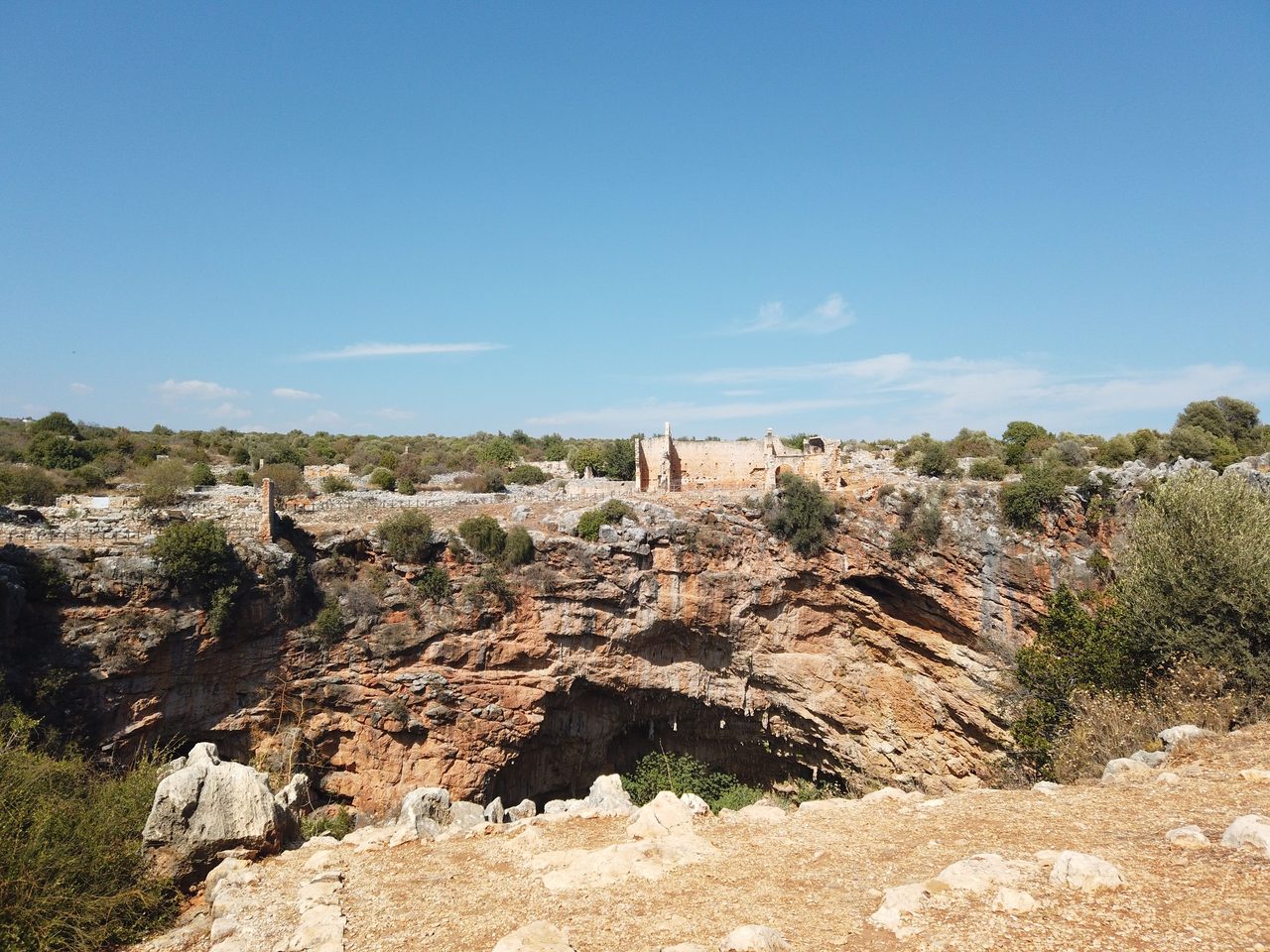
Karaman · 22 Places · Best April-June and September-October
Karaman
Karaman is a historic city and province in south-central Turkey, celebrated as the birthplace of written Turkish and the seat of the powerful Karamanoğulları dynasty that ruled much of Anatolia from the 13th to the 15th century. Ringed by the Taurus Mountains to the south and the volcanic Karadağ plateau to the north, the province combines medieval fortresses, Byzantine rock-cut monasteries, and Seljuk caravanserais with sweeping steppe landscapes, cherry orchards, and sugar-beet fields that define the Anatolian interior.
Karaman sits at the crossroads of the Anatolian plateau and the Taurus Mountains in south-central Turkey, a city shaped by a succession of Hittite, Roman, Byzantine, Karamanoğlu, and Ottoman rulers who each left monuments that can be explored in a single compact historic core. The Karamanoğulları principality made history in 1277 when Mehmed Bey issued a decree mandating Turkish as the language of administration — an act that earned Karaman the title 'birthplace of written Turkish'. The 14th-century Hatuniye Madrasa, the Yunus Emre Mosque and tomb, and the medieval castle all stand within easy walking distance. Beyond the city, the province rewards the curious with Binbirkilise on the Karadağ volcanic plateau, where over a thousand ruined Byzantine church bases stud the landscape; the İvriz Rock Relief, a 3,000-year-old Luwian carving; and the cliff-monastery of Alahan perched high on the Taurus escarpment. The province remains well off the main tourist routes, offering authentic encounters with Anatolian life, remarkably well-preserved history, and the famously sweet Karaman cherries and dried apricots.
The 22 destinations our editors recommend — from iconic landmarks to under-the-radar finds.
Hatuniye Madrasa (Nefise Hatun Kümbeti)
This is a small 14th-century madrasa built under the Karamanid beylik, with a domed tomb chamber attached where Nefise Sultan, a woman of the ruling Karamanid family, is buried. The building marks the transition from Seljuk to Karamanid stonework in the region, and its scale reflects its original function as a place of Islamic study rather than a congregational mosque.
Karaman Castle (Kale)
Karaman Castle sits on a hill at the center of the city and was rebuilt in stages by Byzantine, Seljuk, and Karamanid rulers before serving Ottoman garrisons. Its layout includes an inner citadel ringed by an outer defensive wall, and the site marks Karaman's long run as a regional capital, first as Byzantine Laranda and later as the seat of the Karamanid beylik.
Binbirkilise (Thousand and One Churches, Karadağ)
Binbirkilise is a spread-out field of Byzantine church and monastic ruins across the slopes of the extinct Karadağ volcano, occupied from roughly the 4th to the 11th century. It was one of the densest concentrations of early Christian building activity in central Anatolia, though only a fraction of the structures locals count in the name actually survive as standing ruins today, and none have been reconstructed.
İvriz Rock Relief
Carved directly into a rock face near a spring, this relief dates to the 8th century BC and shows the Neo-Hittite king Warpalawas of Tuwana standing before the storm god Tarhunza, who holds grain and grapes as symbols of fertility. It is one of the best-preserved Luwian rock carvings from the post-Hittite kingdoms of southern Anatolia and gives a rare look at how these successor states depicted royal and divine authority side by side.
Alahan Monastery
Alahan is a 5th-century Byzantine monastic complex built into a hillside along the old road linking Karaman to Mut, with two churches, a courtyard, and carved reliefs of apostles and animals on its surviving doorways. It functioned as a working monastery rather than a pilgrimage shrine, and its remote hillside position is part of what kept its stonework relatively intact compared to Byzantine sites nearer major towns.
Yunus Emre Mosque and Tomb
This mosque and tomb complex in Karaman honors Yunus Emre, the 13th-14th century Turkish poet and mystic whose verses on divine love remain widely read in Turkey today. Karaman is one of several places that claims to hold his actual burial site, a dispute that has never been definitively settled, and the local complex reflects the town's own long-standing claim to that legacy.
Recommended itineraries
Pick a length, follow the route. Each itinerary balances headline sights with breathing room.
5-Day Karaman Explorer
Day 1Arrive in Karaman, explore city center
Day 2Visit top attractions and museums
Day 3Day trip to nearby highlights
Day 4Local markets and hidden gems
Day 5Final sightseeing, departure
7-Day Classic Karaman
Days 1-2Karaman city highlights
Days 3-4Regional exploration
Days 5-6Cultural immersion and local experiences
Day 7Return and departure
14-Day Ultimate Karaman
Days 1-3Karaman comprehensive city tour
Days 4-6Northern region exploration
Days 7-9Eastern highlights
Days 10-12Southern attractions
Days 13-14Return to Karaman, departure
Where to stay in Karaman
Three tiers, every traveller covered — from cost-conscious to flagship hotels.
Budget ₺1,050 (approx $28)
Hostels, budget hotels, and guesthouses offer affordable stays without sacrificing experience.
Mid-range ₺2,960 (approx $80)
Boutique hotels and well-located accommodations provide comfort and convenience at reasonable prices.
Luxury ₺7,770+ (approx $210+)
World-class resorts and premium hotels deliver unforgettable experiences.
Karaman Grand Hotel
Karaman city centre · $$ — ₺1,200-2,000/night (approx $32-54)
Karaman has no commercial airport; the nearest is Konya Airport (KYA), roughly 103 km north. The city is well served by intercity coaches from Konya, Ankara, Adana, Mersin, and Istanbul. TCDD trains also connect Karaman with Konya and Adana. Within the city, minibuses (dolmuş) and taxis cover local routes; car rental is recommended for visiting outlying sites like Binbirkilise and İvriz.
Intercity Bus
Coaches connect Karaman with Konya (1.5 hrs), Ankara (5 hrs), Adana (3 hrs), Mersin (3.5 hrs), and Istanbul (11 hrs) from the Karaman Otogar on Konya Caddesi
Cost: ₺150-850 (approx $4-23)
Train
TCDD conventional trains run between Karaman and Konya (approx 1.5 hrs) and Adana (approx 4 hrs); the station is on İstasyon Caddesi near the city centre
Cost: ₺80-350 (approx $2-9)
Dolmuş
Shared minibuses serve routes within the city and to nearby towns; stand-alone routes depart from the central otogar area
Cost: ₺15-40 (approx $0.40-1.10)
Taxi
Taxis use meters; ask the driver to use the meter (taksimetre). A cross-city ride costs approximately ₺50-120 (approx $1.35-3.25)
Cost: ₺50-400 (approx $1.35-11)
Car Rental
Essential for visiting Binbirkilise, İvriz, and Alahan Monastery. Rental offices on Konya Caddesi; expect to pay ₺1,200-2,200/day (approx $32-60) for a compact car
Cost: ₺1,200-2,200/day (approx $32-60)
Budget breakdown
Daily spend by tier in TRY, broken out by category.
Category
Budget
Mid-range
Luxury
Accommodation
₺490 (approx $13)
₺1,480 (approx $40)
₺4,440 (approx $120)
Food (per day)
₺330 (approx $9)
₺815 (approx $22)
₺1,850 (approx $50)
Transportation
₺145 (approx $4)
₺370 (approx $10)
₺740 (approx $20)
Activities
₺85 (approx $2)
₺295 (approx $8)
₺740 (approx $20)
Daily total
₺1,050 (approx $28)
₺2,960 (approx $80)
₺7,770+ (approx $210+)
Best time to visit Karaman
Weather through the year in Turkey
Best timeShoulderWorth avoiding
Average daytime temperature in °C. Figures are for Turkey.
Spring (April-May) brings blossoming orchards and mild temperatures perfect for exploring archaeological sites. The renowned Karaman cherry harvest in June draws domestic visitors. Early autumn (September-October) offers warm days, lighter crowds, and comfortable temperatures for Taurus Mountain hiking. Summer can be hot (up to 35°C), particularly in the sheltered valley around the city. Winter brings cold, occasionally snowy days that limit outdoor site access.
Essential travel tips
Rent a car to reach Binbirkilise, İvriz, and Alahan Monastery; public transport does not serve these sites
Visit the bazaar in the morning for the freshest dried apricots, lokum, and Karaman cherries in season
Combine Karaman with a day in Konya (103 km north) to add Mevlana Museum to the itinerary
The Hatuniye Madrasa interior courtyard is best photographed in morning light
Hidden gems
Off-the-beaten-path corners most travellers miss.
Binbirkilise (Karadağ Plateau)
Over a thousand ruined Byzantine church bases scatter a volcanic plateau — almost entirely unknown to international tourists and utterly atmospheric at sunrise
Karadağ, 40 km north of Karaman
Mut Old Town
A sleepy Taurus town with a 14th-century Karamanoğlu castle, a riverside Byzantine church, and almost no tourist crowds
Mut, 80 km southwest of Karaman
Ermenek Canyon
One of Turkey's deepest river canyons, carved through the Taurus limestone — boating access from Ermenek Dam Lake with dramatic sheer walls
Ermenek, 115 km southwest of Karaman
Safety information
INFO
Wear sturdy footwear when visiting Karaman Castle and hill sites; surfaces are uneven
INFO
Carry cash as smaller restaurants, bazaar stalls, and rural sites may not accept cards
INFO
Drive cautiously on mountain roads to Alahan Monastery and Binbirkilise, especially in wet weather
INFO
Dress modestly when visiting mosques and madrasas: cover shoulders and knees
INFO
Save Turkey's emergency number 112 and carry water in summer heat
Frequently asked questions
Do I need a visa to visit Karaman?
Entry requirements follow Turkey's national rules. Citizens of the USA, Canada, UK, EU member states, and many other countries enter Türkiye visa-free for tourism stays of up to 90 days within any 180-day period, while nationals of around 40 other countries must obtain an e-Visa online in advance at evisa.gov.tr. Check current requirements for your nationality and ensure your passport is valid for at least six months from your date of entry.
How do I get to Karaman?
Karaman has no commercial airport. The nearest is Konya Airport (KYA), approximately 103 km north, from which a taxi or shuttle takes about 1.5 hours. Intercity coaches connect Karaman with Konya (1.5 hrs), Ankara (5 hrs), Adana (3 hrs), and Istanbul (11 hrs) from the city otogar on Konya Caddesi. TCDD trains also run between Karaman and Konya and Adana.
What is Karaman famous for?
Karaman is celebrated as the place where Turkish was first used as an official administrative language, earning it the title 'birthplace of written Turkish'. It is also famed for the Karamanoğulları dynasty, whose mosques and madrasas define the city's medieval character; for the Binbirkilise Byzantine ruins on the Karadağ plateau; and for Karaman cherries and dried apricots, among Turkey's finest.
What are the top attractions in Karaman?
The top attractions include the Hatuniye Madrasa, Karaman Castle, the Yunus Emre Mosque and tomb, and the Karamanoğulları Museum in the city centre. Outside the city, the Binbirkilise ruins on Karadağ, the İvriz Rock Relief near Ereğli, and the Alahan Monastery on the Taurus escarpment are the most significant sites.