Mersin · 22 Places · Best April-June and September-October
Mersin
Mersin is a major Mediterranean port city and provincial capital on Turkey's southern coast, where ancient ruins, dramatic limestone gorges, sea castles and long sandy beaches stretch along the Cilician shore. The province spans from the industrial port to clifftop monasteries, Hellenistic temple cities and the birthplace of the Apostle Paul, making it one of the most historically layered destinations in Turkey.
Mersin stretches along the eastern Mediterranean coast of Turkey at the foot of the Taurus Mountains, encompassing a modern port city, ancient Cilician ruins, sea fortresses, sweeping beaches and highland plateaus. The city itself is Turkey's busiest container port and a lively commercial center, with a long seafront promenade, a vibrant food scene and easy access to some of Anatolia's most remarkable historical sites. Kızkalesi — the offshore island castle in a turquoise bay — is the province's most photographed landmark. Inland, the Cennet ve Cehennem sinkholes, the temple city of Uzuncaburç, the rock reliefs at Adamkayalar and the spectacular Alahan Monastery cling to the limestone ridges of the Taurus. Tarsus, birthplace of St Paul and once a great Hellenistic and Roman metropolis, lies just 27 km east. The coastal strip produces citrus, bananas and strawberries, and the local table is famous for its seafood, hummus and Tarsus kebabs. The province offers something for every traveler: budget backpackers find cheap guesthouses near Kızkalesi beach, history enthusiasts could spend a week among Roman and Byzantine sites, and sun seekers spread out along beaches from Erdemli to Aydıncık.
The 22 destinations our editors recommend — from iconic landmarks to under-the-radar finds.
Kızkalesi (Maiden's Castle)
A Byzantine fortress built on a small islet just off the Kızkalesi coastline, connected historically to a matching mainland fortress (Korykos) that still stands on shore. The castle was refortified by the Armenian Kingdom of Cilicia and later by Crusader and Ottoman forces, and its walls and towers remain largely intact despite standing in open water for centuries. Boats run out from the beach in front of the modern town, so the visit combines a short crossing with a walk around the ramparts.
Uzuncaburç (Ancient Olba / Diocaesarea)
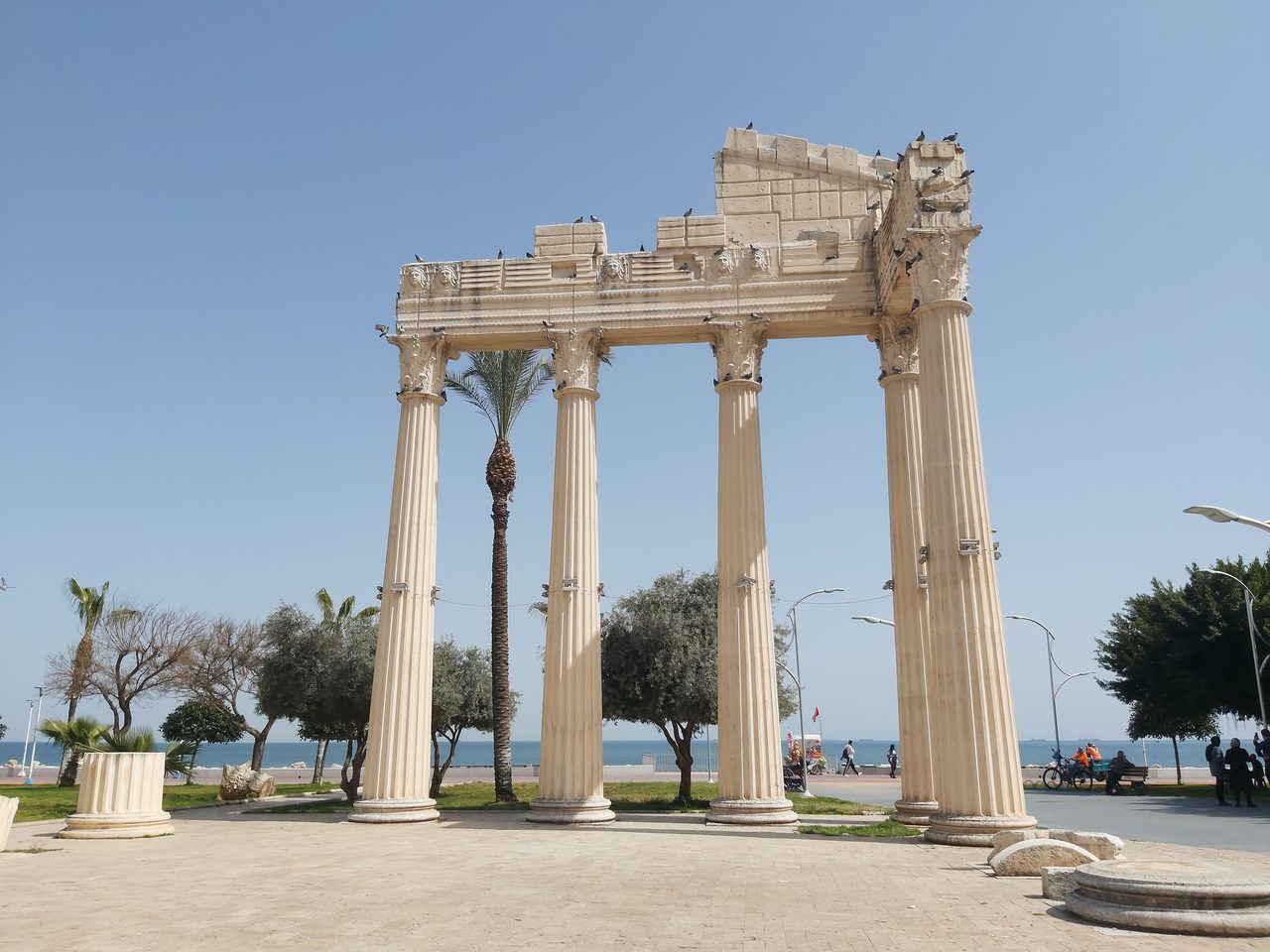
The mountain ruins of Olba, later renamed Diocaesarea, an inland sanctuary city built around a Hellenistic temple to Zeus Olbios and expanded by Rome into a full city with a colonnaded street, a monumental gate, a theatre, and a nymphaeum. Its columns still stand in rows along the former main street, giving a clearer sense of the ancient street plan than most ruins in the region. The setting is a working village, with the ruins scattered among houses and fields rather than fenced off as a single park.
Cennet ve Cehennem (Heaven and Hell Sinkholes)
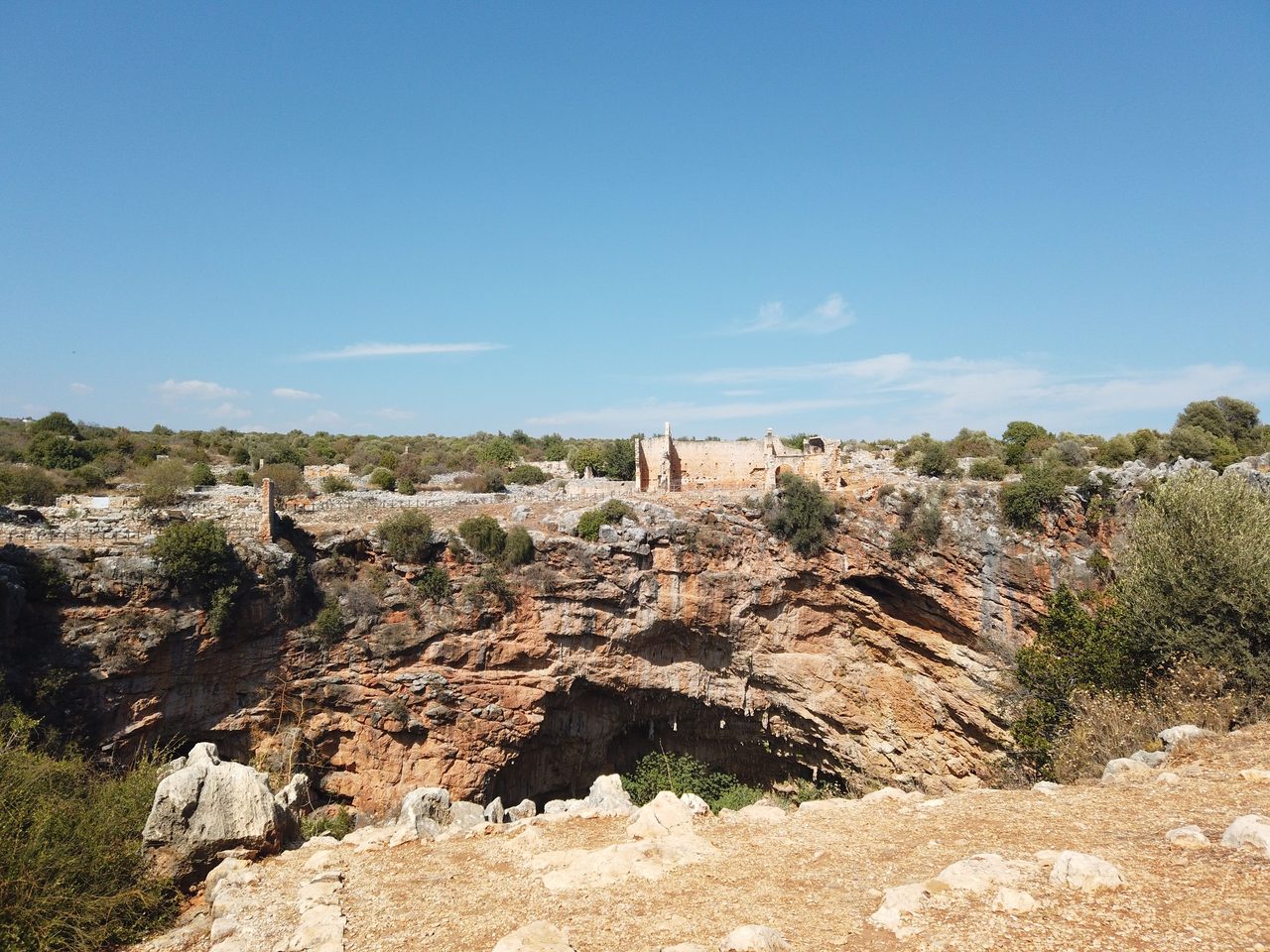
Two large limestone sinkholes a short walk apart: Cennet (Heaven), a deep chasm you descend by a long stepped path to a Byzantine chapel and a cave mouth at the bottom, and Cehennem (Hell), a sheer-sided pit you view only from a railed rim above. Local tradition ties the sinkholes to the myth of Typhon being cast into the underworld, and the chapel at the bottom of Cennet marks the site as a place of pilgrimage in Byzantine times. The descent into Cennet is the main physical activity here, not a passive viewpoint stop.
Tarsus — Roman Gate, St Paul's Well & Waterfall
Three separate points within old Tarsus tied to its Roman and biblical past: the Roman Gate (traditionally called Cleopatra's Gate) marking a historic entrance to the city, St Paul's Well in the old bazaar district associated with the apostle's traditional birthplace, and the Tarsus waterfall on the edge of town. Tarsus was a major Roman provincial capital, and the gate and surrounding old quarter reflect that layered history alongside the city's later Ottoman-era market streets. The three sights sit close enough together to combine into a single walking stop in the old town.
Alahan Monastery
A fifth-century Byzantine monastic complex perched on a ledge in the Taurus Mountains above the Göksu valley, built in two main clusters of churches, a baptistery, and monastic quarters connected by a colonnaded walkway. Its carved lintels and column capitals, some depicting animals and biblical scenes, are unusually well preserved for a mountain site of this age. The remote setting above the gorge is as much a reason to visit as the carvings themselves.
Adamkayalar Rock Reliefs
A set of Roman-era rock-cut reliefs carved into a cliff face in a valley inland from Kızkalesi, depicting local notables, warriors, and family groups in Roman dress, thought to have marked tombs of the regional elite. The reliefs are strung along a stretch of cliff reached on foot down a rough valley trail rather than displayed at a formal site. Their isolated, unrestored setting is part of what makes them different from the more visited ruins along the coast.
Recommended itineraries
Pick a length, follow the route. Each itinerary balances headline sights with breathing room.
5-Day Mersin Explorer
Day 1Arrive in Mersin, explore city center
Day 2Visit top attractions and museums
Day 3Day trip to nearby highlights
Day 4Local markets and hidden gems
Day 5Final sightseeing, departure
7-Day Classic Mersin
Days 1-2Mersin city highlights
Days 3-4Regional exploration
Days 5-6Cultural immersion and local experiences
Day 7Return and departure
14-Day Ultimate Mersin
Days 1-3Mersin comprehensive city tour
Days 4-6Northern region exploration
Days 7-9Eastern highlights
Days 10-12Southern attractions
Days 13-14Return to Mersin, departure
Where to stay in Mersin
Three tiers, every traveller covered — from cost-conscious to flagship hotels.
Budget ₺1,600 (~$35)
Hostels, budget hotels, and guesthouses offer affordable stays without sacrificing experience.
Mid-range ₺4,600 (~$100)
Boutique hotels and well-located accommodations provide comfort and convenience at reasonable prices.
Luxury ₺11,500+ (~$250)
World-class resorts and premium hotels deliver unforgettable experiences.
Mersin is reached by air via Adana Airport (ADA), by high-speed train from Ankara and Gaziantep, and by intercity bus from all major Turkish cities. Local transport uses city buses, the Metro light rail and dolmuş (shared minibus) services. A rental car is the most practical way to explore the coastal sites beyond Silifke.
High-Speed Train (YHT)
Mersin Gar links to Adana by frequent local train (30 min, ₺15-25, ~$0.33-0.54), then connect to the YHT network to Ankara (~4h 30m, ₺400-1,800, ~$8.65-39) and Gaziantep (~2h 30m, ₺300-900, ~$6.50-19.50). Book at tcddtasimacilik.gov.tr or TCDD app.
Cost: ₺15-1,800 depending on route
Intercity Bus (OtoGar)
Mersin OtoGar (Adnan Menderes Bulvarı) has services to Istanbul (12h, ₺550-1,600, ~$11.90-34.60), Ankara (9h, ₺450-1,200, ~$9.75-26), Antalya (6h, ₺300-650, ~$6.50-14.07), Gaziantep (4h, ₺200-450, ~$4.33-9.75) with Metro Turizm, Kamil Koç and Varan.
Cost: ₺200-1,600 depending on route
City Bus (MEGO)
Mersin municipality buses cover most districts. Flat fare ₺10 (~$0.22) with a Mersin Kart (rechargeable transit card, available from card machines at major stops).
Cost: ₺10 (~$0.22)
Mersin Metro (Light Rail)
The Mersin Metro (tram-light rail) runs east-west through the city center from Tece to Yeniçiftlik, ~26 km. Useful for reaching the seafront, OtoGar, and business districts. Runs 06:00-23:30, every 7-10 min in peak hours. Fare ₺10 (~$0.22) with Mersin Kart.
Cost: ₺10 (~$0.22)
Dolmuş (Shared Minibus)
Dolmuş minibuses serve suburban routes and key coastal towns: Tarsus (₺30, ~$0.65, 45 min), Erdemli (₺35, ~$0.76, 50 min), Silifke (₺70, ~$1.52, 1.5h). Board at OtoGar or designated stops on the D400 highway.
Cost: ₺10-90 (~$0.22-1.95)
Taxi
Yellow taxis are metered; use the BiTaksi or iTaksi apps to book and confirm the price. Starting rate ₺30-40 (~$0.65-0.87) plus ₺8-12/km (~$0.17-0.26). Airport to city center: ₺600-900 (~$13-19.50).
Cost: ₺40-900 depending on distance
Car Rental
Europcar, Avis and local firms (Decar, Sixt) operate from Adana Airport and Mersin city center. Compact car from ₺1,600/day (~$34.60). Required to reach Uzuncaburç, Adamkayalar, Alahan Monastery and Anamur independently.
Cost: ₺1,600-3,200/day (~$34.60-69.20)
Ferry (to North Cyprus)
Akgunler Denizcilik and Fergun run car ferries from Taşucu harbor (6 km west of Silifke) to Girne (Kyrenia), North Cyprus: roughly 7h crossing. Book at akgunler.com.tr or the Taşucu port office.
Cost: ₺1,500-2,500 per person (~$32-54); vehicle additional
Budget breakdown
Daily spend by tier in TRY, broken out by category.
Category
Budget
Mid-range
Luxury
Accommodation
₺750 (~$16)
₺2,300 (~$50)
₺6,900 (~$150)
Food (per day)
₺450 (~$10)
₺1,150 (~$25)
₺2,300 (~$50)
Transportation
₺250 (~$5)
₺700 (~$15)
₺1,380 (~$30)
Activities
₺150 (~$3)
₺460 (~$10)
₺920 (~$20)
Daily total
₺1,600 (~$35)
₺4,600 (~$100)
₺11,500+ (~$250)
Best time to visit Mersin
Weather through the year in Turkey
Best timeShoulderWorth avoiding
Average daytime temperature in °C. Figures are for Turkey.
April to June offers warm days (22-28°C), blooming wildflowers in the Taurus and uncrowded beaches. September-October brings still-warm sea temperatures and cooling evenings, ideal for combining beach and ruins. July-August is the high season — beaches and coastal resorts are packed, accommodation prices spike 30-50%, but sea conditions are perfect.
Essential travel tips
Base in Mersin city for the best transport links; stay in Kızkalesi for beach access
Rent a car to reach Uzuncaburç, Adamkayalar and Alahan efficiently
Bring cash (TRY) for village restaurants and small beach cafes
The Müzekart (Museum Pass Türkiye) covers Kızkalesi, Silifke Museum and Tarsus sites
Try Mersin's famous hummus and şiş tavuk at a lokanta for an authentic meal
Book Kızkalesi accommodation well ahead in July-August
Hidden gems
Off-the-beaten-path corners most travellers miss.
Adamkayalar Rock Reliefs
Twelve Hellenistic-Roman funeral reliefs carved into a sheer cliff above a pine-forested stream canyon, free to visit and rarely crowded even in summer.
Near Narlıkuyu, Kızkalesi district
Gilindire Cave (Aynalıgöl)
A limestone cave near Aydıncık concealing an underground lake; guided boats glide through illuminated chambers on mirror-still water.
Near Aydıncık, 170 km west of Mersin
Narlıkuyu Three Graces Mosaic
A tiny museum in the fishing village of Narlıkuyu housing a well-preserved 4th-century Roman mosaic of the Three Graces, a 10-minute detour from Kızkalesi.
Narlıkuyu village, 2 km east of Kızkalesi
Korykos (Kanlıdivane)
A free ancient site 6 km north of Kızkalesi with Hellenistic tombs, Byzantine churches and a deep sinkhole, almost always quiet.
6 km north of Kızkalesi, Erdemli
Safety information
INFO
UV index reaches 10-11 (extreme) June-August; apply SPF 50+ sunscreen every 2 hours, wear a wide-brim hat and avoid direct sun between 12:00-16:00 at exposed archaeological sites such as Kızkalesi and Uzuncaburç
INFO
Use only yellow metered taxis or book via the BiTaksi app; insist the taximeter is running before departure; agree a fare in advance for out-of-town trips where the meter does not apply
INFO
Swim between the red-and-yellow flags at Kızkalesi beach where lifeguards patrol July-August; the coastline westward toward Anamur has no lifeguards and rip currents after storms
INFO
The Cehennem (Hell) sinkhole rim at Cennet ve Cehennem has no guardrail; keep a firm hold on children and do not attempt to descend into the Hell gorge; the Heaven gorge staircase has 452 steps with a rope handrail
INFO
Drink bottled water (₺8-15/1.5L at BİM or A101 supermarkets) rather than tap water; street seafood — particularly midye dolma (stuffed mussels) — is safe only from high-turnover carts on the promenade; avoid mussels in hot weather from slow-moving vendors
INFO
Keep bags zipped and phones in pockets in the Kapalı Çarşı bazaar and at Mersin OtoGar (bus station); use hotel safes for passports, extra cash and cards; carry only the day's spending cash when visiting markets
INFO
Roads to Uzuncaburç (115 km) and Alahan Monastery (155 km) are narrow, winding and unlit; drive slowly, use headlights at all times and be prepared for oncoming farm vehicles and hairpin bends — do not attempt in poor visibility
Frequently asked questions
Do I need a visa to visit Mersin?
Entry requirements follow Turkey's national rules. Many nationalities can enter visa-free or obtain an e-Visa online at evisa.gov.tr. Check the portal well before traveling as requirements vary by nationality.
What is the best time to visit Mersin?
April to June and September to October offer warm Mediterranean weather, manageable crowds and ideal beach conditions. July and August are the hottest and busiest months with sea temperatures around 27-29°C. Winter is mild but windy.
How do I get to Kızkalesi from Mersin city?
Take a dolmuş from Mersin OtoGar toward Silifke (₺40-60, ~$1-1.30) and ask to be dropped at Kızkalesi, roughly 70 km west. Journey takes about 1.5 hours. Alternatively, rent a car from Mersin center for greater flexibility.
Can I visit Uzuncaburç on a day trip?
Yes, from Silifke town Uzuncaburç (ancient Olba) is 30 km north on a mountain road. Dolmuş minibuses run from Silifke in summer (₺30-40, ~$0.65-0.87); otherwise rent a car or join a local tour. The site itself takes 1.5-2 hours to explore.