World · 12 Places · Best May–June and September–October
Muğla
Muğla is a coastal province in southwestern Turkey encompassing the famed Turquoise Coast, where ancient ruins, turquoise bays, pine-forested mountains, and world-class beaches converge. Home to iconic destinations including Bodrum, Marmaris, Fethiye, Ölüdeniz, and Datça, it draws travelers seeking sun-drenched Aegean and Mediterranean scenery alongside rich Lycian, Carian, and Greek heritage.
Stretching across 13,338 km² of southwestern Turkey, Muğla province is one of the country's premier travel destinations. Its jagged coastline harbors hundreds of hidden coves, while inland valleys shelter olive groves, ancient necropolis sites, and thermal springs. The province is divided into distinct sub-destinations: Bodrum with its iconic castle and vibrant marina; Marmaris with its sweeping bay and pine forests; Fethiye and the Blue Lagoon at Ölüdeniz; the remote Datça peninsula; the lagoon town of Köyceğiz; and the sailing hub of Göcek. Visitors come for gulet (wooden yacht) cruises, Lycian Way trekking, paragliding over Ölüdeniz, diving in crystal waters, and exploring Hellenistic ruins like Knidos and Kaunos.
The 12 destinations our editors recommend — from iconic landmarks to under-the-radar finds.
Bodrum Castle
Built by the Knights Hospitaller in the early 15th century using stone from the nearby Mausoleum of Halicarnassus, this castle sits on a small peninsula dividing Bodrum's two harbors. It now houses the Museum of Underwater Archaeology, with excavated shipwreck cargoes displayed in the castle's towers and courtyards. Visitors walk between English, French, German and Italian towers, each reflecting the knights who once garrisoned them.
Ölüdeniz Blue Lagoon
This enclosed bay near Fethiye is fed by clear, calm water protected from open-sea currents by a sand spit, which is why it reads such a distinct turquoise color. The lagoon itself is a protected nature reserve, while the adjoining Belcekız beach strip has the loungers, restaurants and paragliding landing zone. Paragliders from Babadağ mountain drift down and land on the beach beside it throughout the day.
Saklıkent Gorge
One of Turkey's deepest canyons, Saklıkent cuts through the Akdağlar mountains with walls rising hundreds of meters above a fast, cold meltwater stream. A wooden walkway suspended over the river gets visitors to the gorge entrance, after which wading or scrambling through the narrow canyon requires shoes that can get wet. The water stays cold even in summer because it's fed by snowmelt.
Kaunos Ancient City
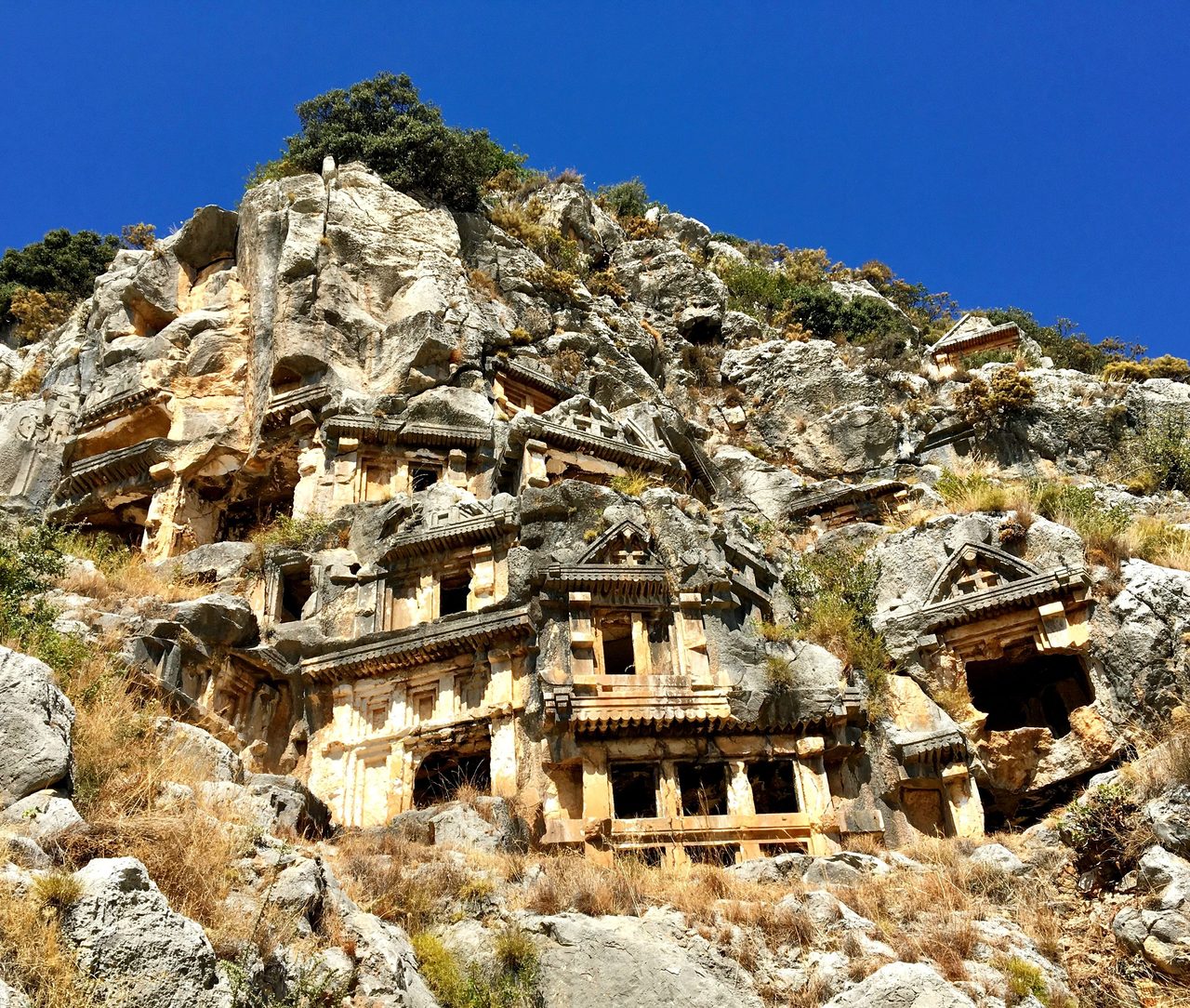
Kaunos was a Carian and later Roman port city on the Dalyan river delta, now landlocked from the sea by centuries of silt buildup. The site includes a well-preserved Roman theater, Byzantine basilica remains, and a harbor temple, but it's most recognizable from a distance for the rock-cut tombs carved into the cliff face above the river. Reaching the ruins normally means crossing the river by small boat from Dalyan town.
Butterfly Valley
This steep-walled valley near Fethiye is accessible mainly by boat from Ölüdeniz, since the alternative is a demanding cliffside hike down. It's named for the resident Jersey tiger moth population that gathers there in summer, along with a waterfall and a basic beach used by boat day-trippers and a small number of campers. The valley has limited infrastructure, reflecting its relative isolation from the coast road.
Mausoleum of Halicarnassus
This was the tomb built for Mausolus, a Carian satrap, and is the origin of the word "mausoleum." It was counted among the Seven Wonders of the Ancient World, though earthquakes brought it down over the medieval period and its stones were later reused by the Knights of St. John to build Bodrum Castle. What remains today is mostly the foundation and excavated blocks, with a small on-site museum explaining the structure's original form through models and fragments.
Recommended itineraries
Pick a length, follow the route. Each itinerary balances headline sights with breathing room.
5-Day Muğla Explorer
Day 1Arrive in Muğla, explore city center
Day 2Visit top attractions and museums
Day 3Day trip to nearby highlights
Day 4Local markets and hidden gems
Day 5Final sightseeing, departure
7-Day Classic Muğla
Days 1-2Muğla city highlights
Days 3-4Regional exploration
Days 5-6Cultural immersion and local experiences
Day 7Return and departure
14-Day Ultimate Muğla
Days 1-3Muğla comprehensive city tour
Days 4-6Northern region exploration
Days 7-9Eastern highlights
Days 10-12Southern attractions
Days 13-14Return to Muğla, departure
Where to stay in Muğla
Three tiers, every traveller covered — from cost-conscious to flagship hotels.
Budget ₺1,200–₺2,000/day (~$35–$59)
Hostels, budget hotels, and guesthouses offer affordable stays without sacrificing experience.
Mid-range ₺3,500–₺7,000/day (~$103–$206)
Boutique hotels and well-located accommodations provide comfort and convenience at reasonable prices.
Luxury ₺15,000–₺40,000+/day (~$441–$1,176)
World-class resorts and premium hotels deliver unforgettable experiences.
Mandarin Oriental Bodrum
Bodrum, Paradise Bay · ₺25,000–₺60,000/night (~$735–$1,765)
Cafés, neighbourhood gems, and tasting menus worth the table reservation.
Korfez Restaurant
Turkish Seafood · ₺500–₺1,200/person (~$15–$35)
A long-running waterfront fine-dining spot on Neyzen Tevfik Caddesi in Bodrum, built around its own boat that brings in the day's catch. The kitchen sticks to a classic Turkish seafood repertoire - fish cooked simply in olive oil, a wide meze spread to start - rather than chasing trends. Tables sit close to the water on Bodrum's marina-facing strip, drawing a mix of yacht-crowd regulars and visitors.
Muğla province is served by two international airports. Dalaman (DLM) handles western sub-districts (Fethiye, Marmaris, Köyceğiz) and Bodrum-Milas (BJV) serves Bodrum and Datça. Intercity dolmuş (shared minibuses) connect most towns. Ferries link Bodrum to Greek islands (Kos, Rhodes). Car rental is recommended for exploring inland areas.
Budget breakdown
Daily spend by tier in TRY, broken out by category.
Average daytime temperature in °C. Figures are for Turkey.
Spring (May–June) offers warm weather, wildflowers, fewer crowds, and lower prices. Summer peak (July–August) brings extreme heat and crowds but full services. September–October sees warm sea temperatures, thinning crowds, and pleasant hiking weather.
Essential travel tips
Book accommodation at least 3 months in advance for July–August
Download BiTaksi or inDrive apps for reliable taxis
Learn basic Turkish phrases — English is widely spoken in tourist areas but less so inland
Carry cash (TRY) for markets and small restaurants — cards accepted in most tourist areas
A car rental unlocks inland ruins, mountain villages, and off-beach coves
Hidden gems
Off-the-beaten-path corners most travellers miss.
Gümüşlük Wednesday Classical Concerts
Free open-air concerts held Wednesday evenings in summer at a ruined ancient harbor village 30 minutes from Bodrum center — classical and jazz under the stars at one of the most atmospheric venues on the Turquoise Coast
Akyaka Riverbend Walk and Restaurants
A forested walking path along the Azmak River with reed-fringed banks and restaurants built over the water — extraordinary natural setting almost unknown to foreign tourists despite being just 33 km from Muğla city
Selimiye Village
Tiny Marmaris-district village reachable by boat or a 55 km winding road from Marmaris; one fishing restaurant, crystal-clear calm bay, pine forest backdrop, and no crowds even in August
Köyceğiz Saturday Lakeside Market
A genuine local market with village cheeses, freshwater lake herbs, honey, and olives — local farmers, not tourist vendors; Köyceğiz lakefront, Saturday mornings from 07:00
Safety information
INFO
Keep valuables secured at beaches — use hotel safes
INFO
Use licensed taxis or Uber/BiTaksi app rather than unmarked cabs
INFO
Apply strong sunscreen — UV index regularly reaches 9–10 in summer
INFO
Carry a water bottle; dehydration risk is high in summer
INFO
Inform someone of your boat trip itinerary before gulet excursions
Frequently asked questions
Is Muğla safe to visit in 2026?
Muğla province is a safe, well-traveled destination. Millions of European tourists visit annually without incident. The primary risks are petty theft in crowded beach areas, occasional overcharging in taxis, and outdoor hazards (sun, sea currents, mountain terrain). Terrorism risk is assessed as low
What is the best time to visit Muğla?
The best time to visit Muğla is May–June and September–October. Muğla province has a classic Mediterranean climate with hot, dry summers and mild, wet winters. The coast averages over 300 sunny days per year. Sea temperatures peak at 26–28°C (79–82°F) in August an
What currency is used in Muğla?
The currency in Muğla is the Turkish Lira (TRY). ATMs are widely available in cities and tourist areas. Credit cards are accepted at most hotels and restaurants, but carry cash for markets and smaller establishments.
What language is spoken in Muğla?
The main language(s) spoken in Muğla: Turkish. In tourist areas, English is generally understood. Learning a few basic phrases in the local language is appreciated by locals.
What are the top attractions in Muğla?
The top attractions in Muğla include Bodrum Castle, Ölüdeniz Blue Lagoon, Saklıkent Gorge, Kaunos Ancient City, and Butterfly Valley. Each offers a unique experience, from historic landmarks to natural wonders.