
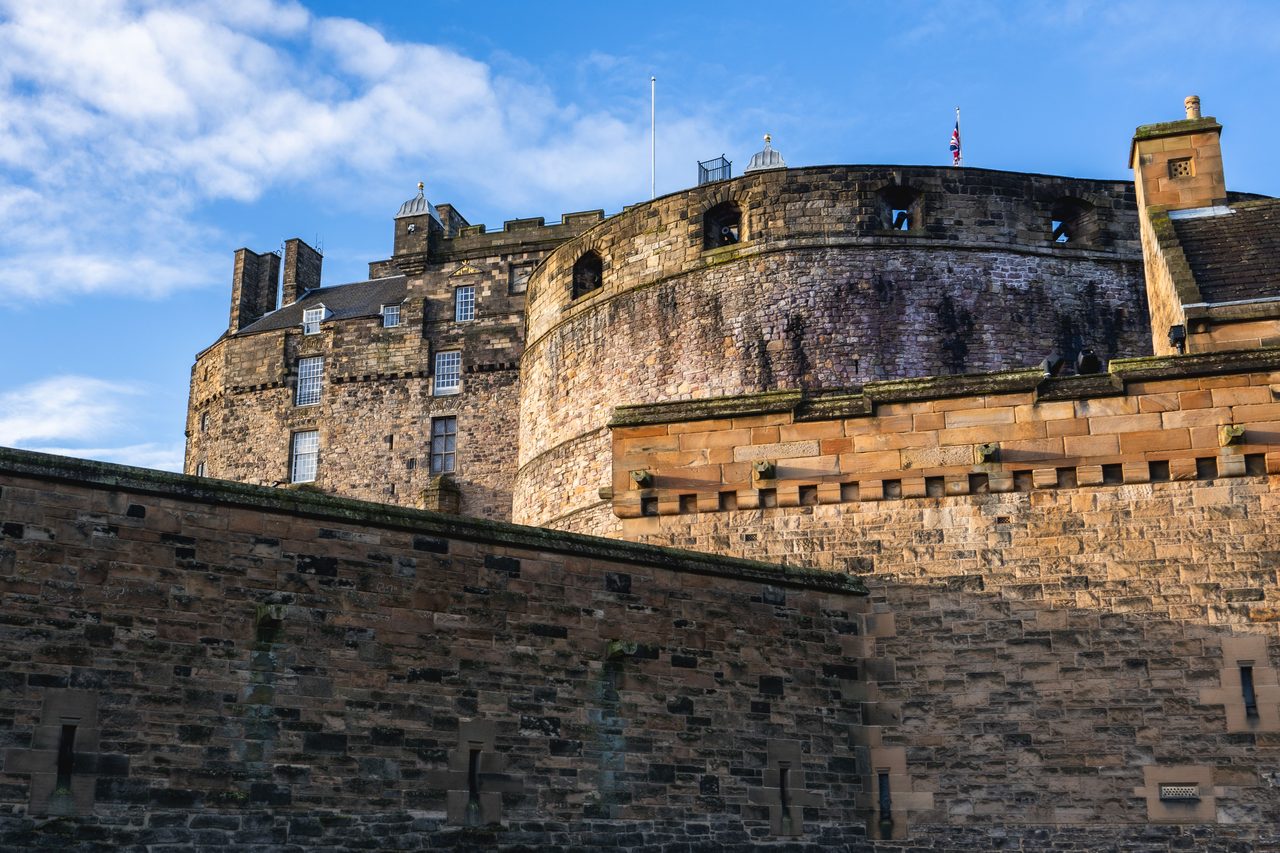
Iconic fortress dominating Edinburgh's skyline, perched on volcanic rock. Home to Scotland's Crown Jewels, the Stone of Destiny, and offering panoramic city views. The castle has witnessed sieges, royal births, and centuries of Scottish history.
Edinburgh Castle occupies Castle Rock, an extinct volcanic plug at the top of the Royal Mile in Edinburgh, Scotland, and dominates the city's skyline from almost every direction. Entry is through the Esplanade, the parade ground used for the Royal Edinburgh Military Tattoo, and over the drawbridge past statues of Robert the Bruce and William Wallace. Inside, the complex is a cluster of buildings from different centuries rather than a single structure. The Crown Room holds the Honours of Scotland, the oldest crown jewels in the British Isles, alongside the Stone of Destiny. The Royal Palace includes the small room where Mary, Queen of Scots gave birth to the future James VI. St Margaret's Chapel, dating from the early twelfth century, is regarded as the oldest surviving building in Edinburgh. Mons Meg, a fifteenth-century siege gun, and the Great Hall with its hammerbeam roof are further stops, and the National War Museum and regimental museums fill other buildings. The batteries on the ramparts give the best views across the New Town, the Firth of Forth and Arthur's Seat, and are the strongest photographic vantage points. The One O'Clock Gun is fired daily except Sundays, with visitors gathering at the Argyle Battery shortly before. A visit typically takes two to three hours, longer with a guided tour or audio guide. Queues form at the gatehouse and the Crown Room, so pre-booked timed tickets are strongly advised, particularly from June to August and during the Edinburgh festivals in August. Early morning on a weekday and the last two hours before closing are quietest. The site is steep and cobbled, and the weather on the rock can be windy even on clear days. Planning the order of the visit saves time. Many visitors head first to the Crown Room, to reach the Honours before queues build, and then move to the Great Hall and the batteries. Guided tours led by castle staff depart regularly from near the entrance and cover the history of the rock. The castle shop and tearoom sit near the Half Moon Battery, and the walk back down the Royal Mile passes many museums, shops and closes.
| Admission | Adult £19.50 · Child £11.70 |
|---|---|
| Hours | Daily 09:30-17:00 (extended summer hours) |
| Typical visit | 2-3 hours |
| Address | Castlehill, Edinburgh EH1 2NG |
Good to know
- Best for
- history buffs, photographers, families, first-time visitors
Location
Castlehill, Edinburgh EH1 2NG
55.9486, -3.1999 View on map
Highlights
- Honours of Scotland and the Stone of Destiny in the Crown Room
- St Margaret's Chapel, the oldest building in Edinburgh
- Mons Meg siege gun and the One O'Clock Gun
- Rampart views over the city, the Forth and Arthur's Seat
Tips for visiting
- Book online for guaranteed entry and avoid queues
- Watch the One O'Clock Gun fired daily except Sundays
- Visit early morning or late afternoon for fewer crowds
When to visit
Weekday mornings at opening or the final two hours before closing are quietest. Midday in summer and the August festival period are the most crowded.
Accessibility
The castle sits on steep cobbled ground, and access is limited in places. A mobility shuttle runs from the gatehouse for those who need it, and lifts serve some buildings. Visitors should check current access details with the castle before visiting.
Visit, book or contact
Frequently asked questions
How long does a visit to Edinburgh Castle take?
Most visitors spend two to three hours. Adding a guided tour or the military museums extends this.
Is Edinburgh Castle suitable for children?
Yes. The guns, the prison vaults and the soldiers' museums suit children, though the steep cobbled slopes can tire younger ones.
Is photography allowed inside?
Photography is allowed in most areas but not in the Crown Room, where the Honours of Scotland are displayed.