Northern Ireland is a land of dramatic contrasts — volcanic basalt coastlines, rolling green drumlins, and a capital city that has transformed itself from a divided post-industrial city into one of Europe's most vibrant short-break destinations. From the otherworldly columns of the Giant's Causeway to the Titanic Quarter's stainless-steel galleries, Northern Ireland rewards visitors who look beyond the obvious.
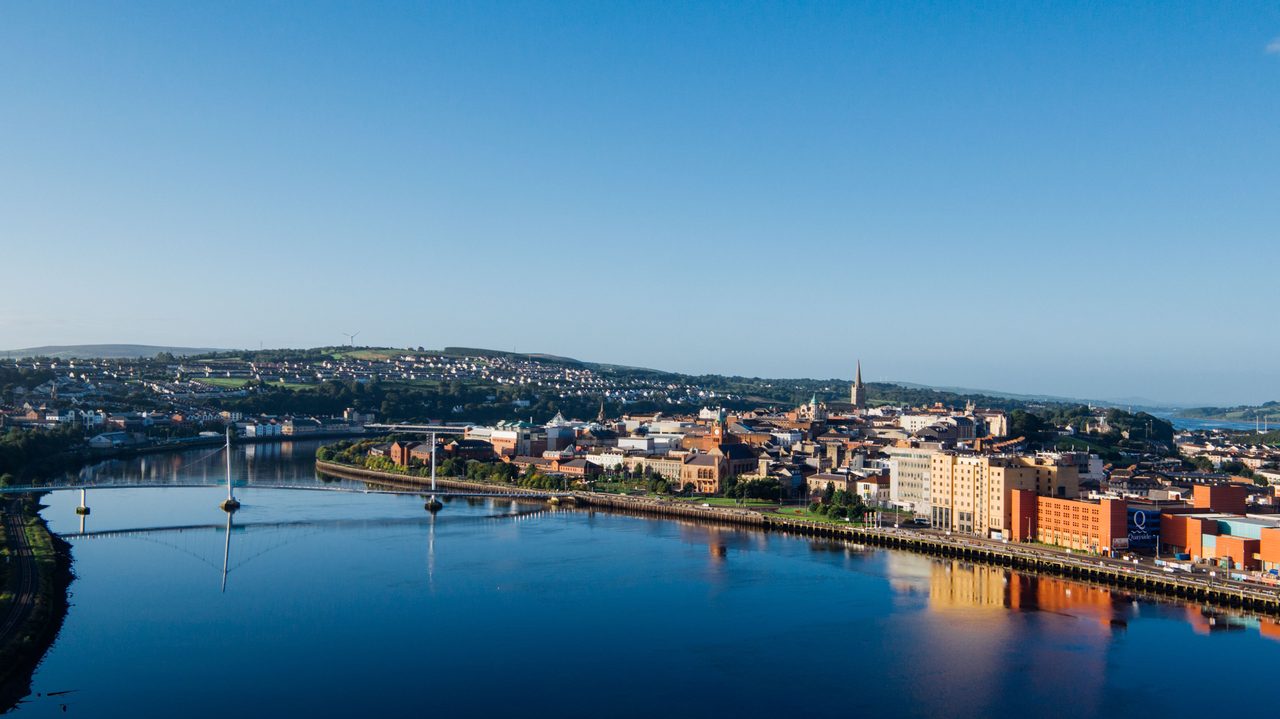
Northern Ireland occupies the northeastern corner of the island of Ireland and is one of four countries that make up the United Kingdom. Belfast, its capital, sits at the head of Belfast Lough and has undergone a remarkable renaissance since the peace process of the 1990s. Beyond the city, the Causeway Coastal Route ranks among the world's great scenic drives, linking the UNESCO-listed Giant's Causeway with Carrick-a-Rede rope bridge, the Glens of Antrim, and the ruined Dunluce Castle. The Mourne Mountains in County Down offer serious hiking and gentle hill walking, while the walled city of Derry~Londonderry is a living lesson in Irish history.
The 22 destinations our editors recommend — from iconic landmarks to under-the-radar finds.
Giant's Causeway
This UNESCO World Heritage Site is a spread of roughly 40,000 interlocking basalt columns formed by volcanic activity around 60 million years ago, most packed into hexagonal shapes that create a stepped, almost tiled surface running down into the sea. It sits on the Antrim coast and is Northern Ireland's best-known natural landmark. The site itself is a short walk downhill from the visitor centre, and once there you can walk out onto the columns themselves.
Titanic Belfast
Titanic Belfast is a museum built on the former Harland & Wolff shipyard where the Titanic was actually constructed and launched in 1911. Its nine interactive galleries cover Belfast's shipbuilding boom, the ship's construction, the sinking, and the wreck's discovery, using reconstructed cabin interiors and a suspended ride-style sequence through a recreated shipyard. The building's angular, silver-clad exterior is designed to evoke the ships' hulls and the White Star Line logo.
Carrick-a-Rede Rope Bridge
This rope bridge connects the Antrim coastline to the small island of Carrickarede, spanning a chasm above the sea that was traditionally crossed by salmon fishermen. The National Trust maintains the current bridge for visitors rather than fishing, and crossing it involves a walk along cliff-top paths before and after. It's a one-way flow across the bridge, so once you're on the island you continue around before crossing back.
Dark Hedges
This is a beech tree avenue planted in the 18th century along Bregagh Road, where the trees have grown to form a tunnel-like canopy over the narrow lane. It gained wider recognition after appearing as the Kingsroad in the HBO series Game of Thrones. The road is still a working public road, not a managed attraction, so there's no entry fee or set opening hours.
Dunluce Castle
Dunluce Castle is a ruined medieval castle perched on a basalt outcrop on the Antrim coast, with sheer drops to the sea on the seaward side. It was a stronghold of the MacDonnell clan and was partially abandoned after part of the kitchen reportedly collapsed into the sea in the 17th century. What remains are roofless walls and towers that you can walk through and around.
Belfast City Hall
Belfast City Hall is a Baroque Revival building completed in 1906, dominating Donegall Square in the city centre with its copper-domed roofline. It remains the seat of Belfast City Council and houses council chambers alongside marble-lined halls and stained glass. The grounds outside include war memorials and a garden of remembrance that are open to walk through freely.
Recommended itineraries
Pick a length, follow the route. Each itinerary balances headline sights with breathing room.
5-Day Northern Ireland Explorer
Day 1Arrive in Northern Ireland, explore city center
Day 2Visit top attractions and museums
Day 3Day trip to nearby highlights
Day 4Local markets and hidden gems
Day 5Final sightseeing, departure
7-Day Classic Northern Ireland
Days 1-2Northern Ireland city highlights
Days 3-4Regional exploration
Days 5-6Cultural immersion and local experiences
Day 7Return and departure
14-Day Ultimate Northern Ireland
Days 1-3Northern Ireland comprehensive city tour
Days 4-6Northern region exploration
Days 7-9Eastern highlights
Days 10-12Southern attractions
Days 13-14Return to Northern Ireland, departure
Where to stay in Northern Ireland
Three tiers, every traveller covered — from cost-conscious to flagship hotels.
Budget £45-£95/day (~$57-$120)
Hostels, budget hotels, and guesthouses offer affordable stays without sacrificing experience.
Mid-range £150-£280/day (~$190-$355)
Boutique hotels and well-located accommodations provide comfort and convenience at reasonable prices.
Luxury £370-£830/day (~$470-$1,054)
World-class resorts and premium hotels deliver unforgettable experiences.
A quietly serious dining room set beside the Lagan near the Waterfront Hall, built around a tasting-menu format that leans on foraged and farmed ingredients from across Ulster. The kitchen changes the menu with the seasons rather than running a fixed carte, and the plating is precise without being fussy. The room itself is understated - pale wood, low noise, river light through the windows rather than heavy decor.
A busy, bare-boards seafood restaurant just off Belfast's main shopping streets, built around shellfish the company harvests itself from beds in Co. Down. The menu runs from a simple chowder to platters of oysters and crab claws, and the kitchen keeps preparations plain so the seafood does the work. It gets loud and packed at peak times, which is part of the appeal rather than a flaw.
The Barking Dog
Modern Irish / Gastropub · ££ — mains £15–£28/person (~$19–$36)
A neighbourhood gastropub on the Malone Road that draws heavily on nearby Queen's University custom as well as local regulars, with a menu built around slow-cooked and grilled meat rather than pub-food shortcuts. The room mixes exposed brick and dark wood with a long bar, and it functions equally as a proper dinner spot or a place to eat before drinks.
Deanes EIPIC
Modern European / Tasting Menu · £££££ — tasting menu £85–£120/person (~$108–$152)
The fine-dining flagship within Michael Deane's Howard Street restaurant group, run as a tasting-menu-only room separate from the more casual Deanes Meat Locker next door. The cooking is technical modern European built on Northern Irish produce - foraged leaves, cured meats made in-house, seasonal game and fish - plated with restraint. The dining room is small, formal, and designed for a slow multi-hour sitting rather than a quick dinner.
Yardbird Belfast
American / Fried Chicken · £ — mains £10–£18/person (~$13–$23)
A loud, informal fried-chicken spot on Hill Street in the Cathedral Quarter, done in a rough-edged American diner style with exposed brick and bare tables. The food is straightforwardly American - buttermilk fried chicken, Nashville-style heat, mac and cheese as a side - rather than an Irish take on the format.
Home Restaurant
Modern Irish · £££ — dinner £35–£55/person (~$44–$70)
A city-centre modern Irish restaurant near Wellington Place, sitting between a casual bistro and full fine dining in tone - a relaxed room with an open kitchen feel, serving produce sourced from named Northern Irish suppliers rather than an anonymous seasonal menu. It works for both a business lunch and an evening dinner without feeling like either a canteen or an occasion restaurant.
Belfast is served by two airports: George Best Belfast City Airport (BHD, 4 km from city centre) and Belfast International Airport (BFS, 30 km west). Translink operates buses and trains across Northern Ireland. Citybus (Metro) runs within Belfast. Driving is the best way to explore rural areas along the Causeway Coast.
Budget breakdown
Daily spend by tier in GBP (£), broken out by category.
Category
Budget
Mid-range
Luxury
Accommodation
£20-£40/night (~$25-$51) — hostels and budget guesthouses
£5-£15/day (~$6-$19) — Metro bus + occasional train
£15-£30/day (~$19-$38)
£40-£80/day (~$51-$102) — private hire
Activities
£5-£15/day (~$6-$19) — many attractions are free
£20-£40/day (~$25-$51)
£50-£150/day (~$63-$190)
Daily total
£45-£95/day (~$57-$120)
£150-£280/day (~$190-$355)
£370-£830/day (~$470-$1,054)
Best time to visit Northern Ireland
Weather through the year in United Kingdom
Best timeShoulderWorth avoiding
Average daytime temperature in °C. Figures are for United Kingdom.
June–August for warmest weather, longest days, and outdoor festivals
Northern Ireland has mild but wet weather year-round. Spring (April–May) and autumn (September–October) offer fewer crowds with reasonable weather. The summer solstice brings nearly 18 hours of daylight.
Essential travel tips
A valid UK driving licence (or international permit) is required to hire a car
Northern Ireland uses the same electrical outlets as Great Britain (Type G, 230V)
Tap water is safe to drink throughout Northern Ireland
Most restaurants and shops accept major credit/debit cards; carry some cash for rural areas
Tipping is customary but not mandatory: 10-15% in restaurants if service charge not included
Hidden gems
Off-the-beaten-path corners most travellers miss.
Safety information
INFO
Be aware of some areas in Belfast where community tensions remain; these are clearly marked with political murals
INFO
Keep valuables secure in crowded tourist areas
INFO
Coastal paths can be slippery — wear appropriate footwear
INFO
Emergency services: dial 999 (UK standard)
Frequently asked questions
Is Northern Ireland safe to visit in 2026?
Northern Ireland is one of the safer destinations in Europe for tourists. Belfast has undergone a remarkable transformation since the 1998 Good Friday Agreement, and most visitors have entirely positive experiences. Petty crime such as pickpocketing exists in tourist areas but violent crime targetin
What is the best time to visit Northern Ireland?
The best time to visit Northern Ireland is June–August. Northern Ireland has a temperate maritime climate characterised by mild temperatures year-round, frequent rainfall, and changeable conditions. Summers are cool and pleasant (highs 18–22°C / 64–72°F);
What currency is used in Northern Ireland?
The currency in Northern Ireland is the British Pound (GBP, £). ATMs are widely available in cities and tourist areas. Credit cards are accepted at most hotels and restaurants, but carry cash for markets and smaller establishments.
What language is spoken in Northern Ireland?
The main language(s) spoken in Northern Ireland: English, Irish, Ulster-Scots. In tourist areas, English is generally understood. Learning a few basic phrases in the local language is appreciated by locals.
What are the top attractions in Northern Ireland?
The top attractions in Northern Ireland include Giant's Causeway, Titanic Belfast, Carrick-a-Rede Rope Bridge, Dark Hedges, and Dunluce Castle. Each offers a unique experience, from historic landmarks to natural wonders.