Open Travel Guide
Arizona

World · 28 Places · Best October to April

Arizona

Arizona is a southwestern US state renowned for its dramatic desert landscapes, ancient Native American cultures, and iconic natural wonders. Home to the Grand Canyon, one of the world's most visited natural sites, Arizona offers visitors a stunning contrast of red rock formations in Sedona, towering saguaro cacti in the Sonoran Desert, forested mountains around Flagstaff, and the otherworldly mesas of Monument Valley.

Capital
Phoenix
Currency
US Dollar
Language
English
Time zone
MST (UTC-7, no daylight saving)
Best time
October to April
Places
28 curated
On this page

About Arizona

Arizona captivates visitors with its extraordinary geological diversity and rich cultural heritage. The state's landscape ranges from the scorching low desert of Phoenix (1,086 ft elevation) to the cool ponderosa pine forests of Flagstaff (7,000 ft). The Grand Canyon, carved over millions of years by the Colorado River, draws nearly 6 million visitors annually. Sedona's red rock formations create a spiritual atmosphere that has made it a wellness and arts destination. The ancient Hohokam canals beneath Phoenix, the cliff dwellings of Montezuma Castle, and the petroglyphs scattered across the desert speak to 2,000 years of human habitation. Arizona's Native American nations—including the Navajo, Hopi, Apache, and Tohono O'odham—maintain vibrant living cultures. The state's Wild West history comes alive in Tombstone, and its Sonoran Mexican food tradition produces some of the country's most distinctive regional cuisine.

Capital
Phoenix
Largest city
Phoenix
Population
7.4 million
Languages
English, Spanish
Currency
US Dollar
Time zone
MST (UTC-7, no daylight saving)

Explore Arizona by topic

Jump straight to the experience you're planning.

Best places to visit in Arizona

The 28 destinations our editors recommend — from iconic landmarks to under-the-radar finds.

Grand Canyon South Rim

Grand Canyon South Rim

One of the world's most awe-inspiring natural wonders, the Grand Canyon stretches 277 miles long and up to 18 miles wide, with depths exceeding a mile. The South Rim is open year-round and offers iconic viewpoints including Mather Point, Desert View, and Yavapai Point, plus access to the famous Bright Angel and South Kaibab trails.

Sedona Red Rock Country

Sedona Red Rock Country

Sedona is surrounded by dramatic red sandstone formations including Cathedral Rock, Bell Rock, and Courthouse Butte that glow orange and crimson at sunrise and sunset. The town is also known for its energy vortex sites believed to emit healing spiritual energy, along with a thriving arts community, jeep tours, and world-class spas.

Monument Valley Navajo Tribal Park

Monument Valley Navajo Tribal Park

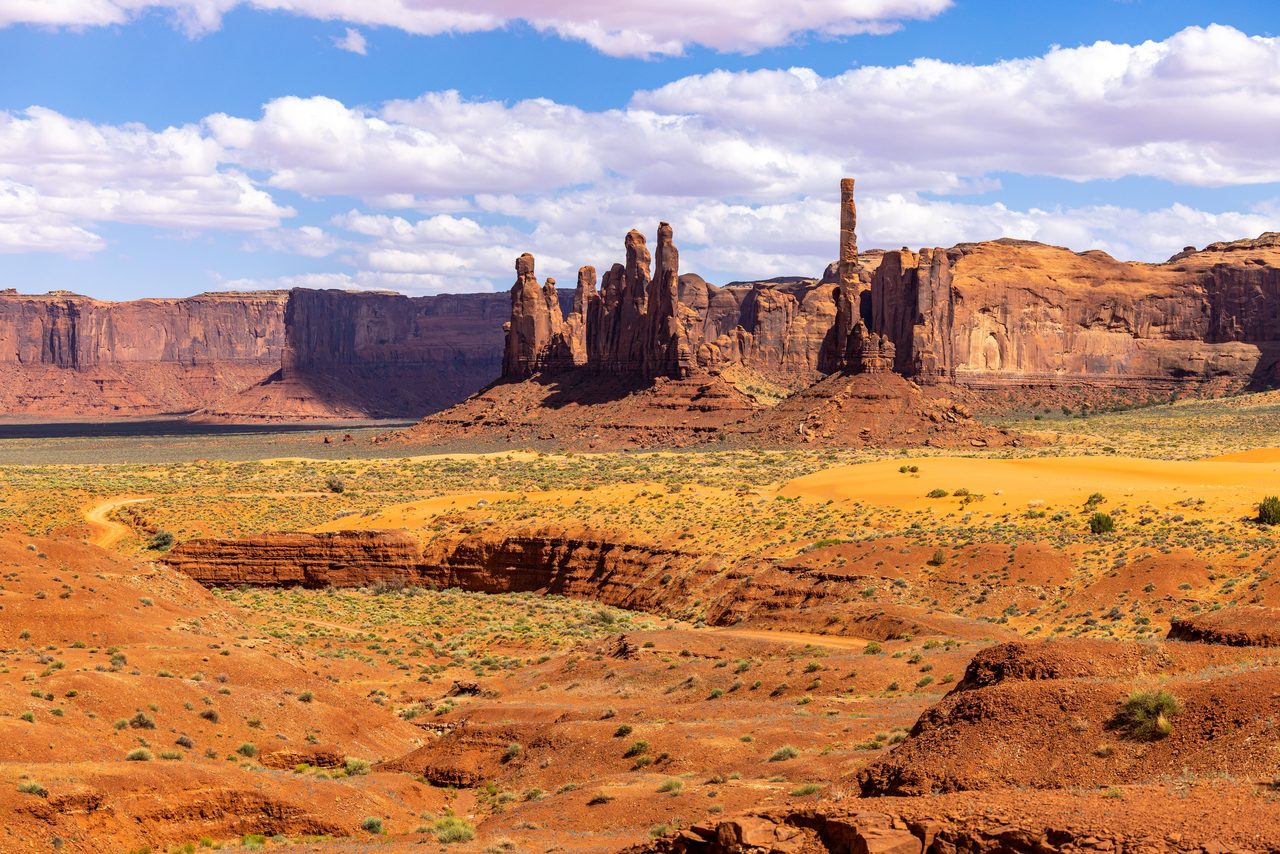
Monument Valley's iconic red sandstone buttes — The Mittens and Merrick Butte — rise dramatically from the Colorado Plateau floor and have appeared in countless Western films. Located on Navajo Nation land straddling Arizona and Utah, the park offers scenic drives, Navajo-guided tours, and unforgettable sunrise views.

Antelope Canyon

Antelope Canyon

Antelope Canyon is a breathtaking slot canyon carved by water erosion in Navajo sandstone, creating sweeping, wave-like walls of orange and red. The famous light beams penetrating through narrow openings in the upper canyon make it one of the most photographed places on Earth. Both Upper Antelope Canyon (The Crack) and Lower Antelope Canyon (The Corkscrew) require guided Navajo tours.

Horseshoe Bend

Horseshoe Bend

Horseshoe Bend is a stunning horseshoe-shaped meander of the Colorado River located just outside Page, where the river makes an almost 270-degree curve around a massive sandstone butte 1,000 feet below the overlook rim. The dramatic canyon walls and deep blue-green water create one of Arizona's most iconic photographs.

Saguaro National Park

Saguaro National Park

Saguaro National Park, split into East (Rincon Mountain) and West (Tucson Mountain) districts flanking Tucson, protects the largest concentration of the giant saguaro cactus — the symbol of the American Southwest. These majestic cacti can live 150-200 years and grow up to 40 feet tall, with arms beginning to appear only after 75 years.

Recommended itineraries

Pick a length, follow the route. Each itinerary balances headline sights with breathing room.

5-Day Arizona Explorer

  • Day 1Arrive in Arizona, explore city center
  • Day 2Visit top attractions and museums
  • Day 3Day trip to nearby highlights
  • Day 4Local markets and hidden gems
  • Day 5Final sightseeing, departure

7-Day Classic Arizona

  • Days 1-2Arizona city highlights
  • Days 3-4Regional exploration
  • Days 5-6Cultural immersion and local experiences
  • Day 7Return and departure

14-Day Ultimate Arizona

  • Days 1-3Arizona comprehensive city tour
  • Days 4-6Northern region exploration
  • Days 7-9Eastern highlights
  • Days 10-12Southern attractions
  • Days 13-14Return to Arizona, departure

Where to stay in Arizona

Three tiers, every traveller covered — from cost-conscious to flagship hotels.

Budget $65

Hostels, budget hotels, and guesthouses offer affordable stays without sacrificing experience.

Mid-range $175

Boutique hotels and well-located accommodations provide comfort and convenience at reasonable prices.

Luxury $450

World-class resorts and premium hotels deliver unforgettable experiences.

The Phoenician, a Luxury Collection Resort

Scottsdale · $$$$

Set against the dramatic backdrop of Camelback Mountain in Scottsdale, The Phoenician is one of Arizona's most iconic luxury resorts. Its 250 acres feature multiple pools, a cactus garden, the Centre for Well-Being spa, three golf courses, and eleven dining options. The resort's signature mother-of-pearl-lined pool is legendary.

Check rates on Booking.com

Four Seasons Resort Scottsdale at Troon North

North Scottsdale · $$$$

Perched high in the Sonoran Desert foothills of North Scottsdale, this exceptional resort offers 210 casitas and villas spread across 40 desert acres with stunning mountain views. The Troon North Golf Club (two championship courses), the award-winning Elements Restaurant, and the Spa at Troon North make this a premier Arizona destination.

Check rates on Booking.com

Enchantment Resort Sedona

Sedona · $$$$

Nestled within the soaring red walls of Boynton Canyon in Sedona, Enchantment Resort is one of America's most breathtaking resort settings. The 70-acre property features the acclaimed Mii amo destination spa, multiple pools, tennis courts, and direct access to one of Sedona's most sacred canyon hikes. Casita-style rooms provide maximum seclusion.

Check rates on Booking.com

El Tovar Hotel

Grand Canyon Village · $$$$

Opened in 1905 and perched on the very rim of the Grand Canyon, El Tovar is one of America's most storied historic hotels. Built by the Fred Harvey Company in a rustic European hunting lodge style, it offers 78 rooms and suites with some featuring direct canyon rim views. The dining room remains the finest restaurant on the South Rim.

Check rates on Booking.com

Where to eat in Arizona

Cafés, neighbourhood gems, and tasting menus worth the table reservation.

Kai Restaurant

Native American / Contemporary Southwestern · $$$$

Arizona's only AAA Five Diamond and Forbes Five-Star restaurant, Kai is one of America's most unique fine dining experiences. Located at the Sheraton Grand at Wild Horse Pass on the Gila River Indian Community, Kai sources ingredients from Native American farms and incorporates Pima and Maricopa cultural traditions into every aspect of the meal.

Binkley's Restaurant

Contemporary American · $$$$

Chef Kevin Binkley's flagship restaurant in Cave Creek is considered one of the Phoenix area's most innovative fine dining experiences, offering a multi-course tasting menu that showcases extraordinary technique and seasonal Arizona ingredients. The intimate 20-seat restaurant creates a highly personal dining experience.

Quiessence at The Farm at South Mountain

Farm-to-Table American · $$$$

Quiessence occupies a 10-acre working organic farm at the foot of South Mountain in Phoenix, offering one of the most romantic dining settings in Arizona. The menus change weekly based on what's harvested from the farm, presented with classical French technique and Arizona ingredients. The setting — surrounded by pecan groves and herb gardens — is magical.

Pizzeria Bianco

Neapolitan Pizza · $$

Chef Chris Bianco's legendary pizzeria in downtown Phoenix was the first pizza restaurant to win a James Beard Award, and it remains one of America's most celebrated pizza destinations. The wood-fired pizzas use house-made mozzarella, imported Italian flour, and local Arizona ingredients. The Rosa pizza with pistachios and Parmigiano-Reggiano is iconic.

Matt's Big Breakfast

American Breakfast · $

Matt's Big Breakfast is a Phoenix institution with two locations where everything is made from scratch using local, humanely-raised ingredients. The small, diner-style spaces are always packed with loyal locals who queue for the fluffy pancakes, hand-formed sausage, and farm-fresh eggs. A must for breakfast lovers.

The Mission

Modern Mexican / Latin · $$$

The Mission combines Colonial Mexican church architecture with modern Latin cuisine in one of Scottsdale's most atmospheric dining rooms. The menu focuses on bold, wood-fired preparations with chile-forward sauces and craft cocktails featuring Mexican spirits. The handmade tortillas and tableside guacamole are essential starters.

Book a food tour in Arizona We may earn a commission from bookings made through this link.

Getting around Arizona

A rental car is essential for exploring Arizona beyond Phoenix's urban core. The state's most iconic destinations — Grand Canyon, Sedona, Monument Valley, Antelope Canyon — are accessible only by personal or tour vehicle. Phoenix has a useful light rail and bus network (Valley Metro), and Tucson has Sun Tran bus service, but neither extends to the major natural attractions. Distances between cities are long: Phoenix to Grand Canyon is 4 hours, Phoenix to Tucson is 2 hours. Plan for significant driving time on any Arizona road trip.

Rental Car

Cost: $45-120 per day

Valley Metro Light Rail (Phoenix)

Cost: $2 per ride, $4 day pass

Sun Tran Bus (Tucson)

Cost: $1.75 per ride

Uber/Lyft

Cost: $10-30 for most city trips

Tour Buses/Shuttle Services

Cost: $50-200 per person depending on destination

Helicopter Tours

Cost: $200-400 per person

Budget breakdown

Daily spend by tier in USD, broken out by category.

Category Budget Mid-range Luxury
Accommodation $30 $120 $300
Food (per day) $20 $35 $100
Transportation $10 $10 $25
Activities $5 $10 $25
Daily total $65 $175 $450

Best time to visit Arizona

Weather through the year in United States

0° JAN 2° FEB 8° MAR 14° APR 18° MAY 24° JUN 26° JUL 26° AUG 21° SEP 15° OCT 9° NOV 4° DEC

Best time Shoulder Worth avoiding

Average daytime temperature in °C. Figures are for United States.

Essential travel tips

  • Research visa requirements before your trip
  • Learn a few basic phrases in the local language
  • Carry cash as cards may not be accepted everywhere
  • Respect local customs and dress codes
  • Purchase travel insurance before departure

Safety information

INFO

Extreme heat is the number one danger in Arizona from May through September. Temperatures in Phoenix regularly exceed 110°F (43°C) in July-August. Never hike between 10am and 4pm in summer, carry at least 1 liter of water per hour of hiking, and recognize heat stroke symptoms (confusion, no sweating, hot dry skin) as a medical emergency.

INFO

Carry significantly more water than you think you need for any hike or desert excursion. A general rule is 1 liter per hour in summer, 0.5 liters per hour in winter. The Grand Canyon Search and Rescue team responds to hundreds of heat and dehydration emergencies annually.

INFO

Flash floods occur rapidly during Arizona's monsoon season (July-September) and can be deadly even when skies appear clear locally. Never enter or park in washes (dry creek beds) or canyon bottoms when rain is falling anywhere in the watershed. Flood waters can arrive in minutes without warning.

INFO

Scorpions are common throughout Arizona, particularly the Arizona bark scorpion — the most venomous scorpion in North America. Shake out shoes before putting them on, check bedding in rustic accommodations, avoid leaving clothing on the ground, and never reach into crevices or under rocks without looking first. Most stings cause intense pain but are rarely fatal for healthy adults.

INFO

Rattlesnakes are found throughout Arizona, including around popular hiking trails in spring and fall. Watch where you step and where you place your hands when scrambling. If bitten, stay calm, immobilize the affected area, and seek emergency care immediately. Do not attempt to suck out venom.

INFO

Sun protection is essential year-round in Arizona. Apply SPF 30+ sunscreen, wear a wide-brimmed hat, and use UV-protective clothing, especially at high elevations (Flagstaff, Grand Canyon rim) where UV radiation is stronger. Sunburn can occur even in winter.

INFO

Border area safety: The areas within 50 miles of the US-Mexico border (including southern Tucson, the Sonoran Desert, and Cochise County) have occasional drug trafficking activity. Stay on official roads and trails, heed any Border Patrol advisories, and do not approach unmarked packages or supplies you may encounter in the desert.

INFO

Fire safety is critical in Arizona's dry forests and grasslands. Wildfires spread rapidly and can cut off roads without warning. Check fire restrictions (campfire bans are frequent in spring/summer), monitor AZFireInfo.gov, and know alternative escape routes when in forested areas.

INFO

Desert road breakdowns can be life-threatening in extreme heat. Before driving into remote areas, ensure your vehicle has a full tank of gas, check tire pressure, carry extra water (1 gallon per person per day), and have a charged phone with offline maps downloaded. Tell someone your itinerary.

INFO

Altitude sickness can affect visitors ascending quickly to Flagstaff (7,000 ft), the Grand Canyon North Rim (8,241 ft), or Humphreys Peak (12,633 ft). Symptoms include headache, nausea, and shortness of breath. Ascend gradually, stay hydrated, and descend if symptoms worsen.

INFO

Wildlife encounters in the desert: Javelinas (collared peccaries) can be aggressive if they feel cornered, especially with young. Give them space. Mountain lions are present in suburban areas near Tucson and Scottsdale — make noise while hiking and keep children close. Gila monsters (venomous lizards) are rarely encountered but do not handle them.

INFO

Monsoon lightning strikes are dangerous and frequent from July through early September. The Phoenix area has one of the highest lightning strike densities in the US. Descend from exposed ridges and peaks before afternoon storms develop, typically by noon in monsoon season.

INFO

Navajo Nation and other tribal lands have specific rules: speed limits are strictly enforced, alcohol is prohibited on most reservation lands, and photography of sacred sites and ceremonies requires explicit permission. Respect all posted signs.

INFO

Swimming in natural waterways like Oak Creek at Slide Rock, the Salt River, and Lake Powell carries risks. Flash floods can surge through canyons without warning, and currents in rivers can be powerful. Children should be supervised at all times near water.

INFO

Car theft and break-ins: Avoid leaving valuables visible in rental cars, particularly at busy trailheads at Camelback Mountain, Cathedral Rock, and Horseshoe Bend where theft from parked vehicles has been reported.

Frequently asked questions

Is Arizona safe to visit in 2026?

Arizona is generally a very safe destination for tourists. The primary risks are environmental — extreme summer heat, flash flooding, and wildlife encounters — rather than crime-related. With proper preparation, most hazards are easily avoided. Emergency services: police at 911, medical at 911.

What is the best time to visit Arizona?

The best time to visit Arizona is October to April.

Do I need a visa to visit Arizona?

Entry requirements follow United States federal immigration rules. Citizens of Visa Waiver Program countries can visit for up to 90 days with an approved ESTA. All others require a US visa. Requirements vary by nationality, so check with your nearest embassy or the official immigration website before traveling.

What currency is used in Arizona?

The currency in Arizona is the US Dollar (USD). ATMs are widely available in cities and tourist areas. Credit cards are accepted at most hotels and restaurants, but carry cash for markets and smaller establishments.

What language is spoken in Arizona?

The main language(s) spoken in Arizona: English, Spanish. In tourist areas, English is generally understood. Learning a few basic phrases in the local language is appreciated by locals.

What are the top attractions in Arizona?

The top attractions in Arizona include Grand Canyon South Rim, Sedona Red Rock Country, Monument Valley Navajo Tribal Park, Antelope Canyon, and Horseshoe Bend. Each offers a unique experience, from historic landmarks to natural wonders.


