World · 21 Places · Best May–June and September–October
Pennsylvania
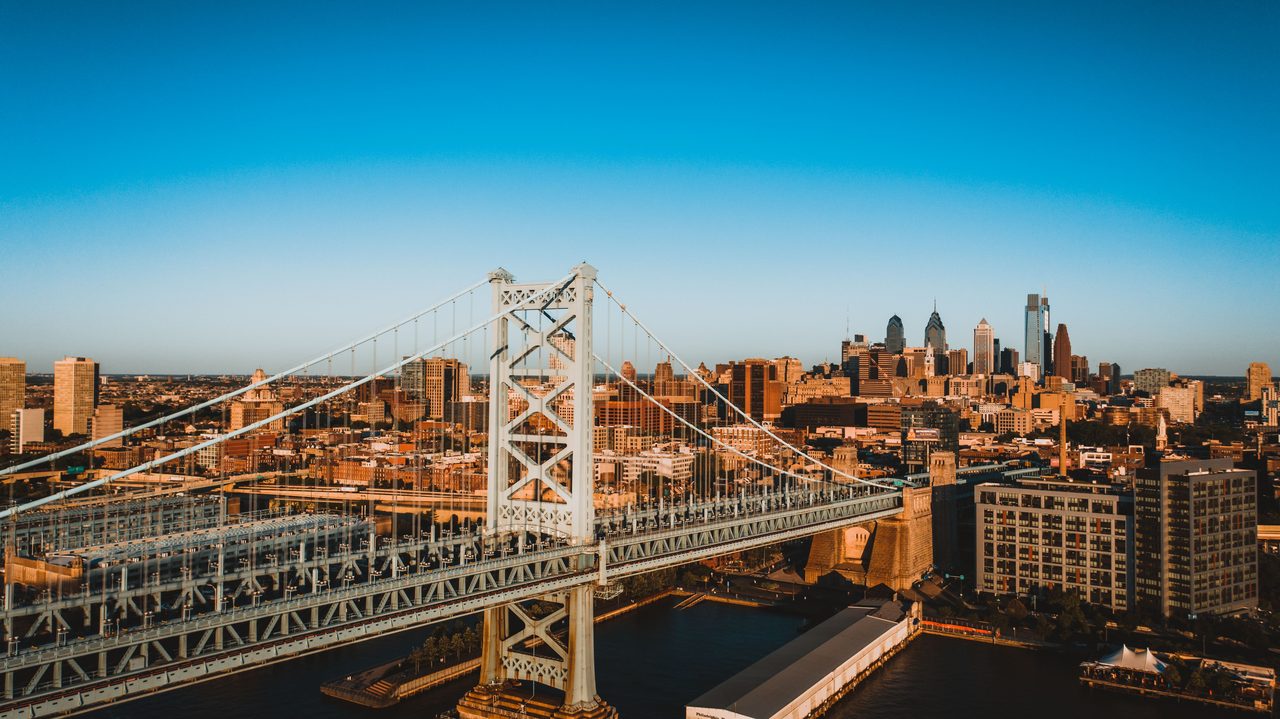
Pennsylvania stretches from the Delaware River to the Ohio border, encompassing historic Philadelphia, dynamic Pittsburgh, the scenic Pocono Mountains, the rolling Amish farmlands of Lancaster County, and some of the most important Revolutionary and Civil War battlefields in the United States. It is one of the original 13 colonies, home to Independence Hall, the Liberty Bell, and Gettysburg National Military Park.
Pennsylvania is a mid-Atlantic state of extraordinary diversity — a place where 18th-century cobblestone streets meet world-class art museums, where Amish horse-drawn buggies share highways with tech corridors, and where forested ridges of the Appalachians give way to sprawling rust-belt cities reborn as cultural hubs. Philadelphia anchors the southeast with revolutionary history, vibrant neighborhoods, and a formidable food scene. Pittsburgh, once the steel capital of the world, has reinvented itself with universities, museums, and a thriving tech sector. Between them lie the Pennsylvania Dutch Country, the Pocono Mountains, Hershey, Gettysburg, and hundreds of state parks. Pennsylvania offers travelers authentic American history, affordable costs, four distinct seasons, and an accessible road network from major northeast corridor cities.
The 21 destinations our editors recommend — from iconic landmarks to under-the-radar finds.
Independence Hall
This Georgian brick building on Chestnut Street is where the Second Continental Congress adopted the Declaration of Independence in 1776 and where delegates later debated and signed the U.S. Constitution in 1787. Rangers lead visitors through the Assembly Room, pointing out the "Rising Sun" chair George Washington sat in during the Constitutional Convention. Entry is by timed tour only, and the room itself is smaller than photographs suggest, so groups move through in batches of around 40.
Liberty Bell Center
Housed in a glass-walled pavilion facing Independence Hall, this exhibit holds the cracked bronze bell that became a symbol of the abolitionist and civil rights movements long after its original 1751 casting. The building's design lets visitors photograph the bell with Independence Hall visible through the window behind it. Panels along the walk-through trace the bell's casting flaws, its recasting by local founders, and how it acquired its current name in the 19th century.
Gettysburg National Military Park
This is the site of the July 1863 battle that turned back Robert E. Lee's invasion of the North and produced the largest casualty count of the Civil War. The park covers roughly 6,000 acres of preserved farmland, ridgelines, and monuments, including the field where Pickett's Charge failed on the third day. Most visitors start at the Museum and Visitor Center, which holds the Gettysburg Cyclorama, a massive 1884 circular painting of the battle, before driving or biking the marked auto tour route across the battlefield itself.
Philadelphia Museum of Art
This Greek Revival building on Fairmount Hill holds one of the country's major encyclopedic art collections, spanning European paintings, arms and armor, and a full reconstructed Japanese teahouse and Hindu temple hall. It's also the museum whose front steps Sylvester Stallone ran up in Rocky, and many visitors still jog them before going inside. Inside, the collection is large enough that most people pick a wing, such as the Impressionist galleries or the arms and armor court, rather than trying to see everything in one visit.
Fallingwater
Frank Lloyd Wright designed this house over a waterfall on Bear Run for the Kaufmann family in 1935, cantilevering its concrete terraces directly out over the falling water rather than beside it. The interior is kept largely as the Kaufmanns left it, with built-in Wright-designed furniture and a stairway that descends straight down into the stream below the living room. You can only see the inside on a guided tour, since the house is a preserved museum property, not a walk-through.
Barnes Foundation
This collection was assembled by Albert Barnes, a Philadelphia chemist who made his fortune from an antiseptic drug, and includes an enormous concentration of Renoir, Cézanne, and Matisse works. The defining feature is the installation itself: paintings are hung in dense, symmetrical wall arrangements mixed with ironwork and furniture, exactly following Barnes's own idiosyncratic ensembles, which the foundation is legally bound to preserve. It moved from its original suburban Merion location to this Benjamin Franklin Parkway building in 2012, replicating the original room layouts inside a new structure.
Recommended itineraries
Pick a length, follow the route. Each itinerary balances headline sights with breathing room.
5-Day Pennsylvania Explorer
Day 1Arrive in Pennsylvania, explore city center
Day 2Visit top attractions and museums
Day 3Day trip to nearby highlights
Day 4Local markets and hidden gems
Day 5Final sightseeing, departure
7-Day Classic Pennsylvania
Days 1-2Pennsylvania city highlights
Days 3-4Regional exploration
Days 5-6Cultural immersion and local experiences
Day 7Return and departure
14-Day Ultimate Pennsylvania
Days 1-3Pennsylvania comprehensive city tour
Days 4-6Northern region exploration
Days 7-9Eastern highlights
Days 10-12Southern attractions
Days 13-14Return to Pennsylvania, departure
Where to stay in Pennsylvania
Three tiers, every traveller covered — from cost-conscious to flagship hotels.
Budget $100–$190/day
Hostels, budget hotels, and guesthouses offer affordable stays without sacrificing experience.
Mid-range $220–$410/day
Boutique hotels and well-located accommodations provide comfort and convenience at reasonable prices.
Luxury $560–$1170/day
World-class resorts and premium hotels deliver unforgettable experiences.
Cafés, neighbourhood gems, and tasting menus worth the table reservation.
Zahav
Modern Israeli · $$$$ (Tasting menu ~$89 USD/person)
Michael Solomonov's modern Israeli restaurant in Society Hill helped define the modern wave of Israeli cooking in the US and won him a James Beard Award. The kitchen builds meals around live-fire cooking and mezze rather than a la carte mains, with a communal, family-style rhythm to the meal. The dining room is warm and low-lit, with an open kitchen visible from most seats.
Butcher and the Rye
American Craft / Whiskey Bar · $$$ ($40–$70 USD/person)
A downtown Pittsburgh restaurant and whiskey bar built around one of the largest whiskey and rye lists in the city, paired with a steak- and charcuterie-heavy American menu. The kitchen leans on dry-aging and open-fire cooking, and the space has a dark, industrial, saloon-like feel with exposed brick and a long bar.
Amada
Spanish Tapas · $$$ ($40–$65 USD/person)
Jose Garces' flagship Spanish tapas restaurant in Old City, credited with popularizing small-plate Spanish dining in Philadelphia when it opened in the 2000s. The menu moves through cold and hot tapas before larger paella dishes, and the room has a warm, exposed-brick, wood-beamed feel typical of the neighborhood's converted commercial buildings.
Philly Cheesesteak at Pat's King of Steaks
American / Cheesesteak · $ ($12–$15 USD per sandwich)
Pat's claims to have invented the Philadelphia cheesesteak in the 1930s, and it still operates as a walk-up window at the corner of 9th and Passyunk in South Philly, directly across from its rival Geno's. There's no table service or interior dining room in the usual sense; you order at the window, stand or sit at the outdoor counters, and eat while the sandwich is hot.
Geno's Steaks
American / Cheesesteak · $ ($12–$15 USD per sandwich)
Geno's opened in the 1960s directly across the intersection from Pat's, and the two have traded the 'best cheesesteak in Philly' argument ever since. It's another order-at-the-window operation, easy to spot at night from its wraparound neon signage, with outdoor seating shared with the general foot traffic of the corner.
Primanti Brothers
Pittsburgh / American · $ ($12–$18 USD per sandwich)
The original Primanti Brothers location sits in Pittsburgh's Strip District, where it started serving working-crowd sandwiches to market and mill workers. Its trademark move — stuffing french fries and coleslaw directly inside the sandwich — turned it into a defining piece of Pittsburgh food culture, served in a no-frills diner setting.
Pennsylvania is served by three major airports — Philadelphia International (PHL), Pittsburgh International (PIT), and Harrisburg International (MDT). Amtrak's Northeast Regional and Keystone Service connect Philadelphia, Harrisburg, and Pittsburgh. The SEPTA network covers Philadelphia's metro area extensively. Intercity buses (Greyhound, FlixBus) serve most cities. A car is recommended for exploring rural Lancaster County, the Poconos, and state parks.
Budget breakdown
Daily spend by tier in USD, broken out by category.
Category
Budget
Mid-range
Luxury
Accommodation
$60–$100/night (hostel or budget motel)
$120–$220/night (3-star hotel)
$300–$600/night (4-5 star)
Food (per day)
$25–$45/day
$50–$90/day
$120–$250/day
Transportation
$5–$15/day (public transit or gas share)
$20–$40/day
$60–$120/day (car rental or rideshare)
Activities
$10–$30/day
$30–$60/day
$80–$200/day
Daily total
$100–$190/day
$220–$410/day
$560–$1170/day
Best time to visit Pennsylvania
Weather through the year in United States
Best timeShoulderWorth avoiding
Average daytime temperature in °C. Figures are for United States.
Spring and fall offer mild weather and fewer crowds. Summer is busy and hot in cities. Fall foliage peaks mid-October in the Poconos and north-central PA.
Essential travel tips
Philadelphia's SEPTA Key card saves money on city transit — load it at any SEPTA Sales Office or online at septa.org.
The America the Beautiful National Parks Pass ($80/year) grants entry to Gettysburg, Valley Forge, and other federal sites.
Amtrak's Keystone Service Philadelphia–Harrisburg runs roughly hourly; book at amtrak.com.
Lancaster County drives are most scenic on back roads (Route 340, Route 30 alternate) rather than the main highway.
Fallingwater requires advance timed-entry ticket reservations at fallingwater.org; book weeks ahead in summer.
Pennsylvania charges 6% sales tax (except on food and clothing); Philadelphia adds a 2% city surtax.
Hidden gems
Off-the-beaten-path corners most travellers miss.
Safety information
INFO
In Philadelphia, stay aware in North and parts of West Philadelphia after dark.
INFO
Lock car doors and do not leave valuables visible in parking areas at state parks.
INFO
Winter driving on mountain routes (US-30, PA-309) can be hazardous; carry an ice scraper.
INFO
Carry water and a trail map when hiking in state forest areas with limited cell coverage.
INFO
Use licensed taxis or Uber/Lyft in cities rather than unmarked vehicles.
Frequently asked questions
Is Pennsylvania safe to visit in 2026?
Pennsylvania presents typical urban safety considerations in Philadelphia and Pittsburgh, while rural destinations like Lancaster County, Gettysburg, and the Pocono Mountains are very safe. Philadelphia's tourist zones (Old City, Rittenhouse Square, Center City) are well-policed and generally safe.
What is the best time to visit Pennsylvania?
The best time to visit Pennsylvania is May–June and September–October. Pennsylvania's climate varies by region. Philadelphia in the southeast experiences hot, humid summers (avg. 88°F/31°C in July) and cold winters (avg. 37°F/3°C in January) with occasional snow. Pittsbu
What currency is used in Pennsylvania?
The currency in Pennsylvania is the US Dollar (USD). ATMs are widely available in cities and tourist areas. Credit cards are accepted at most hotels and restaurants, but carry cash for markets and smaller establishments.
What language is spoken in Pennsylvania?
The main language(s) spoken in Pennsylvania: English. In tourist areas, English is generally understood. Learning a few basic phrases in the local language is appreciated by locals.
What are the top attractions in Pennsylvania?
The top attractions in Pennsylvania include Independence Hall, Liberty Bell Center, Gettysburg National Military Park, Philadelphia Museum of Art, and Fallingwater. Each offers a unique experience, from historic landmarks to natural wonders.