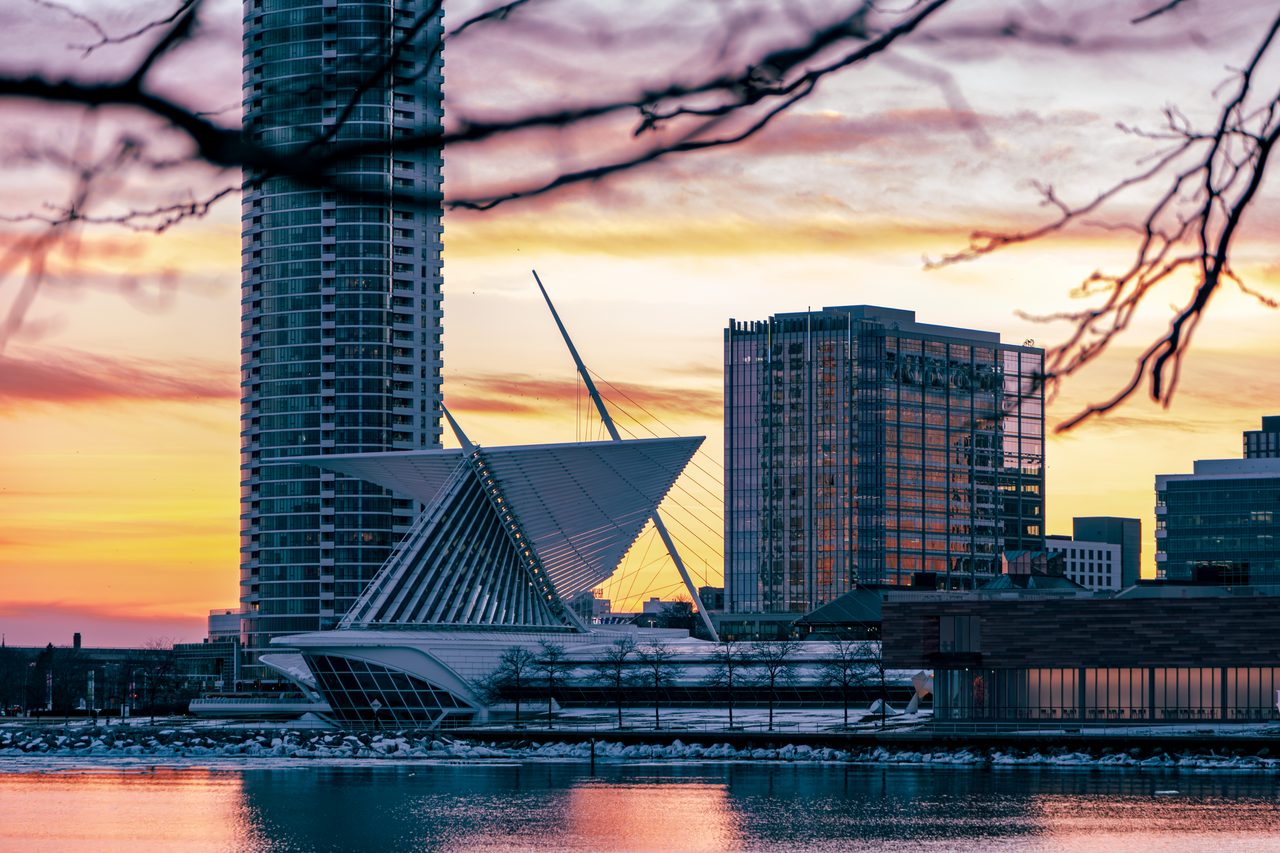
Wisconsin is a four-season Midwestern state celebrated for its dairy heritage, vibrant craft beer scene, and remarkable natural beauty spanning two Great Lakes shorelines, thousands of inland lakes, ancient glacial landscapes, and dense north-woods forests. Milwaukee anchors the south with world-class museums, a famous Harley-Davidson legacy, and a dynamic food scene, while state capital Madison blends Big Ten university energy with progressive culture and farm-to-table dining. Door County's limestone bluffs and cherry orchards draw visitors north, and Wisconsin Dells delivers the nation's greatest concentration of water parks. Green Bay is home to the storied Packers NFL franchise and passionate cheeseheads who travel the state's back roads in search of supper clubs, Friday fish fries, and local craft breweries.
Wisconsin sits between Lake Michigan to the east and the Mississippi River to the west, bordered by Minnesota, Iowa, Illinois, Indiana, and Michigan's Upper Peninsula. The state's glacially sculpted terrain ranges from the sandy beaches of the Apostle Islands National Lakeshore on Lake Superior to the moraines and kettle lakes of the Kettle Moraine State Forest. Madison occupies a narrow isthmus between two lakes and hosts the flagship University of Wisconsin campus. Wisconsin claims more than 15,000 inland lakes, 84,000 miles of rivers and streams, and over 600 state natural areas. Agriculture remains central — Wisconsin produces more cheese than any other state and ranks among the top US dairy producers — yet tourism, manufacturing, and a growing tech sector diversify the economy.
The 22 destinations our editors recommend — from iconic landmarks to under-the-radar finds.
Milwaukee Art Museum
The museum's Santiago Calatrava-designed Quadracci Pavilion, with its wing-like Burke Brise Soleil sunscreen, sits directly on Lake Michigan and is Milwaukee's most photographed building. Inside, the permanent collection runs from Old Masters through American regionalism (strong Georgia O'Keeffe holdings) to contemporary work, spread across the older Eero Saarinen-designed War Memorial Center connected to the newer wings. Most visitors spend two to three hours, with the brise soleil's opening and closing (weather permitting) the structural centerpiece of any visit.
Harley-Davidson Museum
Built on a former rail yard along the Menomonee River, this museum traces Harley-Davidson's history from its 1903 founding in a Milwaukee shed to the present, with rows of restored motorcycles from every decade including racing bikes and celebrity-owned models. The Engine Room and the Experience Gallery let visitors sit on current models, and the site draws heavy crowds during Milwaukee's motorcycle rallies. Expect two to three hours to see the collection properly.
Devil's Lake State Park
Wisconsin's most-visited state park surrounds a lake ringed by 500-foot quartzite bluffs left behind by a Wisconsin Glaciation-era moraine that dammed an ancient river channel. The East Bluff and West Bluff trails climb steeply over talus and rock formations like Devil's Doorway and Balanced Rock, while the beach areas at either end of the lake draw swimmers and paddlers in summer. It's a day-hiking and rock-climbing destination rather than a backcountry park, close enough to Madison for a day trip.
Door County
This narrow peninsula jutting into Lake Michigan and Green Bay is often called the Cape Cod of the Midwest, strung with small harbor towns like Sister Bay, Ephraim, and Fish Creek along a coastline of limestone bluffs, cherry orchards, and five state parks. It's built around slow driving between towns, gallery and shop browsing, and lakeside dining rather than any single attraction, with cherry season in July and fall color in October as the two peak windows. Distances between towns are short but the peninsula rewards at least two or three days rather than a single stop.
Wisconsin Dells
This stretch of the Wisconsin River carved sandstone gorges that gave the town its name, but it's better known today as a concentrated cluster of indoor and outdoor water parks, go-kart tracks, and mini-golf courses marketed as the self-proclaimed Waterpark Capital of the World. Duck boat tours (amphibious vehicles) still run past the actual sandstone rock formations along the river, which is the area's original 19th-century tourist draw. Most visitors base a trip around one or two water parks rather than trying to see everything.
Apostle Islands National Lakeshore
This archipelago of 21 islands off the Bayfield Peninsula in Lake Superior is known for sea caves carved into sandstone cliffs, several historic lighthouses, and cold, clear water that makes it a sea-kayaking destination. The mainland sea caves near Meyers Beach are accessible by kayak year-round in open water and, in rare cold winters, on foot across frozen lake ice when conditions allow. Most of the islands themselves are only reachable by boat, with concessionaire cruises out of Bayfield covering the lighthouses and caves for visitors without their own kayak.
Recommended itineraries
Pick a length, follow the route. Each itinerary balances headline sights with breathing room.
5-Day Wisconsin Explorer
Day 1Arrive in Wisconsin, explore city center
Day 2Visit top attractions and museums
Day 3Day trip to nearby highlights
Day 4Local markets and hidden gems
Day 5Final sightseeing, departure
7-Day Classic Wisconsin
Days 1-2Wisconsin city highlights
Days 3-4Regional exploration
Days 5-6Cultural immersion and local experiences
Day 7Return and departure
14-Day Ultimate Wisconsin
Days 1-3Wisconsin comprehensive city tour
Days 4-6Northern region exploration
Days 7-9Eastern highlights
Days 10-12Southern attractions
Days 13-14Return to Wisconsin, departure
Where to stay in Wisconsin
Three tiers, every traveller covered — from cost-conscious to flagship hotels.
Budget $90–$180/day
Hostels, budget hotels, and guesthouses offer affordable stays without sacrificing experience.
Mid-range $230–$430/day
Boutique hotels and well-located accommodations provide comfort and convenience at reasonable prices.
Luxury $490–$1,120/day
World-class resorts and premium hotels deliver unforgettable experiences.
Cafés, neighbourhood gems, and tasting menus worth the table reservation.
Odd Duck
Farm-to-table American · $$$
A Bay View small-plates restaurant built around a wood-fired oven and a menu that changes with what local farms bring in. Plates are meant for sharing, mixing vegetable-forward dishes with heartier options like the duck confit toast, and the space has an industrial, exposed-brick feel typical of the converted commercial buildings along Kinnickinnic Avenue.
Sanford Restaurant
Contemporary American · $$$$
An East Side Milwaukee fine-dining room occupying the space of a former neighborhood grocery store, with chef Justin Aprahamian's tasting menus built around Wisconsin ingredients. The dining room is understated rather than showy, putting the focus on courses that change seasonally alongside a dedicated Wisconsin cheese course.
L'Etoile
Farm-to-table Wisconsin · $$$$
One of the restaurants credited with starting Madison's farm-to-table movement, set above Capitol Square with a dining room that overlooks the Dane County Farmers' Market grounds. Chef Tory Miller's kitchen builds seasonal tasting menus around Wisconsin dairy, produce, and game, with duck as a recurring, well-executed centerpiece.
Braise Restaurant
Local seasonal American · $$$
A Walker's Point restaurant built on chef David Swanson's community-supported restaurant model, sourcing directly from Wisconsin farms much like a CSA. The cooking leans into Midwestern comfort food elevated with seasonal technique, served in a simple, low-key dining room that doesn't try to compete with the food for attention.
The Old Fashioned
Wisconsin comfort food · $$
A tavern right on Madison's Capitol Square that plays as a distilled version of a Wisconsin supper club, right down to the relish tray and the bar stocked with regional brandies for old fashioneds. The room is wood-paneled and unpretentious, filled with Wisconsin beer and cheese memorabilia, and it treats the fish fry and cheese curds as the main event rather than bar snacks.
Real Chili
Milwaukee-style chili · $
A no-frills Milwaukee institution serving the city's distinctive chili-over-spaghetti style, a local variation that traces back to Greek-owned chili parlors that opened downtown in the 1930s. The room is diner-plain — counter seating, laminated menus, fast turnover — built for a quick, cheap meal rather than lingering.
Wisconsin is best navigated by car due to its rural spread. Milwaukee has a streetcar (The Hop) and bus network. Madison's Metro Transit covers the city. Interstate highways I-94, I-90, I-43, and I-39 connect major cities.
Budget breakdown
Daily spend by tier in USD, broken out by category.
Category
Budget
Mid-range
Luxury
Accommodation
$50–$90/night (hostel or budget motel)
$120–$220/night
$250–$600+/night
Food (per day)
$20–$40/day
$50–$90/day
$100–$200/day
Transportation
$10–$20/day (city transit or shared rides)
$30–$60/day (car rental)
$60–$120/day (car rental or ride-share)
Activities
$10–$30/day
$30–$60/day
$80–$200/day
Daily total
$90–$180/day
$230–$430/day
$490–$1,120/day
Best time to visit Wisconsin
Weather through the year in United States
Best timeShoulderWorth avoiding
Average daytime temperature in °C. Figures are for United States.
June–August and late September–October
Summer brings warm temps and outdoor festivals. Fall foliage peaks late September–mid-October in Door County and the north woods. Winter offers skiing and ice fishing but temperatures can drop below 0°F (-18°C).
Essential travel tips
Wisconsin's supper clubs operate on a relaxed Midwest timeline — arrive early or expect a wait
Friday fish fry is a near-universal tradition; most bars and restaurants serve it
Tipping 18–20% is standard practice
Carry cash at farmers markets and rural cheese factories
Wisconsin has no reciprocal sales-tax exemption — expect 5–5.5% state sales tax
Hidden gems
Off-the-beaten-path corners most travellers miss.
Safety information
INFO
Check weather forecasts before driving in winter — roads can become extremely dangerous
INFO
Carry bear spray when hiking in the Northwoods
INFO
Wear bright clothing during deer hunting season (September–January)
INFO
Secure food in bear-resistant containers at Apostle Islands campgrounds
Frequently asked questions
Is Wisconsin safe to visit in 2026?
Wisconsin is one of the safer US states for travelers. Milwaukee has neighborhoods with elevated crime rates, but tourist areas (Third Ward, East Side, Historic Milwaukee, lakefront) are well-patrolled and safe by day and evening. Madison is consistently ranked among America's safest large cities. R
What is the best time to visit Wisconsin?
The best time to visit Wisconsin is June–August. Wisconsin has a humid continental climate with four distinct seasons. Summers are warm and humid (June–August, highs 75–85°F/24–29°C), perfect for outdoor recreation. Falls are spectacular with brilli
What currency is used in Wisconsin?
The currency in Wisconsin is the US Dollar (USD). ATMs are widely available in cities and tourist areas. Credit cards are accepted at most hotels and restaurants, but carry cash for markets and smaller establishments.
What language is spoken in Wisconsin?
The main language(s) spoken in Wisconsin: English. In tourist areas, English is generally understood. Learning a few basic phrases in the local language is appreciated by locals.
What are the top attractions in Wisconsin?
The top attractions in Wisconsin include Milwaukee Art Museum, Harley-Davidson Museum, Devil's Lake State Park, Door County, and Wisconsin Dells. Each offers a unique experience, from historic landmarks to natural wonders.