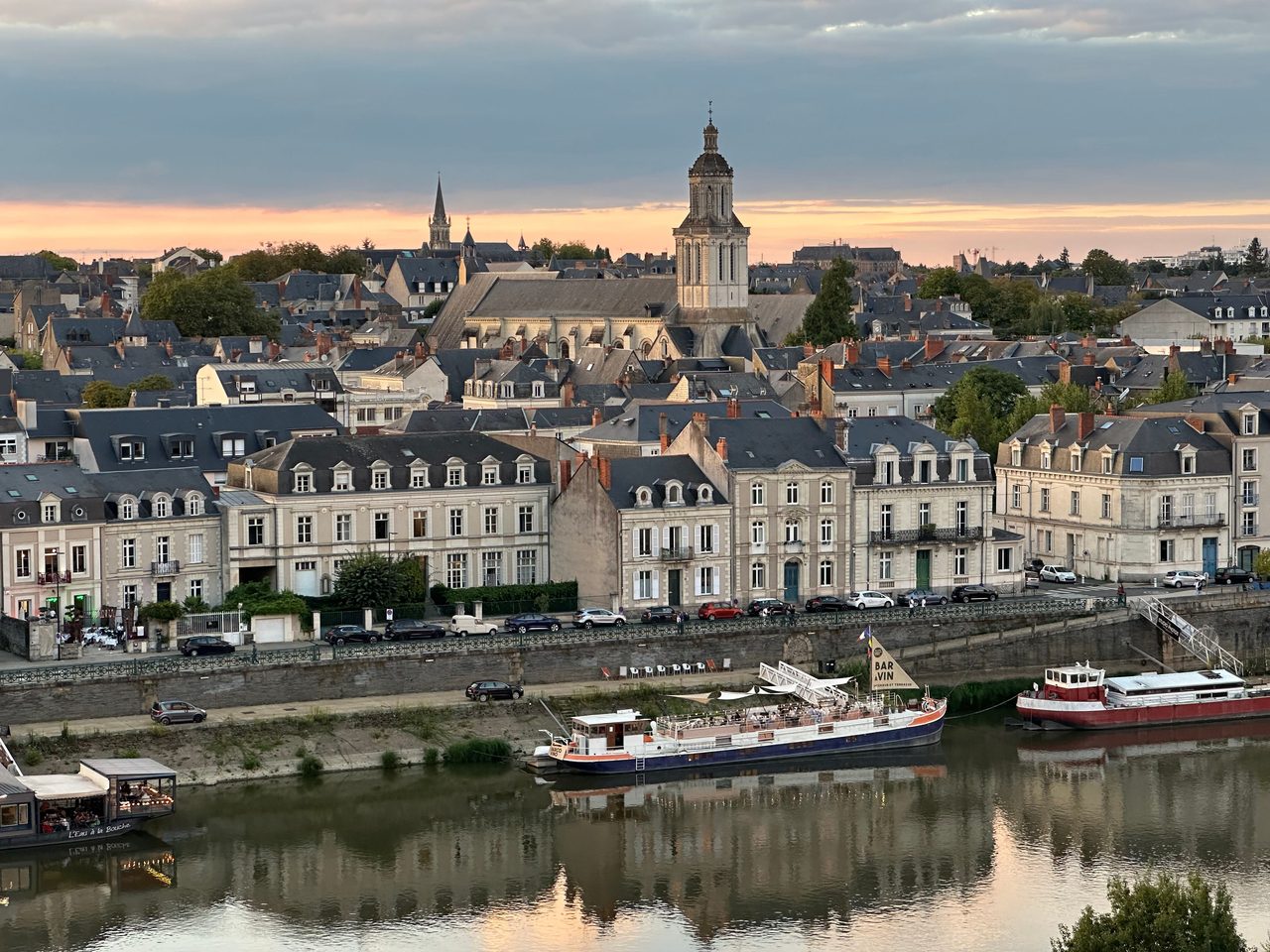
Pays de la Loire · 22 Places · Best May–June and September–October
Pays de la Loire
Pays de la Loire is a diverse western French region anchored by Nantes, one of France's most dynamic and culturally inventive cities. The region spans the lower Loire Valley with its Renaissance châteaux, Atlantic beaches and islands along the Vendée coast, the rillettes-producing Le Mans, and the wine appellations of Muscadet, Anjou, and Saumur. World-class theme park Puy du Fou, the legendary 24 Hours of Le Mans circuit, and the mechanical art installations of Nantes make this one of France's most varied regions for visitors.
Pays de la Loire stretches from the Loire estuary at Saint-Nazaire westward to the Atlantic coast and eastward into the heart of the Loire Valley. Nantes, the regional capital and sixth-largest city in France, was once the capital of the Duchy of Brittany and later the centre of France's transatlantic slave trade — a history fully confronted in the Mémorial de l'Abolition de l'Esclavage. Today Nantes reinvents itself annually through the Voyage à Nantes art trail, the Les Machines de l'Île mechanical elephant workshop, and a booming technology sector. Le Mans, famous worldwide for its 24-hour motor race, also preserves a well-intact medieval Cité Plantagenêt. Angers anchors the Maine-et-Loire département with its mighty 13th-century black château and the astonishing Tapisserie de l'Apocalypse. The Vendée coast stretches 250 km from the Île de Noirmoutier south to the Marais Poitevin wetlands, offering beaches, oyster beds, and the extraordinary Puy du Fou — consistently ranked among Europe's best theme parks.
The 22 destinations our editors recommend — from iconic landmarks to under-the-radar finds.
Les Machines de l'Île — Grand Éléphant
A 12-metre mechanical elephant built from wood and steel that carries passengers on a slow circuit around the former Nantes shipyards on the Île de Machines, spraying water from its trunk as it walks. It's the flagship creation of the Compagnie La Machine, the same troupe behind Nantes's Royal de Luxe street spectacles, and it runs on the site of the old Dubigeon shipyard rather than in a conventional park setting. The adjoining Galerie des Machines workshop shows other mechanical creatures being built and tested.
Château des Ducs de Bretagne
A moated castle in the centre of Nantes that served as the residence of the Dukes of Brittany and later of French monarchs; it's also where Henri IV signed the Edict of Nantes in 1598, granting rights to French Protestants. The ramparts and courtyard are open as a free public walk, while the interior buildings house the Musée d'Histoire de Nantes, tracing the city's history including its role in the transatlantic slave trade. The white limestone walls and slate roofs give it a distinctly Breton-Loire look rather than a typical Loire chateau.
Puy du Fou Historical Theme Park
A theme park built around large-scale live historical shows rather than rides — expect Viking raids staged on a lake, gladiator combat in a full-scale Roman arena, and musketeer duels, performed largely by local volunteer actors. It grew out of a single outdoor pageant in the 1970s and has since expanded into a full day-and-evening park spread through Vendée woodland and reconstructed historical villages. The nighttime Cinéscénie is a separate, larger-scale show performed on the original grounds with a much bigger cast and a different ticket.
Château d'Angers and Tapisserie de l'Apocalypse
A fortress of 17 dark schist and white limestone towers overlooking the Maine river, built for Louis IX in the 13th century, that now houses the Apocalypse Tapestry commissioned by Louis I of Anjou in the 1370s. At roughly 100 metres of surviving hand-woven wool depicting the Book of Revelation, it's the largest medieval tapestry cycle to survive intact and is displayed in a purpose-built darkened gallery to protect the colours. The fortress itself has no royal residential apartments to speak of — it was built for defence, and the walls and towers dominate the visit as much as the tapestry does.
Voyage à Nantes Street Art Trail
A painted green line running through central Nantes that links contemporary art installations, heritage sites and public spaces, created as part of the Voyage à Nantes cultural initiative launched in 2012 to knit the city's scattered art and architecture into one walkable route. Following the line takes you past a mix of permanent public artworks and venues rather than a single curated exhibition, so the experience varies by what's currently installed along the way. It starts at the Jardin des Plantes botanical garden next to Nantes's train station.
Mémorial de l'Abolition de l'Esclavage
A memorial built into the quay along the Loire in Nantes, marking the city's history as France's largest slave-trading port, through which an estimated half a million enslaved people passed on Nantes-based ships. The design is mostly submerged: a walkway runs beneath the quay's surface, its walls lined with glass plaques inscribed with the names of slave ships and abolitionist dates, opening at the far end onto a river-level terrace. It's a quiet, deliberately unmonumental space rather than a statue or plaza.
Recommended itineraries
Pick a length, follow the route. Each itinerary balances headline sights with breathing room.
5-Day Pays de la Loire Explorer
Day 1Arrive in Pays de la Loire, explore city center
Day 2Visit top attractions and museums
Day 3Day trip to nearby highlights
Day 4Local markets and hidden gems
Day 5Final sightseeing, departure
7-Day Classic Pays de la Loire
Days 1-2Pays de la Loire city highlights
Days 3-4Regional exploration
Days 5-6Cultural immersion and local experiences
Day 7Return and departure
14-Day Ultimate Pays de la Loire
Days 1-3Pays de la Loire comprehensive city tour
Days 4-6Northern region exploration
Days 7-9Eastern highlights
Days 10-12Southern attractions
Days 13-14Return to Pays de la Loire, departure
Where to stay in Pays de la Loire
Three tiers, every traveller covered — from cost-conscious to flagship hotels.
Budget €63–130
Hostels, budget hotels, and guesthouses offer affordable stays without sacrificing experience.
Mid-range €155–310
Boutique hotels and well-located accommodations provide comfort and convenience at reasonable prices.
Luxury €350–1000+
World-class resorts and premium hotels deliver unforgettable experiences.
Hôtel La Pérouse
Nantes, Pays de la Loire · €€€ — from €130 / approx USD 142 per night
This is Nantes' celebrated Belle Époque brasserie on Place Graslin, opened in 1895 and classified as a historic monument for its ceramic tilework, mirrors, and gilded plasterwork. The kitchen runs a classic brasserie repertoire built around seafood towers and grilled meats, served under the original painted ceiling.
Pays de la Loire is well-served by TGV from Paris and has good internal TER train links between Nantes, Angers, Le Mans, and Saint-Nazaire. Nantes urban transport (TAN) operates 3 tram lines, 4 busway lines, and an urban bus network. Rural areas including the Vendée coast, Marais Poitevin, and Loire Valley château back-roads require a car.
Budget breakdown
Daily spend by tier in EUR, broken out by category.
Category
Budget
Mid-range
Luxury
Accommodation
€25–60
€80–160
€180–500+
Food (per day)
€20–35
€40–70
€80–200
Transportation
€8–15
€15–30
€40–100
Activities
€10–20
€20–50
€50–200
Daily total
€63–130
€155–310
€350–1000+
Best time to visit Pays de la Loire
Weather through the year in France
Best timeShoulderWorth avoiding
Average daytime temperature in °C. Figures are for France.
May–June: Loire Valley in bloom, Muscadet harvest preparation, moderate temperatures 16–22°C / 61–72°F, significantly fewer crowds than summer. September–October: Atlantic sea still warm (19–21°C / 66–70°F), Muscadet harvest (September), autumn foliage in Loire valley, much lower accommodation prices.
Essential travel tips
The Nantes City Card (€25 / approx USD 27 for 24h; €38 for 48h; €49 for 72h) covers public transport and admission to the main museums — buy at the tourist office at 9 Rue des États, 44000 Nantes
The Loire à Vélo cycling route runs 900 km along the Loire — the section from Angers to Nantes (90 km) is the flattest and most accessible for casual cyclists
Puy du Fou requires advance booking, especially for the Cinéscénie night show (the world's largest outdoor night spectacle); book at puydufou.com
Le Mans medieval Cité Plantagenêt is free to walk through and is easily combined with a Circuit de la Sarthe visit in one day
Muscadet wine is produced within easy day-trip distance of Nantes — the Sèvre et Maine appellation is centred on Vallet, 30 km east of Nantes
Hidden gems
Off-the-beaten-path corners most travellers miss.
Île de Versailles Japanese Garden
A beautifully maintained Japanese garden on a small island in the Erdre river, a 15-minute walk north of the Nantes city centre. Serene, traffic-free, and almost unknown to tourists — a perfect afternoon break or picnic spot using provisions from Marché de Talensac.
Île de Versailles, 44000 Nantes
Passage du Gois at low tide
The 4.2 km tidal causeway to Île de Noirmoutier is one of France's most dramatic natural spectacles. At low tide the road emerges from the sea with stranded lobster pots and seaweed on the tarmac. Stop to walk a section before driving across. Check tide times at gois.fr; allow 1 hour at the site.
D948, 85630 Beauvoir-sur-Mer
Clisson Italian medieval town
Clisson was rebuilt in the 1790s–1830s in an Italian style after the Wars of the Vendée, creating a uniquely incongruous medieval-Italian townscape in rural France. The ruined medieval château, the Italian villas of the Garenne Lemot estate (free park), and the riverside terraces are all within easy walking distance. Best visited on a weekday morning when quiet.
Clisson, 44190 Loire-Atlantique
Fouées in the Anjou wine caves
The soft tufa cliffs of Anjou are carved with cave dwellings and wine cellars. At the Caves de la Genaiserie, bakers still cook fouées — small bread rounds in a wood-fired cave oven — and serve them split open with local rillettes, chèvre, and bean purée. A centuries-old snack found almost nowhere outside Anjou. From €3 / approx USD 3.30 per fouée; book ahead in summer.
Caves de la Genaiserie, 49250 Saint-Cyr-en-Bourg
Saint-Nazaire WWII submarine base
The massive German U-boat pens at Saint-Nazaire are one of the Loire estuary's most striking yet overlooked sights. The reinforced concrete bunker houses the Espadon — a real Cold War French submarine you can walk through — and the Escal'Atlantic ocean liner museum. Very few international tourists make the 40-minute TER journey from Nantes to see it.
Boulevard de la Légion d'Honneur, 44600 Saint-Nazaire
Safety information
INFO
Check beach flags before swimming
INFO
Verify Passage du Gois tide schedule before every crossing
INFO
Guard against pickpocketing at Gare de Nantes and busy tram stops
INFO
Know rip current escape technique at open Atlantic beaches
INFO
Apply sun protection throughout the day on the Vendée coast
INFO
Follow France's Vigipirate security guidance in public spaces
Frequently asked questions
Is Pays de la Loire safe to visit in 2026?
Pays de la Loire is one of France's safest regions for visitors. Nantes, the capital, has a normal urban risk profile — petty theft near the station and in crowded places, but violent crime against tourists is rare. Rural areas, the Vendée coast, and the Loire Valley are extremely safe. The main haz
What is the best time to visit Pays de la Loire?
The best time to visit Pays de la Loire is May–June and September–October. Pays de la Loire has a temperate oceanic climate (Köppen Cfb) strongly influenced by the Atlantic. Winters are mild and wet; summers are warm, occasionally hot, with lower rainfall than the interior o
Do I need a visa to visit Pays de la Loire?
France is in the Schengen Area. EU/EEA/Swiss citizens travel freely. Citizens of the USA, Canada, Australia, and UK can visit for up to 90 days within any 180-day period without a visa. From 2025, non-EU visitors entering the Schengen Zone require ETIAS (European Travel Information and Authorisation System) pre-registration; check travel.ec.europa.eu for the latest status. All other nationalities should consult the French embassy website at france-visas.gouv.fr. Requirements vary by nationality, so check with your nearest embassy or the official immigration website before traveling.
What currency is used in Pays de la Loire?
The currency in Pays de la Loire is the Euro (EUR) (EUR). ATMs are widely available in cities and tourist areas. Credit cards are accepted at most hotels and restaurants, but carry cash for markets and smaller establishments.
What language is spoken in Pays de la Loire?
The main language(s) spoken in Pays de la Loire: French. In tourist areas, English is generally understood. Learning a few basic phrases in the local language is appreciated by locals.
What are the top attractions in Pays de la Loire?
The top attractions in Pays de la Loire include Les Machines de l'Île — Grand Éléphant, Château des Ducs de Bretagne, Puy du Fou Historical Theme Park, Château d'Angers and Tapisserie de l'Apocalypse, and Voyage à Nantes Street Art Trail. Each offers a unique experience, from historic landmarks to natural wonders.