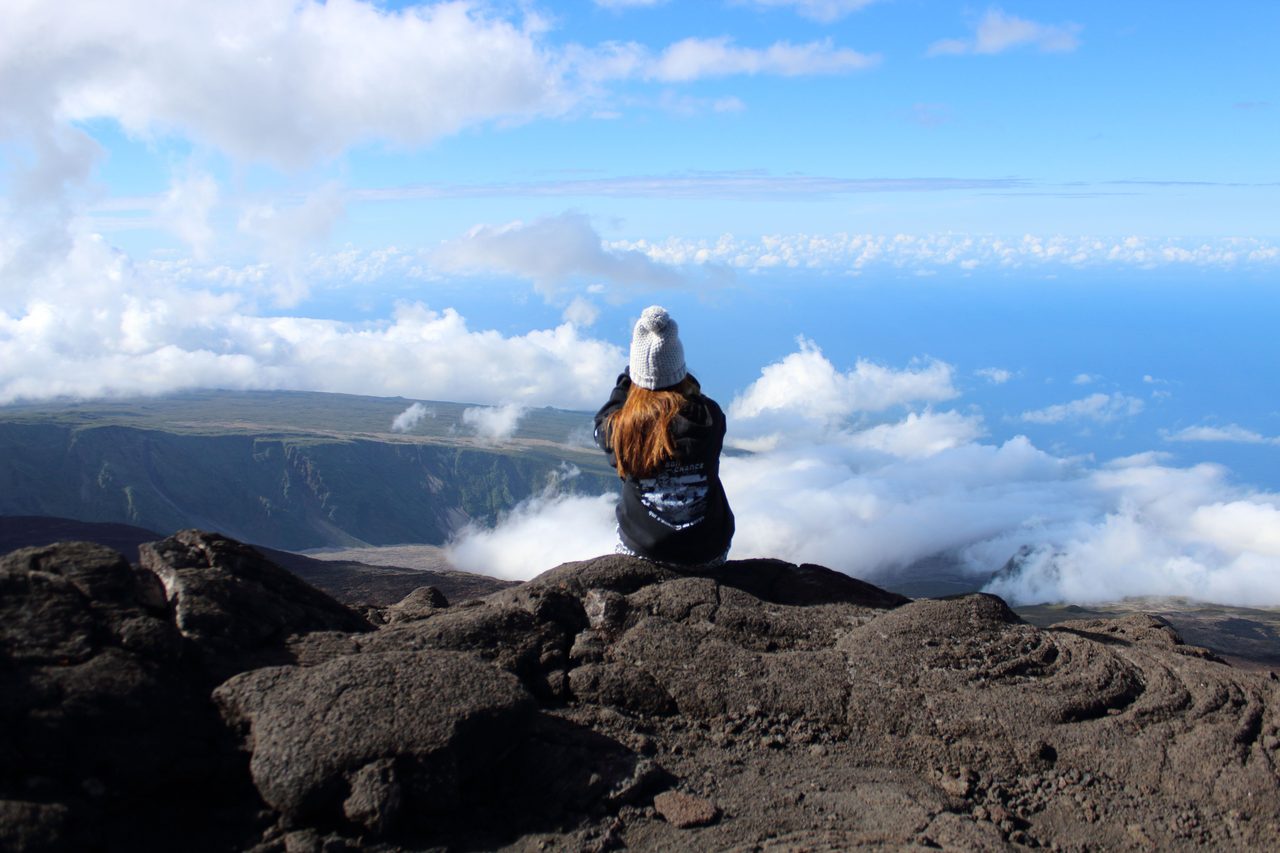
Réunion is a French overseas region and department in the Indian Ocean, 700 km east of Madagascar and 200 km south-west of Mauritius. This volcanic island of extraordinary drama packs an active volcano, three steep-walled cirques, a UNESCO World Heritage mountain core, dense rainforest, and a warm lagoon into 2,512 km². It is simultaneously French enough to accept euros and credit cards everywhere, and exotic enough to feel like another world entirely.
Rising from the sea floor to 3,069 m at Piton des Neiges — the highest point in the Indian Ocean — Réunion is shaped by fire and water in equal measure. The Piton de la Fournaise volcano, one of the most active on Earth, erupts several times a year from its southeastern shield, producing lava flows that sometimes reach the ocean and creating new black-sand coastline. To the west, the ancient caldera has collapsed into three breathtaking amphitheatres — the Cirque de Cilaos, Cirque de Mafate, and Cirque de Salazie — encircled by walls of rock rising 1,000 m from the valley floors. Mafate is the last inhabited place in France with no road access, reachable only on foot or by helicopter. These three cirques and their surrounding ramparts were inscribed as a UNESCO World Heritage Site in 2010. The western coast is Réunion's Riviera: the resort towns of Saint-Gilles-les-Bains and Saint-Leu front a coral lagoon with calm turquoise water, white-sand beaches, and reef-protected swimming. Saint-Denis, the capital, is a busy city of 150,000 with French administrative efficiency and a vibrant Creole market culture. The island's food scene is a unique fusion — Creole cari (curry), Chinese dim sum, Tamil biryani, French boulangeries, and Malbar Hindu temple fêtes all coexist within a few kilometres. Réunion is also a world-class hiking destination: the GRR1 trail circumnavigates the island's mountain core over 8 days, while hundreds of day walks access cirque floors, waterfalls, and volcanic landscapes. UNESCO recognition has raised the island's profile, yet it receives far fewer foreign visitors than Mauritius or the Maldives, making it one of the Indian Ocean's best-kept secrets for adventurous travellers.
The 20 destinations our editors recommend — from iconic landmarks to under-the-radar finds.
Piton de la Fournaise
One of the world's most active shield volcanoes, with eruptions occurring every year or two, often flowing across the surrounding Plaine des Sables lava desert rather than exploding violently. The standard visit is the hike from the Pas de Bellecombe car park down into the caldera and up to the crater rim, roughly 2-3 hours each way over bare lava rock with no shade. The Maison du Volcan in Bourg-Murat explains the eruption history and lets you see webcam feeds when the summit is closed to hikers.
Cirque de Mafate
The most isolated of Réunion's three volcanic cirques, reachable only on foot or by helicopter since no road reaches its floor. A dozen or so small hamlets like La Nouvelle and Marla sit scattered across the terraced interior, connected by a network of steep ridge-and-valley trails that multi-day trekkers use to move between gîtes. The lack of vehicle access is what preserves the near-total quiet inside the amphitheatre of cliffs.
Cirque de Cilaos
A volcanic amphitheatre reached by a mountain road with well over a hundred hairpin bends, ending at the spa town of Cilaos which grew up around thermal springs discovered in the 19th century. The cirque is now a base for hiking to Piton des Neiges, Réunion's highest peak, and for wine growing at unusually high altitude for the tropics. The drive itself, cut into the cliff face with several one-lane tunnels, is as much a feature of a visit as the town.
Cirque de Salazie & Hell-Bourg
The greenest and wettest of the three cirques, its steep slopes covered in tree ferns and laced with waterfalls fed by some of the highest rainfall on the island. Hell-Bourg sits inside it as the cirque's main village, historically a thermal spa town for colonial-era visitors before a landslide destroyed the original springs. The road in passes the Voile de la Mariée waterfall, a set of thin cascades that give the cirque its reputation for lushness.
Le Maïdo Viewpoint
A cliff-edge lookout at the western rim of Cirque de Mafate, reached by a paved road that climbs from the coast at Saint-Paul through several vegetation zones to over 2,000 metres. From the platform the Mafate hamlets and their surrounding ridgelines are laid out below in one continuous panorama, which is otherwise only seen by trekkers on multi-day walks inside the cirque. It's also a known spot for watching the sunrise above a sea of clouds.
Plaine des Sables
A high-altitude lava desert between Bourg-Murat and the Pas de Bellecombe trailhead, its reddish-grey volcanic gravel and total lack of vegetation giving it a landscape unlike anywhere else on the island. The access road crosses it in a series of switchbacks before dropping to the Piton de la Fournaise car park, and the plain itself is often compared to Mars-like or lunar terrain because of its color and barrenness. It formed from ash and cinder deposits rather than solid lava flows.
Recommended itineraries
Pick a length, follow the route. Each itinerary balances headline sights with breathing room.
5-Day Réunion Explorer
Day 1Arrive in Réunion, explore city center
Day 2Visit top attractions and museums
Day 3Day trip to nearby highlights
Day 4Local markets and hidden gems
Day 5Final sightseeing, departure
7-Day Classic Réunion
Days 1-2Réunion city highlights
Days 3-4Regional exploration
Days 5-6Cultural immersion and local experiences
Day 7Return and departure
14-Day Ultimate Réunion
Days 1-3Réunion comprehensive city tour
Days 4-6Northern region exploration
Days 7-9Eastern highlights
Days 10-12Southern attractions
Days 13-14Return to Réunion, departure
Where to stay in Réunion
Three tiers, every traveller covered — from cost-conscious to flagship hotels.
Budget €55–€110 (~$59–$119)
Hostels, budget hotels, and guesthouses offer affordable stays without sacrificing experience.
Mid-range €165–€300 (~$178–$324)
Boutique hotels and well-located accommodations provide comfort and convenience at reasonable prices.
Luxury €460–€1100 (~$497–$1188)
World-class resorts and premium hotels deliver unforgettable experiences.
Lux* Saint-Gilles
Saint-Gilles-les-Bains, west Réunion · €280–€550/night (~$302–$594)
Réunion's sole airport is Roland Garros Airport (RUN) in Sainte-Marie, 9 km east of Saint-Denis. Long-haul connections operate via Paris Charles de Gaulle (Air France, direct ~10.5 hrs) and Paris Orly; regional connections via Mauritius, Mayotte, and Madagascar. Within the island, hiring a car is strongly recommended — public transport (Car Jaune network) covers the coastal ring road but is infrequent in the interior. The main highway Route Nationale 1 links the west coast from Saint-Denis to Saint-Pierre. The Cirques have no road access to Mafate; Cilaos and Salazie are reachable by narrow mountain roads.
Budget breakdown
Daily spend by tier in EUR, broken out by category.
Category
Budget
Mid-range
Luxury
Accommodation
€25–€50 (~$27–$54) gîte or hostel per night
€70–€130 (~$76–$140) 3-star hotel
€200–€500 (~$216–$540) 4–5-star resort
Food (per day)
€15–€25 (~$16–$27) per day
€30–€50 (~$32–$54) per day
€80–€150 (~$86–$162) per day
Transportation
€5–€15 (~$5–$16) per day Car Jaune bus
€35–€60 (~$38–$65) car rental per day
€80–€150 (~$86–$162) private transfer/helicopter
Activities
€0–€20 (~$0–$22) per day
€30–€60 (~$32–$65) per day
€100–€300 (~$108–$324) guided tours
Daily total
€55–€110 (~$59–$119)
€165–€300 (~$178–$324)
€460–€1100 (~$497–$1188)
Best time to visit Réunion
Weather through the year in France
Best timeShoulderWorth avoiding
Average daytime temperature in °C. Figures are for France.
May to November (dry season, cooler temperatures 18–26°C, best hiking conditions)
The volcano can be visited year-round when not actively erupting; July–September offers the clearest skies and best cirque views. Whale watching (humpbacks) runs July–October.
Essential travel tips
Rent a car from day one — the island is only 72 km wide but mountain roads are winding and Car Jaune buses don't reach the cirques or volcano
Book gîtes in Mafate cirque at least 2 months ahead in July–August; there are only ~200 beds in the entire roadless cirque
Download offline maps (Maps.me or OsmAnd) before entering the cirques — mobile data disappears rapidly
Carry euro cash for gîtes, market stalls, and remote villages — many rural places are cash-only
The Réunion Tourisme website (reunion.fr) has up-to-date trail status reports and free downloadable topo maps
Hidden gems
Off-the-beaten-path corners most travellers miss.
Safety information
INFO
Swim only in lagoon areas protected by shark barriers (filets anti-requins) on the west coast; do not swim on the unprotected east or south coasts
INFO
Check OVPF.ipgp.fr before hiking to Piton de la Fournaise — eruptions can close trails with no notice; free volcanic activity bulletins are posted daily
INFO
Download the France Alertes government app for real-time cyclone and flood warnings; cyclone season is November–April
INFO
Hire a 4WD for mountain roads and carry extra water — mobile coverage disappears in the cirques and rescue is slow
INFO
Do not approach new lava flows on the south-east coast — toxic gas (SO2, CO2) and unstable crusts pose serious hazards
Frequently asked questions
Is Réunion safe to visit in 2026?
Réunion is one of the safest destinations in the Indian Ocean for tourists. As a French overseas department, it has French law enforcement, European-standard healthcare, and good infrastructure. The main hazards are natural: shark activity on unprotected coasts, volcanic eruptions and gas emissions,
What is the best time to visit Réunion?
The best time to visit Réunion is May. Réunion has a tropical island climate with two distinct seasons: a hot, wet season (austral summer, November–April) and a cooler, dry season (austral winter, May–October). The island's dramatic topogr
Do I need a visa to visit Réunion?
As a French overseas department, Réunion is part of the European Union Schengen Area. US citizens may enter visa-free for up to 90 days under French/EU rules. EU/EEA citizens enter with a national identity card. Australian and Canadian citizens: 90-day visa-free stay. Passport must be valid for the full duration of stay. No specific vaccinations required for entry. Requirements vary by nationality, so check with your nearest embassy or the official immigration website before traveling.
What currency is used in Réunion?
The currency in Réunion is the Euro (EUR, €) (EUR). ATMs are widely available in cities and tourist areas. Credit cards are accepted at most hotels and restaurants, but carry cash for markets and smaller establishments.
What language is spoken in Réunion?
The main language(s) spoken in Réunion: French (official), Réunion Creole (Kréol Réyoné). In tourist areas, English is generally understood. Learning a few basic phrases in the local language is appreciated by locals.
What are the top attractions in Réunion?
The top attractions in Réunion include Piton de la Fournaise, Cirque de Mafate, Cirque de Cilaos, Cirque de Salazie & Hell-Bourg, and Le Maïdo Viewpoint. Each offers a unique experience, from historic landmarks to natural wonders.