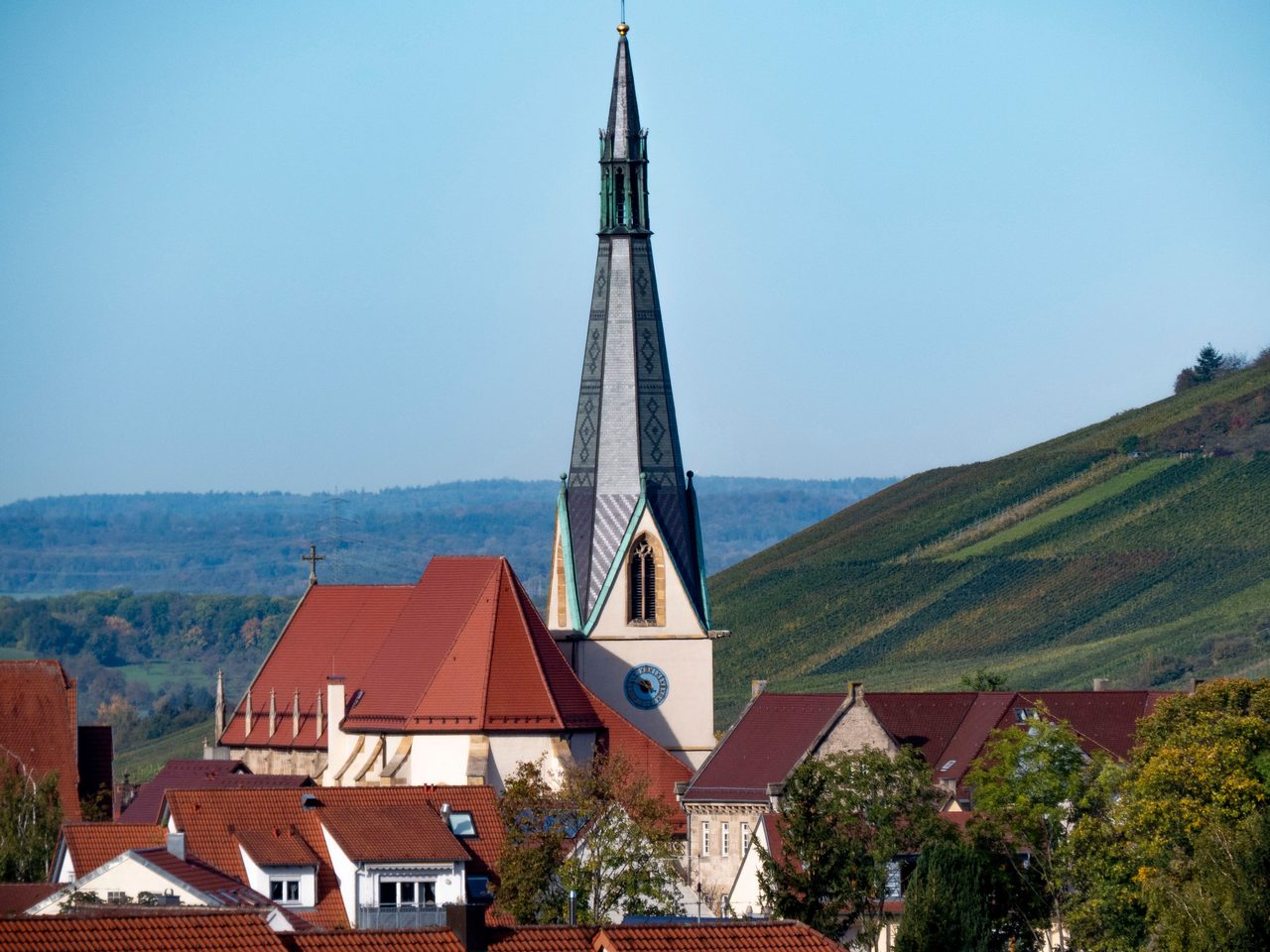
Baden-Württemberg is a federal state in southwestern Germany bordering France and Switzerland, anchored by the automotive capital Stuttgart. The state combines the dense forests and thermal spa towns of the Black Forest, the shimmering shoreline of Lake Constance, the Renaissance and Gothic old towns of Heidelberg, Tübingen, and Ulm, and world-renowned engineering heritage at the Mercedes-Benz and Porsche museums. Vineyards, half-timbered villages, and Europe's largest theme park round out a region prized for both culture and outdoor recreation.
Baden-Württemberg is Germany's third-largest federal state, stretching from the Rhine Valley and the Black Forest (Schwarzwald) in the west to the Swabian Jura and the shores of Lake Constance (Bodensee) in the south and east. Stuttgart, the capital, is home to the Mercedes-Benz Museum and Porsche Museum and sits amid vineyard-covered hills. Heidelberg's Renaissance castle and romantic old town draw visitors from around the world, while Ulm boasts the tallest church spire on earth. The state is dotted with UNESCO World Heritage Sites including Maulbronn Monastery and Reichenau Island, and its spa towns, most famously Baden-Baden, have been drawing visitors for two centuries. The Black Forest region contributes cuckoo clocks, dense pine forests, waterfalls such as Triberg, and glacial lakes such as Titisee.
The 33 destinations our editors recommend — from iconic landmarks to under-the-radar finds.
Heidelberg Castle
This red sandstone castle sits ruined on the Königstuhl hillside above Heidelberg, a mix of Gothic and Renaissance building phases that were never fully repaired after French troops blew up sections of it in the late 17th century and lightning finished the job in 1764. The combination of intact wings, exposed inner courtyard, and collapsed towers makes it one of the most recognizable ruins in Germany, and the terrace gives a direct view down over the Neckar River and the Old Town rooftops. Inside the cellar is the Great Vat, a wine barrel with a capacity of over 220,000 liters that was once used for tribute wine from the surrounding vineyards.
Heidelberg Old Town and Philosophers' Walk
The Altstadt is a long, narrow strip of baroque buildings squeezed between the Neckar River and the castle hill, rebuilt largely in a uniform 18th-century style after the same French destruction that ruined the castle, which is why the streets feel more cohesive than in most German old towns. The Philosophers' Walk climbs the opposite bank of the river on the Heiligenberg slope, following a path that university scholars are said to have used for walking and thinking, and it looks back across the water at the castle and rooftops rather than at anything on the path itself. Both areas are walkable together as a single outing, with the university district and Hauptstrasse forming the pedestrian spine of the Old Town.
Karl Theodor Bridge (Alte Brücke)
This sandstone arch bridge, commissioned by Elector Karl Theodor in the 1780s, crosses the Neckar at the point where the Altstadt meets the base of the Heiligenberg, and it's the bridge most closely tied to Heidelberg's image thanks to Goethe's descriptions of the view from it. Twin gate towers with pointed roofs mark the Old Town end, remnants of an earlier medieval crossing on the same site. It's a pedestrian and cyclist crossing only, not a driving route, which keeps it quieter than the bridges further downstream.
Schwetzingen Palace and Gardens
Schwetzingen was the summer residence of the Palatinate electors, and while the palace building itself is modest compared to Heidelberg's castle, the surrounding garden is the real draw: a large formal French parterre that transitions into an English landscape garden, dotted with follies including a mosque built as a garden ornament rather than a place of worship, a Temple of Apollo, and an artificial Roman ruin. The layout reflects the 18th-century shift in taste from strict geometric gardens to more naturalistic ones, executed on the same grounds so you can see both styles side by side. It's a flatter, easier walk than the Heidelberg castle grounds and suits a half-day visit.
Maulbronn Monastery
Maulbronn is a Cistercian monastery complex founded in the 12th century and preserved essentially intact, including its church, cloister, dormitories, refectory, and the water-management system the monks built to supply the site, which is a large part of why UNESCO listed it as the best-preserved medieval monastery north of the Alps. The church itself shows the shift from Romanesque to early Gothic architecture within a single building. It's a working example of a self-contained monastic complex rather than a single church or ruin, so the visit covers workshops, mill buildings, and walled gardens as well as the religious core.
Reichenau Island
Reichenau sits in Lake Constance and was one of the most important Benedictine monastic centers in the early medieval Holy Roman Empire, producing illuminated manuscripts that are now scattered across major European libraries. Its UNESCO listing covers three churches on the island — St. Mary and Marcus Minster, St. George's in Oberzell with its Ottonian-period frescoes, and St. Peter and Paul in Niederzell — that together document church architecture from the 9th to 11th centuries. Outside the churches, the island today is largely given over to vegetable farming, so the walk between sites passes greenhouses and fields rather than a dense town center.
Recommended itineraries
Pick a length, follow the route. Each itinerary balances headline sights with breathing room.
5-Day Baden-Württemberg Explorer
Day 1Arrive in Baden-Württemberg, explore city center
Day 2Visit top attractions and museums
Day 3Day trip to nearby highlights
Day 4Local markets and hidden gems
Day 5Final sightseeing, departure
7-Day Classic Baden-Württemberg
Days 1-2Baden-Württemberg city highlights
Days 3-4Regional exploration
Days 5-6Cultural immersion and local experiences
Day 7Return and departure
14-Day Ultimate Baden-Württemberg
Days 1-3Baden-Württemberg comprehensive city tour
Days 4-6Northern region exploration
Days 7-9Eastern highlights
Days 10-12Southern attractions
Days 13-14Return to Baden-Württemberg, departure
Where to stay in Baden-Württemberg
Three tiers, every traveller covered — from cost-conscious to flagship hotels.
Budget €55-75
Hostels, budget hotels, and guesthouses offer affordable stays without sacrificing experience.
Mid-range €110-170
Boutique hotels and well-located accommodations provide comfort and convenience at reasonable prices.
Luxury €280+
World-class resorts and premium hotels deliver unforgettable experiences.
Cafés, neighbourhood gems, and tasting menus worth the table reservation.
Schwarzwaldstube
Modern French / Black Forest · €€€€ (tasting menus €195–255 / $211–275)
This is the flagship fine-dining room inside the Hotel Traube Tonbach, run for decades under chef Harald Wohlfahrt and now continuing under his successors as one of Germany's most consistently top-rated kitchens. The cooking is classical French technique applied to prime ingredients, with Black Forest game and freshwater fish worked into otherwise haute-French menus. The dining room is formal and quiet, wood-panelled in a way that nods to the surrounding valley rather than to a generic luxury-hotel look.
Restaurant Bareiss
Modern French · €€€€ (tasting menus €205–260 / $221–281)
Set inside the Hotel Bareiss in Mitteltal, this is the other long-running three-star anchor of the Baiersbronn valley, built around Claus-Peter Lumpp's classical French repertoire. Sauces and fish cookery are the backbone of the menu, with the wine list built to match a very French style of cooking rather than a regional Black Forest one. The room is formal hotel dining, oriented toward the valley views rather than any rustic styling.
Adler Stube
Modern European · €€€€ (tasting menus €150–195 / $162–211)
Also housed at Traube Tonbach, this is the sister dining room to Schwarzwaldstube, pitched a register more relaxed but still built on precise, French-leaning technique applied to game and freshwater fish from the surrounding Black Forest. It draws on the same kitchen infrastructure as its more famous neighbor, so the cooking is exacting even though the format is a touch less ceremonial.
Speisemeisterei
Modern European · €€€€ (tasting menus €135–185 / $146–200)
This restaurant occupies part of Schloss Hohenheim, the university-owned baroque estate on Stuttgart's southern edge, and pairs that setting with a modern European menu that leans on ingredients grown in the estate's own gardens. The cooking is refined rather than rustic, closer in spirit to contemporary tasting-menu dining than to a Swabian country inn, even though it draws on regional produce.
Zur Weinsteige
Swabian / Modern European · €€€ (mains €28–48 / $30–52)
One of Stuttgart's older Swabian dining rooms, named for the steep Weinsteige road that climbs out of the city toward Degerloch, this restaurant serves hearty regional cooking in a traditionally furnished setting rather than a modernized one. The kitchen sticks to the classic Swabian repertoire of roasted meats and hand-made noodles rather than reinterpreting them.
Alte Kanzlei
Swabian · €€ (mains €14–26 / $15–28)
Set right on Schillerplatz beside Stuttgart's Altes Schloss, this restaurant trades on one of the most central positions in the old city and serves straightforward Swabian classics to a mix of visitors and regulars. The dining room and terrace both look directly onto the square, which is as much the draw as the cooking itself.
Baden-Württemberg is served by two main international gateways — Stuttgart Airport (STR) in the state capital and the tri-national EuroAirport Basel-Mulhouse-Freiburg (EAP) in the far south-west, which is the practical entry point for the Freiburg and Black Forest region. The state is covered by a dense Deutsche Bahn regional network plus several integrated local transit authorities (VVS in Stuttgart, VAG/RVF in Freiburg, bodo around Lake Constance). A car is genuinely useful for the Black Forest, the Swabian Alb, and rural Lake Constance villages, but every city and most towns are reachable by train or bus. Lake Constance (Bodensee) itself is also a transport corridor, with passenger ferries linking Konstanz, Meersburg, Friedrichshafen and Lindau.
ICE / Intercity trains (Deutsche Bahn)
High-speed ICE and Intercity services connect Stuttgart Hauptbahnhof with Frankfurt, Munich, Karlsruhe, Basel, and Mannheim; Stuttgart 21, the underground through-station project, has progressively opened new platforms in recent years
Cost: Eur €30–90 one-way depending on route and advance purchase, Usd $32–97
Regional trains (RE/RB)
Regionalexpress (RE) and Regionalbahn (RB) trains link every sizeable town in the state and are covered by day-pass tickets; they are slower than ICE but far cheaper for exploring the state
Cost: Eur €5–20 per journey without a day pass, Usd $5.40–21.60
Baden-Württemberg-Ticket
The state's flat-rate day ticket, valid on all regional trains (RE, RB, IRE) and most local buses/trams statewide from midnight to 3 AM the following day; as of April 2026 it is the single statewide day ticket (the former separate youth ticket was folded into it)
Cost: Eur €27 for one traveler, group tickets for up to 5 people from about €63 total, Usd $29 for one traveler, group tickets from about $68
Deutschlandticket
Germany-wide monthly subscription valid on all local and regional public transport (S-Bahn, U-Bahn, trams, buses, RE/RB trains) but not ICE/IC; best value for stays of two weeks or longer, or for travelers based in one city making frequent local trips
Cost: Eur €63/month (price set from January 2026), Usd $68/month
VVS (Verkehrsverbund Stuttgart)
Integrated S-Bahn, U-Bahn (Stadtbahn), tram and bus network for Stuttgart and its surrounding region; single tickets, day tickets, and short-trip (Kurzstrecke) fares are all available from ticket machines and the VVS app
Cost: Eur €2.90 short trip, €4.60 single zone-crossing fare, day ticket from €7.60, Usd $3.15 / $4.95 / from $8.20
VAG Freiburg and RVF regional network
Freiburg's tram and bus network (VAG) covers the city itself, while the Regio-Verkehrsverbund Freiburg (RVF) extends ticketing to surrounding towns and the edge of the Black Forest
Cost: Eur €2.60 single city ticket, day ticket from €7.20, Usd $2.80 / from $7.80
Budget breakdown
Daily spend by tier in EUR, broken out by category.
Category
Budget
Mid-range
Luxury
Accommodation
€25-40
€65-110
€170-450
Food (per day)
€15-25
€35-50
€75-140
Transportation
€5-10
€15-20
€30-55
Activities
€10-15
€20-30
€45-90
Daily total
€55-75
€110-170
€280+
Best time to visit Baden-Württemberg
Weather through the year in Germany
Best timeShoulderWorth avoiding
Average daytime temperature in °C. Figures are for Germany.
Essential travel tips
Buy the Baden-Württemberg-Ticket for cheap regional train travel across the whole state in a single day
Book Europa-Park tickets online in advance, especially during summer and Halloween season
Sunday closures are widespread — plan grocery shopping for weekdays or Saturdays
Tap water is safe and of high quality throughout the state
Ulm Minster's tower climb (768 steps) is worth doing early to avoid queues and heat
Reserve Heidelberg Castle and funicular tickets online during peak summer weekends
Lake Constance ferries connect Germany, Switzerland, and Austria on a single regional pass in some cases
Cash is still commonly used in small Black Forest villages and traditional Gasthäuser
Hidden gems
Off-the-beaten-path corners most travellers miss.
Ravenna Gorge Viaduct
railway viaduct in the Black Forest lit up at Christmas, dramatic and little-visited outside the season
Meersburg
half-timbered old town on Lake Constance with Germany's oldest inhabited castle
Kloster Maulbronn surroundings
walking trails around the best-preserved medieval monastery complex north of the Alps
Blautopf, Blaubeuren
strikingly blue karst spring pool beside a half-timbered old town near Ulm
Insel Mainau
flower island on Lake Constance with botanical gardens, quieter in shoulder season
Schwäbisch Hall
picturesque half-timbered town on the Kocher River, overlooked in favor of larger cities
Safety information
INFO
Petty theft around Stuttgart Hauptbahnhof and transit hubs — Stuttgart's main railway station and surrounding areas, along with crowded U-Bahn and S-Bahn platforms, see occasional opportunistic bag and phone theft, particularly during large events like the Cannstatter Volksfest.
INFO
Crowds and theft at Christmas markets — Stuttgart's Christmas market is one of Europe's largest and oldest, drawing dense crowds through late November and December. Large gatherings anywhere in Germany carry a low but non-zero heightened-vigilance recommendation following past incidents at other German Christmas markets, and concrete security barriers are now standard at market entrances.
INFO
Weather changes quickly in the Black Forest and Swabian Jura — Conditions on Black Forest ridgelines (Feldberg, Belchen) and the Swabian Jura escarpment can shift rapidly, with fog, sudden rain, and temperature drops even in summer. Trails like the Westweg and Schluchtensteig pass through remote wooded sections with limited phone signal.
INFO
Lake Constance and river currents — Lake Constance (Bodensee) is popular for swimming and watersports in summer but can develop sudden squalls, and water temperatures away from the shallows remain cool. The Neckar River running through Stuttgart, Tübingen, and Heidelberg has current sections that are stronger than they appear.
INFO
Autobahn and Black Forest mountain roads — Sections of Autobahn in Baden-Württemberg (A5, A8, A81) have no general speed limit outside marked zones, requiring adjustment for visiting drivers. Black Forest roads such as the Schwarzwaldhochstraße have tight bends, and can ice over in shaded sections well into spring.
INFO
Tick awareness in the Black Forest and Swabian countryside — Much of Baden-Württemberg, including the Black Forest and the Swabian Jura, is classified by Germany's Robert Koch Institute as a high-risk area for TBE (tick-borne encephalitis), in addition to the more widespread risk of Lyme disease, particularly from April through October.
INFO
Common tourist scams in Baden-Württemberg — Baden-Württemberg sees relatively few scams compared to southern European destinations, but visitors should stay alert in the busiest tourist spots.
INFO
Important laws for visitors to Baden-Württemberg — Germany-wide regulations apply throughout the state, and local authorities do enforce them.
INFO
Current government travel advisory status — As of 2026, the US State Department rates Germany overall at Level 2 (Exercise Increased Caution), citing a general, low-probability risk of terrorism affecting public spaces, transit hubs, and large events anywhere in the country, rather than any specific threat concentrated in Baden-Württemberg. This is the same rating given to France, the UK, and most of Western Europe, and Germany continues to rank among the statistically safest destinations for international travellers.
Frequently asked questions
Do I need a visa to visit Baden-Württemberg?
EU/Schengen Area. No visa required for EU citizens. Many nationalities can visit for 90 days visa-free under Schengen rules. Non-Schengen nationals should check requirements. Requirements vary by nationality, so check with the nearest embassy or the official immigration website before traveling.
What currency is used in Baden-Württemberg?
The currency in Baden-Württemberg is the Euro (EUR). ATMs are widely available in cities and tourist areas. Credit cards are accepted at most hotels and restaurants, but carry cash for markets and smaller establishments, especially in Black Forest villages.
What language is spoken in Baden-Württemberg?
The main language(s) spoken in Baden-Württemberg: German, Swabian dialect, Alemannic dialect. In tourist areas, English is generally understood. Learning a few basic phrases in the local language is appreciated by locals.
What are the top attractions in Baden-Württemberg?
The top attractions in Baden-Württemberg include Heidelberg Castle, the Black Forest, Lake Constance, Europa-Park in Rust, and the Mercedes-Benz and Porsche museums in Stuttgart. Each offers a unique experience, from historic landmarks to engineering heritage and natural scenery.