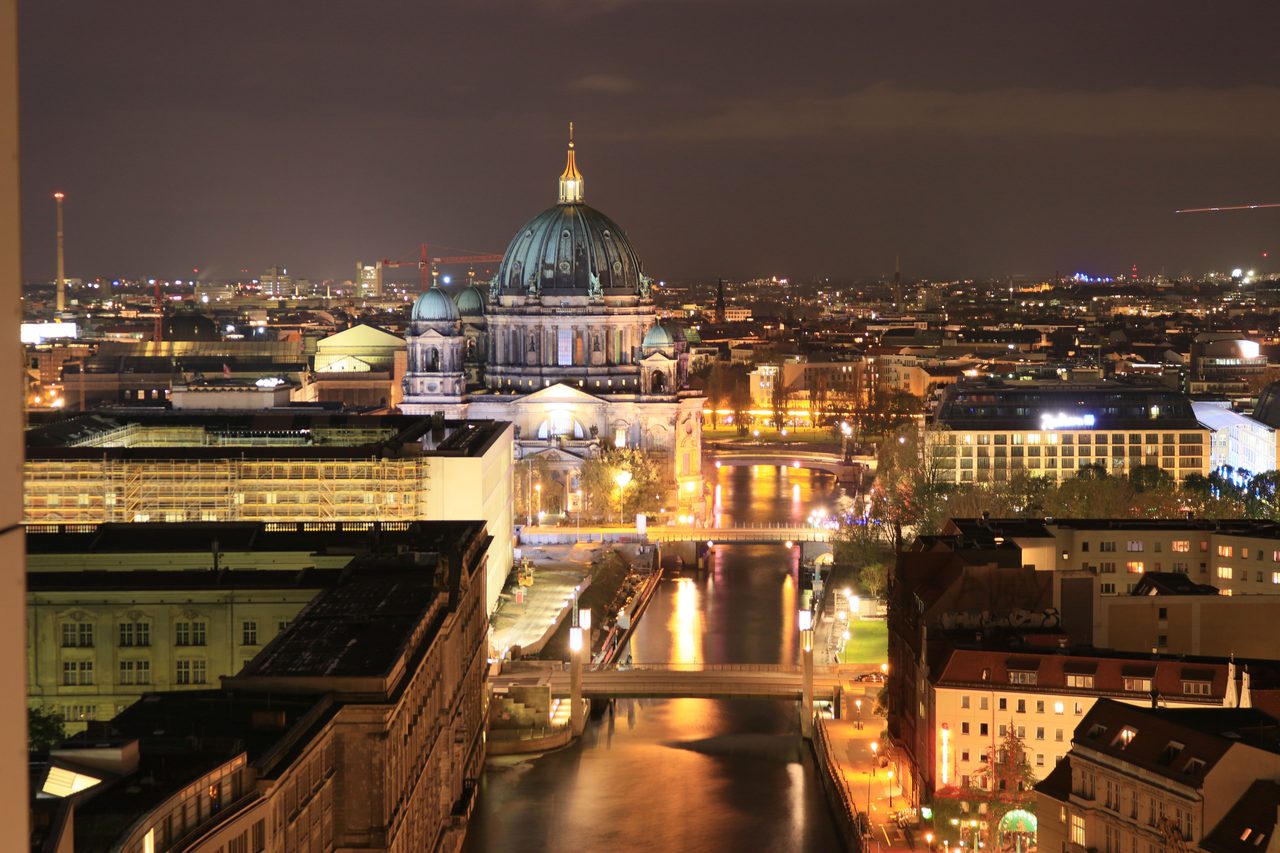
Berlin is Germany's vibrant capital and largest city, renowned for its turbulent history, world-class museums, state-of-the-art art scene, and legendary nightlife. From the remnants of the Berlin Wall to the grandeur of the Brandenburg Gate, the city seamlessly blends its complex past with an innovative, forward-looking spirit. Berlin stands as one of Europe's most culturally rich and diverse metropolises.
Berlin is Germany's dynamic capital, a city that has reinvented itself repeatedly after the devastation of World War II and four decades of division. Today it's a global hub for technology startups, contemporary art, and electronic music. The city's 170+ museums, countless galleries, and vibrant street art scene attract millions of visitors each year, while its green spaces, lakes, and forests offer tranquil escapes within the city limits.
The 29 destinations our editors recommend — from iconic landmarks to under-the-radar finds.
Brandenburg Gate
Berlin's most iconic landmark and the symbol of German reunification. This neoclassical triumphal arch was built in 1791 on the orders of Prussian King Frederick William II. During the Cold War it stood inaccessible in the no-man's land between East and West Berlin; today it is a symbol of peace and unity. Best visited at dawn or after dark when illuminated.
Reichstag Building
Germany's parliament building topped with a spectacular glass dome designed by architect Sir Norman Foster. The dome is free to visit with advance reservation and offers panoramic views over Berlin and down into the plenary chamber below. The building witnessed some of Germany's most dramatic historical moments including the 1933 fire and the hoisting of the Soviet flag in 1945.
Museum Island (Museumsinsel)
A UNESCO World Heritage Site comprising five world-renowned museums on a small island in the Spree River. The complex includes the Pergamon Museum (Hellenistic antiquities), Neues Museum (Egyptian Museum including the bust of Nefertiti), Altes Museum (Greco-Roman antiquities), Alte Nationalgalerie (19th-century art), and Bode Museum (sculptures and Byzantine art). Allow a full day to do justice to even two museums.
Berlin Wall Memorial
The most authentic and extensive Berlin Wall memorial site, preserving an original 200-metre section of the Wall with the death strip, watchtowers, and security infrastructure intact. The open-air documentation centre on Bernauer Straße tells the story of the city's division between 1961 and 1989 through photographs, objects, and first-hand accounts. An emotionally powerful and historically essential visit.
East Side Gallery
The world's longest open-air gallery - a 1.3km stretch of the original Berlin Wall covered in 105 murals by international artists. Painted in 1990 shortly after the Wall fell, the murals celebrate freedom and reunification. The most famous image is Dmitri Vrubel's 'My God, Help Me to Survive This Deadly Love' depicting Brezhnev and Honecker kissing. Located along the Spree River in Friedrichshain.
Checkpoint Charlie
The most famous border crossing between East and West Berlin, now a major tourist site. The original Allied guardhouse and the famous 'You are now leaving the American sector' sign have been reconstructed. The nearby Haus am Checkpoint Charlie museum tells the full story of Cold War escape attempts. The site sits on the former division line on Friedrichstraße.
Recommended itineraries
Pick a length, follow the route. Each itinerary balances headline sights with breathing room.
5-Day Berlin Explorer
Day 1Arrive in Berlin, explore city center
Day 2Visit top attractions and museums
Day 3Day trip to nearby highlights
Day 4Local markets and hidden gems
Day 5Final sightseeing, departure
7-Day Classic Berlin
Days 1-2Berlin city highlights
Days 3-4Regional exploration
Days 5-6Cultural immersion and local experiences
Day 7Return and departure
14-Day Ultimate Berlin
Days 1-3Berlin comprehensive city tour
Days 4-6Northern region exploration
Days 7-9Eastern highlights
Days 10-12Southern attractions
Days 13-14Return to Berlin, departure
Where to stay in Berlin
Three tiers, every traveller covered — from cost-conscious to flagship hotels.
Budget €50
Hostels, budget hotels, and guesthouses offer affordable stays without sacrificing experience.
Mid-range €120
Boutique hotels and well-located accommodations provide comfort and convenience at reasonable prices.
Luxury €350
World-class resorts and premium hotels deliver unforgettable experiences.
Hotel Adlon Kempinski Berlin
Mitte, Berlin · $$$$
Berlin's most legendary hotel, operating since 1907 with a glittering guest list that has included Charlie Chaplin, Michael Jackson, and numerous heads of state. Situated directly on Pariser Platz next to the Brandenburg Gate, the Adlon offers unmatched location and timeless grandeur. The Lorenz Adlon Esszimmer restaurant holds two Michelin stars.
Part of the exclusive Soho House members' club group, this Berlin outpost occupies a stunning 1920s building in Mitte. The rooftop pool, cinemas, and beautifully designed rooms attract creative industry guests. The restaurant Cecconi's serves Italian cuisine, and the late-night bar scene is legendary. Some areas are members-only.
An intimate luxury design hotel in a stunning 1930s Danish Embassy building adjacent to the Berlin Zoo and Tiergarten. Architect Patricia Urquiola designed the theatrical interiors mixing Scandinavian elegance with Berlin cool. The Michelin-starred Cinco restaurant by Diego Guerrero offers outstanding contemporary cuisine. Just 80 rooms for an exclusive atmosphere.
Berlin's most glamorous address since opening in 2013, occupying a dramatic 32-storey tower at the western end of Kurfürstendamm. The art deco-inspired interiors, 232 rooms and suites, and the acclaimed Peacock Alley bar create an atmosphere of refined luxury. The spa and indoor pool on the upper floors offer city views.
Cafés, neighbourhood gems, and tasting menus worth the table reservation.
Nobelhart & Schmutzig
Modern German · $$$$
One of Berlin's most celebrated restaurants, holding one Michelin star. Chef Billy Wagner's restaurant champions 'brutally local' cuisine - every ingredient comes from within Brandenburg, creating a hyper-seasonal 10-course tasting menu that changes constantly. The counter seating around the open kitchen creates an intimate, theatrical dining experience.
Rutz
Modern German · $$$$
Chef Marco Müller's two-Michelin-star restaurant is one of Germany's finest, combining outstanding German produce with precision technique and a world-class natural wine cellar. The seasonal tasting menus reflect Müller's creative interpretation of German flavours. The wine program, with over 1,000 labels focusing on natural wines, is extraordinary.
Tim Raue
Asian-German Fusion · $$$$
Chef Tim Raue's flagship two-Michelin-star restaurant is one of Germany's most creative, combining Asian flavour profiles (Japanese, Chinese, Thai) with European technique and produce. The food is bold, precise, and unlike anything else in Berlin. The striking minimalist interior on Rudi-Dutschke-Straße has become one of the city's dining landmarks.
Facil
Mediterranean · $$$$
A Michelin-starred oasis hidden inside the Mandala Hotel at Potsdamer Platz, Facil's dining room is a glass atrium surrounded by a bamboo garden. Chef Michael Kempf's Mediterranean-influenced cuisine is light, precise, and beautifully presented. The lunch set menu offers exceptional value for a Michelin-starred experience.
Horvath
Austrian-German · $$$$
Chef Sebastian Frank's two-Michelin-star restaurant on the Landwehrkanal in Kreuzberg serves innovative Austrian-German cuisine with exceptional depth and originality. Frank is celebrated for his ability to create dishes that feel simultaneously classic and utterly modern. The canal terrace in summer is one of Berlin's finest dining settings.
Zur Letzten Instanz
Traditional German · $$
Berlin's oldest restaurant, established in 1621 near the Nikolaiviertel. Napoleon, Beethoven, and Charlie Chaplin have all passed through these historic rooms. The menu focuses on hearty Berlin classics: pork knuckle (Eisbein), sauerkraut, and Berlin-style potato soup. The atmospheric wood-panelled rooms and tiled stoves preserve four centuries of history.
Berlin has one of Europe's best public transport networks, operated by BVG (Berliner Verkehrsbetriebe). The U-Bahn (metro), S-Bahn (suburban rail), trams, and buses cover the entire city 24/7, making a car unnecessary for tourists.
U-Bahn (Metro)
10 underground lines serving all major neighborhoods and tourist sites
Cost: €2.90 single / €8.60 day pass
S-Bahn
Overground rapid transit connecting Berlin and its suburbs, also serves airports
Cost: €2.90 single within Berlin
Bus
Extensive bus network including tourist route 100 and 200 linking major sites
Cost: €2.90 single
Tram
Historic tram network operating mainly in former East Berlin districts
Cost: €2.90 single
Taxi
Yellow taxis available throughout the city, can be hailed or booked via apps
Cost: €4.00 base + €2.10/km
Bicycle
Excellent cycling infrastructure with 1,600km of bike lanes; Nextbike and Deutsche Bahn rental available
Cost: €10-20/day rental
Budget breakdown
Daily spend by tier in EUR, broken out by category.
Category
Budget
Mid-range
Luxury
Accommodation
€22
€80
€250
Food (per day)
€15
€25
€60
Transportation
€8
€10
€25
Activities
€5
€15
€30
Daily total
€50
€120
€350
Best time to visit Berlin
Weather through the year in Berlin
Best timeShoulderWorth avoiding
Average daytime temperature in °C. Figures are for Berlin.
Essential travel tips
Buy the Berlin WelcomeCard for unlimited transport and museum discounts
Book Reichstag dome tickets online in advance - they're free but must be reserved
Hidden gems
Off-the-beaten-path corners most travellers miss.
Tempodrom
Unique tent-shaped venue for concerts and events
Tiergarten
Klunkerkranich
Rooftop bar and garden atop a shopping center in Neukölln
Neukölln
Safety information
INFO
Berlin is one of Europe's safer capitals but remain alert for pickpockets on U-Bahn lines and tourist areas like Alexanderplatz
INFO
Keep bags zipped and valuables out of sight in busy areas like Hackescher Markt and the Ku'damm
INFO
Use only licensed yellow taxis or trusted ride-share apps; avoid unofficial taxi offers at airports
INFO
Be cautious at ATMs especially at night; use ATMs inside banks or supermarkets
INFO
Avoid Görlitzer Park after dark - it is a known drug dealing area
INFO
Night U-Bahn and S-Bahn can have rowdy passengers on weekends; stay in occupied carriages
INFO
The area around Kottbusser Tor in Kreuzberg can be chaotic - keep an eye on belongings
INFO
Register with your country's embassy if staying for extended periods
INFO
Emergency services respond quickly - dial 112 for any emergency
INFO
Berlin's clubs can get crowded; keep your drink in sight and know your limits with alcohol
INFO
Cycling is popular but watch for trams and other cyclists in bike lanes
INFO
Carry your accommodation address written down in case you get lost
INFO
Be respectful near memorial sites - behavior that trivializes history is taken seriously
INFO
Berlin has CCTV coverage in most public transport areas
Frequently asked questions
Is Berlin safe to visit in 2026?
Berlin is generally a very safe city for tourists, with low violent crime rates. The main concerns are petty theft in tourist areas and on public transport. Emergency services: police at 110, medical at 112.
What is the best time to visit Berlin?
The best time to visit Berlin is May, June, September. Berlin has a temperate continental climate with cold winters, warm summers, and moderate precipitation year-round. Summers can be pleasantly warm with long days perfect for outdoor activities, while w
Do I need a visa to visit Berlin?
Entry requirements follow Germany/Schengen rules. EU/EEA citizens can enter with ID card. Most other nationals can stay up to 90 days without a visa. US, UK, Canadian, Australian passport holders do not require a visa for tourist stays. Requirements vary by nationality, so check with your nearest embassy or the official immigration website before traveling.
What currency is used in Berlin?
The currency in Berlin is the Euro (EUR). ATMs are widely available in cities and tourist areas. Credit cards are accepted at most hotels and restaurants, but carry cash for markets and smaller establishments.
What language is spoken in Berlin?
The main language(s) spoken in Berlin: German. In tourist areas, English is generally understood. Learning a few basic phrases in the local language is appreciated by locals.
Explore Berlin by city
The cities below have their own guides — hotels, attractions and where to eat, in depth.