
5-Day Saxony-Anhalt Explorer
- Day 1Arrive in Saxony-Anhalt, explore city center
- Day 2Visit top attractions and museums
- Day 3Day trip to nearby highlights
- Day 4Local markets and hidden gems
- Day 5Final sightseeing, departure
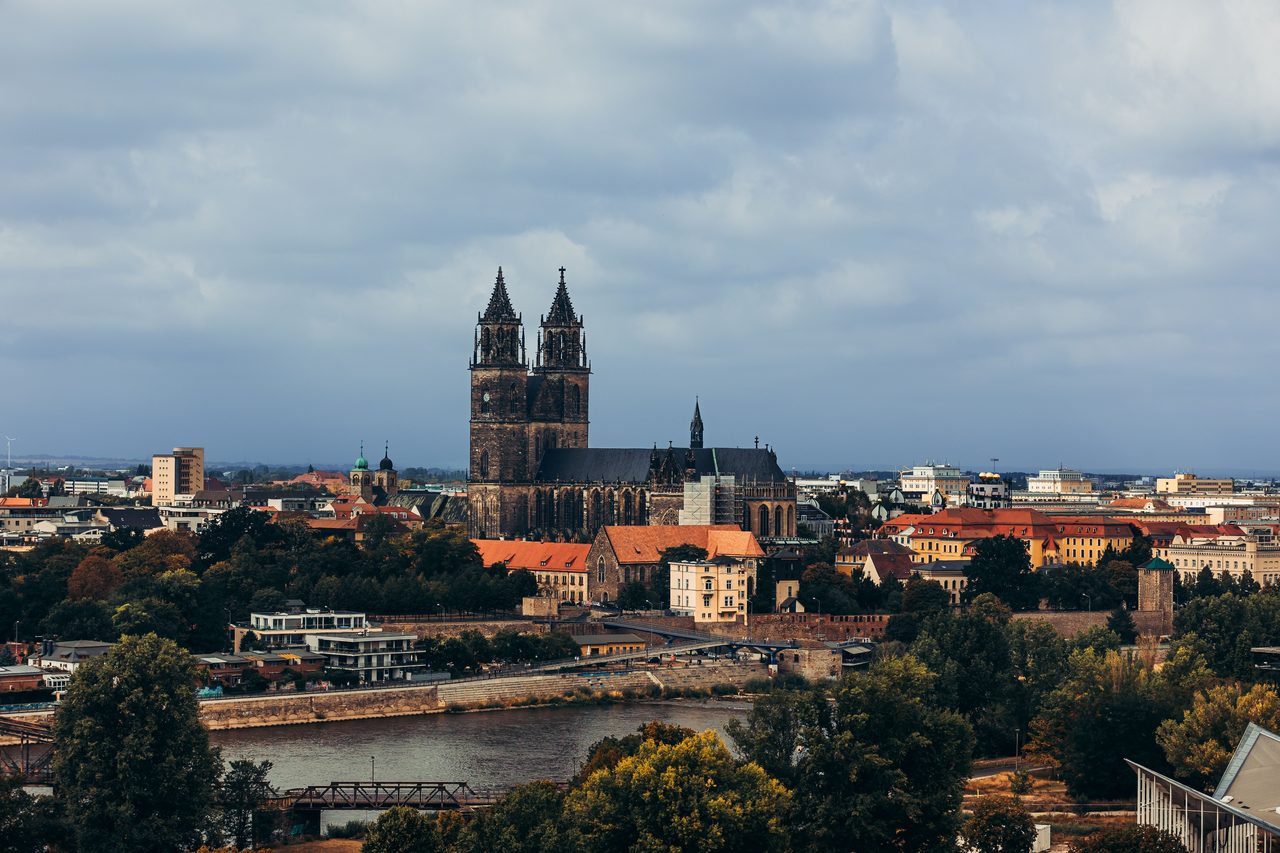
Saxony-Anhalt · 10 Places
Saxony-Anhalt sits at the historical heart of Germany, stretching along the Elbe and Saale rivers between the Harz mountains in the west and the Fläming heathland in the east. Its capital, Magdeburg, anchors the north, while Halle (Saale), the state's largest city, dominates the south. The state holds five UNESCO World Heritage Sites: the medieval half-timbered old town of Quedlinburg, the Luther Memorials in Wittenberg and Eisleben where the Protestant Reformation began, Naumburg Cathedral with its celebrated 13th-century sculpture, the Bauhaus buildings in Dessau, and the landscaped Garden Kingdom of Dessau-Wörlitz.
Saxony-Anhalt rarely tops a first-time visitor's Germany itinerary, yet it holds more UNESCO World Heritage Sites per capita than almost any other German state. Martin Luther nailed the Reformation into motion here, in the university town of Wittenberg and the mining town of Eisleben where he was born and died. Quedlinburg's old town survived the Second World War almost untouched, leaving over 2,000 half-timbered houses spanning eight centuries along cobbled lanes below a Romanesque collegiate church. Naumburg Cathedral holds the medieval Naumburg Master's life-sized stone donor figures, among the most admired sculptures of the European Middle Ages. Dessau gave the world the Bauhaus movement, and its steel-and-glass school building still functions as a working design academy. Magdeburg's Gothic cathedral rises over the Elbe, while Halle, birthplace of composer George Frideric Handel, blends salt-mining history with a lively student population. Between the towns lie the Harz mountains, home to the Brocken peak and the steam-powered Harzer Schmalspurbahnen narrow-gauge railway, and the Saale-Unstrut valley, Germany's northernmost commercial wine region. Deutsche Bahn regional trains (RE/RB) and the MDV, marego, and HAVAG transit networks connect nearly every town covered here, making Saxony-Anhalt one of the more affordable and uncrowded parts of Germany to explore independently.
Jump straight to the experience you're planning.
The 10 destinations our editors recommend — from iconic landmarks to under-the-radar finds.
Pick a length, follow the route. Each itinerary balances headline sights with breathing room.
Three tiers, every traveller covered — from cost-conscious to flagship hotels.
Hostels, budget hotels, and guesthouses offer affordable stays without sacrificing experience.
Boutique hotels and well-located accommodations provide comfort and convenience at reasonable prices.
World-class resorts and premium hotels deliver unforgettable experiences.
A neo-Gothic landmark hotel directly on Wernigerode's historic market square, next to the ornate half-timbered town hall. The hotel has 123 rooms across a distinctive red-brick and sandstone building, a restaurant, and a bar overlooking the market square.
Check rates on Booking.comA family-run hotel on Breite Straße in Wernigerode's old town, one of the town's best-preserved half-timbered shopping streets, within easy walking distance of both the market square and the castle hill.
Check rates on Booking.comA restored half-timbered building and adjoining 19th-century villa on the edge of Quedlinburg's UNESCO-listed old town, furnished with country-house antiques and a Mediterranean-influenced garden.
Check rates on Booking.comA boutique hotel inside a half-timbered building directly on Quedlinburg's market square, named for Byzantine princess and Holy Roman Empress Theophanu, who was linked to the town's medieval abbey.
Check rates on Booking.comCafés, neighbourhood gems, and tasting menus worth the table reservation.
Quedlinburg's own house brewery and restaurant near St. Blasii church, brewing its own beer on site and serving hearty Harz regional dishes, including Quedlinburger Grünkohl in season.
A traditional town hall cellar restaurant on Quedlinburg's market square, serving German and Harz regional dishes in vaulted cellar rooms beneath the historic Rathaus.
A regional restaurant chain built entirely around potato dishes, with a branch in Wernigerode's old town serving dozens of potato-based mains alongside standard Harz fare.
A restaurant in central Magdeburg specializing in regional and seasonal dishes built around lesser-used vegetables such as purple carrots and swede, served on a lush terrace in the city center.
A restaurant in Magdeburg's Rothenbaumpark area combining traditional German cooking with international influences, popular for both casual meals and small celebrations.
A town hall cellar restaurant on Magdeburg's Alter Markt, beneath the Rathaus and near the Magdeburger Reiter statue, serving traditional German and regional Saxony-Anhalt dishes.
Book a food tour in Saxony-Anhalt We may earn a commission from bookings made through this link.
Saxony-Anhalt is served by Deutsche Bahn regional trains (RE/RB) linking Magdeburg, Halle, Dessau, Wittenberg, Naumburg, and Quedlinburg, plus local transit associations including marego (Magdeburg region), MDV (Mitteldeutscher Verkehrsverbund, covering Halle, Dessau, and the south), and HAVAG (Halle's tram network). The state is flat outside the Harz, making cycling and rail travel practical for independent visitors.
Daily spend by tier in EUR, broken out by category.
| Category | Budget | Mid-range | Luxury |
|---|---|---|---|
| Accommodation | €20-32 | €55-95 | €140-350 |
| Food (per day) | €11-18 | €25-42 | €60-110 |
| Transportation | €6-10 | €10-16 | €22-45 |
| Activities | €8-12 | €14-26 | €35-75 |
| Daily total | €45-65 | €90-140 | €230+ |
Best time Shoulder Worth avoiding
Average daytime temperature in °C. Figures are for Germany.
Pickpocketing in Magdeburg and Halle — Magdeburg Hauptbahnhof, Halle (Saale) Hauptbahnhof, and busy shopping streets in both cities see occasional opportunistic pickpocketing, particularly around train platforms and crowded market events.
Fast-changing weather on the Brocken and in the Harz — The Brocken is the windiest point in Germany and one of the snowiest and foggiest, with weather that can shift from clear to whiteout conditions within minutes even in summer. Sudden temperature drops and dense fog are common on exposed Harz ridgelines.
Tick awareness in Harz forests — The Harz's forests and meadow trails carry a tick population from April through October, which can transmit Lyme disease — a widespread concern across forested Germany, not specific to any one trail.
Inland lake swimming at Barleber See, Geiseltalsee, and Süßer See — Saxony-Anhalt's inland lakes range from officially supervised bathing areas (Badestellen) with lifeguards during summer to informal, unsupervised swimming spots with no lifeguard coverage. Geiseltalsee is a former lignite mine flooded into a lake, with steep underwater drop-offs in places.
Common tourist scams in Saxony-Anhalt — Saxony-Anhalt sees far fewer scams than major international tourist cities, with only isolated issues around its busiest attractions.
Driving on rural Harz and Altmark roads — Saxony-Anhalt's countryside is easy to drive overall, but rural roads connecting Harz villages and the Altmark region can be narrow, poorly lit at night, and shared with agricultural vehicles and cyclists.
Important local regulations for visitors — Saxony-Anhalt follows standard German regulations that visitors should be aware of, particularly around cycling, hiking off-trail, and rural land access.
EU/Schengen Area rules apply. No visa is required for EU citizens. Many nationalities can visit for 90 days visa-free under Schengen rules. Non-Schengen nationals should check requirements with their nearest German embassy or the official immigration website before traveling.
The currency in Saxony-Anhalt is the Euro (EUR). ATMs are widely available in Magdeburg, Halle, and Wittenberg. Credit cards are accepted at most hotels and restaurants, but many rural markets and small-town restaurants prefer cash.
The main language spoken in Saxony-Anhalt is German. In Magdeburg, Halle, and the main UNESCO tourist towns, English is generally understood at hotels and major attractions. Learning a few basic German phrases is appreciated by locals in smaller towns.
Saxony-Anhalt has five UNESCO World Heritage Sites: the Old Town of Quedlinburg, the Luther Memorials in Eisleben and Wittenberg, the Bauhaus and its Sites in Dessau, the Garden Kingdom of Dessau-Wörlitz, and Naumburg Cathedral.
The top attractions in Saxony-Anhalt include Quedlinburg's half-timbered old town, the Luther House and St. Mary's Church in Lutherstadt Wittenberg, Naumburg Cathedral, the Bauhaus Building in Dessau, and the Brocken summit in the Harz mountains, reached by the historic Harzer Schmalspurbahnen steam railway.