World · 21 Places · Best May–June and September–October
Epirus
Epirus is a rugged, mountainous region in northwestern Greece bordering Albania, renowned for its dramatic landscapes, ancient history, and rich culinary traditions. Dominated by the Pindus mountain range and the Vikos–Aoös National Park — home to one of the world's deepest gorges — Epirus offers pristine rivers, stone-built villages, Byzantine monasteries, and the atmospheric lakeside city of Ioannina.
Epirus (Ήπειρος) occupies the northwestern corner of Greece and is one of the country's most unspoiled regions. The Pindus Mountains define its interior, sheltering traditional villages like Metsovo, Papingo, and Monodendri. The Vikos Gorge, listed in the Guinness Book of Records as the world's deepest canyon relative to its width, draws hikers from across Europe. Lake Pamvotis in Ioannina harbors a small island with the monastery where Ottoman ruler Ali Pasha was assassinated in 1822. Epirus has one of Greece's richest local cuisines, centered on pies (pites), dairy, lamb, and wild game. The region remained largely isolated until the late 20th century, preserving architecture, dialect, and traditions found nowhere else in Greece.
The 21 destinations our editors recommend — from iconic landmarks to under-the-radar finds.
Vikos Gorge
Vikos Gorge cuts through the Pindus range between Monodendri and the Papingo villages, and its depth relative to width has led to it being cited as one of the deepest gorges in the world. The limestone walls drop hundreds of metres to the Voidomatis river below, and the classic view is from the Oxya viewpoint near Monodendri, reached by a short walk from the village. Most visitors see it either from marked overlooks or by walking a section of the gorge floor trail between Monodendri and Vikos village.
Lake Pamvotis & Ioannina Island
Lake Pamvotis borders the city of Ioannina, and a small inhabited island sits within it, reachable only by boat, with a cluster of Ottoman-era monasteries and a fishing village on its shore. The island has no cars, and its narrow paths connect the monastery buildings to lakeside tavernas serving fish and frog dishes pulled from the lake itself. It's a short crossing but a distinct change of pace from the city on the mainland shore.
Ali Pasha Museum
This small museum occupies part of the Monastery of St. Panteleimon on Ioannina Island and is dedicated to Ali Pasha, the Ottoman-era ruler of Epirus whose court made Ioannina a regional power center in the early 19th century. The rooms display period weapons, clothing, and documents relating to his rule and his death, which took place in this same building. It's a compact visit focused on one specific figure rather than a broad regional history.
Zagori Stone Villages
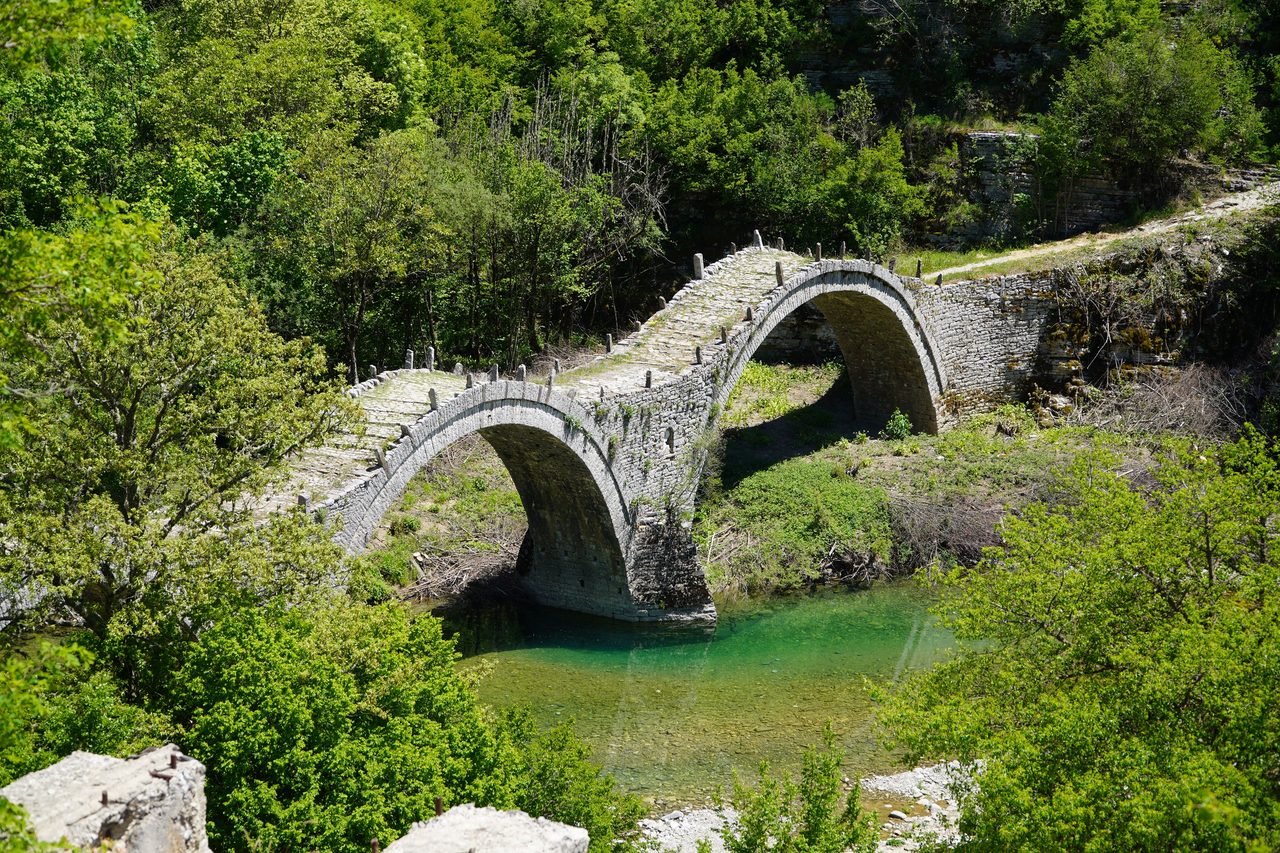
Zagori is a cluster of around 45 villages scattered through the mountains north of Ioannina, built almost entirely from local grey stone, including the houses, the arched bridges, and the cobbled streets connecting them. Papingo, split into Mikro and Megalo Papingo, sits at the base of the Astraka peaks and is one of the more visited pair, with stone guesthouses converted from old mansions. The villages were built by families who made money abroad and returned to build in a shared architectural style that has stayed largely intact.
Metsovo
Metsovo is a mountain town on the road between Ioannina and the Meteora region, historically populated by Vlach shepherding communities and known for its wine, cheese, and wood-carved interiors. The town center is built on a slope with stone-roofed buildings, and the Tositsa Mansion, a preserved 18th-century Vlach house, shows the domestic architecture and furnishings of the wealthier families who funded much of the town's infrastructure. It functions as both a stopover on the Ioannina route and a destination for its local cured meats and cheeses.
Ioannina Byzantine Museum
Housed inside the Kastro, the walled old town of Ioannina, this museum covers the Byzantine and post-Byzantine period in Epirus through icons, coins, and church artifacts gathered from the region. The Kastro itself is worth walking through separately, with its old mosque, clock tower, and views over Lake Pamvotis, and the museum sits within that same walled complex. It gives context for the religious and civic life of Ioannina before the Ottoman period that later shaped the city under Ali Pasha.
Recommended itineraries
Pick a length, follow the route. Each itinerary balances headline sights with breathing room.
5-Day Epirus Explorer
Day 1Arrive in Epirus, explore city center
Day 2Visit top attractions and museums
Day 3Day trip to nearby highlights
Day 4Local markets and hidden gems
Day 5Final sightseeing, departure
7-Day Classic Epirus
Days 1-2Epirus city highlights
Days 3-4Regional exploration
Days 5-6Cultural immersion and local experiences
Day 7Return and departure
14-Day Ultimate Epirus
Days 1-3Epirus comprehensive city tour
Days 4-6Northern region exploration
Days 7-9Eastern highlights
Days 10-12Southern attractions
Days 13-14Return to Epirus, departure
Where to stay in Epirus
Three tiers, every traveller covered — from cost-conscious to flagship hotels.
Budget €45–€100/day (~$49–$108)
Hostels, budget hotels, and guesthouses offer affordable stays without sacrificing experience.
Mid-range €160–€315/day (~$173–$340)
Boutique hotels and well-located accommodations provide comfort and convenience at reasonable prices.
Luxury €380–€820/day (~$411–$886)
World-class resorts and premium hotels deliver unforgettable experiences.
Aristi Mountain Resort & Villas
Aristi village, Zagori · €€€€ (€220–€450/night, ~$238–$486)
Epirus is best explored by rental car due to its mountainous terrain. Ioannina has the only commercial airport (IOA) and is served by KTEL buses from Athens, Thessaloniki, and other cities. Taxis and local minibuses connect villages in Zagori.
Budget breakdown
Daily spend by tier in EUR, broken out by category.
Category
Budget
Mid-range
Luxury
Accommodation
€25–€50/night (~$27–$54)
€80–€150/night (~$86–$162)
€200–€450/night (~$216–$486)
Food (per day)
€15–€25/day (~$16–$27)
€30–€55/day (~$32–$59)
€70–€120/day (~$76–$130)
Transportation
€5–€15/day (~$5–$16)
€30–€60/day (rental car, ~$32–$65)
€60–€100/day (private driver, ~$65–$108)
Activities
€0–€10/day (~$0–$11)
€20–€50/day (~$22–$54)
€50–€150/day (~$54–$162)
Daily total
€45–€100/day (~$49–$108)
€160–€315/day (~$173–$340)
€380–€820/day (~$411–$886)
Best time to visit Epirus
Weather through the year in Greece
Best timeShoulderWorth avoiding
Average daytime temperature in °C. Figures are for Greece.
Spring brings wildflowers and full rivers for rafting. Autumn has mild weather and golden foliage in Zagori. Summer is warm but can be crowded in popular villages.
Essential travel tips
Rent a car in Ioannina to reach Zagori villages — public transport is very limited
Visit Metsovo on weekdays to avoid weekend crowds from Thessaloniki and Athens
Book accommodation in Papingo and Aristi months in advance for summer
Most tavernas in Zagori close in January–February; call ahead
Ioannina's kastro (castle district) is best explored on foot in the morning
Hidden gems
Off-the-beaten-path corners most travellers miss.
Papingo Pools (Rogovo)
Natural rock pools carved by the Rogovo stream, perfect for swimming in summer, accessible by a 30-minute walk from Megalo Papingo.
Papingo village, Zagori
Monastery of Molyvdoskepastos
A 14th-century Byzantine monastery perched above the Aoos River gorge, rarely visited and extraordinarily scenic.
Konitsa, Epirus
Dragonlake (Drakolimni) of Tymfi
A glacial lake at 2,050 m altitude, accessible via a full-day hike from Papingo; home to alpine newts and surrounded by peaks.
Mount Tymfi, Zagori
Safety information
INFO
Carry extra water and a map when hiking the Vikos Gorge
INFO
Inform someone of your hiking plans before setting out
INFO
Road conditions in Zagori can be icy in winter — use winter tyres or chains
INFO
Emergency mountain rescue: EKAB 166 or Greek Mountain Rescue 10400
Frequently asked questions
Is Epirus safe to visit in 2026?
Epirus is one of Greece's safest regions. Violent crime is extremely rare. The main hazards are mountain-related: sudden weather changes, trail conditions, and driving on narrow mountain roads. Ioannina city is safe at all hours. Standard urban precautions (watch for pickpockets in crowded markets)
What is the best time to visit Epirus?
The best time to visit Epirus is May–June and September–October. Epirus has a Mediterranean climate in its coastal areas (Parga, Preveza) and a continental mountain climate inland. Ioannina is one of the rainiest cities in Greece, receiving heavy precipitation in a
What currency is used in Epirus?
The currency in Epirus is the Euro (EUR). ATMs are widely available in cities and tourist areas. Credit cards are accepted at most hotels and restaurants, but carry cash for markets and smaller establishments.
What language is spoken in Epirus?
The main language(s) spoken in Epirus: Greek. In tourist areas, English is generally understood. Learning a few basic phrases in the local language is appreciated by locals.
What are the top attractions in Epirus?
The top attractions in Epirus include Vikos Gorge, Lake Pamvotis & Ioannina Island, Ali Pasha Museum, Zagori Stone Villages, and Metsovo. Each offers a unique experience, from historic landmarks to natural wonders.