World · 22 Places · Best April–June and September–October
Western Greece
Western Greece is a diverse region spanning three regional units — Achaea, Aetolia-Acarnania, and Elis — encompassing the birthplace of the Olympic Games, Greece's third-largest city Patras, Europe's longest cable-stayed bridge, and sweeping lagoons teeming with flamingos. The region blends ancient archaeology, Byzantine monasteries, Carnival celebrations, mountain rack railways, and long sandy beaches into one of the country's most rewarding but least-crowded itineraries.
Western Greece occupies the northwestern Peloponnese and the western mainland, stretching from the Gulf of Patras and Ionian coast inland to the Aroania and Panachaiko mountain ranges. Patras anchors the north as a vibrant university city famous for Greece's largest Carnival. To the south, the UNESCO-adjacent plain of Ancient Olympia draws visitors year-round to the sanctuary that launched the Olympic Games in 776 BC. East of Patras, the narrow-gauge rack railway climbs spectacular gorges to the village of Kalavryta, where a sobering memorial recalls a wartime massacre. The vast Messolonghi lagoon — a wetland of international importance — shelters the island town of Aetoliko and feeds a unique salt-curing tradition. The Achaia Clauss winery, founded in 1861, produces the renowned Mavrodaphne dessert wine just outside Patras. Adventure seekers can hike through the gorge of Vouraikos, white-water raft on the Ladon River, and sea kayak along the Elis coast, while the beaches at Kalogria, Kourouta, and Cape Kyllini attract sunseekers without the Aegean island crowds.
The 22 destinations our editors recommend — from iconic landmarks to under-the-radar finds.
Ancient Olympia
This archaeological site in the Alfeios valley was the sanctuary of Zeus and the birthplace of the ancient Olympic Games, held here every four years from 776 BC. Walking the grounds takes you past the remains of the Temple of Zeus, the Palaestra, and the stone-lined stadium entrance tunnel where athletes once passed. The scale is spread out and mostly low ruins and column stumps rather than intact structures, so it rewards an unhurried walk rather than a quick photo stop.
Museum of the History of the Olympic Games in Antiquity
Housed near the archaeological site, this museum focuses specifically on the ancient Games rather than general finds from Olympia, tracing the events, training, and rituals that made up the competition. Exhibits include athletic equipment, victor inscriptions, and models reconstructing how the stadium and training grounds looked in use. It gives context that the bare ruins next door don't provide on their own.
Rio-Antirrio Bridge (Charilaos Trikoupis Bridge)
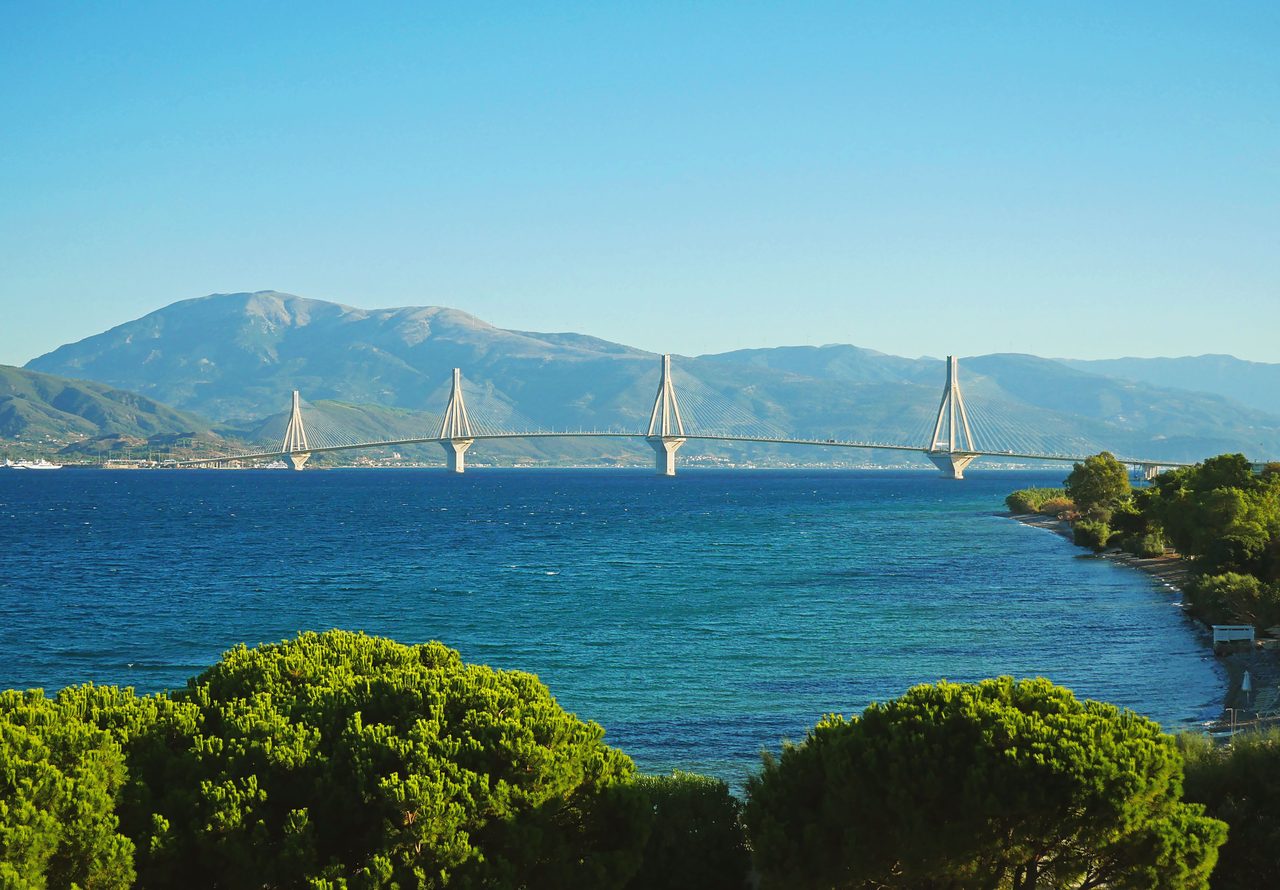
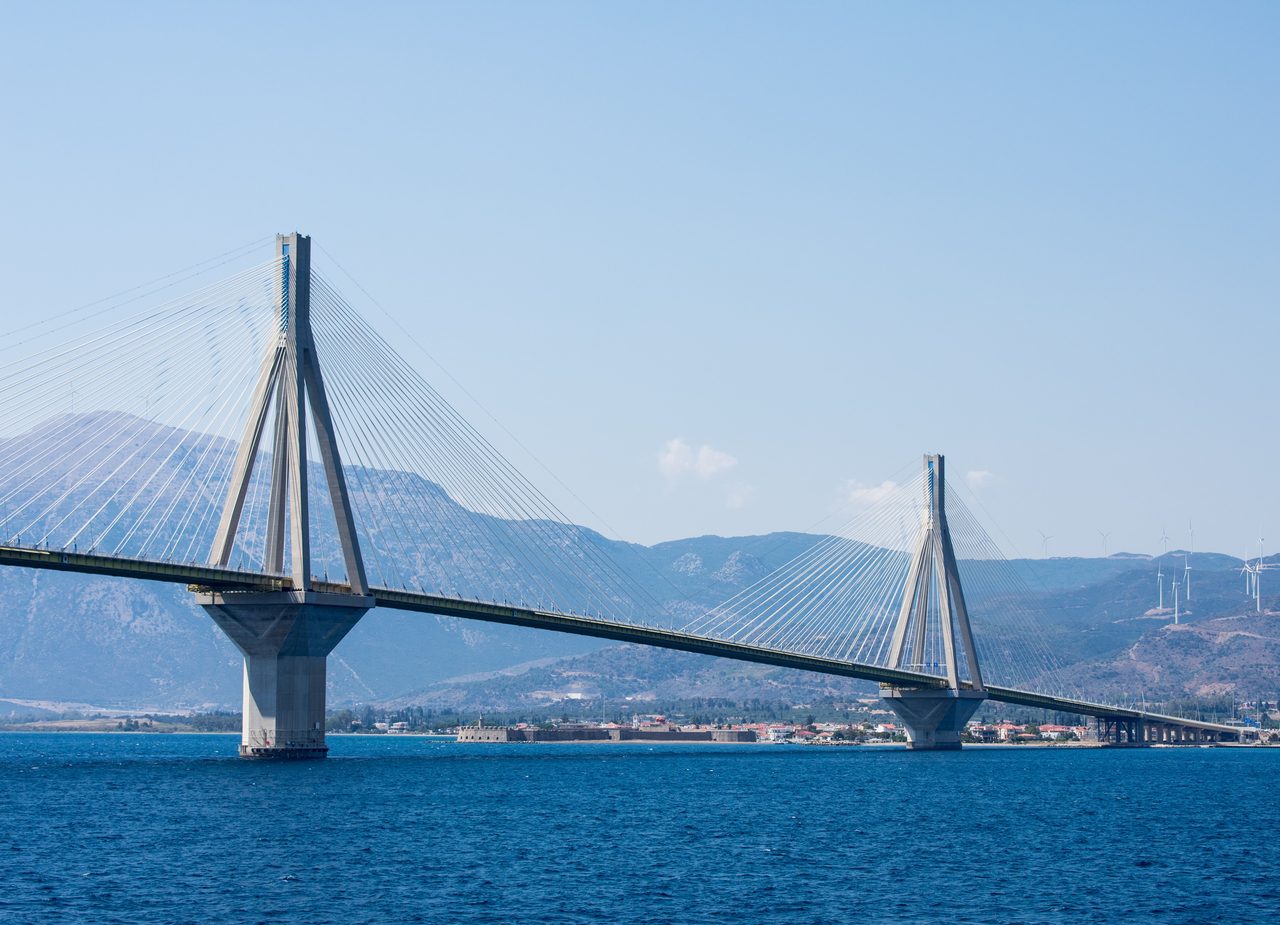
This cable-stayed bridge spans the Gulf of Corinth to link the Peloponnese at Rio with the mainland at Antirrio, replacing the car ferries that used to make the crossing. It was engineered to withstand the strong currents, deep water, and seismic activity of the strait, and its four tall pylons are visible for miles along the coast in both directions. For most visitors the interest is in seeing or crossing the structure itself rather than anything to do once there.
Diakopto-Kalavryta Rack Railway (Odontotos)
This narrow-gauge cog railway climbs from the coast at Diakopto up through the Vouraikos Gorge to the mountain town of Kalavryta, using a rack-and-pinion system on the steepest grades. Built by an Italian company in the late 19th century, the line still runs its original route through tunnels, over bridges, and alongside the river gorge, with the carriages moving slowly enough to take in the drop on either side. The journey itself, not a destination at either end, is the reason to ride it.
Castle of Patras (Kastro)
This fortress sits on a hill above the old town in Ano Poli, built on foundations going back to Byzantine rule and later modified by Venetian and Ottoman occupiers. The walls and towers are largely intact enough to walk along, and the elevated position gives a clear view down over Patras to the gulf and the Rio-Antirrio bridge in the distance. It's a modest, self-contained site that takes well under an hour to walk through.
Archaeological Museum of Patras
This museum covers Patras's history as one of the major Roman-era cities of Greece, a period when it was a significant colony and port on the route between Italy and the eastern Mediterranean. The collection includes mosaics, grave goods, and everyday objects excavated from Roman villas and cemeteries around the city, displayed across a modern building rather than a converted historic one. It fills in a period of Patras's history that the medieval castle and old town don't cover.
Recommended itineraries
Pick a length, follow the route. Each itinerary balances headline sights with breathing room.
5-Day Western Greece Explorer
Day 1Arrive in Western Greece, explore city center
Day 2Visit top attractions and museums
Day 3Day trip to nearby highlights
Day 4Local markets and hidden gems
Day 5Final sightseeing, departure
7-Day Classic Western Greece
Days 1-2Western Greece city highlights
Days 3-4Regional exploration
Days 5-6Cultural immersion and local experiences
Day 7Return and departure
14-Day Ultimate Western Greece
Days 1-3Western Greece comprehensive city tour
Days 4-6Northern region exploration
Days 7-9Eastern highlights
Days 10-12Southern attractions
Days 13-14Return to Western Greece, departure
Where to stay in Western Greece
Three tiers, every traveller covered — from cost-conscious to flagship hotels.
Budget €55–€105/day (~$60–$115)
Hostels, budget hotels, and guesthouses offer affordable stays without sacrificing experience.
Mid-range €135–€255/day (~$147–$277)
Boutique hotels and well-located accommodations provide comfort and convenience at reasonable prices.
Luxury €330–€690/day (~$358–$750)
World-class resorts and premium hotels deliver unforgettable experiences.
Majestic Hotel Patras
Patras city centre, Achaea · €€€ (€120–€200/night, ~$130–$218)
Western Greece is well connected by bus (KTEL), train (Hellenic Train), and ferry. The E65/E55 motorway links Patras to Athens in under 2 hours. KTEL Achaias runs frequent intercity buses. Patras port offers ferry connections to Italy (Ancona, Bari, Brindisi, Venice) and Ionian islands.
Budget breakdown
Daily spend by tier in EUR, broken out by category.
Category
Budget
Mid-range
Luxury
Accommodation
€25–€45/night (~$27–$49)
€70–€120/night (~$76–$130)
€150–€350/night (~$163–$380)
Food (per day)
€15–€25/day (~$16–$27)
€30–€55/day (~$33–$60)
€70–€120/day (~$76–$130)
Transportation
€5–€15/day (~$5–$16)
€15–€35/day (~$16–$38)
€60–€120/day (~$65–$130)
Activities
€10–€20/day (~$11–$22)
€20–€45/day (~$22–$49)
€50–€100/day (~$54–$109)
Daily total
€55–€105/day (~$60–$115)
€135–€255/day (~$147–$277)
€330–€690/day (~$358–$750)
Best time to visit Western Greece
Weather through the year in Greece
Best timeShoulderWorth avoiding
Average daytime temperature in °C. Figures are for Greece.
The Patras Carnival takes place 40 days before Orthodox Easter (usually February–March) and is the best time to experience the city's famous festivities. Ancient Olympia is best visited in spring and autumn to avoid summer heat.
Essential travel tips
Purchase a combined ticket for the Archaeological Museum of Olympia and the site of Ancient Olympia
Book ferry tickets to Italy well in advance, especially in summer
The Diakopto-Kalavryta rack railway requires advance booking in high season
Patras Carnival events begin weeks before the main parade — check the official program at carnivalpatras.gr
Hire a car to explore the Aetolia-Acarnania region, as public transport is limited there
Hidden gems
Off-the-beaten-path corners most travellers miss.
Monastery of Mega Spilaio
Kalavryta, Achaea
Achaia Clauss Winery
Petroto, Patras
Lake Trichonida
Aetolia-Acarnania
Nafpaktos Castle & Harbour
Nafpaktos, Aetolia-Acarnania
Safety information
INFO
Keep valuables secure in Patras port area during large ferry arrivals
INFO
Use sunscreen and carry water when visiting Ancient Olympia in summer
INFO
Check sea conditions before swimming at open beaches
INFO
Drive carefully on mountain roads near Kalavryta — steep and winding
Frequently asked questions
Is Western Greece safe to visit in 2026?
Patras is a busy port city; exercise standard vigilance near the ferry terminal during peak arrival times. Rural areas and smaller towns (Nafpaktos, Messolonghi, Kalavryta) are very safe. Archaeological sites are family-friendly and well-managed by staff.
What is the best time to visit Western Greece?
The best time to visit Western Greece is April–June and September–October. Western Greece experiences a classic Mediterranean climate. Summers (June–September) are hot and dry with temperatures regularly reaching 32–38°C (90–100°F) at Ancient Olympia and inland areas. Patras
What currency is used in Western Greece?
The currency in Western Greece is the Euro (EUR). ATMs are widely available in cities and tourist areas. Credit cards are accepted at most hotels and restaurants, but carry cash for markets and smaller establishments.
What language is spoken in Western Greece?
The main language(s) spoken in Western Greece: Greek. In tourist areas, English is generally understood. Learning a few basic phrases in the local language is appreciated by locals.
What are the top attractions in Western Greece?
The top attractions in Western Greece include Ancient Olympia, Museum of the History of the Olympic Games in Antiquity, Rio-Antirrio Bridge (Charilaos Trikoupis Bridge), Diakopto-Kalavryta Rack Railway (Odontotos), and Castle of Patras (Kastro). Each offers a unique experience, from historic landmarks to natural wonders.