
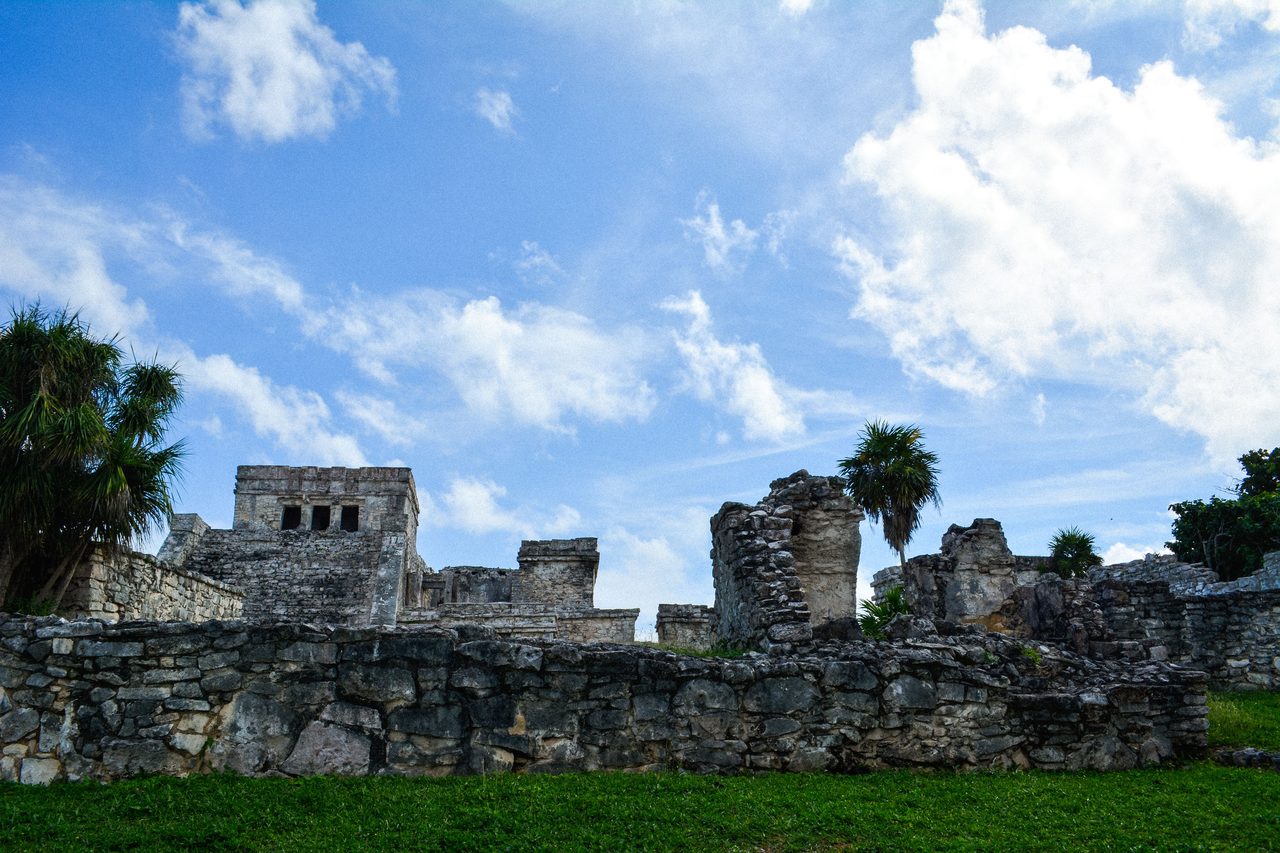
Stunning clifftop Mayan ruins overlooking the turquoise Caribbean Sea. This well-preserved walled city was a major trading port and features the iconic El Castillo temple. After exploring ruins, descend to the pristine beach below for swimming.
The Tulum Archaeological Site sits on a limestone cliff above the Caribbean Sea along Highway 307 in Quintana Roo, Mexico, about 130 kilometres south of Cancun. Tulum was a walled Maya port city occupied mainly between the 13th and 15th centuries and was still active when Spanish ships first sighted it. Visitors enter through the western wall and walk shaded paths between low stone structures. The principal building is El Castillo, a stepped pyramid that served as a lookout and beacon beside the sea. Close by are the Temple of the Frescoes, which holds remnants of painted murals, and the Temple of the Descending God, named for the diving figure carved above its doorway. The cliff-edge setting gives the site its fame: turquoise water frames the ruins from almost every angle, and a small beach below El Castillo can be reached by a staircase, where swimming is usually permitted when conditions are safe. Iguanas wander freely over the stones, and climbing the structures is not allowed. A typical visit takes about two to three hours including the walk from the parking area, which is a kilometre or so from the entrance, with a shuttle or train available for a small fee. The site opens early, usually at 8:00 AM, and arriving at opening gives the best light and the thinnest crowds. By late morning tour buses from Cancun and Playa del Carmen fill the paths and the heat becomes strong with little shade. Entry is charged in Mexican pesos, with a separate fee for the car park, and nearby Tulum town offers restaurants and cenotes for combining a day. Visitors should bring water, sun protection and reef-safe sunscreen if swimming. The site closes in the late afternoon, so the final entry time is earlier than the official closing hour, and rainy conditions can make the stone surfaces slippery.
| Admission | Adult $95 MXN ($5 USD) entrance + $58 MXN ($3 USD) state fee · Child Free under 13 |
|---|---|
| Hours | 8:00 AM - 5:00 PM daily |
| Typical visit | 2-3 hours |
| Address | Carretera Federal, Cancun - Chetumal Km 230, 307, 77780 Tulum |
Good to know
- Best for
- beaches, photography, couples, history
Location
Carretera Federal, Cancun - Chetumal Km 230, 307, 77780 Tulum
20.2145, -87.4286 View on map
Highlights
- El Castillo pyramid watching over the Caribbean coastline
- Temple of the Frescoes with remnants of Maya painted murals
- Temple of the Descending God and its carved diving figure
- Small beach below the cliff with swimming when conditions allow
- Walls of the fortified Maya port city on three sides
Tips for visiting
- Visit at opening time to avoid crowds
- Bring swimsuit for beach access below ruins
- Parking is 300-500 MXN, arrive by bike or shuttle
- Combine with nearby cenotes (Gran Cenote 5 min away)
When to visit
Arrive at opening around 8:00 AM, before the tour buses, for soft light and cooler air. The dry season from December to April is most pleasant.
Accessibility
Paths are mostly packed earth and stone with some uneven sections, and the stairs to the beach are steep. Wheelchair users can reach several viewpoints along the main path with assistance but not the beach.
Visit, book or contact
Frequently asked questions
How long does a visit to Tulum take?
Most visitors need two to three hours, including the walk from the parking area and time at the beach. Photographers often stay longer for the morning light.
Is Tulum worth it for kids?
Yes, children usually enjoy the iguanas and the beach below the cliff. The heat and lack of shade mean a morning visit with water and hats works best.
Is photography allowed at Tulum?
Handheld cameras and phones are allowed. Tripods and drones are not permitted without special authorisation.
Can visitors climb the structures?
No, climbing El Castillo and other buildings is prohibited to protect the stonework. Visitors view them from marked paths.