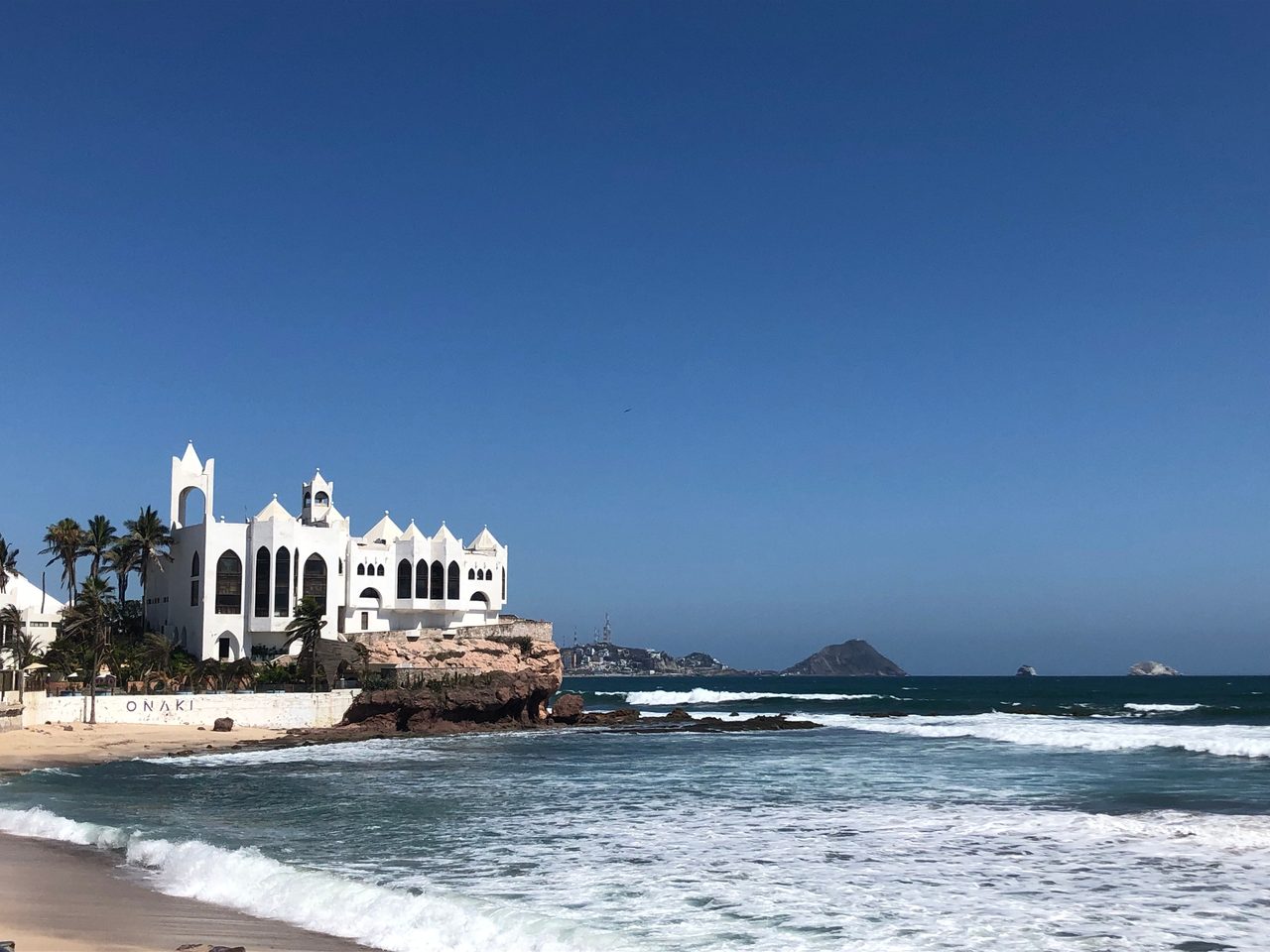
Sinaloa is a Pacific coast state in northwestern Mexico, stretching from the Sierra Madre Occidental foothills to a long stretch of Pacific coastline. It is home to Culiacán, the state capital and largest inland city, and Mazatlán, a historic port city and long-established beach resort with a colonial old town and a wide, palm-lined malecón. Sinaloa is also one of Mexico's main agricultural producers and has a strong regional identity built around seafood, banda music, and its Pacific coast heritage.
Sinaloa runs along Mexico's northwest Pacific coast between the states of Sonora and Nayarit, backed by the Sierra Madre Occidental. Culiacán, the state capital, sits inland on the Culiacán River and functions as the state's commercial, agricultural, and administrative center, though it sees relatively few international visitors. Mazatlán, on the coast, is the state's main tourist destination, with a restored 19th-century Centro Histórico, the Teatro Ángel Peralta opera house, a broad malecón, and the resort strip of the Zona Dorada. Los Mochis, in the north, is best known as the western terminus of the Copper Canyon railway (El Chepe). Security conditions vary sharply across the state, and current travel advisories should be checked closely before planning a route beyond the established tourist areas of Mazatlán.
The 26 destinations our editors recommend — from iconic landmarks to under-the-radar finds.
Faro de Mazatlán (El Faro)
This lighthouse sits atop Cerro del Crestón at the southern tip of Mazatlán's harbor entrance, and the promoted claim of being one of the highest natural-elevation lighthouses in the world comes from the height of the hill itself, not the tower. Getting there means a steep switchback trail on foot rather than a lift or shuttle, so the payoff is the climb as much as the view at the top. From the summit you can see the harbor channel, the malecón curving along the coast, and the offshore islands used for the local boat tours.
Catedral Basílica de la Inmaculada Concepción
This is Mazatlán's main cathedral, built in a mix of Gothic and Baroque-influenced styles typical of 19th-century Mexican church construction, with twin yellow-tiled towers that stand out over the low rooftops of Centro Histórico. It functions as an active parish, so visits happen around ongoing services rather than a fixed museum schedule. The interior has a vaulted nave and an altar area that reflect the more ornate end of regional colonial-era church design, even though the building itself postdates the colonial period.
Plazuela Machado
This is the central square of Mazatlán's Centro Histórico, ringed by restored 19th-century buildings with wrought-iron balconies that now house restaurants, cafés and galleries. It's the anchor of the historic district's revival, and its surrounding streets connect directly to the Teatro Ángela Peralta a block away. The plaza is at its most active in the evening, when restaurant terraces fill up and the square becomes the main gathering point for the old town.
Teatro Ángela Peralta
This restored 19th-century theater, named after the Mexican opera soprano, is the performance venue anchoring Centro Histórico alongside Plazuela Machado a block away. Its horseshoe-shaped auditorium with tiered balconies was fully restored after decades of disuse, and it now hosts opera, dance and theater performances tied to the city's cultural calendar. Even without a ticket, the lobby and gallery let you see the restoration work and building's layout.
Isla de la Piedra (Stone Island)
Despite the name, this is a peninsula rather than a true island, reached by a short water taxi crossing from the Mazatlán waterfront near the cruise terminal. It's a working fishing community as well as a beach destination, and the beach itself is longer and less developed than the hotel-zone beaches in town, backed by palm groves that supply local palapa restaurants. The pace here is slower and more local than Zona Dorada.
Isla de Venados (Deer Island)
This is the largest of the three islands making up the Reserva Ecológica Islas de Mazatlán, a protected zone just offshore from the Zona Dorada hotel strip. Boat operators run out from Playa Sábalo for snorkeling and beach time on the island's more sheltered side, since the surrounding waters are part of the marine reserve rather than open coastline. The island itself is undeveloped, so the appeal is the swimming and snorkeling rather than any facilities on land.
Recommended itineraries
Pick a length, follow the route. Each itinerary balances headline sights with breathing room.
5-Day Sinaloa Explorer
Day 1Arrive in Sinaloa, explore city center
Day 2Visit top attractions and museums
Day 3Day trip to nearby highlights
Day 4Local markets and hidden gems
Day 5Final sightseeing, departure
7-Day Classic Sinaloa
Days 1-2Sinaloa city highlights
Days 3-4Regional exploration
Days 5-6Cultural immersion and local experiences
Day 7Return and departure
14-Day Ultimate Sinaloa
Days 1-3Sinaloa comprehensive city tour
Days 4-6Northern region exploration
Days 7-9Eastern highlights
Days 10-12Southern attractions
Days 13-14Return to Sinaloa, departure
Where to stay in Sinaloa
Three tiers, every traveller covered — from cost-conscious to flagship hotels.
Budget MX$700 ($41)
Hostels, budget hotels, and guesthouses offer affordable stays without sacrificing experience.
Mid-range MX$1,739 ($101)
Boutique hotels and well-located accommodations provide comfort and convenience at reasonable prices.
Luxury MX$4,500+ ($260+)
World-class resorts and premium hotels deliver unforgettable experiences.
Cafés, neighbourhood gems, and tasting menus worth the table reservation.
Pedro y Lola
Mexican / Seafood · $$
A plaza-facing restaurant on Plazuela Machado named for Pedro Infante and Lola Beltrán, two icons of Mexican film and song. The kitchen works a Sinaloan seafood and Mexican menu, and the open terrace looks directly onto the square's bandstand and colonial facades.
El Presidio Cocina de México
Regional Mexican · $$$
A dressier regional Mexican dining room that plates interior Mexican classics with more composition and technique than the seafood-shack norm of the coast. The chile en nogada, when it runs in season, is a poblano stuffed and finished with a walnut cream sauce and pomegranate rather than a Sinaloan dish.
Topolo Mexican Restaurant & Wine Bar
Mexican fusion · $$$
A Centro Histórico restaurant pairing contemporary Mexican cooking with a wine list, set in a converted historic building near the cathedral district rather than on the malecón. Dishes like huitlacoche crepes bring an interior-Mexican ingredient, the corn fungus used in central Mexican cooking, onto a coastal menu.
El Shrimp Bucket (Barrio Olas Altas)
Seafood · $$
One of Mazatlán's oldest tourist-era restaurants, opened in the Olas Altas neighborhood where the city's original hotel strip stood before Zona Dorada was developed. It's an open-air, casual room built around large shared platters of shrimp rather than plated fine dining.
Pancho's Restaurant
Seafood · $$
A long-running beachfront restaurant on Playa Gaviotas in Zona Dorada, with tables set out toward the sand. The menu centers on shrimp prepared several ways rather than a single signature preparation, aimed at the hotel-zone crowd staying nearby.
Sinaloa stretches roughly 400 km along Mexico's Pacific coast, with its three main gateway cities - Los Mochis in the north, Culiacán the state capital in the middle, and Mazatlán the beach resort in the south - linked by the Mex 15/15D coastal highway and by frequent long-distance buses. Each city has its own international airport, and Mazatlán additionally connects across the Sea of Cortez to Baja California Sur by overnight car ferry. Public transit within the cities is limited, so a rental car, taxi, pulmonia (in Mazatlán) or intercity bus does most of the work. El Fuerte, near Los Mochis, is the southern starting point for the Chepe Express train into the Copper Canyon.
Budget breakdown
Daily spend by tier in MXN, broken out by category.
Category
Budget
Mid-range
Luxury
Accommodation
MX$350 ($21)
MX$900 ($52)
MX$2,800 ($163)
Food (per day)
MX$220 ($13)
MX$450 ($26)
MX$1,000 ($58)
Transportation
MX$80 ($5)
MX$200 ($12)
MX$450 ($26)
Activities
MX$50 ($3)
MX$189 ($11)
MX$250 ($15)
Daily total
MX$700 ($41)
MX$1,739 ($101)
MX$4,500+ ($260+)
Best time to visit Sinaloa
Weather through the year in Sinaloa
Best timeShoulderWorth avoiding
Average daytime temperature in °C. Figures are for Sinaloa.
Essential travel tips
Base a visit in Mazatlán's tourist core rather than combining it with travel through other parts of the state
Carry small peso bills for taxis, pulmonías, and market stalls, as card acceptance is inconsistent outside hotels
Book Copper Canyon rail tickets in advance during the November-April high season
Try camarones a la diabla and aguachile at a Mercado Municipal seafood stall for an authentic, affordable meal
Drink only bottled or purified water throughout the state
Hidden gems
Off-the-beaten-path corners most travellers miss.
Puente de Cristal glass-floor viewpoint atop the El Faro lighthouse hike
The Mirador cliff above Olas Altas at sunset
watching the clavadistas dive
The Rio Fuerte riverbank at sunset in El Fuerte
Mercado Pino Suarez before 10AM
when the ceviche and aguachile stalls are freshest
The coconut plantations behind Isla de la Piedra's main beach
Copala's back lanes away from the plaza
where the original mining-town layout survives
Skip the crowded main Zona Dorada strip at midday
walk the malecon at sunset instead for the same coastline with far fewer crowds
El Faro lighthouse summit
reached before the heat builds
Isla de la Piedra's beach in the early morning
empty before the first panga crossings
The malecon between Olas Altas and Zona Dorada
Plazuela Machado as the evening lights and live music begin
The Rio Fuerte riverbank in El Fuerte
Safety information
INFO
The U.S. State Department rates Sinaloa at Level 4: Do Not Travel, its highest advisory level, citing crime, cartel-related violence, and kidnapping; this is a significant, real advisory and should be weighed seriously when planning a trip
INFO
The UK Foreign, Commonwealth & Development Office advises against all but essential travel to Sinaloa state, with a stated exception for the tourist areas of Mazatlan and Los Mochis, plus Highway 32 between El Fuerte and Los Mochis and the federal toll road (15D) that runs the length of the state
INFO
Most visitors who travel to Sinaloa go specifically to Mazatlan's Zona Dorada and Centro Historico beach and hotel districts, which see a steady flow of cruise passengers and tourists and are not the areas where cartel violence occurs
INFO
Armed clashes between security forces and organized crime groups can occur without warning, overwhelmingly outside tourist zones and mostly linked to trafficking-route disputes rather than targeting visitors; avoid unrelated inland travel, especially after dark
INFO
Fly rather than drive into or around Sinaloa where possible; long-distance highway travel outside the main toll roads carries the greatest risk and is specifically flagged by both the US and UK advisories
INFO
Avoid travel on non-toll rural highways at night anywhere in the state, including routes connecting Culiacan to smaller towns
INFO
Stick to well-known tourist areas of Mazatlan (the Zona Dorada, Centro Historico, and malecon) and avoid wandering into unfamiliar neighborhoods after dark
INFO
Hurricane season runs June through November along the Sinaloa coast; monitor forecasts during a visit and follow local authorities' guidance if a storm approaches
INFO
Keep a low profile with valuables, use officially marked taxis or app-based rides rather than unmarked vehicles, and avoid displaying large amounts of cash or jewelry
Frequently asked questions
Is Sinaloa safe to visit?
Sinaloa carries a Level 4 'Do Not Travel' advisory from the US State Department due to cartel-related violence, though the advisory specifically exempts Mazatlán's Historic Center and Zona Dorada tourist areas, recommending arrival by air. The UK FCDO similarly advises against non-essential travel to most of the state while noting that Mazatlán, Los Mochis, and the main coastal highway remain accessible. Visitors who do travel should stay within established tourist areas, avoid inland highways, and check current advisories before planning any travel beyond central Mazatlán.
Do I need a visa to visit Sinaloa?
Most visitors from the US, Canada, the EU, UK, and many other countries can enter Mexico visa-free for up to 180 days with a valid passport and a Forma Migratoria Múltiple (FMM) tourist card, issued on arrival or completed online in advance. Requirements vary by nationality, so travelers should confirm with Mexican immigration or their nearest consulate before departure.
What is the best way to get around Sinaloa?
Most visitors fly into Mazatlán International Airport, then get around using taxis, ride-hailing apps, or the city's open-air pulmonía cabs. First-class buses connect Mazatlán, Culiacán, and Los Mochis along the coastal Highway 15D toll road, and Los Mochis serves as the western terminus of the scenic Copper Canyon railway.
What is Sinaloa known for?
Sinaloa is known for Mazatlán's long oceanfront malecón, its restored colonial Centro Histórico, and the Zona Dorada resort strip, as well as being the western gateway to the Copper Canyon railway via Los Mochis. The state is also one of Mexico's largest agricultural producers and known for fresh Pacific seafood, including shrimp and ceviche.