World · 26 Places · Best March–June, September–October
Lisboa
Lisboa (Lisbon) is Portugal's sun-drenched capital, a city of seven hills overlooking the wide mouth of the Tagus River where it meets the Atlantic. One of Europe's oldest and most atmospheric capitals, Lisbon blends Moorish alleyways, Manueline monasteries, baroque palaces, and cutting-edge contemporary culture into a tapestry of faded grandeur and vibrant renewal. The city's golden Age of Discoveries legacy is visible in every azulejo-tiled facade, and audible in the mournful strains of fado drifting from Alfama's cobbled lanes.
Perched above the blue-silver Tagus estuary, Lisbon is a city that rewards slow wandering. Ancient trams groan up impossibly steep streets, opening onto panoramic miradouros where locals sip espresso and watch the river shimmer below. The Alfama district — the city's Moorish heart — sprawls beneath São Jorge Castle in a labyrinth of whitewashed houses draped in bougainvillea. Belém, a short tram ride west, holds the great Manueline monuments of Portugal's maritime empire: the UNESCO-listed Jerónimos Monastery and the iconic Torre de Belém. The city's food scene ranges from €2 pastéis de nata eaten standing at a counter to Michelin-starred contemporary Portuguese cuisine. Fado, the city's haunting musical soul, fills intimate restaurants and dedicated casas de fado every evening.
The 26 destinations our editors recommend — from iconic landmarks to under-the-radar finds.
Jerónimos Monastery
This late-Gothic Manueline monastery was built starting in 1501, funded by the spice trade Vasco da Gama's voyages opened up, and it functioned as a working monastery for Hieronymite monks until 1833. The stonework around the south portal and cloister is carved with maritime motifs — ropes, coral, armillary spheres — that mark it as the signature building of Portugal's Age of Discovery. Vasco da Gama's tomb sits just inside the church entrance, and the two-story cloister is the part most worth lingering in.
Belém Tower (Torre de Belém)
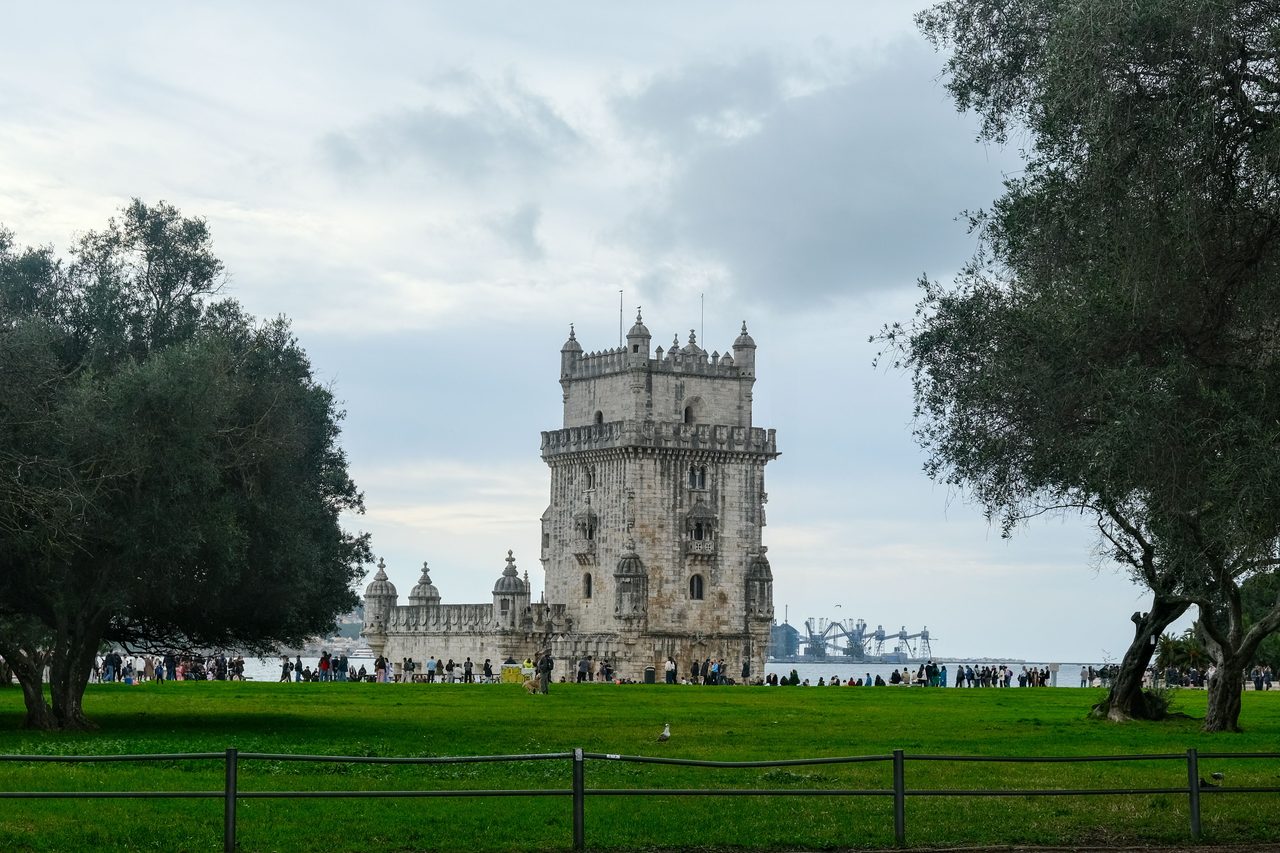
Built in the early 1500s as a fortified watchtower guarding the mouth of the Tagus, this is one of the few structures in Belém that survived the 1755 earthquake intact. Its Manueline exterior carvings include a rhinoceros head — a nod to an actual rhino shipped to Portugal in 1515 — and it later served as a customs post and even a political prison. Inside, the rooms are small and the stone spiral staircase to the top is narrow.
São Jorge Castle (Castelo de São Jorge)
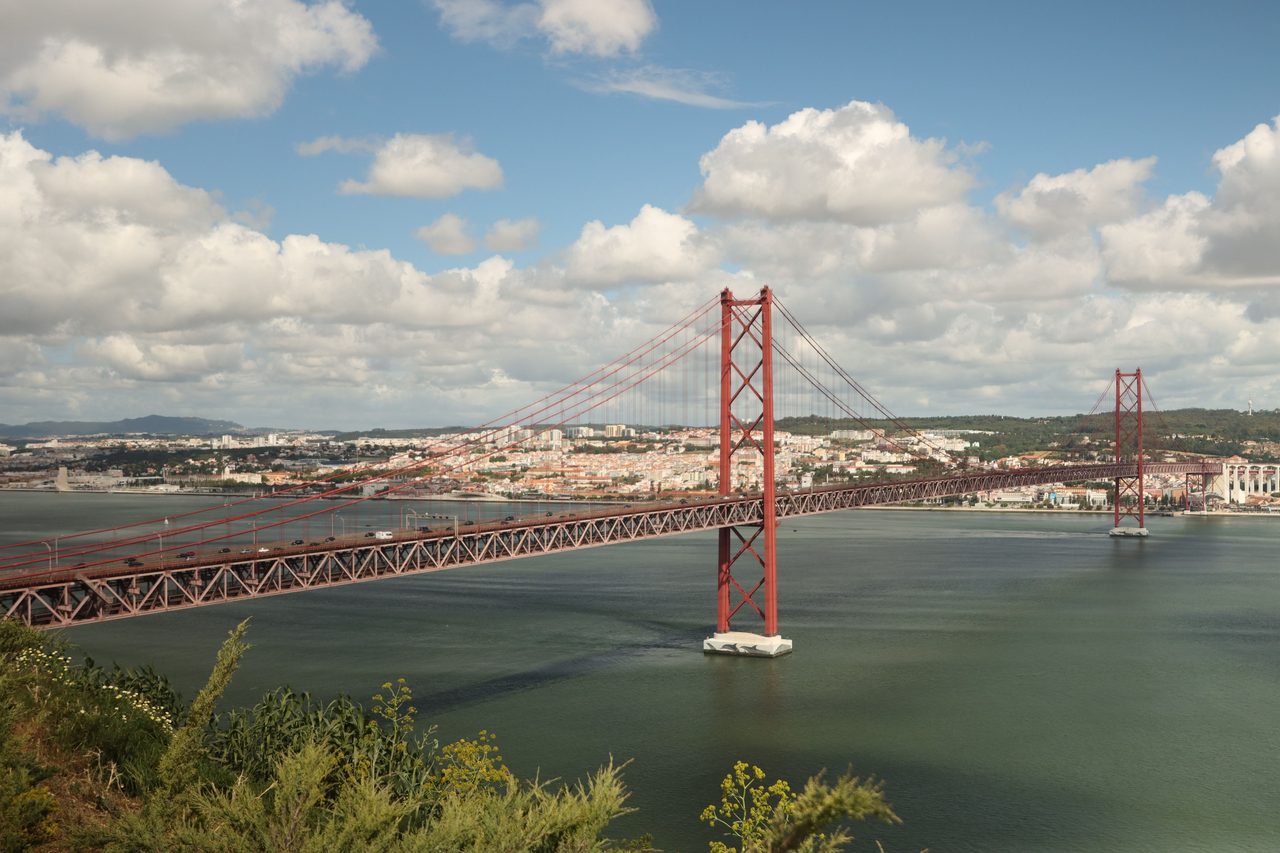
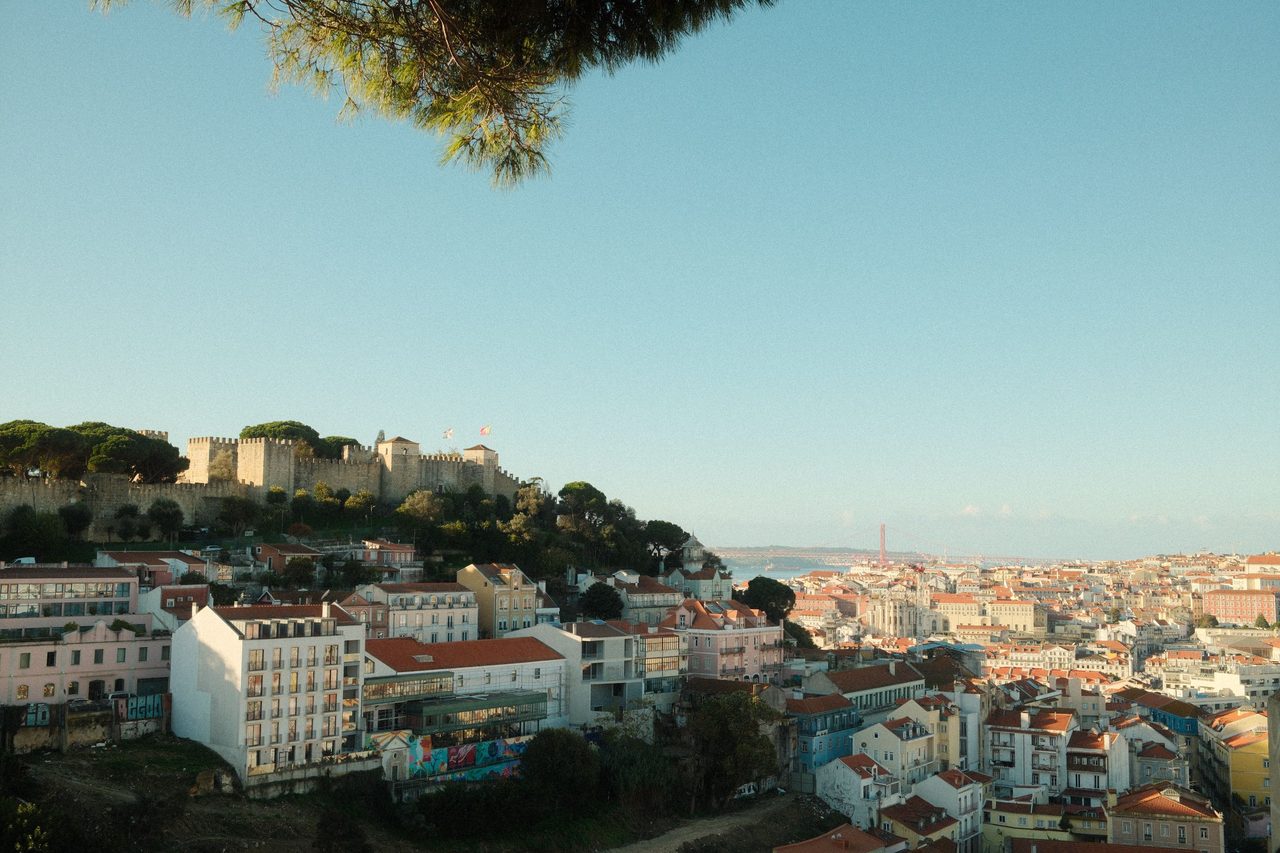
Perched on Lisbon's highest hill, this castle traces its walls back to Moorish fortifications from the 11th century, later expanded under Portugal's early kings as a royal residence before the court moved downhill. What draws most visitors now isn't the ruined keep itself but the ramparts, which give an unobstructed sweep over the Baixa grid, the Tagus, and the 25 de Abril Bridge. There's also a small archaeological site inside showing excavated layers from Iron Age to Moorish occupation.
Pena Palace, Sintra
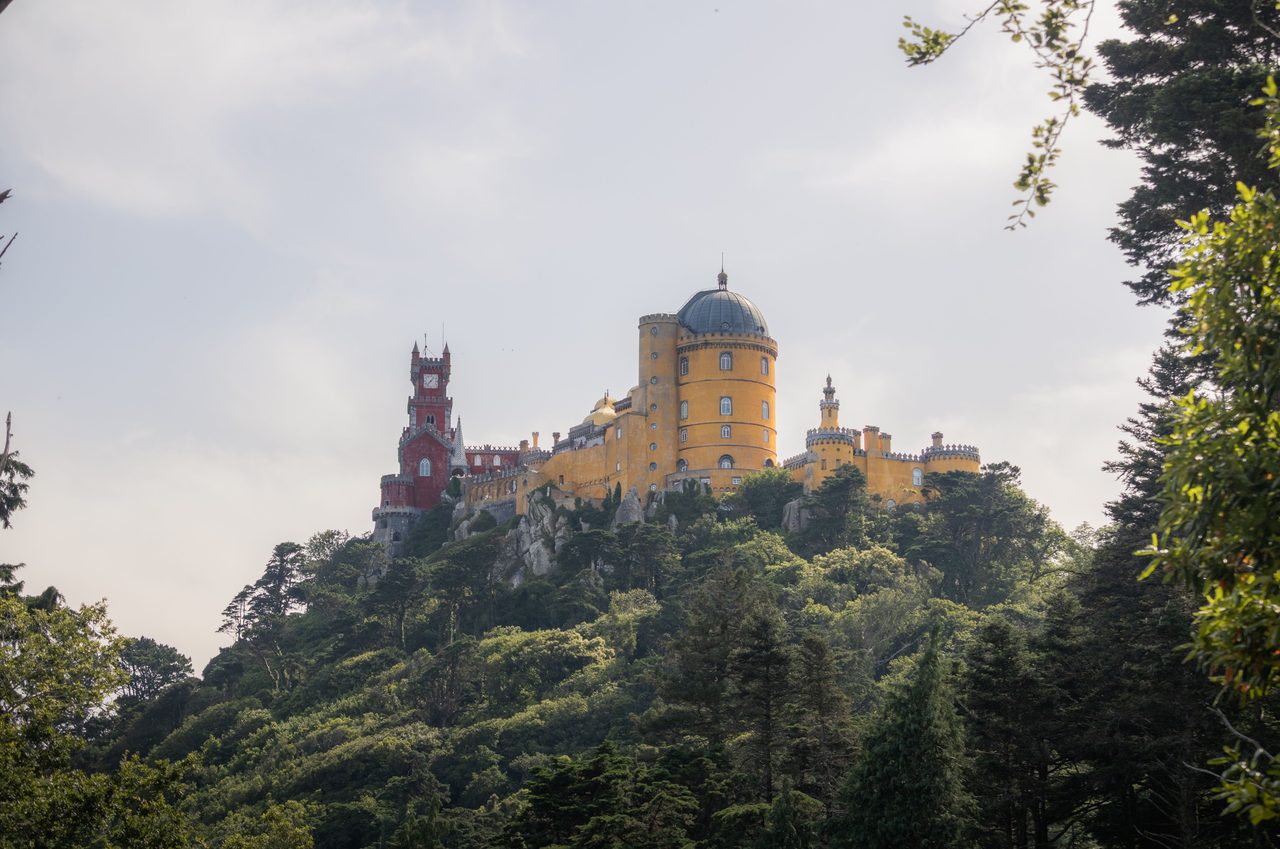
Commissioned in the 1840s by King Ferdinand II on the ruins of a hilltop monastery, this palace is a deliberately theatrical mashup of Neo-Gothic, Neo-Manueline, Neo-Islamic, and Neo-Renaissance styles, painted in bold red and yellow. It was one of the first Romanticist palaces in Europe and set the template for the fantasy-castle look Sintra is known for. The surrounding Pena Park adds another few hundred acres of forest paths, ponds, and follies if there's time.
Oceanarium Lisbon (Oceanário de Lisboa)
Built for Expo '98 and still one of the largest indoor aquariums in Europe, its layout circles a single massive central tank representing the open ocean, with four surrounding habitats standing in for the Atlantic, Pacific, Indian, and Antarctic ecosystems. Sunfish, sharks, and rays share the main tank, while otters and puffins occupy the side habitats. The design means you see the central tank from multiple angles and depths as you move through.
Alfama District
Lisbon's oldest surviving neighborhood, Alfama kept its narrow Moorish-era street layout because it was largely spared by the 1755 earthquake that flattened the lower town. It's a hillside maze of whitewashed houses, tiled facades, and steep stairways below São Jorge Castle, still home to working-class residents alongside the fado bars and tascas that have moved in. There's no single sight to tick off here — the point is wandering the alleys between the castle and the river.
Recommended itineraries
Pick a length, follow the route. Each itinerary balances headline sights with breathing room.
5-Day Lisboa Explorer
Day 1Arrive in Lisboa, explore city center
Day 2Visit top attractions and museums
Day 3Day trip to nearby highlights
Day 4Local markets and hidden gems
Day 5Final sightseeing, departure
7-Day Classic Lisboa
Days 1-2Lisboa city highlights
Days 3-4Regional exploration
Days 5-6Cultural immersion and local experiences
Day 7Return and departure
14-Day Ultimate Lisboa
Days 1-3Lisboa comprehensive city tour
Days 4-6Northern region exploration
Days 7-9Eastern highlights
Days 10-12Southern attractions
Days 13-14Return to Lisboa, departure
Where to stay in Lisboa
Three tiers, every traveller covered — from cost-conscious to flagship hotels.
Budget €50–70 (~$54–76)
Hostels, budget hotels, and guesthouses offer affordable stays without sacrificing experience.
Mid-range €100–150 (~$108–162)
Boutique hotels and well-located accommodations provide comfort and convenience at reasonable prices.
Luxury €250+ (~$270+)
World-class resorts and premium hotels deliver unforgettable experiences.
Cafés, neighbourhood gems, and tasting menus worth the table reservation.
Belcanto
Contemporary Portuguese · $$$$
José Avillez's flagship two-Michelin-star restaurant in Chiado, where classic Portuguese dishes such as bacalhau and suckling pig are broken down and reassembled into modernist, multi-course tasting menus. The dining room is small and formal — quiet, jacket-appropriate, built for a slow, deliberate meal rather than conversation over drinks.
The 19th-century Mercado da Ribeira market hall, converted by Time Out magazine into a food court by installing stalls run by already-established Lisbon chefs and restaurants rather than building a menu from scratch. Seating is communal long tables under the market's original iron roof.
Solar dos Presuntos
Traditional Portuguese · $$$
A long-running Portuguese restaurant near Restauradores built around Minho-region game and cured meats rather than Lisbon's coastal seafood staples. The room is old-school — white tablecloths, dark wood, decades of framed photos of past diners on the walls.
Tasca do Chico
Portuguese Tavern / Fado · $$
A cramped, informal fado tavern in Bairro Alto where the singing isn't scheduled entertainment but amateurs and professionals taking turns between tables — the lights dim and the room goes silent for each singer. Walls are covered floor to ceiling with football scarves and photographs.
A Cevicheria
Seafood / Peruvian-Portuguese Fusion · $$$
José Avillez's small ceviche bar on Rua Dom Pedro V, identifiable by the large papier-mâché octopus hanging over the bar. The cooking applies Peruvian technique to Portuguese seafood — acidic, bright, built for sharing plates rather than a conventional sit-down meal.
Lisbon has an integrated public transport network (Carris buses, Metro, trams, and ferries) managed under the Navegante card system. A day pass costs €6.60 (~$7.10) and covers all modes. The famous Tram 28 covers much of the historic city. Taxis and rideshare apps are affordable. The airport is 7km from the city centre, reachable by metro (€1.55/~$1.68) or Aerobus (€4/~$4.30).
Budget breakdown
Daily spend by tier in EUR (Euro), broken out by category.
Category
Budget
Mid-range
Luxury
Accommodation
€15–30 hostel dorm (~$16–32)
€70–120 mid-range hotel (~$76–130)
€200–500+ boutique/5-star hotel (~$216–540+)
Food (per day)
€15–20 (~$16–22)
€30–50 (~$32–54)
€80–150+ (~$86–162+)
Transportation
€5–10 (~$5.40–11)
€10–15 (~$11–16)
€20–50 private transfers (~$22–54)
Activities
€10–15 (~$11–16)
€20–30 (~$22–32)
€50–100+ (~$54–108+)
Daily total
€50–70 (~$54–76)
€100–150 (~$108–162)
€250+ (~$270+)
Best time to visit Lisboa
Weather through the year in Portugal
Best timeShoulderWorth avoiding
Average daytime temperature in °C. Figures are for Portugal.
Lisbon enjoys over 2,800 hours of sunshine per year, making it Europe's sunniest capital. Spring offers pleasant temperatures of 18–24°C, wildflowers in Sintra, and the beloved Festas de Lisboa in June. September and October bring warm sea temperatures, thinner crowds, and lower hotel rates.
Essential travel tips
Buy a Navegante rechargeable card (€0.50) at any Metro station for discounted fares on all transport.
Wear comfortable shoes with grip – Lisbon's cobblestones (calçada portuguesa) are beautiful but slippery when wet.
Most museums are free on the first Sunday of each month.
Restaurant lunch menus (prato do dia) offer two courses plus a drink for €8–12 (~$8.65–13).
Lisbon is generally quiet until 22:00 for dinner; booking a table is advisable at popular restaurants.
The Lisboa Card (€21/24h, €35/48h, €44/72h) covers unlimited public transport and free entry to many museums.
Always validate your transport ticket before boarding; inspectors do check.
Hidden gems
Off-the-beaten-path corners most travellers miss.
Jardim da Cerca da Graça
A recently restored community garden behind the Graça convent offering one of Lisbon's finest panoramic viewpoints without the Tram 28 tourist crowds. The terraced garden has fig and olive trees, vegetable plots, and a small café.
Graça, near Miradouro da Graça
Pátio das Arcadas, Alfama
A hidden courtyard tucked behind the Sé Cathedral where local residents hang laundry between 18th-century walls. Rarely found by tourists, it captures the authentic soul of Alfama neighbourhood life.
Alfama, near the Sé Cathedral
Museu da Água
Lisbon's water museum, housed inside the city's 18th-century steam pumping station. The vast vaulted cisterns and Victorian-era engines are extraordinary. Almost entirely overlooked by tourists despite being open to the public.
Alviade, eastern Lisbon
Taberna da Mouraria
A tiny neighbourhood taberna in the Mouraria district serving old-school petiscos and house wine to a predominantly local clientele. No English menu, cash only, but some of the most authentic flavours in the city.
Mouraria, central Lisbon
Rua das Janelas Verdes
A quiet, aristocratic street in Lapa running behind the National Museum of Ancient Art. Lined with 18th-century palaces and fragrant garden walls, it feels entirely removed from the tourist circuit.
Lapa / Santos district
Safety information
INFO
Keep children within sight on Tram 28 and in crowded markets like Feira da Ladra – these are the most common spots for pickpocketing.
INFO
Carry a card with the accommodation's address and phone number for young children in case of separation.
INFO
Hospital Dona Estefânia (Rua Jacinta Marto, +351 21 359 4200) is Lisbon's dedicated children's hospital for emergencies.
INFO
Sunscreen and hydration are the main daily safety concern in summer; carry water at all times.
INFO
Cobblestone streets are uneven – supervise children closely near curbs and tram tracks.
Frequently asked questions
How many days do visitors need in Lisbon?
A minimum of three days covers the essential highlights: Alfama, Belém, and the historic centre. Five to seven days allows for day trips to Sintra and Cascais and deeper exploration of neighbourhoods like Mouraria, Príncipe Real, and Parque das Nações.
Is Lisbon an expensive city to visit?
Lisbon is considerably more affordable than London, Paris, or Amsterdam. Budget travellers can manage on €50–70/day (~$54–76). Mid-range visitors spending €100–150/day (~$108–162) eat and sleep very comfortably.
What is the best way to get from Lisbon airport to the city centre?
The Metro red line connects the airport to Alameda in about 20 minutes for €1.55 (~$1.68). The Aerobus is a comfortable direct bus to Marquês de Pombal/Rossio for €4 (~$4.30). Taxis or Uber cost approximately €10–15 (~$11–16) to the city centre.
Is Portuguese widely spoken or is English sufficient?
English is widely spoken in hotels, restaurants, and tourist areas across Lisbon. Younger Lisbonites typically speak English well. Learning a few Portuguese words (obrigado/obrigada for thank you, por favor for please) is appreciated by locals.
What neighbourhoods are best for first-time visitors?
Chiado and Baixa offer the best central base. Alfama provides the most atmospheric experience. Príncipe Real is ideal for those seeking a quieter, more residential feel with excellent restaurants and boutiques.
Is the Lisboa Card worth buying?
For visitors planning multiple museum visits and frequent public transport use, the Lisboa Card (€21/24h, €35/48h, €44/72h — approximately $23/$38/$48) offers good value. It covers unlimited transport and free entry to Jerónimos Monastery, Belém Tower, and many other attractions.
Explore Lisboa by city
The cities below have their own guides — hotels, attractions and where to eat, in depth.