Norte · 28 Places · Best May–June and September–October
Norte
Norte is Portugal's northernmost and most populous region, an extraordinary tapestry of Atlantic coastline, medieval cities, terraced wine valleys, and wild highland national parks. Porto, the region's vibrant capital, gave port wine and the country its very name. The Douro Valley, the world's oldest demarcated wine region, cuts through the landscape in dramatic terraced splendour, while Braga presides as Portugal's religious capital and Guimarães as its historic cradle. Peneda-Gerês, Portugal's only national park, offers rugged granite peaks, pristine rivers, and ancient Roman roads.
Norte encompasses Portugal's most storied landscapes and cities. Porto's UNESCO-listed Ribeira district lines the Douro riverfront with colourful azulejo-tiled buildings, its bridges strung between granite bluffs. Across the river in Vila Nova de Gaia, dozens of port wine lodges age their casks in the cool Atlantic air. The Douro Valley stretches 100 km east through some of the world's most dramatic wine-growing terrain, best explored by vintage train or river cruise. Inland, Braga — Portugal's oldest city — dazzles with Baroque churches and a thriving student population, while Guimarães, birthplace of Portugal's first king, preserves a perfectly intact medieval centre. To the north, Viana do Castelo sits at the Lima estuary beneath a hilltop basilica, and Peneda-Gerês National Park protects ancient granite moorland and oak forests.
The 28 destinations our editors recommend — from iconic landmarks to under-the-radar finds.
Ribeira District, Porto
This is Porto's old riverfront quarter along the Douro, a dense tangle of narrow lanes and tall, faded townhouses stacked above the water. It's the part of the city UNESCO listed for its medieval street pattern, and it sits directly under the Dom Luís I bridge. Most visitors walk it slowly, stopping at the quayside cafes and small squares rather than following a set route.
Livraria Lello
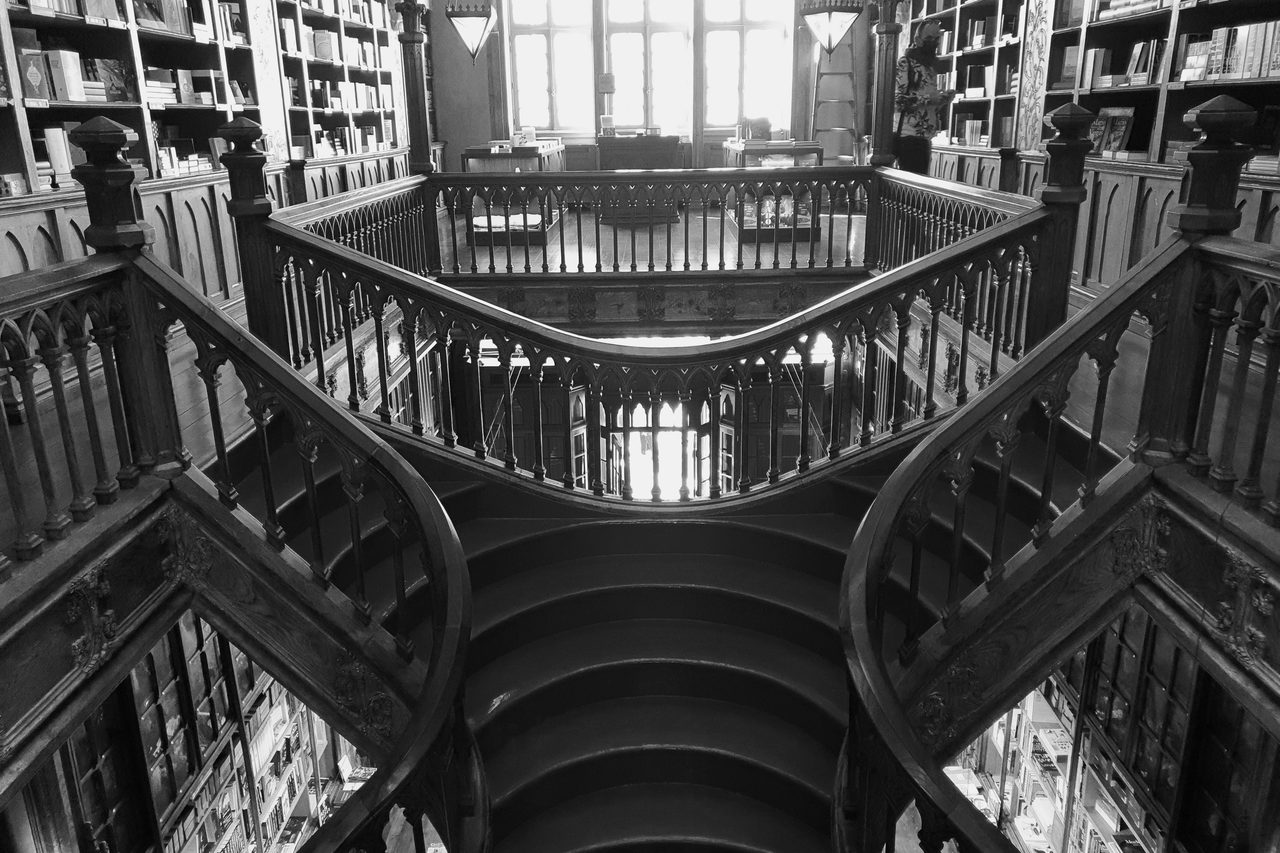
Opened in 1906, this is one of Portugal's oldest working bookshops, known for its neo-Gothic facade and a red, twisting central staircase inside. The interior is compact, so the shop limits how many people are inside at once, which is why entry is ticketed rather than free. It's often linked to J.K. Rowling, who lived in Porto in the early 1990s, though the bookshop itself makes no official claim about direct inspiration for her books.
Port Wine Cellars, Vila Nova de Gaia
Port wine is aged, not made, in Vila Nova de Gaia — the wine travels down from Douro Valley quintas and matures here in the cellars lining the riverfront across from Porto. Houses like Graham's, Taylor's, and Sandeman occupy converted warehouses ("caves") built into the hillside, many still using barrels stacked several rows high. A typical visit is a short guided walk through the cellar followed by a seated tasting of two or three styles.
Guimarães Historic Centre
Guimarães is where the first King of Portugal, Afonso Henriques, was born, and the town's medieval core is preserved largely intact around Largo da Oliveira. Its 10th-century castle and the neighboring Palace of the Dukes of Braganza anchor a walkable network of granite streets, arcaded squares, and the Romanesque Nossa Senhora da Oliveira church. Because so much of the layout survives from the period, walking through it gives a direct sense of a Portuguese medieval town rather than a reconstruction.
Douro Valley Vineyards
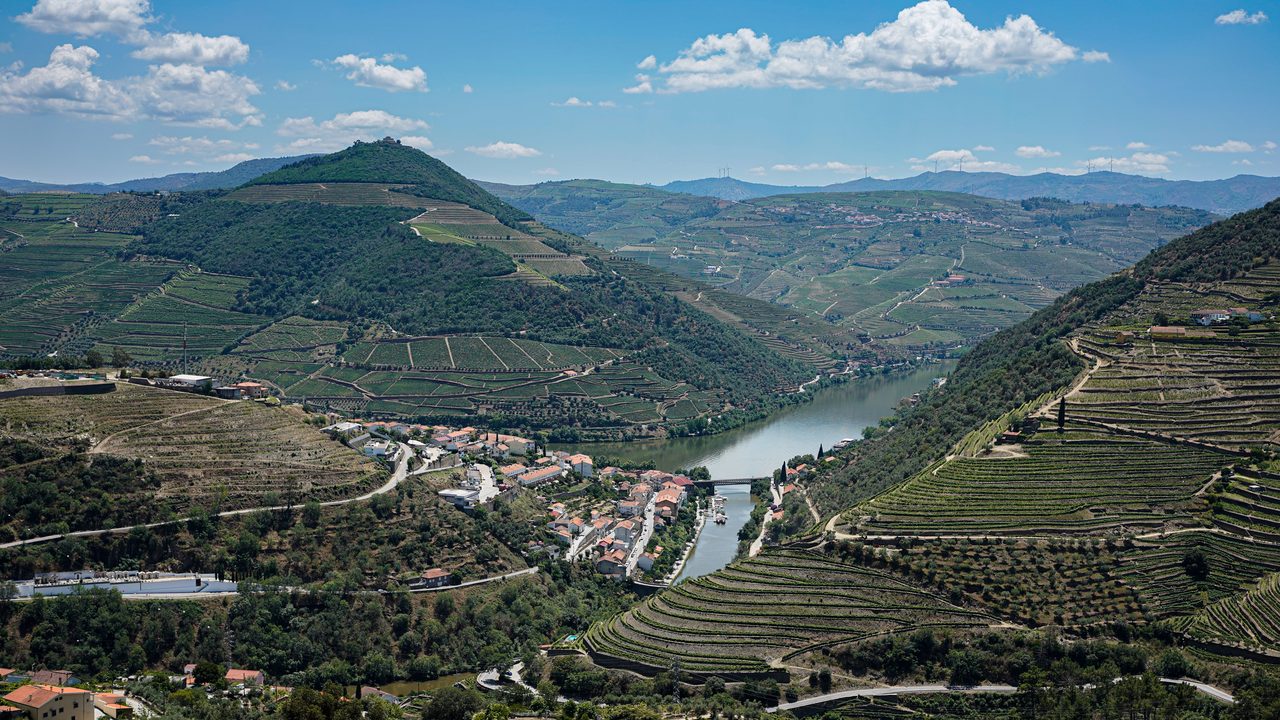
The Douro is where port wine grapes are grown, on steep schist terraces cut into the valley walls above the river — a landscape old enough, and altered little enough, to carry UNESCO World Heritage status. Individual quintas (wine estates) run their own tours and tastings, so the experience varies a lot depending on which one you visit and how far upriver you go. Many visitors combine a quinta stop with a river cruise or a drive along the N222 road that runs above the terraces.
Bom Jesus do Monte, Braga
This hilltop sanctuary near Braga is built around a zigzagging Baroque staircase that climbs the hillside in switchbacks, each landing marked by fountains and small chapels representing the senses and virtues. At the top stands the neoclassical church itself, but the staircase is really the point of the visit — it's one of the most recognizable pieces of religious architecture in Portugal. A funicular running alongside the stairs offers an alternative to the climb.
Recommended itineraries
Pick a length, follow the route. Each itinerary balances headline sights with breathing room.
5-Day Norte Explorer
Day 1Arrive in Norte, explore city center
Day 2Visit top attractions and museums
Day 3Day trip to nearby highlights
Day 4Local markets and hidden gems
Day 5Final sightseeing, departure
7-Day Classic Norte
Days 1-2Norte city highlights
Days 3-4Regional exploration
Days 5-6Cultural immersion and local experiences
Day 7Return and departure
14-Day Ultimate Norte
Days 1-3Norte comprehensive city tour
Days 4-6Northern region exploration
Days 7-9Eastern highlights
Days 10-12Southern attractions
Days 13-14Return to Norte, departure
Where to stay in Norte
Three tiers, every traveller covered — from cost-conscious to flagship hotels.
Budget €45–€85 (~$52–$99)/day
Hostels, budget hotels, and guesthouses offer affordable stays without sacrificing experience.
Mid-range €135–€260 (~$157–$302)/day
Boutique hotels and well-located accommodations provide comfort and convenience at reasonable prices.
Luxury €360–€930 (~$418–$1,079)+/day
World-class resorts and premium hotels deliver unforgettable experiences.
Cafés, neighbourhood gems, and tasting menus worth the table reservation.
The Yeatman Restaurant
Contemporary Portuguese · $$$$
Perched inside The Yeatman hotel on the Vila Nova de Gaia hillside, this is a formal, Michelin-starred dining room built around the view across the Douro to Porto's Ribeira. The kitchen, under chef Ricardo Costa, works in tasting-menu format with modern Portuguese technique applied to classic ingredients like bacalhau and game.
Antiqvvm
Contemporary Portuguese · $$$$
Set in a restored 19th-century mansion attached to the Museu Romântico gardens, Antiqvvm pairs a formal, art-filled dining room with a kitchen led by chef Vítor Matos that reworks northern Portuguese staples into tasting-menu courses. It holds a Michelin star and leans into plating and technique over rustic presentation.
DOP by Rui Paula
Contemporary Portuguese · $$$
Chef Rui Paula's Porto flagship occupies a converted building on Largo de São Domingos, with a sleek, dark-toned dining room that sits apart from the historic square outside. The cooking translates Douro-region dishes like bacalhau and lamb into refined, plated versions rather than the home-style originals.
Casa de Chá da Boa Nova
Contemporary Portuguese (Seafood) · $$$$
This restaurant occupies Álvaro Siza Vieira's landmark concrete-and-glass building set directly into the rocks on the Leça da Palmeira coastline, with dining rooms that look straight out over the Atlantic. Chef Rui Paula runs a two-Michelin-star kitchen here built almost entirely around seafood pulled from that coast.
Cantina 32
Creative Portuguese · $$
A narrow, exposed-stone dining room on Rua das Flores, Cantina 32 serves small, sharing-style plates that update Portuguese comfort food with modern touches like truffle mayo alongside croquettes. The space is tight and informal compared with the fine-dining names elsewhere on this list.
Café Santiago (Francesinha)
Portuguese (Francesinha) · $
A long-running, no-frills diner on Rua de Passos Manuel, Café Santiago is one of the names Porto locals cite first when arguing about who makes the city's best francesinha. It's a proper lunch-counter operation, not a restaurant to linger in, with the sandwich doing all the work.
Porto's Andante card (rechargeable, €0.60 (~$0.70) purchase) covers the metro, STCP buses, heritage trams, and the Guindais funicular. Single journeys cost €1.50 (~$1.74) (Zone 2). The Andante Tour day pass (€7 (~$8.12)) gives unlimited travel all day. Intercity CP trains use a separate booking system (comboios.pt); tickets can be bought at station vending machines or online.
Budget breakdown
Daily spend by tier in EUR, broken out by category.
Category
Budget
Mid-range
Luxury
Accommodation
€20–€35 (~$23–$41)/night (hostel dorm or budget guesthouse)
Average daytime temperature in °C. Figures are for Portugal.
Spring (May–June) brings the region's best weather: warm, green, with wildflowers in Gerês and flowering almond trees in the Douro Valley. Autumn (September–October) is the Douro harvest season — the most atmospheric time to visit wine country. July–August are warm and sunny but busy; Porto is crowded. Winter is rainy and cool but excellent for city culture, food, and wine — hotel rates drop by 30–50%.
Essential travel tips
The Andante card (rechargeable transport card, €0.60 (~$0.70) to purchase) covers Porto metro, buses, and trams — available at metro stations
Port wine lodge tours in Vila Nova de Gaia cost €10–€25 (~$11.60–$29) and include tastings — no reservation needed for most
Livraria Lello charges a €10 (~$11.60) entry fee (redeemable on book purchases) — arrive early morning to beat queues
Douro Valley is easiest by car; trains from Porto Campanhã to Pocinho follow the river closely and are scenic
Braga and Guimarães are easily combined in a single day trip from Porto by CP train (30–45 min each)
Hidden gems
Off-the-beaten-path corners most travellers miss.
Miradouro da Vitoria
A crumbling terrace behind the old Jewish quarter with the layered view of the Se, the river and the lit Gaia lodges. Free, open at all hours, and almost always empty.
Rua de Sao Bento da Vitoria, 4050-543 Porto
Miradouro dos Guindais
Five minutes' walk up from the funicular puts you level with the upper deck of the Luis I bridge with almost nobody else there.
Rua de Augusto Rosa, above the funicular station, Porto
Jardim do Morro upper terraces
Everyone stops at the first terrace by the Metro exit; climb two minutes further towards Serra do Pilar and the crowd thins by 90% for the same view.
Avenida da Republica, Vila Nova de Gaia (Metro Jardim do Morro, Line D)
Serra do Pilar monastery terrace
This is the exact spot the postcard photograph of the Luis I bridge is taken from. The terrace is free; the circular cloister inside is EUR 4 (~$4.64).
Largo Aviz, 4430-329 Vila Nova de Gaia
Afurada fishing village
A working fishing community on the Gaia bank where the communal open-air laundry is still in daily use and the grill houses serve sardines to families rather than tour groups.
Cafe Ancora d'Ouro (Piolho)
Porto's century-old student cafe, loud and cheap and entirely unbothered by visitors - a bica costs EUR 0.80 (~$0.93) and a pastel de nata EUR 0.90 (~$1.04).
Capela das Almas tile facade at 08:00
Almost 16,000 azulejos on the outside of a working parish church on Porto's busiest shopping street, which locals walk past daily and visitors photograph at the worst hour.
Mercado do Bolhao at opening
The restored market works as a real market between 08:00 and 10:30, when the fish arrives and the stallholders are serving neighbourhood regulars rather than posing for cameras.
Citânia de Briteiros
Portugal's finest Iron Age hillfort settlement near Guimarães, with reconstructed round houses and sweeping valley views — rarely crowded.
Afurada Neighbourhood, Vila Nova de Gaia
A traditional fishing village at the mouth of the Douro overlooked by most visitors, with seafood restaurants, colourful murals, and a working shipyard.
Amarante
A charming Romanesque bridge town on the Tâmega River, 60 km east of Porto, with a beautiful convent, local wine, and famous phallic pastries during June's São Gonçalo festival.
Alto Lindoso Reservoir Viewpoint
A flooded medieval village visible beneath the clear water of Lindoso reservoir in Peneda-Gerês — an eerie and unforgettable sight.
Safety information
INFO
At Atlantic beaches, follow lifeguard flags strictly: red flag = no swimming (dangerous rip currents); yellow flag = swim with caution; green = safe. Portuguese beaches have strong undertow even in calm conditions
INFO
In Gerês, keep children away from the road edges on mountain passes (EN308 is narrow and winding)
INFO
Porto's historic centre has some very steep drops from city walls and viewpoints — supervise young children at Miradouro da Vitória and the Sé terrace
INFO
Keep children hydrated on summer hikes in Gerês — carry 1.5L per person; mountain streams are not safe to drink without filtering
INFO
Hospital de São João has a dedicated 24-hour paediatric A&E: +351 225 512 100
Frequently asked questions
Is Norte safe to visit in 2026?
Norte Portugal is one of Europe's safest regions for travellers. Portugal consistently ranks in the top 5 of the Global Peace Index. Porto scores very low on violent crime — comparable to Zurich or Copenhagen. The region is extremely safe for solo travellers, families, female solo travellers, and LG
What is the best time to visit Norte?
The best time to visit Norte is May–June and September–October. Norte Portugal has an Atlantic temperate climate — mild, green, and moderately rainy. Porto averages 1,200mm of rain annually (twice London's total), mostly October–March. Summers (June–September) are
Do I need a visa to visit Norte?
Entry follows Schengen rules. EU/EEA citizens enter with a national ID card. US, Canadian, Australian and UK passport holders may stay up to 90 days within any 180-day period without a visa. Other nationalities may require a Schengen visa — check with the Portuguese embassy in your home country before travel. Requirements vary by nationality, so check with your nearest embassy or the official immigration website before traveling.
What currency is used in Norte?
The currency in Norte is the Euro (EUR). ATMs are widely available in cities and tourist areas. Credit cards are accepted at most hotels and restaurants, but carry cash for markets and smaller establishments.
What language is spoken in Norte?
The main language(s) spoken in Norte: Portuguese. In tourist areas, English is generally understood. Learning a few basic phrases in the local language is appreciated by locals.
What are the top attractions in Norte?
The top attractions in Norte include Ribeira District, Porto, Livraria Lello, Port Wine Cellars, Vila Nova de Gaia, Guimarães Historic Centre, and Douro Valley Vineyards. Each offers a unique experience, from historic landmarks to natural wonders.
Explore Norte by city
The cities below have their own guides — hotels, attractions and where to eat, in depth.