World · 20 Places · Best April–May and September–October
Denizli
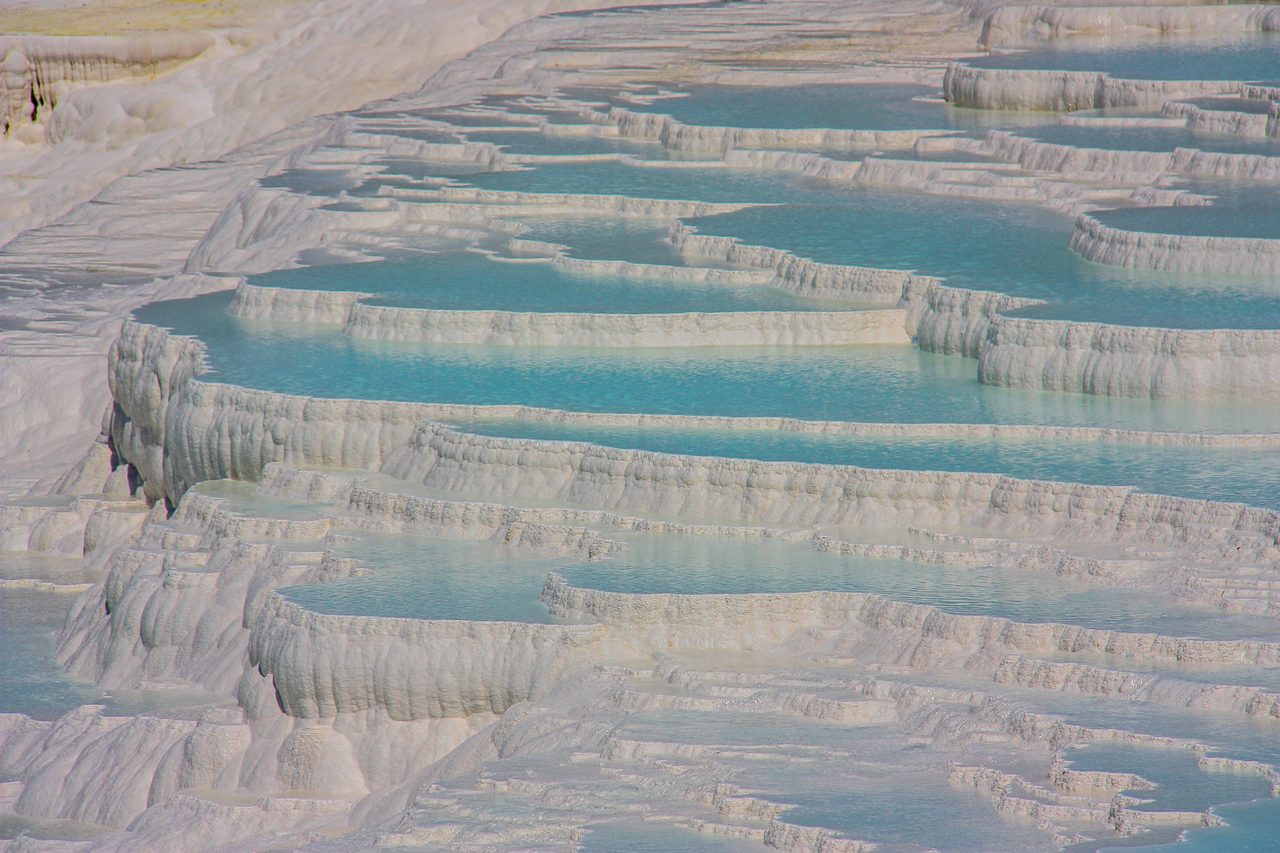
Denizli is a dynamic city in southwestern Turkey, world-famous as the gateway to Pamukkale — the extraordinary terraced white travertines and thermal pools that cascade down a hillside and are inscribed on the UNESCO World Heritage List alongside Hierapolis, the ancient Greco-Roman city that crowns the plateau above. Beyond the travertines, Denizli province shelters Laodikeia (one of the Seven Churches of Revelation), Tripolis ancient city, the underground Kaklik Cave, hot red springs at Karahayıt, and the rugged Honaz Mountain National Park. The city itself is a prosperous textile and manufacturing hub, offering modern amenities, excellent lokanta dining, and affordable accommodation.
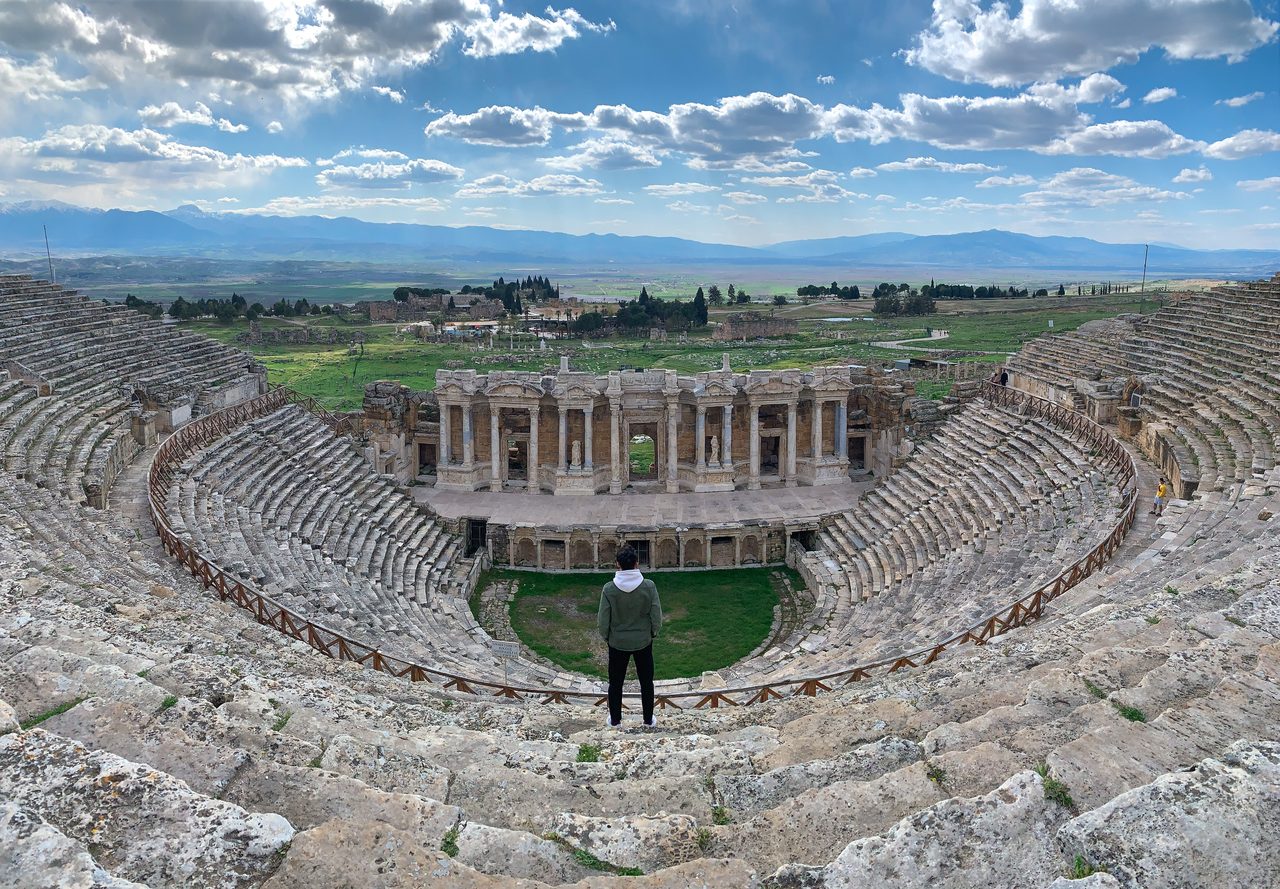
Denizli sits in the Büyük Menderes River basin at roughly 355 metres above sea level, surrounded by mountains that protect it from extreme winters while its valley location gives it hot, dry Mediterranean summers. The city is Turkey's leading textile producer, a fact visible in its bustling commercial centre, yet its surroundings are the real draw. Pamukkale (Cotton Castle) lies just 20 km north — a hillside draped in calcium-white travertine terraces filled with milky thermal water that visitors can walk barefoot across. Above the terraces, the sprawling ruins of Hierapolis include a 15,000-seat theatre, a vast necropolis, and an extraordinary museum. Cleopatra's Antique Pool lets swimmers float above sunken Roman columns. Nearby Laodikeia reveals a beautifully excavated Byzantine main street. Karahayıt's iron-red thermal springs offer accommodation among sulphur baths, while Honaz Dağı rises to 2,528 m for hiking and cool-season skiing.
The 20 destinations our editors recommend — from iconic landmarks to under-the-radar finds.
Pamukkale Travertines
Calcium-rich thermal water flowing down a hillside for thousands of years has built up bright white terraced pools and mineral formations that look like frozen waterfalls. The site is one of Turkey's most photographed landscapes, and visitors walk barefoot along a designated wet path up the travertine slope since regular footwear is not allowed on the formations. Some of the shallow terrace pools near the top hold water for wading, though many lower terraces are kept dry to protect them from erosion.
Hierapolis Ancient City
This Greco-Roman spa city was built directly on top of the travertine plateau to take advantage of the same thermal springs, and its ruins include a well-preserved theatre, a colonnaded main street, monumental gates, and one of the largest ancient necropolises in Anatolia spread along the approach road. The city thrived because ancient visitors came for the same thermal waters that draw people today. Walking the site means covering real distance across the plateau, from the theatre on one side to the necropolis and Plutonium area on the other.
Cleopatra's Antique Pool
This is a thermal swimming pool set among submerged ancient marble columns and architectural fragments, the result of an earthquake that toppled part of a Roman colonnaded structure into the spring. Swimming among the fallen columns in warm mineral water is the specific draw, distinct from simply viewing the travertines outside. The pool sits within the Hierapolis site but requires its own separate ticket beyond the combined Pamukkale entry.
Hierapolis Archaeological Museum
Housed in the restored remains of the city's ancient Roman bath complex, this museum displays sarcophagi, statues, and everyday objects recovered from Hierapolis and the surrounding necropolis. Seeing artefacts in the original bath building's vaulted halls gives a sense of the scale of Roman construction on the site before you continue on to the ruins outside. It's a compact stop compared to the ancient city itself.
Laodikeia Ancient City
Laodikeia was a wealthy Roman-era city on the trade routes through the Lycus valley, known in the New Testament as one of the seven churches of Revelation, and its ruins include a stadium, multiple bath complexes, and a large colonnaded street still being excavated. Unlike the tourist-dense Pamukkale/Hierapolis site, this is a working excavation with fewer visitors and more open ground to walk across. The scale of the street grid gives a sense of a genuinely large Roman city rather than a single monument.
Karahayıt Red Springs
A few kilometers north of the main Pamukkale terraces, this village has its own thermal springs colored deep red-orange by iron oxide deposits rather than the white calcium of Pamukkale proper, creating a visibly different mineral landscape. The free-to-view springs sit alongside hotels that offer day-use access to their own thermal pools fed by the same water source. It's a quieter, less-visited counterpart to the main travertine site.
Recommended itineraries
Pick a length, follow the route. Each itinerary balances headline sights with breathing room.
5-Day Denizli Explorer
Day 1Arrive in Denizli, explore city center
Day 2Visit top attractions and museums
Day 3Day trip to nearby highlights
Day 4Local markets and hidden gems
Day 5Final sightseeing, departure
7-Day Classic Denizli
Days 1-2Denizli city highlights
Days 3-4Regional exploration
Days 5-6Cultural immersion and local experiences
Day 7Return and departure
14-Day Ultimate Denizli
Days 1-3Denizli comprehensive city tour
Days 4-6Northern region exploration
Days 7-9Eastern highlights
Days 10-12Southern attractions
Days 13-14Return to Denizli, departure
Where to stay in Denizli
Three tiers, every traveller covered — from cost-conscious to flagship hotels.
Budget ~800–1,600 TRY (~$24–48 USD)
Hostels, budget hotels, and guesthouses offer affordable stays without sacrificing experience.
Mid-range ~2,050–4,600 TRY (~$62–138 USD)
Boutique hotels and well-located accommodations provide comfort and convenience at reasonable prices.
Luxury ~6,200–14,000 TRY (~$186–420 USD)
World-class resorts and premium hotels deliver unforgettable experiences.
Richmond Pamukkale Thermal
Karahayıt, 5 km north of Pamukkale village · 5,000–9,000 TRY/night (~$150–270 USD)
Denizli city is well served by intercity coaches (otogar is central), local dolmuş minibuses, and taxis. From Denizli centre to Pamukkale: dolmuş from Deliklitaş dolmuş stand (Atatürk Cad.) runs every 30 minutes, 25–35 TRY (~$0.75–1 USD), 30-minute journey. Taxis to Pamukkale cost ~150–200 TRY (~$4.50–6 USD) one way.
Budget breakdown
Daily spend by tier in TRY / USD, broken out by category.
Category
Budget
Mid-range
Luxury
Accommodation
400–700 TRY (~$12–21 USD) per night in a guesthouse or hostel
1,000–2,500 TRY (~$30–75 USD) per night in a 3–4-star hotel
3,500–8,000 TRY (~$105–240 USD) per night at a thermal resort
Food (per day)
150–300 TRY (~$4.50–9 USD) per day eating at lokanta and street food
400–800 TRY (~$12–24 USD) per day at mid-range restaurants
1,200–2,500 TRY (~$36–75 USD) per day at fine dining and resort restaurants
Transportation
50–100 TRY (~$1.50–3 USD) per day on dolmuş and city buses
150–300 TRY (~$4.50–9 USD) per day with occasional taxis
500–1,000 TRY (~$15–30 USD) per day with private transfers
Activities
200–500 TRY (~$6–15 USD) per day (Pamukkale entry ~1,140 TRY/€30/~$33 USD)
500–1,000 TRY (~$15–30 USD) per day
1,000–2,500 TRY (~$30–75 USD) per day including spa treatments
Daily total
~800–1,600 TRY (~$24–48 USD)
~2,050–4,600 TRY (~$62–138 USD)
~6,200–14,000 TRY (~$186–420 USD)
Best time to visit Denizli
Weather through the year in Turkey
Best timeShoulderWorth avoiding
Average daytime temperature in °C. Figures are for Turkey.
Spring (April–May) offers mild temperatures of 18–25°C, wildflowers on Honaz mountain, and smaller Pamukkale crowds. Autumn (September–October) is similarly pleasant. Summers are hot and dry — the travertines are best visited at sunrise or sunset to avoid crowds and heat.
Essential travel tips
Buy the Pamukkale + Hierapolis combined ticket (€30 / ~1,140 TRY / ~$33 USD) at the site entrance — do not buy from touts
Arrive at Pamukkale at sunrise (gate opens 06:00) to walk the white terraces before crowds and heat build
Cleopatra's Antique Pool charges a separate entry fee (~350 TRY/$10.50 USD) above the general Pamukkale ticket
Laodikeia entry is free and rarely crowded — worth a half-day stop
Turkish currency (TRY) is the only practical payment method at local markets and dolmuş; card accepted at hotels and larger restaurants
Hidden gems
Off-the-beaten-path corners most travellers miss.
Kaklik Cave
Underground calcium cave with thermal pools mirroring Pamukkale's formations — rarely visited, 30 km west of the city. Free entry.
Tripolis Ancient City
Remote Hellenistic-Roman ruins beside the Yenicekent reservoir, rarely visited yet with fine colonnaded streets and theatre fragments.
Honaz Mountain National Park Summit
A 2,528 m summit with views across the Büyük Menderes plain to the Aegean horizon. A two-hour drive and hike from Denizli city.
Safety information
INFO
Wear shoes to the Pamukkale entry gate; you must remove them on the terraces — bring flip-flops in your bag
INFO
Stay hydrated in summer; temperatures exceed 35°C in July and August
INFO
Use licensed taxis (TAKSI sign on roof) or the BiTaksi app to avoid overcharging
INFO
Keep copies of passport and visa in a separate bag from originals
INFO
Emergency services: Police 155, Ambulance 112, Fire 110
Frequently asked questions
Is Denizli safe to visit in 2026?
Denizli is a safe, family-oriented provincial city with low crime rates by Turkish and international standards. The main tourism areas — Pamukkale village and Karahayıt — are well-policed tourist zones with a strong local tourism economy. Pickpocketing is very rare compared to major tourist cities l
What is the best time to visit Denizli?
The best time to visit Denizli is April–May and September–October. Denizli has a hot-summer Mediterranean climate (Köppen Csa), characterised by hot, dry summers and mild, wet winters. The city sits at 355 m above sea level in the Büyük Menderes basin, giving it hott
Do I need a visa to visit Denizli?
Citizens of the USA, UK, EU, Canada, and Australia require an e-Visa obtained at evisa.gov.tr before arrival (~$50 USD). Some nationalities receive visa-free entry for up to 90 days. Check current requirements at the nearest Turkish consulate or evisa.gov.tr before travel. Requirements vary by nationality, so check with your nearest embassy or the official immigration website before traveling.
What currency is used in Denizli?
The currency in Denizli is the Turkish Lira (TRY). ATMs are widely available in cities and tourist areas. Credit cards are accepted at most hotels and restaurants, but carry cash for markets and smaller establishments.
What language is spoken in Denizli?
The main language(s) spoken in Denizli: Turkish. In tourist areas, English is generally understood. Learning a few basic phrases in the local language is appreciated by locals.
What are the top attractions in Denizli?
The top attractions in Denizli include Pamukkale Travertines, Hierapolis Ancient City, Cleopatra's Antique Pool, Hierapolis Archaeological Museum, and Laodikeia Ancient City. Each offers a unique experience, from historic landmarks to natural wonders.