World · 22 Places · Best April–May and September–October
Diyarbakır
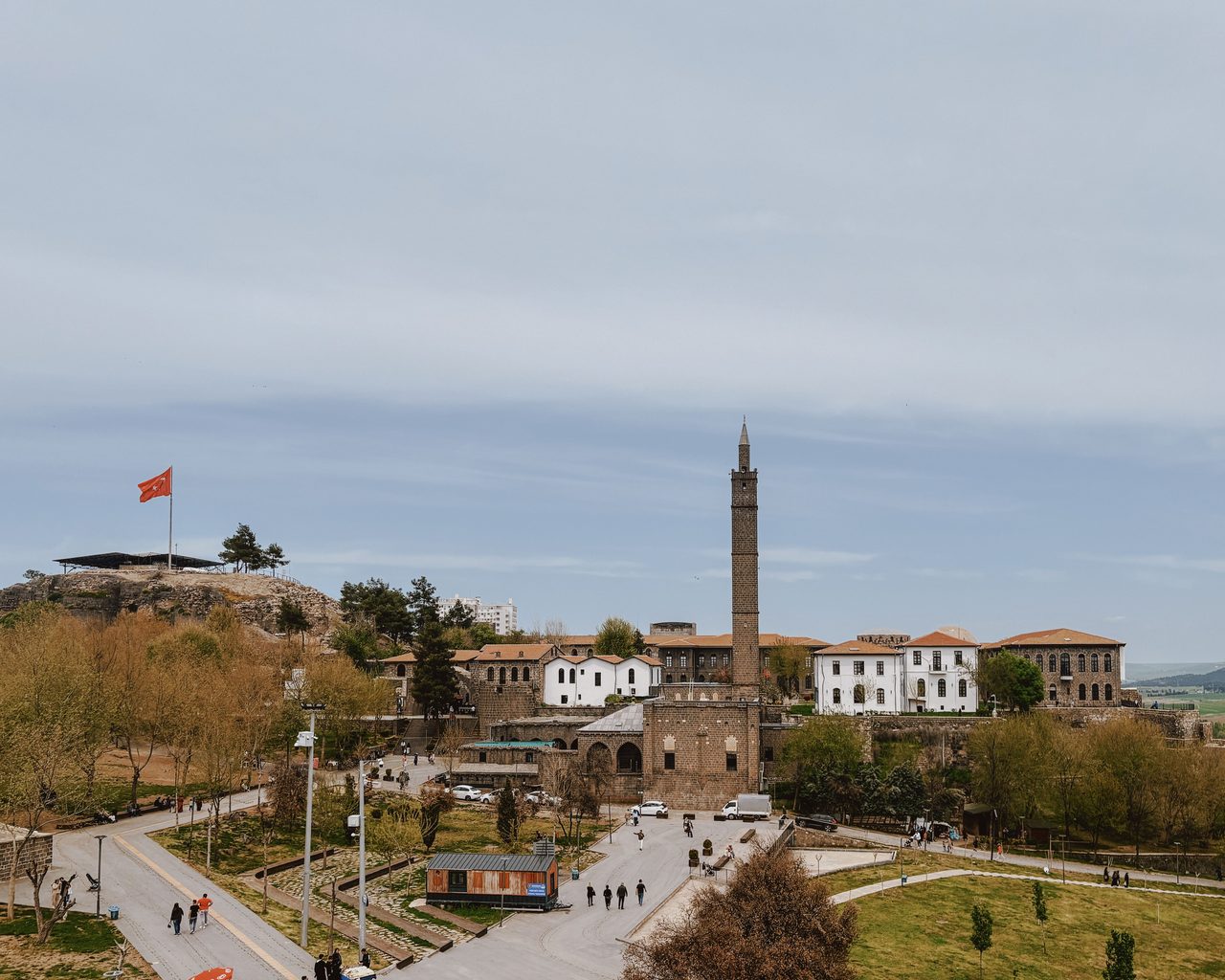
Diyarbakır is southeastern Turkey's cultural capital, anchored by some 6 km of UNESCO-listed black basalt city walls—among the longest and best-preserved in the world. Perched above the Tigris River, the ancient walled city (Sur) shelters mosques, Armenian churches, Kurdish cultural centres and bustling bazaars that have thrived here for more than 7,000 years. The city is famous throughout Turkey for its colossal watermelons, its layered Anatolian-Kurdish cuisine and the plaintive vocal tradition of dengbêj storytellers.
Founded as Amida by the Assyrians and later fortified by the Romans, Diyarbakır has been a strategic Silk Road crossroads for millennia. Inscribed on the UNESCO World Heritage List in 2015 together with the Hevsel Gardens—a lush agricultural belt hugging the Tigris—the city blends Roman, Byzantine, Artuqid, Seljuk, Ottoman and Kurdish legacies into a streetscape unlike anywhere else in Turkey. Visitors come for the monumental basalt walls, the Grand Mosque (one of Anatolia's oldest), the restored Surp Giragos Armenian Church and the human warmth of a city that opens its doors with legendary hospitality.
Capital
Diyarbakır
Largest city
Diyarbakır
Population
1,732,000 (metropolitan)
Languages
Turkish (official), Kurdish (Kurmanji and Zazaki widely spoken)
The 22 destinations our editors recommend — from iconic landmarks to under-the-radar finds.
Diyarbakır City Walls
These basalt fortifications encircle the old city of Sur for roughly 5.5 km, built up over Roman, Byzantine, and later Artuqid and Ottoman phases on top of even earlier foundations. The black volcanic stone gives the walls a distinctive dark, heavy look that differs from the pale limestone city walls found elsewhere in Turkey. Walking a stretch of the ramparts, especially the section overlooking the Tigris valley and Hevsel Gardens, is the main draw, and the walls are inscribed as a joint UNESCO site together with the gardens below them.
Hevsel Gardens
A belt of terraced market gardens and orchards squeezed between the base of the city walls and the Tigris River, cultivated continuously for centuries to supply Diyarbakır with vegetables and fruit. The gardens are part of the same UNESCO listing as the walls above them, valued as one of the few surviving examples of a historic urban agricultural zone feeding a major city. A visit here is mostly about the contrast: dense fortified stone above, open irrigated green space below.
Grand Mosque (Ulu Camii)
Built by the Great Seljuks in the late 11th century on the site of an earlier Byzantine church, this is one of the oldest mosques in Anatolia still in active use. Its long rectangular courtyard lined with reused Roman and Byzantine columns is modeled on the Umayyad Mosque in Damascus, making it stylistically closer to early Syrian mosque architecture than to the domed Ottoman mosques travelers see elsewhere in Turkey. The building is constructed from the same dark basalt as the city walls, giving the courtyard a stark, monochrome feel.
Four-Legged Minaret (Dört Ayaklı Minare)
Attached to the Kasım Padişah Mosque, this 16th-century minaret is unusual because it rests on four separate stone legs with open space beneath, rather than rising from a single solid base. Local tradition holds that unmarried women who walk around or beneath it a set number of times will find a husband, and the minaret is a recognizable stop on any walk through the Sur district's back streets. It's a small site best seen as part of a longer walk rather than a standalone destination.
Surp Giragos Armenian Church
Once considered the largest Armenian church in the Middle East, Surp Giragos was restored and reopened in 2011 after decades of disuse, only to be badly damaged again during the fighting in the Sur district in 2015-2016. What visitors see today is a building still carrying that recent history alongside its 19th-century Armenian architecture, including its bell tower, which is rare for a church built under Ottoman-era restrictions on church height. It's one of the few surviving markers of Diyarbakır's once-substantial Armenian community.
Diyarbakır Archaeological Museum
This museum gathers finds from excavations across the wider Diyarbakır region, spanning prehistoric, Urartian, Roman, and early Islamic material, and gives context for the layered history visible in the city's walls and mosques. It's a smaller, more traditional regional museum rather than a headline collection, useful for filling in the historical background before or after walking the Sur district. Museum Card holders get in without an extra fee.
Recommended itineraries
Pick a length, follow the route. Each itinerary balances headline sights with breathing room.
5-Day Diyarbakır Explorer
Day 1Arrive in Diyarbakır, explore city center
Day 2Visit top attractions and museums
Day 3Day trip to nearby highlights
Day 4Local markets and hidden gems
Day 5Final sightseeing, departure
7-Day Classic Diyarbakır
Days 1-2Diyarbakır city highlights
Days 3-4Regional exploration
Days 5-6Cultural immersion and local experiences
Day 7Return and departure
14-Day Ultimate Diyarbakır
Days 1-3Diyarbakır comprehensive city tour
Days 4-6Northern region exploration
Days 7-9Eastern highlights
Days 10-12Southern attractions
Days 13-14Return to Diyarbakır, departure
Where to stay in Diyarbakır
Three tiers, every traveller covered — from cost-conscious to flagship hotels.
Budget 430–1,080 TRY/day (~$11–$28)
Hostels, budget hotels, and guesthouses offer affordable stays without sacrificing experience.
Mid-range 1,950–4,000 TRY/day (~$51–$105)
Boutique hotels and well-located accommodations provide comfort and convenience at reasonable prices.
Luxury 5,200–10,300 TRY/day (~$137–$271)
World-class resorts and premium hotels deliver unforgettable experiences.
Merit Diyarbakır Hotel
Yenişehir, 2 km from Sur historic district · 3,500–5,500 TRY/night (~$92–$145)
Diyarbakır Airport (DIY) sits 6 km southwest of the city centre. Turkish Airlines and Pegasus Airlines operate daily flights to Istanbul (Atatürk and Sabiha Gökçen) and Ankara. Within the city, DIAYAY municipal buses and dolmuş (shared minibuses) connect Yenişehir with the Sur district for 10–15 TRY (~$0.26–0.40). Taxis are metered and widely available. Intercity travel is best via the otogar (main bus terminal on Şanlıurfa Yolu) with routes to Mardin (1.5 hrs), Şanlıurfa (3 hrs), Ankara (12 hrs) and Istanbul (18 hrs).
Budget breakdown
Daily spend by tier in Turkish Lira (TRY); approx. 38 TRY = 1 USD (June 2026), broken out by category.
Category
Budget
Mid-range
Luxury
Accommodation
300–600 TRY/night (~$8–$16)
1,200–2,500 TRY/night (~$32–$66)
3,500–7,000 TRY/night (~$92–$184)
Food (per day)
100–250 TRY/day (~$3–$7)
400–700 TRY/day (~$11–$18)
800–1,500 TRY/day (~$21–$39)
Transportation
30–80 TRY/day (~$0.80–$2.10)
150–300 TRY/day (~$4–$8)
400–800 TRY/day (~$11–$21)
Activities
0–150 TRY/day (~$0–$4)
200–500 TRY/day (~$5–$13)
500–1,000 TRY/day (~$13–$26)
Daily total
430–1,080 TRY/day (~$11–$28)
1,950–4,000 TRY/day (~$51–$105)
5,200–10,300 TRY/day (~$137–$271)
Best time to visit Diyarbakır
Weather through the year in Turkey
Best timeShoulderWorth avoiding
Average daytime temperature in °C. Figures are for Turkey.
Spring (April–May) offers mild temperatures (18–25°C), blooming Hevsel Gardens and comfortable walking. Autumn (September–October) brings cooler air after the summer heat. Summer is intense but the watermelon harvest draws domestic visitors.
Essential travel tips
The historic Sur district is compact — most major sights are walkable within 2–3 km.
Diyarbakır's giant watermelons (karpuz) are in peak season July–September; try them at any market.
Friday is the main prayer day; Grand Mosque and many smaller mosques fill with worshippers at noon.
Bazaars and copper workshops close on Sundays in the Sur district.
The city is hot June–August (often 40°C+); plan outdoor sightseeing for early morning.
Hidden gems
Off-the-beaten-path corners most travellers miss.
Safety information
INFO
Register travel plans with your country's embassy in Ankara.
INFO
Carry a photocopy of your passport at all times; original in a money belt.
INFO
Use official yellow taxis with working meters (Taksi app or DigiTaksi available).
INFO
Respect local customs: dress modestly near mosques, remove shoes before entering.
INFO
Emergency number: 112 (police 155, ambulance 112, fire 110).
Frequently asked questions
Is Diyarbakır safe to visit in 2026?
Diyarbakır is southeastern Turkey's largest city and receives visitors year-round. The main tourist areas — the UNESCO-listed Sur district, Yenişehir commercial centre and the Tigris River banks — are generally safe during daylight hours. Travellers should consult UK FCDO (gov.uk/foreign-travel-advi
What is the best time to visit Diyarbakır?
The best time to visit Diyarbakır is April–May and September–October. Diyarbakır sits at 670 m elevation on the Tigris plateau and experiences a continental semi-arid climate with hot, dry summers and cold winters. July and August are the hottest months, often reaching
What currency is used in Diyarbakır?
The currency in Diyarbakır is the Turkish Lira (TRY). ATMs are widely available in cities and tourist areas. Credit cards are accepted at most hotels and restaurants, but carry cash for markets and smaller establishments.
What language is spoken in Diyarbakır?
The main language(s) spoken in Diyarbakır: Turkish (official), Kurdish (Kurmanji and Zazaki widely spoken). In tourist areas, English is generally understood. Learning a few basic phrases in the local language is appreciated by locals.
What are the top attractions in Diyarbakır?
The top attractions in Diyarbakır include Diyarbakır City Walls, Hevsel Gardens, Grand Mosque (Ulu Camii), Four-Legged Minaret (Dört Ayaklı Minare), and Surp Giragos Armenian Church. Each offers a unique experience, from historic landmarks to natural wonders.