World · 20 Places · Best April–June and September–October
Karabük
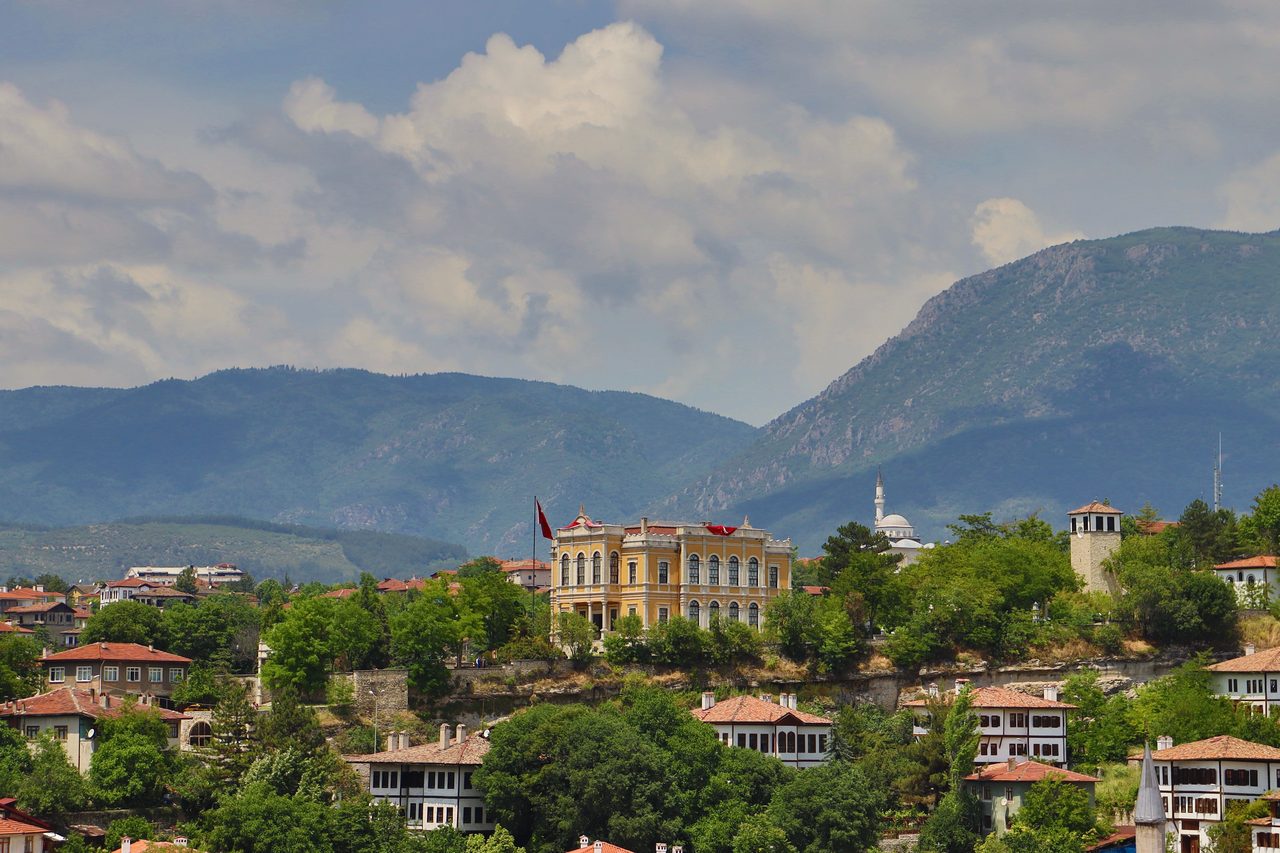
Karabük is a small industrial city in northwestern Turkey's Western Black Sea region, best known as the gateway to Safranbolu — a UNESCO World Heritage Site of 17th-century Ottoman merchant houses, ancient hans, and cobblestone lanes. Beyond Safranbolu, the province rewards visitors with deep river canyons, ancient Phrygian-era ruins at Eskipazar, dense Black Sea forests, and the dramatic Tokatlı Canyon.
Set among forested hills at roughly 400 m elevation, Karabük city itself grew up around the Kardemir iron and steel works founded in 1937. The surrounding province, however, packs remarkable heritage: Safranbolu's perfectly preserved Ottoman quarter draws UNESCO visitors from across the world; Yörük Village offers a living window into rural Anatolian life; Bulak Cave winds underground for several kilometres; and the Yenice forests harbour some of Turkey's richest biodiversity. The city is compact, affordable, and served by train and bus from Ankara and Istanbul.
The 20 destinations our editors recommend — from iconic landmarks to under-the-radar finds.
Safranbolu Historic District
Safranbolu's old town is a UNESCO World Heritage Site built on the wealth of Ottoman-era caravan trade, with several hundred timber-framed konak houses climbing the hillsides above the Çarşı (market) quarter. The houses' overhanging upper floors, latticed windows, and courtyards reflect a wealthy merchant lifestyle rather than a rural one, which is why UNESCO singled it out over other Anatolian towns. Walking the district means covering cobbled, steep lanes on foot between the Çarşı below and the Kıranköy and Bağlar neighborhoods above.
Cinci Han Caravanserai
This two-story stone caravanserai was built in the 17th century by Cinci Hoca, a local-born imam who rose to become an advisor at the Ottoman court, using the wealth and influence that position brought him to fund building projects back in his hometown. It once housed traveling merchants and their goods on the trade routes through Safranbolu, with a central courtyard ringed by rooms and stabling below. Today the restored building holds shops and a café rather than merchants, but the courtyard layout still shows how a working caravanserai was organized.
Cinci Hamam (Historic Bath)
Built in the same period and by the same patron as the neighboring Cinci Han, this working Turkish bath still functions as a public hamam rather than a museum piece. Visitors go through the standard sequence of a hot marble göbek taşı (belly stone), washing basins, and private wash cells, in a stone building whose domed ceiling with small glass oculi is original to its Ottoman construction. Because it's an active bath rather than a restored monument, the experience is functional and a little worn at the edges rather than polished for tourists.
Tokatlı Canyon (Tokatlı Kanyonu)
This canyon cuts through the limestone hills just outside Safranbolu, with a footpath and a suspension bridge that let visitors cross above the gorge rather than only view it from a rim. A glass-floored viewing terrace has been added at one overlook point, giving a straight-down look at the drop beneath the walkway. The canyon is also a trailhead for longer hikes, including a route down toward Safranbolu's İncekaya Aqueduct area.
Yörük Village (Yörük Köyü)
Yörük Köyü preserves the same Ottoman timber-house style as Safranbolu's town center but in a rural, still-inhabited village setting rather than a dense urban quarter. The village takes its name from Yörük nomadic Turkic herders who historically settled the area, and several of its old houses have been kept as lived-in homes rather than converted into shops or hotels. A small museum house is open for a look inside a period interior, with household items and furnishings arranged as they'd have been used.
Bulak Cave (Bulak Mağarası)
This cave near Safranbolu has a lit, walkable path through several chambers of stalactites and stalagmites, formed over a long period by water moving through the limestone bedrock beneath the village of Bulak. It's a smaller, more manageable cave than some of Turkey's larger show caves, which makes it a workable stop even for visitors not planning a dedicated caving excursion. The temperature inside stays noticeably cooler than outside, which is a relief on hot Black Sea-region summer days.
Recommended itineraries
Pick a length, follow the route. Each itinerary balances headline sights with breathing room.
5-Day Karabük Explorer
Day 1Arrive in Karabük, explore city center
Day 2Visit top attractions and museums
Day 3Day trip to nearby highlights
Day 4Local markets and hidden gems
Day 5Final sightseeing, departure
7-Day Classic Karabük
Days 1-2Karabük city highlights
Days 3-4Regional exploration
Days 5-6Cultural immersion and local experiences
Day 7Return and departure
14-Day Ultimate Karabük
Days 1-3Karabük comprehensive city tour
Days 4-6Northern region exploration
Days 7-9Eastern highlights
Days 10-12Southern attractions
Days 13-14Return to Karabük, departure
Where to stay in Karabük
Three tiers, every traveller covered — from cost-conscious to flagship hotels.
Budget 500–1,100 TRY (~$15–33 USD)
Hostels, budget hotels, and guesthouses offer affordable stays without sacrificing experience.
Mid-range 1,450–3,400 TRY (~$44–102 USD)
Boutique hotels and well-located accommodations provide comfort and convenience at reasonable prices.
Luxury 4,800–12,800 TRY (~$144–384 USD)
World-class resorts and premium hotels deliver unforgettable experiences.
Havuzlu Asmazlar Konağı
Çarşı, Safranbolu · 2,500–4,500 TRY per night (~$75–135 USD)
Karabük is accessible by train on the Irmak-Filyos line (from Ankara via Karabük) and by intercity bus. Within the province a dolmuş (shared minibus) network connects Karabük city to Safranbolu (~8 km). Driving is the most flexible option for reaching Tokatlı Canyon and Yenice Forest.
Budget breakdown
Daily spend by tier in TRY, broken out by category.
Category
Budget
Mid-range
Luxury
Accommodation
300–600 TRY (~$9–18 USD)
800–2,000 TRY (~$24–60 USD)
3,000–8,000 TRY (~$90–240 USD)
Food (per day)
150–300 TRY (~$5–9 USD)
400–800 TRY (~$12–24 USD)
1,000–2,500 TRY (~$30–75 USD)
Transportation
50–100 TRY (~$2–3 USD)
150–300 TRY (~$5–9 USD)
500–1,500 TRY (~$15–45 USD)
Activities
0–100 TRY (~$0–3 USD)
100–300 TRY (~$3–9 USD)
300–800 TRY (~$9–24 USD)
Daily total
500–1,100 TRY (~$15–33 USD)
1,450–3,400 TRY (~$44–102 USD)
4,800–12,800 TRY (~$144–384 USD)
Best time to visit Karabük
Weather through the year in Turkey
Best timeShoulderWorth avoiding
Average daytime temperature in °C. Figures are for Turkey.
Spring brings blossoms to Safranbolu gardens and comfortable hiking weather. Autumn foliage in Yenice Forest is spectacular. Summer is busy with domestic tourists.
Essential travel tips
Exchange currency in Ankara or Istanbul before arriving — ATMs in Karabük city centre are reliable but Safranbolu village has limited ATM access
Book Safranbolu konak (Ottoman mansion) accommodation well in advance for weekends and public holidays
The Safranbolu–Karabük dolmuş runs from Karabük Otogar (bus station) roughly every 20 minutes, fare 50–90 TRY (~$1.50–2.70)
Most historic sites in Safranbolu are free to walk around; the Cinci Han and some konaks charge entry (20–50 TRY / $0.60–1.50)
Hidden gems
Off-the-beaten-path corners most travellers miss.
Safety information
INFO
Keep copies of your passport and visa documents in a separate bag
INFO
Use licensed taxis or BiTaksi app rather than unmarked vehicles
INFO
Carry cash — many smaller restaurants and shops in Safranbolu are cash-only
Karabük and Safranbolu are among the safest destinations in Turkey for independent travellers. Petty crime is very rare in the historic district. The main risks are traffic (narrow Safranbolu cobblestone streets can be slippery when wet) and standard outdoor hazards when hiking in remote areas like
What is the best time to visit Karabük?
The best time to visit Karabük is April–June and September–October. Karabük has a continental climate with cold, snowy winters and warm, relatively dry summers. The province sits at 400–700 m elevation in the western Black Sea foothills, giving it higher precipitation
What currency is used in Karabük?
The currency in Karabük is the Turkish Lira (TRY). ATMs are widely available in cities and tourist areas. Credit cards are accepted at most hotels and restaurants, but carry cash for markets and smaller establishments.
What language is spoken in Karabük?
The main language(s) spoken in Karabük: Turkish. In tourist areas, English is generally understood. Learning a few basic phrases in the local language is appreciated by locals.
What are the top attractions in Karabük?
The top attractions in Karabük include Safranbolu Historic District, Cinci Han Caravanserai, Cinci Hamam (Historic Bath), Tokatlı Canyon (Tokatlı Kanyonu), and Yörük Village (Yörük Köyü). Each offers a unique experience, from historic landmarks to natural wonders.