Alaska is America's final frontier — a vast wilderness state where glaciers calve into fjords, brown bears fish alongside bald eagles, and the aurora borealis paints the night sky in emerald and violet. The largest US state by area covers 1.7 million square kilometres yet holds fewer than 750,000 people, making it one of the least densely populated places on Earth. From Anchorage's urban sophistication to Denali's soaring summit, from the Inside Passage's towering rainforests to the Arctic's endless tundra, Alaska offers unmatched natural grandeur.
Alaska overwhelms the senses with superlatives: the highest peak in North America (Denali at 20,310 ft), the largest national park in the US (Wrangell-St. Elias at 13.2 million acres), the longest coastline of any US state (33,904 miles), and summer days with up to 22 hours of sunlight. Six distinct regions define the state — Southeast Alaska's temperate rainforest Inside Passage, Southcentral Alaska around Anchorage and the Kenai Peninsula, the Interior dominated by Denali, the Southwest encompassing Kodiak Island and the Alaska Peninsula, the vast Yukon-Kuskokwim Delta, and the Far North from the Brooks Range to the Arctic Ocean. Wildlife encounters are fundamental to any Alaska visit: humpback whales breach in Glacier Bay, 500,000 caribou migrate across the Arctic National Wildlife Refuge, and brown bears congregate at Brooks Falls in Katmai National Park to catch sockeye salmon. Alaska's Indigenous peoples — Aleut, Alutiiq, Athabascan, Eyak, Haida, Tlingit, Tsimshian, Yup'ik, and Inupiat — maintain living cultural traditions across the state. The state's economy is driven by oil, fishing, and a booming tourism industry that draws over two million visitors annually.
The 22 destinations our editors recommend — from iconic landmarks to under-the-radar finds.
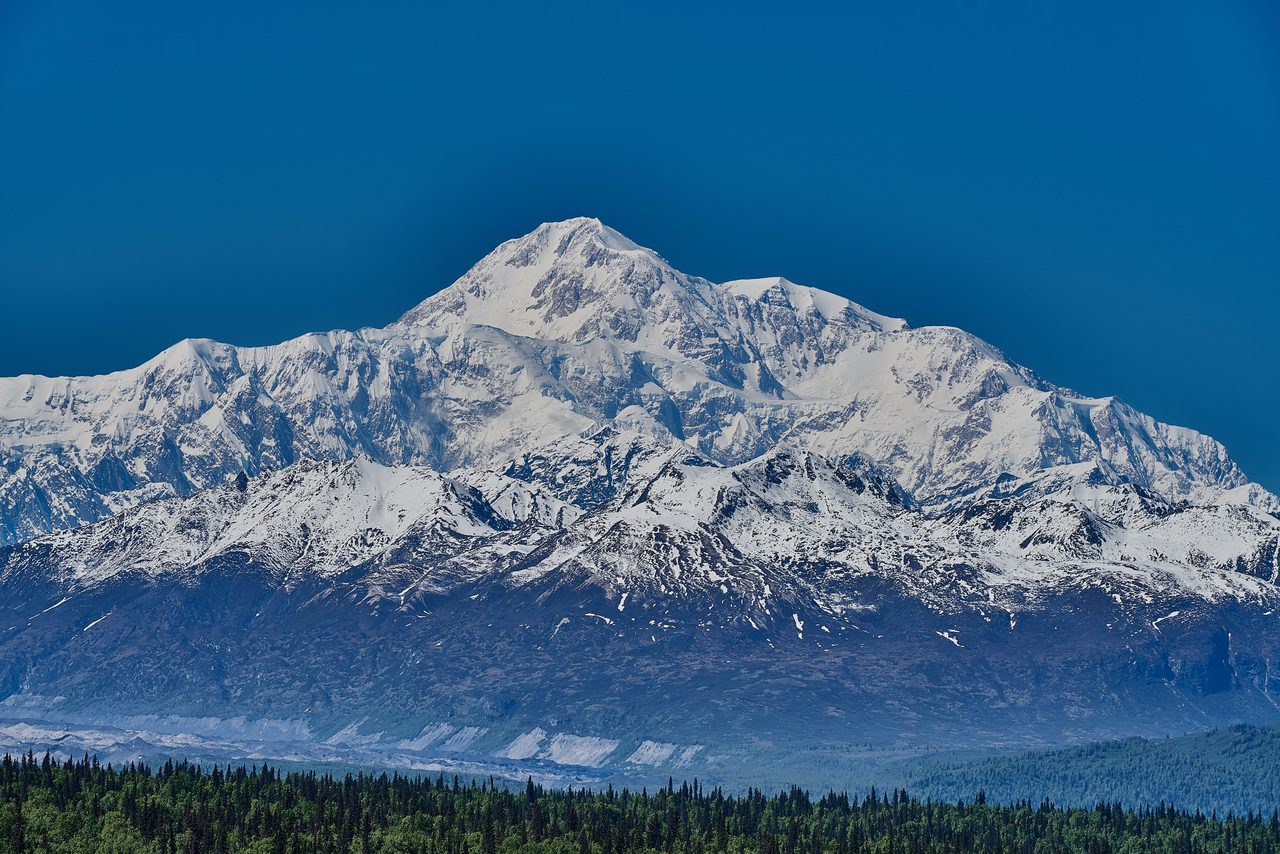
Denali National Park & Preserve
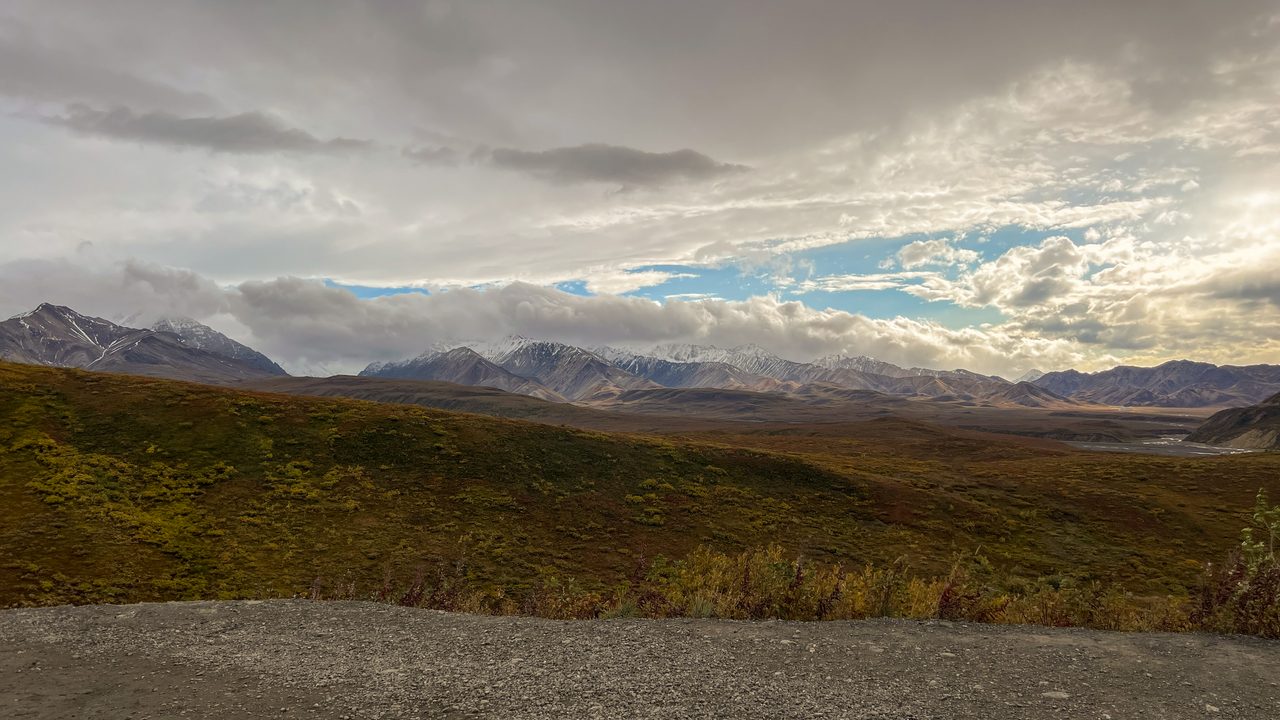
Denali is a six-million-acre park built around North America's tallest peak, and most visitors experience it via a single 92-mile road that private vehicles can only drive a short way up before shuttle or tour buses take over. The bus ride itself is the main event, crossing tundra and river braids where grizzlies, caribou, and Dall sheep are often visible from the road. The mountain shows itself only about a third of the time, so seeing Denali clear of clouds is a matter of luck as much as timing.
Kenai Fjords National Park
This park protects the Harding Icefield and the tidewater glaciers that spill from it into the fjords near Seward, most of it accessible only by boat. Day cruises out of Seward harbor take visitors past calving glaciers, sea otters, puffins, and often whales, while the small road-accessible section at Exit Glacier lets people walk right up to a retreating glacier's edge on foot. The contrast between the easy Exit Glacier trail and the boat-only fjords makes it a park with two very different ways to visit.
Glacier Bay National Park
Glacier Bay is a fjord system in Southeast Alaska that has almost no road access, reached mainly by cruise ship or small tour boat out of Gustavus. Sailing into the bay traces the path of a glacier that has retreated over 60 miles since the late 1700s, passing tidewater glaciers, harbor seals hauled out on ice floes, and steep, forested fjord walls. Because so few visitors arrive independently, the experience is shaped heavily by whichever cruise or tour operator brings you in.
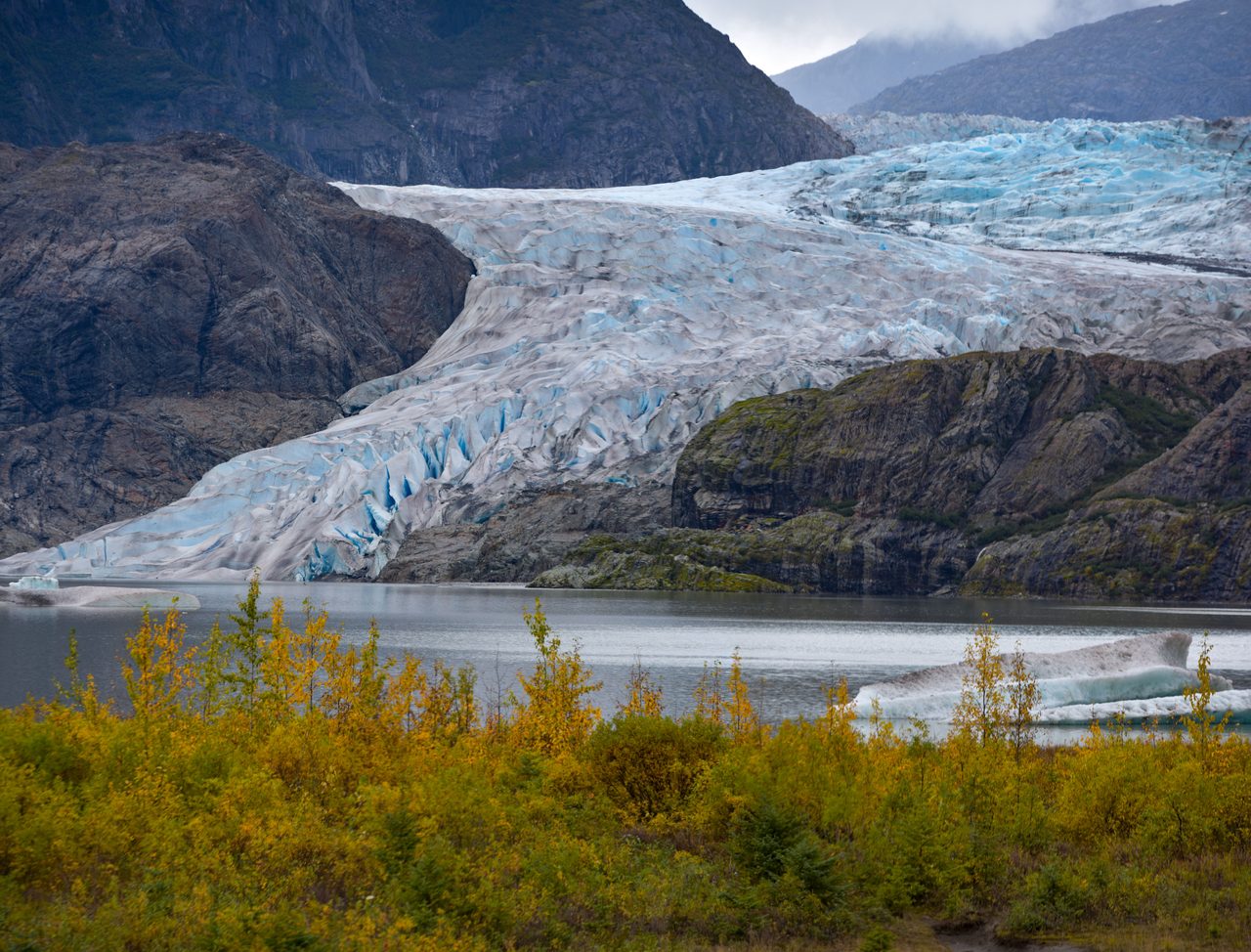
Mendenhall Glacier
Mendenhall is a glacier that flows down from the Juneau Icefield to a lake just outside downtown Juneau, making it one of the most accessible glaciers in the state. A short paved path from the visitor center leads to lake-level views of the ice face, and side trails reach waterfalls and, in some years, ice caves that form at the glacier's edge. Its proximity to a cruise port makes it one of the most-visited glaciers in Alaska, with crowds that track cruise ship schedules.
Anchorage Museum
This is Alaska's largest museum, combining an art collection, an extensive Alaska Native heritage exhibit developed with the Smithsonian, and a science center aimed at families. The Alaska Native gallery in particular draws on artifacts and multimedia to cover the state's diverse indigenous cultures in more depth than most visitors expect from a single stop. It functions as a good orientation point for a trip, especially for travelers who won't otherwise reach rural Alaska.
Chena Hot Springs Resort
Chena is a geothermal resort about an hour from Fairbanks, built around a natural rock-lined hot spring lake that stays warm outdoors year-round, including in winter. It's also one of the more reliable spots in the Fairbanks area to view the aurora in winter, since it sits away from city light pollution, and it houses a year-round Aurora Ice Museum kept below freezing with ice sculptures and an ice bar. The mix of soaking in hot water surrounded by snow and chasing aurora from the same property is its main draw.
Recommended itineraries
Pick a length, follow the route. Each itinerary balances headline sights with breathing room.
5-Day Alaska Explorer
Day 1Arrive in Alaska, explore city center
Day 2Visit top attractions and museums
Day 3Day trip to nearby highlights
Day 4Local markets and hidden gems
Day 5Final sightseeing, departure
7-Day Classic Alaska
Days 1-2Alaska city highlights
Days 3-4Regional exploration
Days 5-6Cultural immersion and local experiences
Day 7Return and departure
14-Day Ultimate Alaska
Days 1-3Alaska comprehensive city tour
Days 4-6Northern region exploration
Days 7-9Eastern highlights
Days 10-12Southern attractions
Days 13-14Return to Alaska, departure
Where to stay in Alaska
Three tiers, every traveller covered — from cost-conscious to flagship hotels.
Budget $150-270/day
Hostels, budget hotels, and guesthouses offer affordable stays without sacrificing experience.
Mid-range $330-610/day
Boutique hotels and well-located accommodations provide comfort and convenience at reasonable prices.
Luxury $850-1950/day
World-class resorts and premium hotels deliver unforgettable experiences.
Cafés, neighbourhood gems, and tasting menus worth the table reservation.
Moose's Tooth Pub & Pizzeria
Pizza / Craft Beer · $$
A high-volume brewpub and pizzeria in Anchorage, part of the Broken Tooth Brewing family, turning out wood-fired pizzas with inventive topping combinations alongside its own house beers. The dining room is loud and packed with picnic-style tables, more brewery hall than restaurant.
Simon & Seafort's Saloon & Grill
Seafood / American · $$$
A longstanding Anchorage dining room set above Cook Inlet, built around steaks and Alaskan seafood with a traditional saloon-and-grill menu that has changed little in decades. The room's big windows face the water, making it a spot people book specifically for the view at sunset.
Orso Restaurant
Contemporary American / Italian · $$$
A downtown Anchorage restaurant sharing its building and ownership group with Glacier Brewhouse next door, but pitched more toward Italian-leaning, sauce-driven plates than the brewhouse's wood grill. The interior is warmer and more subdued, aimed at a sit-down dinner crowd rather than a casual brewpub feel.
Marx Bros. Cafe
Contemporary American · $$$$
One of Anchorage's most established fine-dining rooms, housed in a small early-1900s house rather than a purpose-built restaurant space, which keeps seating limited and the dining rooms intimate. The menu leans into Alaskan seafood built up with rich, classic preparations rather than the plainer grilling style found elsewhere in the city.
Glacier Brewhouse
American / Seafood · $$
A large, timber-framed Anchorage brewpub built around an open wood-fired grill and rotisserie, giving its meat and seafood a smokier character than the city's other casual seafood spots. The high-ceilinged, log-and-stone dining room seats a lot of people without feeling like a chain.
Tracy's King Crab Shack
Seafood · $$$
A waterfront crab shack right on the Juneau cruise ship dock, built for quick, messy plates of crab rather than a sit-down meal. Seating is mostly outdoor picnic tables with a view of the harbor and whatever ships are in port.
Rent a car in Anchorage for Southcentral and Interior Alaska. Use the Alaska Marine Highway System for Southeast Alaska. Fly between major cities via Alaska Airlines. Take the Alaska Railroad for a scenic Anchorage-to-Fairbanks journey.
Budget breakdown
Daily spend by tier in USD, broken out by category.
Category
Budget
Mid-range
Luxury
Accommodation
$80-120/night (hostels, budget hotels)
$180-280/night
$400-800+/night
Food (per day)
$30-50/day
$60-100/day
$150-250/day
Transportation
$20-40/day
$40-80/day
$100-300/day
Activities
$20-60/day
$50-150/day
$200-600/day
Daily total
$150-270/day
$330-610/day
$850-1950/day
Best time to visit Alaska
Weather through the year in United States
Best timeShoulderWorth avoiding
Average daytime temperature in °C. Figures are for United States.
September is ideal for aurora borealis, fall colors, and whale watching with fewer crowds. March offers best aurora and winter sports conditions. Shoulder seasons (May, early June) offer lower prices and early wildlife activity.
Essential travel tips
Book summer accommodations and tours 4-6 months in advance — Alaska fills up fast June-August
Rent a car in Anchorage for maximum flexibility — many top attractions are only accessible by road
An America the Beautiful Annual Pass ($80, store.usgs.gov/pass) covers entry to Denali, Kenai Fjords, Glacier Bay, and Wrangell-St. Elias
Pack layers: even July days can swing from 70°F to 45°F with rain
Download offline maps (Maps.me or AllTrails) as cell coverage disappears quickly outside cities
Alaska Airlines has the most domestic Alaska routes; book 2-3 months ahead for summer fares
Hidden gems
Off-the-beaten-path corners most travellers miss.
Wrangell-St. Elias National Park
The largest US national park receives only 80,000 visitors per year despite being six times the size of Yellowstone. Drive the Nabesna or McCarthy roads for extraordinary solitude.
Petersburg
This Norwegian-heritage fishing town in Southeast Alaska has no cruise ship dock, keeping it blissfully authentic. Walk the cannery boardwalk and watch fishing boats unload their catch.
Gustavus
The tiny gateway town to Glacier Bay has just 450 residents, no traffic lights, and exceptional whale watching right from the dock. Stay at Glacier Bay Lodge for the full wilderness experience.
Safety information
INFO
Carry bear spray at all times in any backcountry or park area — Alaska has approximately 60,000 brown/grizzly bears and 100,000 black bears. Bear spray (available at REI Anchorage, 1000 W Northern Lights Blvd, $50-60) is more effective than firearms in most bear encounters. Spray when the bear is within 60 feet; aim at the face in a 30-60 degree arc.
INFO
File a trip plan before any backcountry excursion — Leave a written trip plan with the Alaska State Troopers (907-269-5511) or a trusted contact listing your route, expected return time, and vehicle description. In remote areas, emergency response takes 12-72 hours. Carry a satellite communicator (Garmin inReach Mini, ~$400 purchase or $35/month subscription) as a backup to non-existent cell service.
INFO
Dress in waterproof layers regardless of the season — Alaska weather changes rapidly at any time of year. Interior temperatures in January can drop to -60°F (-51°C). Even in July, mountain and coastal areas can experience near-freezing temperatures and driving rain. Wear a moisture-wicking base layer, insulating mid-layer, and waterproof outer shell. Hypothermia is a genuine risk even in summer if unprepared.
INFO
Never enter or cross glacial streams alone or without proper assessment — Alaska's glacial rivers run extremely cold (32-38°F / 0-3°C) and fast, with invisible braided channels and shifting glacial gravel. Cold water immersion survival time is under 15 minutes. If crossing is necessary, use a trekking pole, face upstream, unbuckle pack straps, and cross at the widest and shallowest point — never the most obvious path.
INFO
Check and monitor aurora and avalanche forecasts for your region — The Alaska Avalanche Center (alaskasnow.org) provides daily regional forecasts for backcountry travelers. The Geophysical Institute aurora forecast (gi.alaska.edu/aurora-forecast) is updated daily and gives a 1-9 activity scale. For aurora viewing, Kp 3+ is visible with a dark sky; Kp 5+ is visible from Anchorage suburbs. Avalanche danger is real in the Chugach and Alaska Range from October through May.
INFO
Purchase travel insurance that includes emergency medical evacuation — A wilderness rescue in Alaska can cost $5,000-50,000+ depending on location and conditions. Medevac helicopter flights from remote areas run $5,000-20,000. Standard health insurance rarely covers wilderness rescue. Travel insurance with evacuation coverage (World Nomads, Allianz) or a dedicated wilderness rescue membership (Alaska Mountain Rescue Group) is strongly recommended for any backcountry activity.
Frequently asked questions
Is Alaska safe to visit in 2026?
Alaska is safe for well-prepared travelers. The main risks are environmental — wildlife encounters, extreme weather, remote terrain — rather than crime. Always carry bear spray, file trip plans for backcountry travel, and dress in layers. Emergency: 911 for police/fire/medical. Alaska State Troopers: 907-269-5511.
What is the best time to visit Alaska?
June through August offers the warmest temperatures (50-75°F), longest daylight hours (up to 22 hours), and most wildlife activity. September is ideal for fall colors, aurora borealis, and fewer crowds. January-March offers winter sports and the best aurora viewing.
Do I need a visa to visit Alaska?
Entry requirements follow US federal immigration rules. Citizens of Visa Waiver Program countries need an approved ESTA (esta.cbp.dhs.gov, $21). All others require a US visa. Alaska is a US state — no special permits are needed beyond standard US entry.
What currency is used in Alaska?
US Dollar (USD). Credit and debit cards are widely accepted in cities and major tourist areas. Carry cash for small businesses, markets, and remote areas where connectivity may be limited.
What are the top attractions in Alaska?
Denali National Park, Kenai Fjords National Park, Glacier Bay National Park, Mendenhall Glacier, Chena Hot Springs, and aurora borealis viewing near Fairbanks are the top draws. Wildlife watching — brown bears, whales, and bald eagles — is world-class throughout the state.
Do I need a car in Alaska?
A rental car is essential for visiting Denali, the Kenai Peninsula, and most of Southcentral Alaska. Anchorage and Fairbanks are driveable. Southeast Alaska cities (Juneau, Ketchikan, Sitka) are only accessible by air or ferry — the Alaska Marine Highway System (dot.alaska.gov/amhs) connects them.