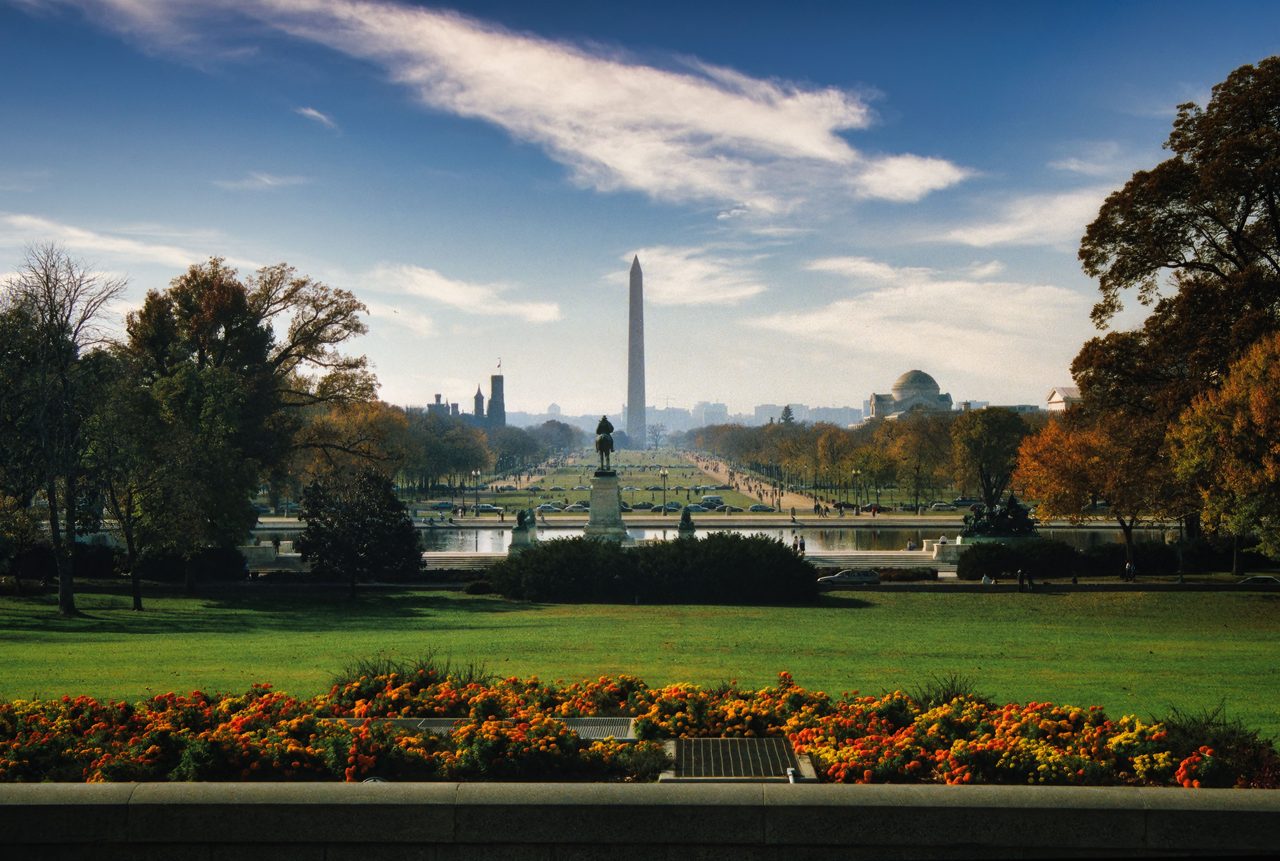
Washington, D.C. is the capital of the United States, a planned federal district occupying 68 square miles on the Potomac River between Maryland and Virginia. Home to the three branches of the U.S. federal government, world-class Smithsonian museums, iconic monuments, and a vibrant multicultural dining and arts scene, the city draws more than 24 million visitors annually. Most of the capital's major museums and memorials are free, making it one of the most accessible great cities on earth.
Founded in 1790 and designed by Pierre Charles L'Enfant, Washington, D.C. blends grand neoclassical architecture with a dynamic, modern urban character. The National Mall stretches from the Lincoln Memorial to the U.S. Capitol, flanked by Smithsonian museums that are free and open to the public. Beyond the monuments, the city's neighborhoods—Georgetown, Dupont Circle, U Street, Adams Morgan, Capitol Hill, Navy Yard, and Shaw—offer diverse dining, nightlife, and shopping. The city is deeply walkable and served by the Metro rail system. Its parks, along the Potomac and through Rock Creek Park, give visitors green escapes within the urban core.
Capital
Washington, D.C.
Largest city
Washington, D.C.
Population
689,545
Languages
English
Currency
US Dollar (USD)
Time zone
Eastern Time (ET) — UTC-5 (standard) / UTC-4 (daylight saving)
The 23 destinations our editors recommend — from iconic landmarks to under-the-radar finds.
Lincoln Memorial
A Greek Doric-style temple honoring Abraham Lincoln, built with 36 columns representing the states in the Union at the time of his death. Inside, Daniel Chester French's 19-foot seated marble statue of Lincoln faces east down the Reflecting Pool toward the Washington Monument and Capitol. The memorial is also where Martin Luther King Jr. delivered his "I Have a Dream" speech in 1963, marked by an inscription on the steps.
Washington Monument
A 555-foot marble obelisk honoring George Washington, it was the tallest structure in the world when completed in 1884. A slight color change partway up marks where construction paused for over 20 years due to funding and the Civil War before resuming with stone from a different quarry. An elevator carries visitors to an observation level near the top for views over the National Mall.
Smithsonian National Air and Space Museum
This Smithsonian museum holds one of the world's most significant collections of historic aircraft and spacecraft, including the original Wright Flyer and the Apollo 11 command module Columbia. Exhibits trace the history of flight from early aviation through the space race, mixing full-size artifacts with hands-on displays. Its collection draws heavily from actual milestones in American aerospace history rather than replicas.
National Museum of Natural History
Part of the Smithsonian, this museum houses the Hope Diamond, extensive dinosaur fossil halls, and a rotunda dominated by a mounted African bush elephant. Its collections span geology, human origins, and biodiversity across a scale few natural history museums can match. The dinosaur hall underwent a major renovation reopening in 2019 with updated fossil mounts and interpretation.
United States Capitol
Home to the U.S. Senate and House of Representatives, the Capitol's white cast-iron dome and Statue of Freedom are among the most recognizable symbols of the federal government. The Rotunda beneath the dome displays historical paintings and statuary, and the Capitol Visitor Center underneath the building serves as the entry point for tours. Because it's an active legislative building, access is more restricted than most Mall attractions.
National Gallery of Art
This museum holds one of the finest collections of Western painting and sculpture in the United States, split between a classical West Building and a modernist East Building designed by I. M. Pei. It houses the only Leonardo da Vinci painting on public display in the Americas, alongside major works by Vermeer, Rembrandt, and generations of American and European artists. Unlike the Smithsonian museums, it operates independently but shares the same free-admission model.
Recommended itineraries
Pick a length, follow the route. Each itinerary balances headline sights with breathing room.
5-Day Washington, D.C. Explorer
Day 1Arrive in Washington, D.C., explore city center
Day 2Visit top attractions and museums
Day 3Day trip to nearby highlights
Day 4Local markets and hidden gems
Day 5Final sightseeing, departure
7-Day Classic Washington, D.C.
Days 1-2Washington, D.C. city highlights
Days 3-4Regional exploration
Days 5-6Cultural immersion and local experiences
Day 7Return and departure
14-Day Ultimate Washington, D.C.
Days 1-3Washington, D.C. comprehensive city tour
Days 4-6Northern region exploration
Days 7-9Eastern highlights
Days 10-12Southern attractions
Days 13-14Return to Washington, D.C., departure
Where to stay in Washington, D.C.
Three tiers, every traveller covered — from cost-conscious to flagship hotels.
Budget $95–$180/day
Hostels, budget hotels, and guesthouses offer affordable stays without sacrificing experience.
Mid-range $245–$465/day
Boutique hotels and well-located accommodations provide comfort and convenience at reasonable prices.
Luxury $600–$1300/day
World-class resorts and premium hotels deliver unforgettable experiences.
Cafés, neighbourhood gems, and tasting menus worth the table reservation.
Ben's Chili Bowl
American Soul Food · $
A U Street counter-and-booth spot that has been serving half-smokes since the 1950s, through the neighborhood's changes including the 1968 riots and the Metro construction years. The kitchen runs a short, unchanging menu built around a natural-casing half-smoke split and grilled, then buried in loose chili and mustard. The dining room is narrow, lined with photos of visiting politicians, musicians, and comedians who've stopped in over the decades.
Le Diplomate
French Bistro · $$$
A large 14th Street brasserie built to look like it's been in Paris for a century, with brass rails, tile floors, and outdoor tables that stay busy across three seasons. The kitchen sticks to bistro fundamentals - steak frites, mussels, roast chicken - executed at a scale that keeps the room turning over quickly on weekend nights. It reads as a scene as much as a restaurant, with the sidewalk seating in particular functioning as a place to be seen along 14th Street.
Old Ebbitt Grill
American / Seafood · $$
A dark-wood, brass-and-taxidermy saloon a block from the White House that has operated continuously since the 19th century, making it one of the oldest restaurant rooms in the city. The kitchen leans on a raw bar and Chesapeake seafood alongside burgers and classic American plates, aimed at a mix of tourists, lobbyists, and downtown office workers. Its proximity to federal buildings makes it a default lunch spot for the surrounding agencies and press corps.
The Dabney
Mid-Atlantic Seasonal · $$$
A Blagden Alley restaurant built around a wood-burning hearth, cooking Mid-Atlantic ingredients - Chesapeake seafood, regional produce, country ham - with a menu that shifts through the seasons. The dining room is compact and rustic, with exposed brick and the open hearth visible from the tables, giving the cooking a distinct smoke character. It draws a dedicated local following for chef Jeremiah Langhorne's regionally focused approach, which was unusual in D.C. when the restaurant opened.
Bresca
Modern European · $$$$
A small, softly lit 14th Street dining room serving a modern European tasting menu built around technique-driven plates like foie gras preparations and vegetable-forward courses. Chef Ryan Ratino's cooking earned the restaurant a Michelin star, and the format is centered on the multi-course tasting rather than an à la carte menu. Seating is limited, which keeps the room quiet and geared toward a slower, multi-hour meal.
Roses Luxury
New American · $$$
A Barracks Row restaurant that helped define D.C.'s modern dining scene when it opened, pairing an easygoing, communal dining room with a kitchen that mixes American, Southeast Asian, and Italian influences on one menu. The pork and lychee sausage pasta became a signature order almost immediately and is still the dish most people come for. The space has a homey, plant-filled feel with shared tables in the back garden room.
Washington, D.C. is served by three major airports and a comprehensive Metro rail system. The WMATA Metro has six lines covering the city and inner suburbs. Circulator buses supplement Metro coverage. Ride-shares (Uber, Lyft), taxis, Capital Bikeshare, and electric scooters fill the gaps.
Budget breakdown
Daily spend by tier in USD, broken out by category.
Category
Budget
Mid-range
Luxury
Accommodation
$60–$100/night (hostels/budget hotels)
$150–$280/night
$350–$700/night
Food (per day)
$25–$45/day
$60–$100/day
$150–$300/day
Transportation
$10–$15/day
$15–$25/day
$50–$100/day
Activities
$0–$20/day (most Smithsonian museums are free)
$20–$60/day
$50–$200/day
Daily total
$95–$180/day
$245–$465/day
$600–$1300/day
Best time to visit Washington, D.C.
Weather through the year in United States
Best timeShoulderWorth avoiding
Average daytime temperature in °C. Figures are for United States.
March–May (cherry blossoms in late March/early April; mild weather) and September–November (comfortable temperatures, fewer crowds than summer).
The city is busy year-round as the national capital. Booking hotels 2–3 months ahead is advisable for spring and early summer.
Essential travel tips
Most Smithsonian museums are free and require no tickets — just arrive early to beat crowds.
Purchase a SmarTrip card ($10 including $8 credit) for Metro and bus travel; available at all Metro stations.
The National Mall is roughly 2 miles (3.2 km) long — wear comfortable shoes.
Many popular attractions require timed-entry passes (National Archives, Holocaust Museum) — reserve online several weeks in advance.
Parking is extremely limited and expensive downtown; Metro is strongly preferred.
Hidden gems
Off-the-beaten-path corners most travellers miss.
Safety information
INFO
Keep valuables secure in crowded tourist sites like the Mall.
INFO
Use well-lit streets and avoid isolated areas after midnight.
INFO
Metro stations are generally safe; exercise awareness late at night.
INFO
Emergency: 911 (police, fire, ambulance). Non-emergency DC Police: +1-202-727-9099.
Frequently asked questions
Is Washington, D.C. safe to visit in 2026?
The primary tourist areas of Washington, D.C. — including the National Mall, Capitol Hill, Georgetown, Dupont Circle, and Penn Quarter — are very safe during daylight hours and generally safe at night. The city has neighborhoods with higher crime rates (particularly east of the Anacostia River and p
What is the best time to visit Washington, D.C.?
The best time to visit Washington, D.C. is March–May. Washington, D.C. sits in the humid subtropical climate zone. Summers (June–August) are hot and muggy with temperatures regularly reaching 90–95°F (32–35°C) and heat index values above 100°F (38°C). Wi
What currency is used in Washington, D.C.?
The currency in Washington, D.C. is the US Dollar (USD). ATMs are widely available in cities and tourist areas. Credit cards are accepted at most hotels and restaurants, but carry cash for markets and smaller establishments.
What language is spoken in Washington, D.C.?
The main language(s) spoken in Washington, D.C.: English. In tourist areas, English is generally understood. Learning a few basic phrases in the local language is appreciated by locals.
What are the top attractions in Washington, D.C.?
The top attractions in Washington, D.C. include Lincoln Memorial, Washington Monument, Smithsonian National Air and Space Museum, National Museum of Natural History, and United States Capitol. Each offers a unique experience, from historic landmarks to natural wonders.