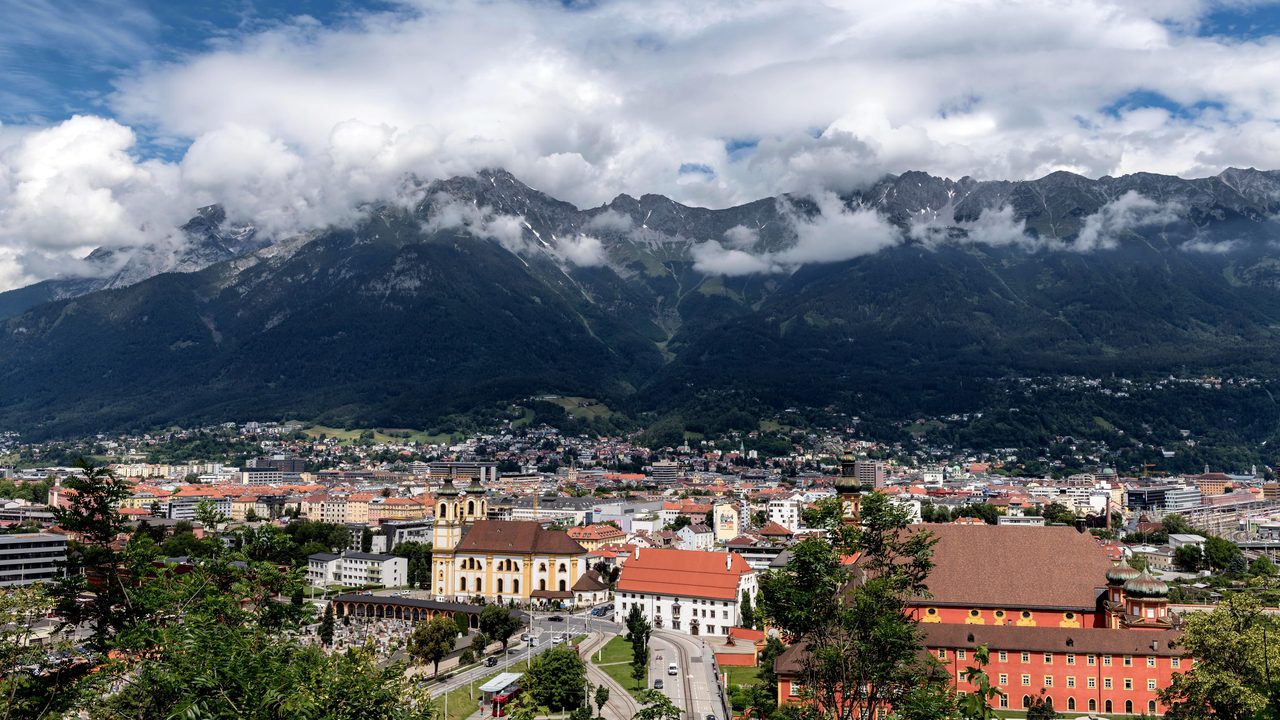
Tyrol is Austria's most spectacular alpine state, home to the historic city of Innsbruck and some of Europe's finest mountain scenery. Bordered by Germany, Italy, Switzerland, and the Austrian states of Salzburg, Vorarlberg, and Carinthia, Tyrol offers world-class skiing in winter and superb hiking in summer.
Tyrol (Tirol in German) is one of Austria's nine federal states, stretching across the central Alps between Germany and Italy. The state capital, Innsbruck, has twice hosted the Winter Olympics (1964 and 1976) and remains a vibrant city of culture, history, and outdoor adventure. Beyond Innsbruck, Tyrol encompasses legendary ski resorts such as Kitzbühel, Mayrhofen, and the Ötztal, along with the dramatic landscapes of the Zillertal, Stubai, and Inn valleys. The region is famed for its traditional Tyrolean culture — from dirndl and lederhosen to yodeling and Schuhplattler folk dancing — alongside a thriving culinary scene featuring hearty mountain dishes. Tyrol draws visitors year-round: skiers and snowboarders from December through April, and hikers, cyclists, and paragliders from May through October.
The 26 destinations our editors recommend — from iconic landmarks to under-the-radar finds.
Nordkette Mountain & Cable Car
The Nordkette mountain chain rises dramatically directly above Innsbruck to 2,334m. The Nordkettenbahn cable car departs from the city centre and ascends through Hungerburg to Seegrube and the Hafelekar peak, offering breathtaking panoramic views across the Inn Valley and 500+ peaks. In summer the high-alpine terrain is ideal for hiking; in winter there is a ski area.
Golden Roof (Goldenes Dachl)
Innsbruck's most iconic landmark, the Golden Roof is a late-Gothic oriel window balcony built in 1500 by Emperor Maximilian I. Its roof is covered with 2,657 fire-gilded copper tiles. The adjacent museum details the history of Emperor Maximilian I and the Habsburg dynasty.
Swarovski Crystal Worlds (Kristallwelten)
Located in Wattens, 20 km east of Innsbruck, Swarovski Crystal Worlds is a unique art and design museum created in 1995 to mark the centenary of the Swarovski company. The underground chambers of wonder feature crystal installations by world-renowned artists. The surrounding garden park is spectacular.
Bergisel Ski Jump
The Bergisel ski jump is one of the Four Hills Tournament venues and was redesigned by architect Zaha Hadid in 2002. The tower features a panoramic restaurant and observation deck at 750m above sea level with sweeping views of Innsbruck. The ramp was used in the 1964 and 1976 Winter Olympics.
Imperial Palace (Hofburg) Innsbruck
The Innsbruck Hofburg is one of the most important imperial palaces of the Habsburg dynasty. Originally built in the 15th century and comprehensively rebuilt by Empress Maria Theresa in the 18th century, it houses the Giant's Hall (Riesensaal) — a 31-metre long Rococo ceremonial room — and an extensive collection of Habsburg portraits.
Ambras Castle (Schloss Ambras)
Ambras Castle is a Renaissance-era castle and palace set in parkland above Innsbruck. Archduke Ferdinand II transformed the medieval fortress in the 16th century into a magnificent Renaissance residence. Today it houses the Chamber of Art and Curiosities — one of the world's oldest museums — and an exceptional armour collection.
Recommended itineraries
Pick a length, follow the route. Each itinerary balances headline sights with breathing room.
5-Day Tyrol Explorer
Day 1Arrive in Tyrol, explore city center
Day 2Visit top attractions and museums
Day 3Day trip to nearby highlights
Day 4Local markets and hidden gems
Day 5Final sightseeing, departure
7-Day Classic Tyrol
Days 1-2Tyrol city highlights
Days 3-4Regional exploration
Days 5-6Cultural immersion and local experiences
Day 7Return and departure
14-Day Ultimate Tyrol
Days 1-3Tyrol comprehensive city tour
Days 4-6Northern region exploration
Days 7-9Eastern highlights
Days 10-12Southern attractions
Days 13-14Return to Tyrol, departure
Where to stay in Tyrol
Three tiers, every traveller covered — from cost-conscious to flagship hotels.
Budget $50-100
Hostels, budget hotels, and guesthouses offer affordable stays without sacrificing experience.
Mid-range $100-200
Boutique hotels and well-located accommodations provide comfort and convenience at reasonable prices.
Luxury $300+
World-class resorts and premium hotels deliver unforgettable experiences.
Hotel Goldener Adler
Herzog-Friedrich-Straße 6, 6020 Innsbruck · €€€
One of Europe's oldest guesthouses, the Hotel Goldener Adler has welcomed travellers to Innsbruck's old town since 1390. The historic building features elegant rooms with antique furnishings, and the wood-panelled restaurant serves superb Tyrolean cuisine. Guests over the centuries have included Goethe, Mozart, and Napoleon.
Südtiroler Platz 2, 6020 Innsbruck · Contact for pricing
The Grand Hotel Europa is Innsbruck's most prestigious address, situated directly opposite the main train station. Opened in 1869, the hotel has been completely renovated and features 123 elegant rooms and suites, the acclaimed Europa Stuben restaurant, a rooftop bar with mountain views, and a full-service spa.
Ried 5, 6373 Jochberg (Kitzbühel Alps) · Contact for pricing
A magnificent 5-star superior hotel set in the Kitzbühel Alps near Jochberg, offering ski-in/ski-out access in winter and direct access to hiking trails in summer. The hotel features 134 rooms and suites, a 4,000 m² spa, three restaurants, and one of Austria's finest wine cellars.
Griesenauweg 26, 6370 Kitzbühel · Contact for pricing
An intimate 5-star Relais & Châteaux property in the heart of Kitzbühel with only 39 rooms. The Tennerhof is renowned for its exceptional cuisine — with over 30 years of award recognition — its beautiful garden, outdoor heated pool, and charming Tyrolean-style interiors. One of the most romantic hotels in the Alps.
Cafés, neighbourhood gems, and tasting menus worth the table reservation.
Europa Stuben
Austrian / International · €€€€
The flagship restaurant of the Grand Hotel Europa, Europa Stuben offers refined Austrian and international cuisine in an elegant setting. The kitchen focuses on seasonal alpine produce, sustainable sourcing, and creative interpretations of Tyrolean classics. Excellent wine list featuring Austrian and international labels.
Ottoburg
Tyrolean / Austrian · €€€
Set in a Gothic tower dating back to 1494 in the heart of Innsbruck's old town, Ottoburg is one of the city's most atmospheric dining venues. The multi-floor restaurant serves classic Tyrolean and Austrian dishes in romantically vaulted medieval rooms. Excellent Tiroler Gröstl and Wiener Schnitzel.
Restaurant Goldener Adler
Tyrolean / Austrian · €€€
The restaurant of one of Europe's oldest hotels serves authentic Tyrolean cuisine in beautiful wood-panelled rooms. The menu features house specialities like Kaiserschmarrn, Knödel, and Schlutzkrapfen. The wine cellar is excellent with Austrian classics.
Gasthof Riese Haymon
Tyrolean / Austrian · €€
A beloved traditional Gasthaus in Innsbruck's Wilten district, generations of locals have favoured Gasthof Riese Haymon for hearty Tyrolean home cooking. Dumpling specialities are the house pride — Speckknödel, Spinatknödel, and bread dumplings served in rich broth. Excellent value and genuine Austrian atmosphere.
Gasthaus Anich
Tyrolean / Austrian · €€
Named after the Tyrolean cartographer Peter Anich, this beloved Gasthaus has been a meeting point for Innsbruck locals for decades. The kitchen sources directly from regional farmers and producers, ensuring authentic flavours. Gröstl, Schlutzkrapfen, and seasonal specials are the highlights.
Restaurant Hotel Sailer
Tyrolean / Austrian · €€
The restaurant of Hotel Sailer offers up to 90 guests a choice between a cosy wood-panelled indoor dining room and a garden terrace. Tyrolean Gröstl, Schlutzkrapfen, Bauernomelette (farmer's omelette with lard and chives), and locally brewed beer are house specialities.
Tyrol has an excellent public transport network centred on Innsbruck. The ÖBB rail network connects Innsbruck to Vienna, Salzburg, Munich, and Zurich, and branch lines serve major valleys. The VVT (Verkehrsverbund Tirol) integrates buses, trains, and cable cars across the state. Driving is practical for reaching remote valleys, but many ski resorts have shuttle services and parking restrictions.
Budget breakdown
Daily spend by tier in USD, broken out by category.
Category
Budget
Mid-range
Luxury
Accommodation
$15-40
$50-120
$150+
Food (per day)
$10-25
$30-60
$80+
Transportation
$5-15
$20-50
$75+
Activities
$5-15
$20-50
$75+
Daily total
$50-100
$100-200
$300+
Best time to visit Tyrol
Weather through the year in Austria
Best timeShoulderWorth avoiding
Average daytime temperature in °C. Figures are for Austria.
Essential travel tips
Research visa requirements before your trip
Learn a few basic phrases in the local language
Carry cash as cards may not be accepted everywhere
Respect local customs and dress codes
Purchase travel insurance before departure
Safety information
Frequently asked questions
Do I need a visa to visit Tyrol?
Part of the Schengen Area. EU/EEA citizens need only a valid ID. Non-EU citizens should check Schengen visa requirements. Austria is generally open to tourists from most countries for short stays under 90 days. Requirements vary by nationality, so check with your nearest embassy or the official immigration website before traveling.
What currency is used in Tyrol?
The currency in Tyrol is the Euro (EUR). ATMs are widely available in cities and tourist areas. Credit cards are accepted at most hotels and restaurants, but carry cash for markets and smaller establishments.
What language is spoken in Tyrol?
The main language(s) spoken in Tyrol: German. In tourist areas, English is generally understood. Learning a few basic phrases in the local language is appreciated by locals.