

Römerberg and Römer (Frankfurt Old Town Square)
Frankfurt's medieval town-hall square, anchored by the stepped-gable Römer building that has served as the city hall since 1405.
Hesse · 11 Places
Hesse is the central German state anchored by Frankfurt am Main, the country's financial capital and home to its busiest airport, yet its political capital is the quieter spa town of Wiesbaden across the Rhine-Main region. Beyond the Frankfurt skyline, Hesse holds the Rheingau wine region along the Rhine, the half-timbered university town of Marburg on its steep hillside, the fairy-tale city of Kassel with its UNESCO-listed Bergpark Wilhelmshöhe, and the Lorsch Abbey ruins, another UNESCO World Heritage Site dating to the Carolingian era. The state sits at the geographic heart of Germany and along the Fairy Tale Road associated with the Brothers Grimm, who were born in Hanau and worked in Kassel.
Hesse is the German federal state built around the Rhine-Main metropolitan region, where Frankfurt am Main's glass-and-steel skyline — unusual for Germany — houses the European Central Bank and the country's largest airport, while the actual state capital, Wiesbaden, remains a genteel 19th-century spa town of colonnades and thermal baths just across the Rhine. West of Frankfurt, the Rheingau stretches along the river as one of Germany's premier Riesling wine regions, dotted with Kloster Eberbach's Cistercian cellars and the hillside town of Rüdesheim. North of the Rhine-Main sprawl, Hesse turns rural and hilly: Marburg's cobbled Altstadt climbs to a Gothic castle above the Lahn River, Kassel's Bergpark Wilhelmshöhe cascades from a hilltop Hercules statue in Europe's largest hillside park complex, and Fulda's baroque cathedral quarter anchors the state's east. Lorsch Abbey, a Carolingian gatehouse and monastery ruin, and the Upper Germanic-Raetian Limes, the Roman frontier wall, both hold UNESCO World Heritage status within the state. Hesse's dense RMV and NVV regional rail networks make it one of the more efficient parts of Germany for exploring both its financial capital and its medieval towns without a car.
Jump straight to the experience you're planning.
The 11 destinations our editors recommend — from iconic landmarks to under-the-radar finds.
Frankfurt's medieval town-hall square, anchored by the stepped-gable Römer building that has served as the city hall since 1405.

One of Germany's leading art museums, holding works from Dürer and Vermeer to Picasso and Beckmann across roughly 700 years of European painting.

A 22-hectare botanical garden opened in 1871, with historic glasshouses covering tropical, subtropical, and desert plant collections.

A 200-meter skyscraper with the city's only publicly accessible open-air observation deck on a high-rise, giving panoramic skyline views.

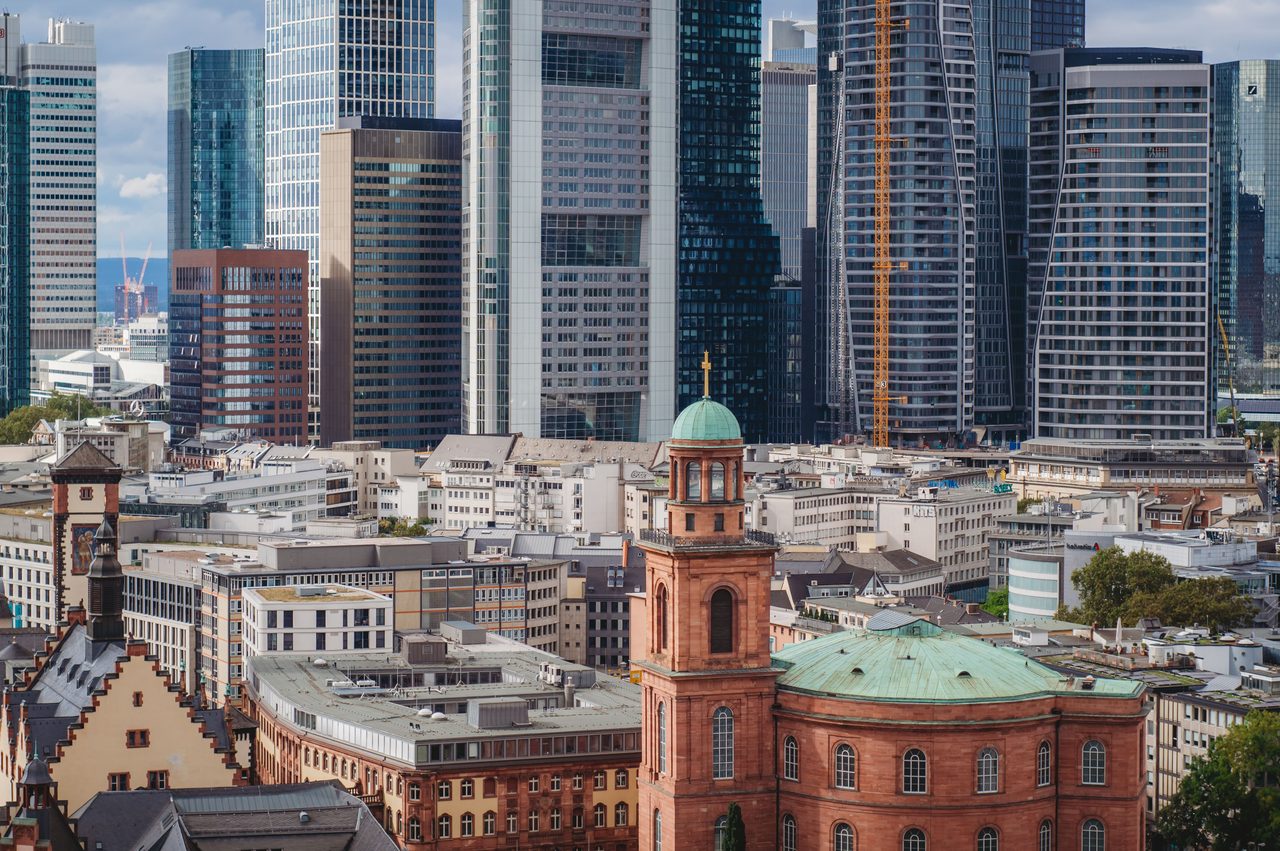
A red-sandstone Gothic church that served as the site of Holy Roman Emperor elections and coronations for centuries.

A UNESCO World Heritage hillside park in Kassel, famous for its monumental Hercules statue and gravity-fed cascading water displays.
Pick a length, follow the route. Each itinerary balances headline sights with breathing room.
Three tiers, every traveller covered — from cost-conscious to flagship hotels.
Hostels, budget hotels, and guesthouses offer affordable stays without sacrificing experience.
Boutique hotels and well-located accommodations provide comfort and convenience at reasonable prices.
World-class resorts and premium hotels deliver unforgettable experiences.
A 147-room mansion hotel in the former Villa Speyer, a 1901 neo-Gothic banking-family residence in Frankfurt's Sachsenhausen district, reopened in December 2025 under the Althoff Collection after a multi-year renovation. The property sits in a garden setting close to the Museumsufer riverside museum row.
Check rates on Booking.comFrankfurt's grand hotel since 1876, on Kaiserplatz in the heart of the city center. The 303-room property is the flagship of the Steigenberger group, with a French fine-dining restaurant and a marble-columned lobby that has hosted state visits for well over a century.
Check rates on Booking.comA design-driven 5-star hotel near Frankfurt Hauptbahnhof, part of the Autograph Collection, known for its rooftop spa pool, cocktail bar, and dark, minimalist room aesthetic aimed at a younger luxury crowd than the city's traditional grand hotels.
Check rates on Booking.comA 218-room 5-star hotel on Thurn-und-Taxis-Platz in Frankfurt's banking district, formerly operated as Jumeirah Frankfurt and rebranded to JW Marriott in 2022. Upper floors have skyline views toward the Bankenviertel tower cluster, and the hotel includes a seven-treatment-room spa.
Check rates on Booking.comCafés, neighbourhood gems, and tasting menus worth the table reservation.
Frankfurt's best-known Apfelwein tavern, open in Sachsenhausen since 1931, serving Handkäs mit Musik, Rippchen mit Kraut, and Grüne Soße alongside self-pressed apple wine poured from a stoneware Bembel.
Sachsenhausen tavern named for the painted murals on its facade, serving traditional Frankfurt dishes and Apfelwein at long communal wooden tables.
Family-run Apfelwein tavern on a quiet Sachsenhausen courtyard corner, serving Hessian regional dishes and its own Apfelwein at outdoor tables in warmer months.
Small, traditional Apfelwein tavern on Wallstraße in the heart of Alt-Sachsenhausen, serving Hessian home cooking in a wood-paneled dining room.
Century-old Apfelwein tavern on Wallstraße, one of the last in Alt-Sachsenhausen to still press and serve its own house Apfelwein on site.
Michelin-starred restaurant inside a listed early-20th-century villa in Frankfurt's diplomatic quarter, serving a creative, regionally influenced tasting menu with a separate lunchtime bistro.
Book a food tour in Hesse We may earn a commission from bookings made through this link.
Hesse is served by two regional transit authorities: the RMV (Rhein-Main-Verkehrsverbund) covering Frankfurt, Wiesbaden, Darmstadt, and the Rheingau, and the NVV (Nordhessischer VerkehrsVerbund) covering Kassel and the north. Frankfurt Airport (FRA) is Germany's busiest and a major ICE high-speed rail hub, putting the whole state within easy reach of the rest of the country.
Daily spend by tier in EUR, broken out by category.
| Category | Budget | Mid-range | Luxury |
|---|---|---|---|
| Accommodation | €28-45 | €70-120 | €170-450 |
| Food (per day) | €14-22 | €32-50 | €70-130 |
| Transportation | €7-12 | €14-20 | €30-55 |
| Activities | €8-15 | €18-32 | €45-90 |
| Daily total | €55-80 | €110-170 | €280+ |
Best time Shoulder Worth avoiding
Average daytime temperature in °C. Figures are for Germany.
Pickpocketing around Frankfurt Hauptbahnhof and the Bahnhofsviertel — Frankfurt's main train station and the adjoining Bahnhofsviertel district see occasional pickpocketing, drug activity, and street-level nuisance crime, particularly after dark, though violent crime toward visitors is rare.
Rheingau wine festival crowd and alcohol safety — The Rheingau's wine festivals (Weinfeste) in towns such as Rüdesheim, Eltville, and Geisenheim draw large crowds and generous wine pours from spring through autumn, and intoxication-related incidents rise during these events.
Driving the Taunus uplands and Rheingau vineyard roads — The Taunus hills and Rheingau vineyard lanes involve winding, narrow roads with steep gradients, occasional fog, and cyclists or hikers sharing the route.
Rhine and Main river safety — The Rhine at Rüdesheim/Bingen and the Main through Frankfurt carry significant shipping traffic and strong currents; both rivers are unsuitable for casual swimming.
Common tourist scams in Hesse — Frankfurt sees more organized scam activity than the rest of Hesse given its financial-center tourist and business-traveler volume, though incidents remain infrequent overall.
Tick awareness in Hesse's forests — Hesse's forests, including the Taunus uplands and the woodland around Kassel's Bergpark, carry a tick population from April through October, which can transmit Lyme disease and, in some areas, tick-borne encephalitis (TBE).
Important local regulations for visitors — Hesse follows standard German regulations that visitors should be aware of, particularly around cycling, alcohol, and rural land access.
EU/Schengen Area. No visa required for EU citizens. Many nationalities can visit for 90 days visa-free under Schengen rules. Non-Schengen nationals should check requirements with their nearest German embassy or the official immigration website before traveling.
The currency in Hesse is the Euro (EUR). ATMs are widely available in Frankfurt, Wiesbaden, and Kassel. Credit cards are accepted at most hotels and restaurants, but many rural Rheingau wineries and small-town inns prefer cash.
The main language spoken in Hesse is German, often with a distinctive Hessian dialect (Hessisch) heard in Frankfurt and rural areas. In Frankfurt and larger towns, English is widely understood due to the finance industry and international airport. Learning a few basic German phrases is appreciated by locals.
No. Although Frankfurt am Main is Hesse's largest city and best known internationally, the state capital is Wiesbaden, a smaller spa town just across the Rhine. Wiesbaden houses the Hessian state parliament, while Frankfurt remains the region's commercial and transport hub.
The top attractions in Hesse include Frankfurt's Römerberg old town square and Museumsufer museum district, the UNESCO-listed Bergpark Wilhelmshöhe in Kassel, the Rheingau wine route around Kloster Eberbach, Marburg's hilltop Altstadt, and the Carolingian ruins of Lorsch Abbey. Each offers a distinct experience, from modern finance-capital energy to medieval hill towns and vineyard landscapes.