
5-Day Saxony Explorer
- Day 1Arrive in Saxony, explore city center
- Day 2Visit top attractions and museums
- Day 3Day trip to nearby highlights
- Day 4Local markets and hidden gems
- Day 5Final sightseeing, departure
Saxony · 10 Places
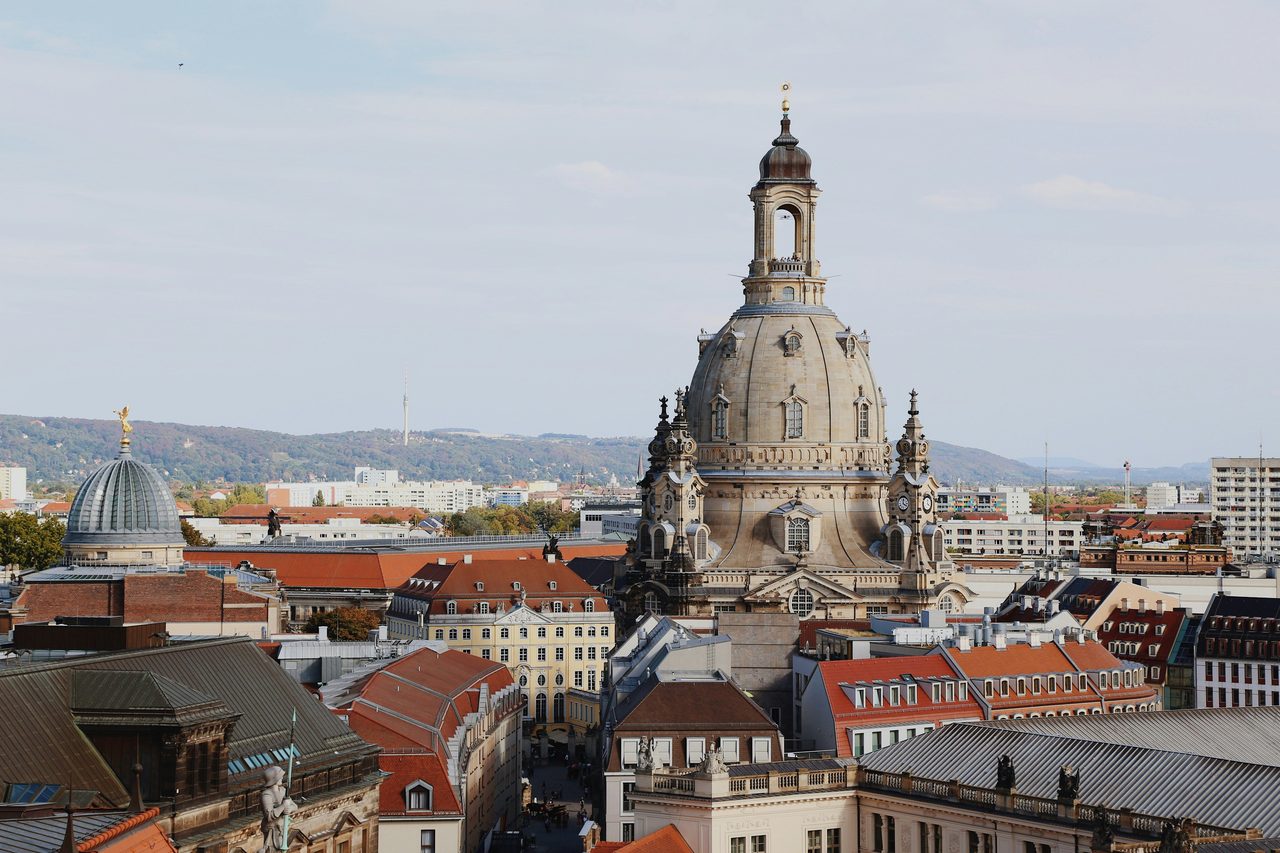
Saxony is the German federal state in the country's southeast, bordering the Czech Republic and Poland, built around the twin poles of Dresden and Leipzig. Dresden, the Baroque capital on the Elbe, was painstakingly rebuilt after its 1945 destruction and today holds the Frauenkirche, Zwinger Palace, and Grünes Gewölbe treasury. Leipzig, once East Germany's publishing and trade-fair hub, is now known for its Bach heritage, the peaceful-revolution history of the Nikolaikirche, and the Spinnerei art complex in a former cotton mill. Beyond the two cities, Saxony holds the sandstone cliffs of Saxon Switzerland National Park, the porcelain town of Meissen, the Sorbian heartland around Bautzen, and the UNESCO-listed Erzgebirge mining region.
Saxony pairs two very different anchor cities with a compact, easily reached countryside. Dresden's rebuilt Altstadt clusters the Frauenkirche, Zwinger Palace, Semperoper opera house, and Residenzschloss along a short stretch of the Elbe, with the Brühlsche Terrasse promenade tying them together above the river. Leipzig, 100 km northwest, trades palaces for a dense inner-city ring of trade-fair architecture, Bach's Thomaskirche, and the Spinnerei, a former cotton-spinning mill turned gallery district. Between and around the two cities lie Saxon Switzerland National Park's sandstone table mountains and the Bastei bridge, the porcelain town of Meissen, the walled Sorbian city of Bautzen, Colditz Castle, Moritzburg's moated hunting lodge, and the Erzgebirge (Ore Mountains) mining region along the Czech border, inscribed as a UNESCO World Heritage Site in 2019. A dense regional rail network run by MDV and VVO connects nearly every site directly from Dresden or Leipzig.
Jump straight to the experience you're planning.
The 10 destinations our editors recommend — from iconic landmarks to under-the-radar finds.
Pick a length, follow the route. Each itinerary balances headline sights with breathing room.
Three tiers, every traveller covered — from cost-conscious to flagship hotels.
Hostels, budget hotels, and guesthouses offer affordable stays without sacrificing experience.
Boutique hotels and well-located accommodations provide comfort and convenience at reasonable prices.
World-class resorts and premium hotels deliver unforgettable experiences.
A five-star hotel inside a rebuilt 18th-century Baroque palace directly beside the Dresden Residenzschloss, originally built by Augustus the Strong for his mistress, with a glass-covered courtyard atrium.
Check rates on Booking.comA 5-star boutique hotel in Dresden's Neustadt district inside a reconstructed 18th-century Baroque townhouse, with 58 rooms, a Michelin-recommended restaurant, and a small spa.
Check rates on Booking.comA modern 4-star chain hotel directly on Dresden's Altmarkt square, close to the Kreuzkirche and a short walk from the Frauenkirche and Zwinger, with straightforward comfortable rooms.
Check rates on Booking.comA 4-star hotel inside Dresden's restored 18th-century cloth merchants' hall (Gewandhaus) on Neumarkt, a short walk from the Frauenkirche, blending the historic building's arcaded facade with contemporary interiors.
Check rates on Booking.comCafés, neighbourhood gems, and tasting menus worth the table reservation.
A refined restaurant directly opposite the Zwinger Palace's Old Masters Picture Gallery, serving modern Saxon and European cuisine with a seasonal tasting menu and a heated terrace facing Theaterplatz.
A themed restaurant beneath the Taschenbergpalais recreating an 18th-century Baroque tavern, with staff in period costume, live music, and hearty Saxon dishes served in vaulted cellar rooms.
A French-influenced fine-dining restaurant in Dresden's Neustadt district, known for its refined seasonal menu and one of the city's more extensive wine lists, in an understated contemporary dining room.
A riverside brewery restaurant on the Elbe with its own beer garden, serving traditional Saxon dishes and Watzke house-brewed beer, popular for its terrace views across to the Altstadt skyline.
A historic restaurant built into a surviving 16th-century powder tower near the Frauenkirche, serving medieval-style Saxon dishes eaten without cutlery in a candlelit vaulted cellar.
A specialty coffee roastery and cafe in Dresden's Neustadt, roasting its own beans on site and serving a well-regarded breakfast and brunch menu popular with locals and remote workers.
Book a food tour in Saxony We may earn a commission from bookings made through this link.
Saxony is served by two regional transit associations: VVO (Verkehrsverbund Oberelbe) around Dresden and MDV (Mitteldeutscher Verkehrsverbund) around Leipzig, plus DB regional and ICE trains linking the two cities in about 70 minutes. The S-Bahn network reaches Saxon Switzerland, Meissen, and Radebeul directly from Dresden Hauptbahnhof.
Daily spend by tier in EUR, broken out by category.
| Category | Budget | Mid-range | Luxury |
|---|---|---|---|
| Accommodation | €25-40 | €65-110 | €160-420 |
| Food (per day) | €13-20 | €28-48 | €68-125 |
| Transportation | €6-10 | €12-18 | €25-50 |
| Activities | €8-14 | €16-30 | €40-85 |
| Daily total | €50-75 | €105-160 | €260+ |
Best time Shoulder Worth avoiding
Average daytime temperature in °C. Figures are for Germany.
Petty theft in Dresden and Leipzig's tourist areas — The Dresden Altstadt around the Frauenkirche and Zwinger, Leipzig's Hauptbahnhof, and both cities' Christmas markets see occasional opportunistic bag and phone theft, particularly in dense crowds.
Saxon Switzerland cliff and trail safety — Saxon Switzerland National Park's sandstone formations, including the Bastei bridge and the Malerweg trail, involve exposed viewpoints, steep drops, and sections that become slippery when wet.
Elbe river safety in Dresden and Meissen — The Elbe river flowing through Dresden and Meissen has strong currents in places and is subject to seasonal flooding, particularly in spring after snowmelt.
Occasional demonstrations in some Saxon towns — Saxony, like many German states, sees periodic political demonstrations, including some organized by far-right groups in certain towns; these are infrequent, geographically limited, and rarely affect the main tourist areas of Dresden and Leipzig, but visitors should avoid any gathering they encounter.
Common tourist scams in Saxony — Saxony sees far fewer scams than major international tourist cities, but a small number operate around its busiest sites.
Tick awareness in Saxony's forests — Saxony's forests, including the Ore Mountains and Saxon Switzerland National Park, carry a tick population from April through October, which can transmit Lyme disease and, less commonly, tick-borne encephalitis (TBE).
Important local regulations for visitors — Saxony follows standard German regulations that visitors should be aware of, particularly around cycling and hiking access.
EU/Schengen Area. No visa required for EU citizens. Many nationalities can visit for 90 days visa-free under Schengen rules. Non-Schengen nationals should check requirements with their nearest German embassy or the official immigration website before traveling.
The currency in Saxony is the Euro (EUR). ATMs are widely available in Dresden, Leipzig, and Chemnitz. Credit cards are accepted at most hotels and restaurants, but many small-town restaurants and rural markets prefer cash.
The main language spoken in Saxony is German, often with the distinctive Saxon dialect. Upper Sorbian is a recognized minority language spoken around Bautzen. In Dresden and Leipzig, English is generally understood at hotels and major attractions.
Direct DB regional and intercity trains run roughly every 30 minutes between Dresden Hauptbahnhof and Leipzig Hauptbahnhof, taking about 70 minutes. Regional (RE) services are covered by the Deutschlandticket.
The top attractions in Saxony include the Frauenkirche and Zwinger Palace in Dresden, the Bastei Bridge in Saxon Switzerland National Park, Leipzig's Nikolaikirche and Völkerschlachtdenkmal, Königstein Fortress, and the Meissen Porcelain Manufactory.