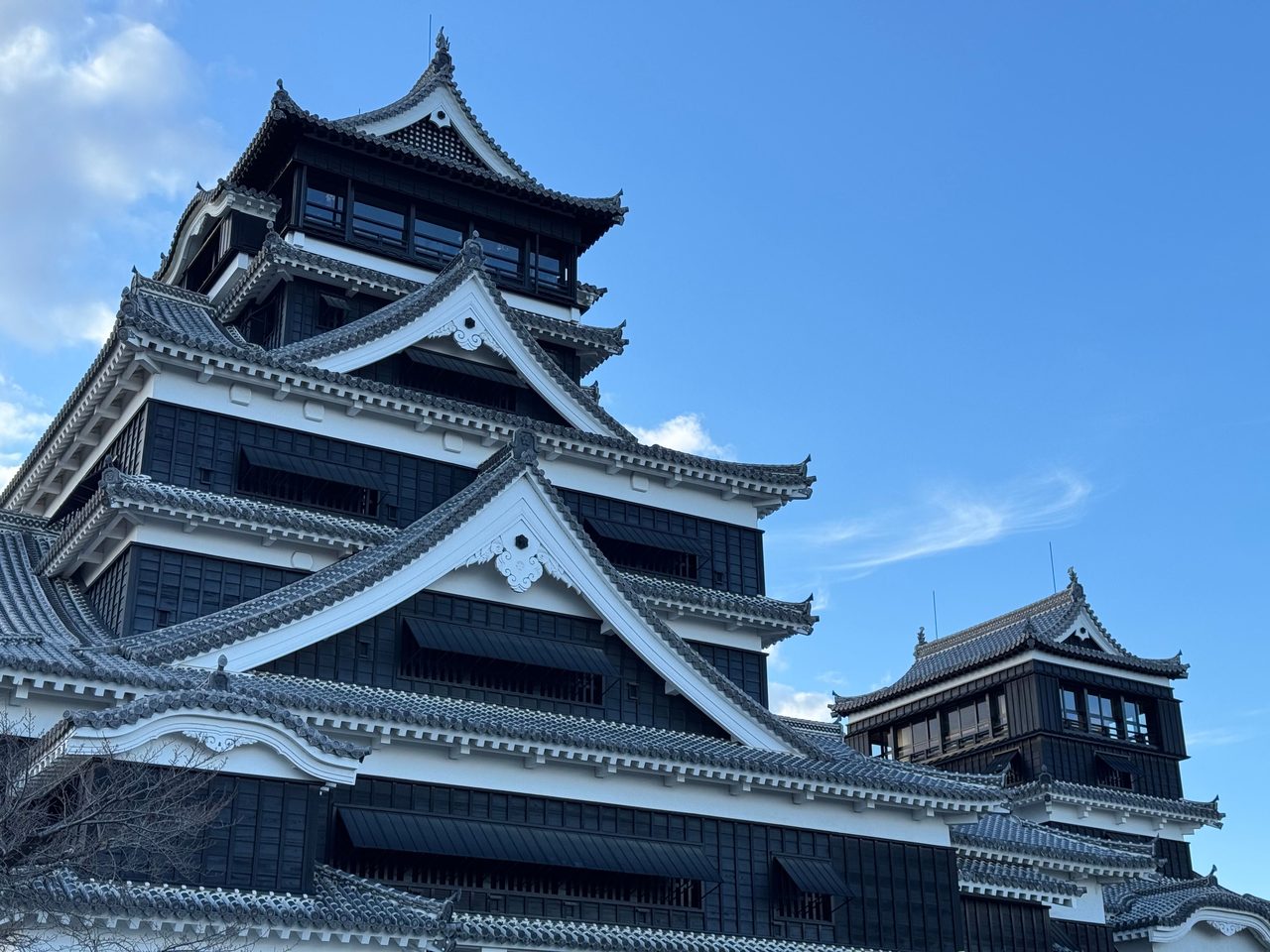
Kumamoto is a dynamic city on Kyushu island renowned for its magnificent feudal castle, vibrant food culture centered on horse sashimi and mustard lotus root, and proximity to Mt. Aso — one of the world's largest active calderas. Rebuilt with resilience after the 2016 earthquakes, Kumamoto blends historic samurai heritage with modern vitality.
Situated in central Kyushu, Kumamoto Prefecture offers an extraordinary range of experiences within a compact area. The castle city hub provides world-class historical architecture, traditional gardens, and a thriving local culinary scene, while the surrounding landscape delivers dramatic volcanic terrain, hot spring resorts, and scenic coastal areas. The Kyushu Shinkansen connects Kumamoto seamlessly with Fukuoka to the north and Kagoshima to the south, making it an ideal base for exploring the island.
The 22 destinations our editors recommend — from iconic landmarks to under-the-radar finds.
Kumamoto Castle
Kumamoto Castle is one of Japan's three great castles, built in the early 1600s by the warlord Kato Kiyomasa, whose engineering is on full display in the castle's steep, curved stone walls known as musha-gaeshi, designed to make scaling them nearly impossible for attackers. A powerful 2016 earthquake badly damaged the structure, and restoration work is still visible in parts of the complex, which adds an unusual layer to a visit: you're seeing both a historic fortress and an active reconstruction project. The main keep houses a museum on the castle's history and Kato Kiyomasa's rule of the region.
Suizenji Jojuen Garden
Suizenji Jojuen is an Edo-period strolling garden laid out by the Hosokawa clan, built around a spring-fed pond and shaped to represent scenes from the fifty-three stations of the old Tokaido road between Kyoto and Edo. Its best-known feature is a grass-covered mound modeled on Mt. Fuji, set beside the water so the whole miniature landscape can be taken in while walking the looping paths. It's a quieter, more contemplative stop than the castle, built for slow walking rather than climbing or exploring interiors.
Mt. Aso Nakadake Crater
Nakadake is the still-active crater of Mt. Aso, sitting inside one of the largest volcanic calderas in the world, and it's one of the few active craters anywhere that visitors can approach this closely. Depending on volcanic activity, you can look down into a steaming, sulfur-yellow crater lake or find the area closed off entirely when gas levels rise. The surrounding caldera landscape of grassland and smaller peaks is part of the appeal even when the crater itself isn't accessible.
Aso Farm Land
Aso Farm Land is a large resort and theme park in the Minami-Aso countryside built around an agricultural and wellness theme, with distinctive dome-shaped buildings used for both accommodation and indoor attractions. It combines a hot spring bathing facility, family rides, and farm-style animal encounters, making it more of a day-long resort stop than a quick sightseeing detour. It's aimed squarely at families and groups looking for a mix of activities rather than a single landmark to view.
Kumamoto Prefectural Art Museum
The Kumamoto Prefectural Art Museum sits within the outer grounds of Kumamoto Castle, giving it a convenient pairing with a castle visit, and holds collections spanning regional archaeology, Japanese painting, and modern and contemporary art. It's a smaller, calmer counterpoint to the castle's crowds, with special exhibitions rotating through alongside the permanent collection. The building's setting inside the historic castle park is part of what makes a stop here feel connected to the rest of the site rather than a separate errand.
Reigando Cave (Musashi Miyamoto's Cave)
Reigando is the cave where the swordsman and strategist Miyamoto Musashi is said to have spent his final years writing the Book of Five Rings (Gorin no Sho), his treatise on strategy and swordsmanship. It sits on the grounds of Gankaiji Temple, reached by a walk through wooded, hilly terrain rather than a direct roadside stop, and the cave and surrounding rock-cut Buddhist statues give it a different, more austere character than the castle or gardens in the city center. It draws visitors specifically interested in Musashi's history rather than general sightseers.
Recommended itineraries
Pick a length, follow the route. Each itinerary balances headline sights with breathing room.
5-Day Kumamoto Explorer
Day 1Arrive in Kumamoto, explore city center
Day 2Visit top attractions and museums
Day 3Day trip to nearby highlights
Day 4Local markets and hidden gems
Day 5Final sightseeing, departure
7-Day Classic Kumamoto
Days 1-2Kumamoto city highlights
Days 3-4Regional exploration
Days 5-6Cultural immersion and local experiences
Day 7Return and departure
14-Day Ultimate Kumamoto
Days 1-3Kumamoto comprehensive city tour
Days 4-6Northern region exploration
Days 7-9Eastern highlights
Days 10-12Southern attractions
Days 13-14Return to Kumamoto, departure
Where to stay in Kumamoto
Three tiers, every traveller covered — from cost-conscious to flagship hotels.
Budget 5,000–9,000 JPY (~$34–$61)
Hostels, budget hotels, and guesthouses offer affordable stays without sacrificing experience.
Mid-range 15,000–28,000 JPY (~$102–$191)
Boutique hotels and well-located accommodations provide comfort and convenience at reasonable prices.
Luxury 45,000–110,000 JPY (~$307–$750)
World-class resorts and premium hotels deliver unforgettable experiences.
ANA Crowne Plaza Kumamoto New Sky
Chuo Ward, near Kumamoto Castle · 18,000–45,000 JPY/night (~$123–$307)
Cafés, neighbourhood gems, and tasting menus worth the table reservation.
Susakiya
Japanese / Basashi (Horse Sashimi) · 3,000–6,000 JPY/person (~$20–$41)
Kanzukiya
Japanese / Regional Specialties · 1,500–4,000 JPY/person (~$10–$27)
Ajisen Ramen Honten (Original Location)
Japanese / Ramen · 800–1,500 JPY/person (~$5.45–$10.20)
This is the founding shop of the Ajisen Ramen chain, which grew from a single Kumamoto noodle counter into a global franchise. The kitchen sticks to the tonkotsu style the chain built its name on: a pork-bone broth finished with mayu, the black garlic oil that is the signature marker of Kumamoto ramen. The space is a working noodle shop rather than a destination restaurant, built for quick turnover rather than lingering.
The city center is served by Kumamoto City Tram (streetcar) and an extensive bus network. Kumamoto Station is on the Kyushu Shinkansen. JR local trains connect to regional destinations.
Budget breakdown
Daily spend by tier in JPY, broken out by category.
Category
Budget
Mid-range
Luxury
Accommodation
2,500–4,500 JPY/night (~$17–$31)
8,000–15,000 JPY/night (~$55–$102)
25,000–60,000 JPY/night (~$170–$409)
Food (per day)
1,200–2,500 JPY/day (~$8–$17)
3,000–6,000 JPY/day (~$20–$41)
10,000–25,000 JPY/day (~$68–$170)
Transportation
500–800 JPY/day (~$3–$5)
800–1,500 JPY/day (~$5–$10)
2,000–5,000 JPY/day (~$14–$34)
Activities
500–1,500 JPY/day (~$3–$10)
1,500–4,000 JPY/day (~$10–$27)
5,000–15,000 JPY/day (~$34–$102)
Daily total
5,000–9,000 JPY (~$34–$61)
15,000–28,000 JPY (~$102–$191)
45,000–110,000 JPY (~$307–$750)
Best time to visit Kumamoto
Weather through the year in Japan
Best timeShoulderWorth avoiding
Average daytime temperature in °C. Figures are for Japan.
Kumamoto has four distinct seasons. Spring and autumn are the most comfortable and photogenic periods. Winter is mild by Japanese standards with rare snowfall.
Essential travel tips
Purchase an IC card (Suica or local nimoca) for seamless bus and train travel
The Kumamoto Castle Loop Bus (100 yen / ~$0.68) links major attractions
Many restaurants display plastic food models — pointing is acceptable to order
Kumamoto Station and Shinyashiki area are the two main commercial hubs
Horse meat (basashi) is a local delicacy — try it at least once
Hidden gems
Off-the-beaten-path corners most travellers miss.
Safety information
INFO
Carry earthquake preparedness awareness — Kumamoto has seismic history
Kumamoto is one of Japan's safest cities for international travelers. Violent crime is extremely rare. The primary risks are natural — the region has seismic activity and an active volcano at Mt. Aso. Petty theft is uncommon, but standard precautions should be observed in crowded festival areas.
What is the best time to visit Kumamoto?
The best time to visit Kumamoto is March–May. Kumamoto has a humid subtropical climate (Köppen Cfa) with four distinct seasons. Summers are hot and humid (July–August averages 28–33°C / 82–91°F), winters are mild with occasional frost but rarely
What currency is used in Kumamoto?
The currency in Kumamoto is the Japanese Yen (JPY). ATMs are widely available in cities and tourist areas. Credit cards are accepted at most hotels and restaurants, but carry cash for markets and smaller establishments.
What language is spoken in Kumamoto?
The main language(s) spoken in Kumamoto: Japanese. In tourist areas, English is generally understood. Learning a few basic phrases in the local language is appreciated by locals.
What are the top attractions in Kumamoto?
The top attractions in Kumamoto include Kumamoto Castle, Suizenji Jojuen Garden, Mt. Aso Nakadake Crater, Aso Farm Land, and Kumamoto Prefectural Art Museum. Each offers a unique experience, from historic landmarks to natural wonders.