
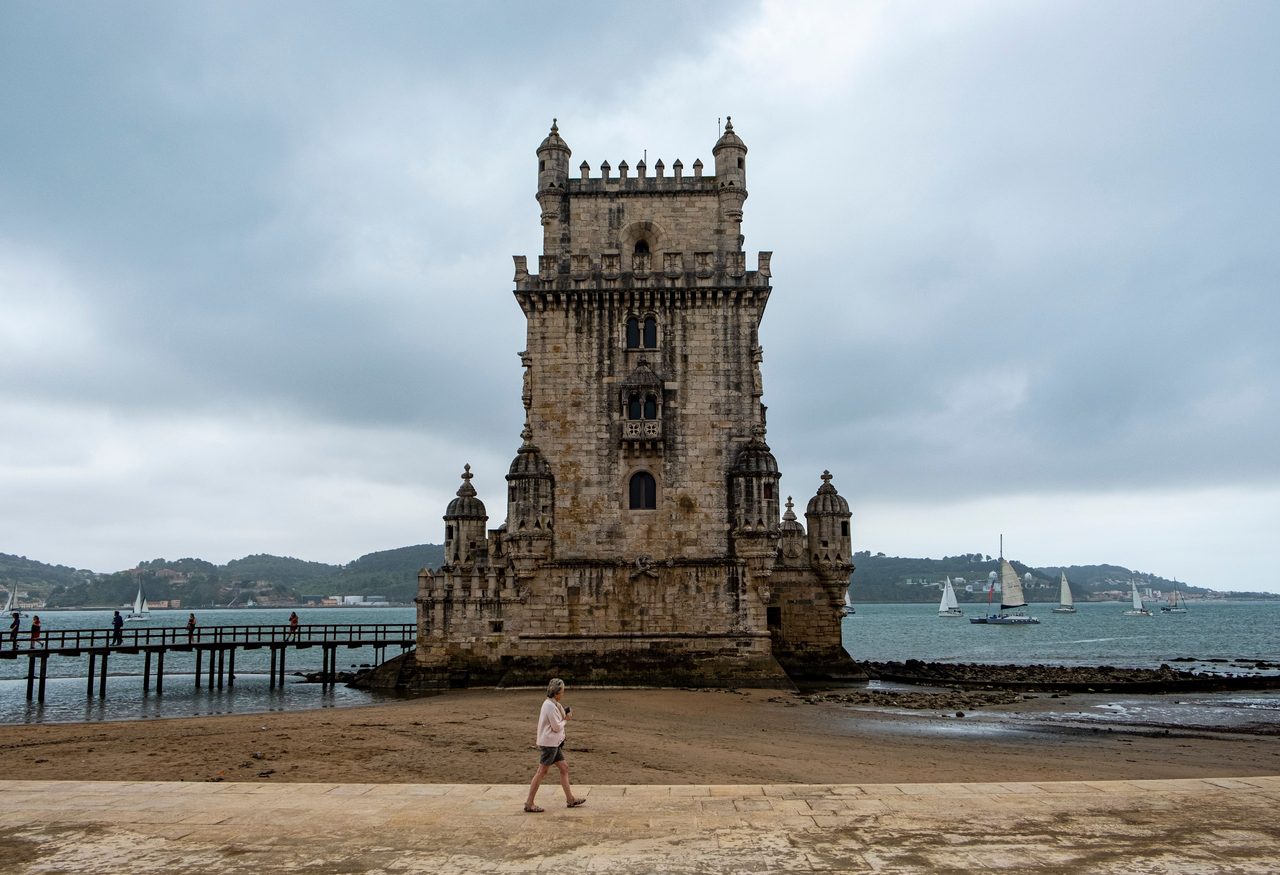
This iconic 16th-century fortified tower stands as a symbol of Portugal's Age of Discovery. Built in Manueline style with intricate stone carvings, it served as a ceremonial gateway to Lisbon and a defense system. The UNESCO World Heritage site offers stunning views of the Tagus River from its battlements.
Belém Tower (Torre de Belém) rises from the northern bank of the Tagus River in the Belém district of Lisbon, Portugal, on Avenida Brasília. Completed in the early 16th century under King Manuel I, the limestone fortress combines a bulwark with a slender four-storey tower and is the most recognisable example of Manueline architecture, with carved ropes, armillary spheres, crosses of the Order of Christ and a rhinoceros sculpted beneath one of the sentry boxes. Together with the nearby Jerónimos Monastery it forms a UNESCO World Heritage Site. Visitors enter across a short walkway, pass through the bulwark terrace lined with cannon embrasures, and then climb a narrow spiral staircase through the Governor's Hall, the King's Hall and the Audience Chamber to the roof terrace. Rooms are mostly bare, so the appeal lies in the stonework, the views over the river and the sense of the building's role as a ceremonial gateway for ships leaving on voyages of discovery. The final stair is single-file, which creates queues in both directions at busy times. A typical visit lasts 45 to 90 minutes including the queue. The best photographs of the exterior are taken from the riverside promenade to the west, at the small beach beside the tower, and from the Padrão dos Descobrimentos side in late afternoon, when the stone turns golden. Crowds peak between 11am and 4pm, especially when cruise ships dock, and on weekends. Early morning right after opening and the last hour before closing are noticeably quieter. The tower is closed on Mondays and on several public holidays, and entry is capped by the number of people allowed inside at one time, so queues form outside even when the grounds are empty. Combined tickets with Jerónimos Monastery exist, and the Lisboa Card gives free or discounted entry. Visitors should allow extra time for the walk along the river from Belém tram and train stops.
| Admission | Adult $8 · Child $4 |
|---|---|
| Hours | October-April: 10am-5:30pm, May-September: 10am-6:30pm, Closed Mondays |
| Typical visit | 1-1.5 hours |
| Address | Av. Brasília, 1400-038 Lisboa |
Good to know
- Best for
- history, photography, architecture
Location
Av. Brasília, 1400-038 Lisboa
38.6916, -9.2160 View on map
Highlights
- Manueline stonework with carved ropes, crosses and a sculpted rhinoceros
- Rooftop terrace with views over the Tagus River and Belém waterfront
- Bulwark terrace with cannon embrasures facing the river
- UNESCO-listed alongside the Jerónimos Monastery
- Golden-hour photos from the riverside promenade and nearby beach
Tips for visiting
- Visit early morning to avoid crowds
- Combine with nearby Jerónimos Monastery
- Stairs are narrow and steep
- Buy Lisboa Card for free entry
When to visit
Arrive at opening on a weekday morning to avoid the longest queues; the last hour before closing is also quieter. Late afternoon gives the best light on the limestone from outside.
Accessibility
The narrow spiral staircase and uneven stone floors make the upper levels inaccessible to wheelchair users. The ground-level bulwark terrace can be reached with some assistance, and the riverside approach is flat.
Visit, book or contact
Frequently asked questions
How long does a visit to Belém Tower take?
Most visitors spend 45 to 90 minutes, depending on the queue for the narrow spiral staircase. Visiting right after opening shortens the wait.
Is Belém Tower worth it for kids?
Older children usually enjoy the climb, the cannons and the roof views, but the staircase is steep and narrow. Strollers cannot be taken inside the tower.
Is photography allowed inside?
Photography without flash is generally allowed for personal use, though the single-file staircase makes stopping difficult. The best exterior shots are taken from outside the fortress.