Murcia · 22 Places · Best March–May and September–November
Murcia
Murcia is a sun-drenched autonomous community in southeastern Spain, wedged between Andalusia, Valencia, and the Mediterranean coast. Known as the 'Garden of Europe' for its extraordinary agricultural output, the region blends Baroque city architecture, Roman ruins, a vast saltwater lagoon, and some of Spain's most dramatic Holy Week processions.
Murcia occupies the southeastern corner of Spain, bisected by the Segura River and bookended by the mountain ranges of Sierra Espuña to the west and the glittering Costa Cálida coastline to the east. The regional capital bears one of Spain's most ornate Baroque cathedrals and a famous Casino whose Moorish-Rococo interior rivals any palace in the country. Cartagena, the second city, is an open-air archaeology museum with Roman theatres, Punic walls, and an unmatched naval history stretching back more than 2,500 years. The Mar Menor — Europe's largest saltwater lagoon — offers calm, warm swimming, water sports, and therapeutic mud bathing, while Sierra Espuña hides pine forests, raptors, and hiking trails at elevations above 1,500 m.
The 22 destinations our editors recommend — from iconic landmarks to under-the-radar finds.
Cathedral of Murcia (Catedral de Murcia)
Murcia's cathedral sits on the site of a former mosque and took shape over some three centuries, so its exterior mixes Gothic structure with an exuberant Baroque main facade facing the plaza. Inside, the Capilla de los Vélez is the standout space, a Gothic chapel with an intricately carved star-ribbed ceiling that contrasts with the plainer Renaissance-era naves elsewhere in the building.
Real Casino de Murcia
This is a 19th-century private members' club, not a gambling casino, built by the city's wealthy elite as a showcase of imported styles and decorative excess. Visitors move through a sequence of themed rooms, including a courtyard modeled on the Alhambra's Nasrid architecture and a ballroom lined with mirrors and gilt, that together read as a catalogue of what old Murcian money wanted to display.
Roman Theatre of Cartagena (Teatro Romano)
This Roman theatre lay buried and forgotten under the old town for centuries until it was uncovered in excavations starting in 1988, hidden in part beneath Cartagena's cathedral ruins. The museum designed by architect Rafael Moneo walks visitors down through the city's layered history before opening onto the excavated seating and stage of the theatre itself.
Mar Menor
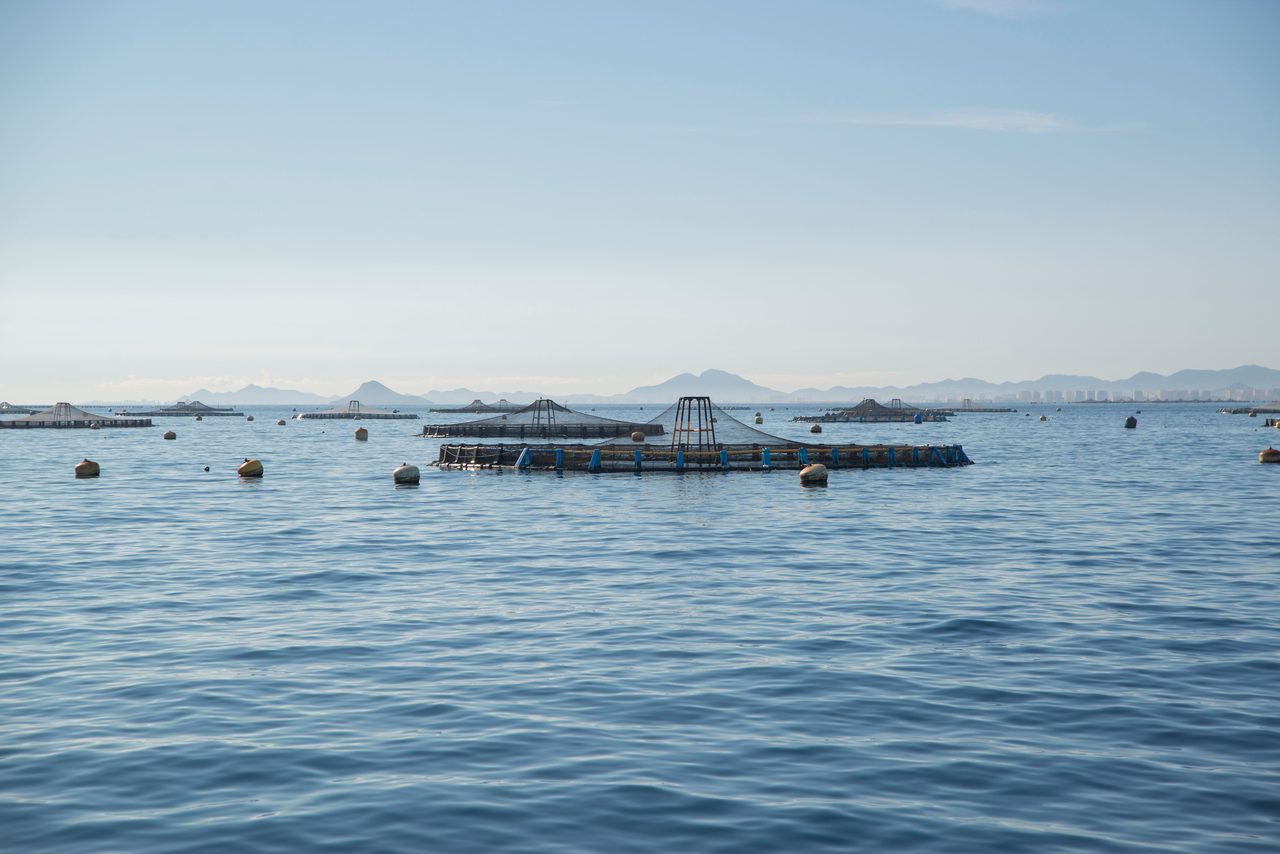
The Mar Menor is a large saltwater lagoon separated from the open Mediterranean by the narrow sandbar of La Manga, which keeps its water noticeably calmer, shallower, and warmer than the sea beyond it. It's long been used for gentle swimming and watersports rather than surf, and its muddy shallows have a tradition of use as a natural spa treatment.
Sierra Espuña Natural Park
Sierra Espuña is a pine-forested mountain range that stands out sharply from the arid Murcian plains around it, the result of a 19th-century reforestation project that transformed what had been eroded, bare terrain. It's now a hiking and cycling destination with a network of marked trails through the pines, and it's known for a long-running griffon vulture reintroduction program that visitors can sometimes spot overhead.
Murcia Archaeological Museum (MURAM)
MURAM traces the Murcia region's long occupation history through Iberian, Roman, and Islamic-era artifacts, giving context to sites like the Roman Theatre in Cartagena or the Islamic-period remains found around the city. It's a conventional, well-organized regional museum rather than a headline attraction, useful for filling in the background to what you see at outdoor sites.
Recommended itineraries
Pick a length, follow the route. Each itinerary balances headline sights with breathing room.
5-Day Murcia Explorer
Day 1Arrive in Murcia, explore city center
Day 2Visit top attractions and museums
Day 3Day trip to nearby highlights
Day 4Local markets and hidden gems
Day 5Final sightseeing, departure
7-Day Classic Murcia
Days 1-2Murcia city highlights
Days 3-4Regional exploration
Days 5-6Cultural immersion and local experiences
Day 7Return and departure
14-Day Ultimate Murcia
Days 1-3Murcia comprehensive city tour
Days 4-6Northern region exploration
Days 7-9Eastern highlights
Days 10-12Southern attractions
Days 13-14Return to Murcia, departure
Where to stay in Murcia
Three tiers, every traveller covered — from cost-conscious to flagship hotels.
Budget $50
Hostels, budget hotels, and guesthouses offer affordable stays without sacrificing experience.
Mid-range $110
Boutique hotels and well-located accommodations provide comfort and convenience at reasonable prices.
Luxury $280
World-class resorts and premium hotels deliver unforgettable experiences.
Murcia is served by the Región de Murcia International Airport (RMU) at Corvera and Alicante–Elche Airport (ALC, 80 km north). The city has a tram line (Metrotrén), intercity buses to Cartagena and the coast, and a train station. A car is highly recommended for exploring Sierra Espuña and rural villages.
Airport Bus
Line 97 connects RMU airport to Murcia city bus station; journey ~45 min
Cost: €1.45 (~$1.60)
Taxi from RMU
Fixed-rate taxi from Corvera Airport to Murcia city centre
Cost: €25–€35 (~$27–$38)
Intercity Bus (ALSA/Latbus)
Regular buses connect Murcia to Cartagena (50 min), Lorca (1 hr), and Alicante (1.5 hr)
Cost: €3–€8 (~$3.25–$8.65)
Murcia Tram (Metrotrén)
Light rail linking Murcia city centre with Alicante via 28 stops
Cost: €1.20–€3.80 (~$1.30–$4.10)
Taxi/Cabify
Taxis widely available; Cabify app operates in Murcia city and Cartagena
Cost: €5–€15 typical city fare
Rental Car
Essential for Sierra Espuña, Caravaca de la Cruz, and coastal towns; available at RMU and Alicante airports
Cost: €25–€50/day (~$27–$54)
Budget breakdown
Daily spend by tier in EUR, broken out by category.
Category
Budget
Mid-range
Luxury
Accommodation
$18
$65
$180
Food (per day)
$15
$30
$70
Transportation
$5
$10
$25
Activities
$12
$25
$50
Daily total
$50
$110
$280
Best time to visit Murcia
Weather through the year in Spain
Best timeShoulderWorth avoiding
Average daytime temperature in °C. Figures are for Spain.
Holy Week (Semana Santa) in late March/April is spectacular but draws large crowds. Spring brings flower-filled countryside and comfortable temperatures.
Essential travel tips
Spanish lunch runs 14:00–16:00 — the main meal of the day; look for the Menú del Día (€10–€13 for three courses with wine)
Many Murcia city attractions are free to enter, including the Casino's ground floor
Hire a car for at least one day to reach Sierra Espuña or the wine villages of Jumilla
During July–August, visit beaches before 10:00 or after 18:00 to avoid extreme heat and crowds
Holy Week dates move annually — check exact dates 3–6 months before visiting if this is a priority
Hidden gems
Off-the-beaten-path corners most travellers miss.
Playa de Bolnuevo
A wild beach near Mazarrón backed by surreal eroded sandstone formations called Los Urros — utterly unlike anything else in Spain
Mazarrón, 60 km south of Murcia city
Jumilla Wine Town
A hilltop town with a Moorish castle ringed by Monastrell vineyards where several bodegas offer free tastings and tours
Jumilla, 70 km northwest of Murcia city
Hacienda del Álamo
Lavender and almond groves with a Baroque farmhouse nestled in the Guadalentín valley, almost entirely visited only by locals
Near Alhama de Murcia, 35 km southwest of Murcia city
Safety information
INFO
Keep bags and phones secure in Murcia city market (Mercado de Verónicas) and beach areas
INFO
Use official taxi ranks or the Cabify app; unlicensed taxis operate near Cartagena port
INFO
Check beach flag conditions daily — red flag means no swimming
INFO
Carry water and sun protection when hiking; summer temperatures exceed 40°C
INFO
Emergency number 112 works across Spain and connects to police, ambulance, and fire
Frequently asked questions
Is Murcia safe to visit in 2026?
Murcia is a safe destination. Crime rates are low and violent crime against tourists is rare. The main risks are petty theft at busy beaches and markets in summer, and heat-related illness when hiking in July–August. Emergency services: dial 112 for all emergencies, 091 for National Police, 061 for ambulance.
What is the best time to visit Murcia?
March–May and September–November are ideal — temperatures are comfortable (18–25°C), landscapes are green or golden, and beaches are uncrowded. Holy Week (late March/April) brings spectacular processions. July–August are very hot inland (38–42°C) but great for beach holidays along the Mar Menor and Costa Cálida.
Do I need a visa to visit Murcia?
Murcia is part of Spain and the EU Schengen Area. EU citizens enter freely. Most Western nationals (US, UK, Canada, Australia) receive 90-day visa-free access. ETIAS electronic authorisation is expected to be required for non-EU visa-exempt visitors. Check current requirements at exteriores.gob.es before travelling.
What currency is used in Murcia?
The currency is the Euro (EUR). ATMs are available throughout Murcia city, Cartagena, and coastal towns. Credit cards are accepted at most hotels and restaurants. Carry €20–€30 cash for small tapas bars, markets, and rural tolls.
What are the top attractions in Murcia?
The top attractions in Murcia include the Cathedral of Murcia and its bell tower, the Roman Theatre of Cartagena, the Real Casino de Murcia, the Mar Menor lagoon, and Sierra Espuña Natural Park. Holy Week processions and the Jumilla wine region are also major draws.