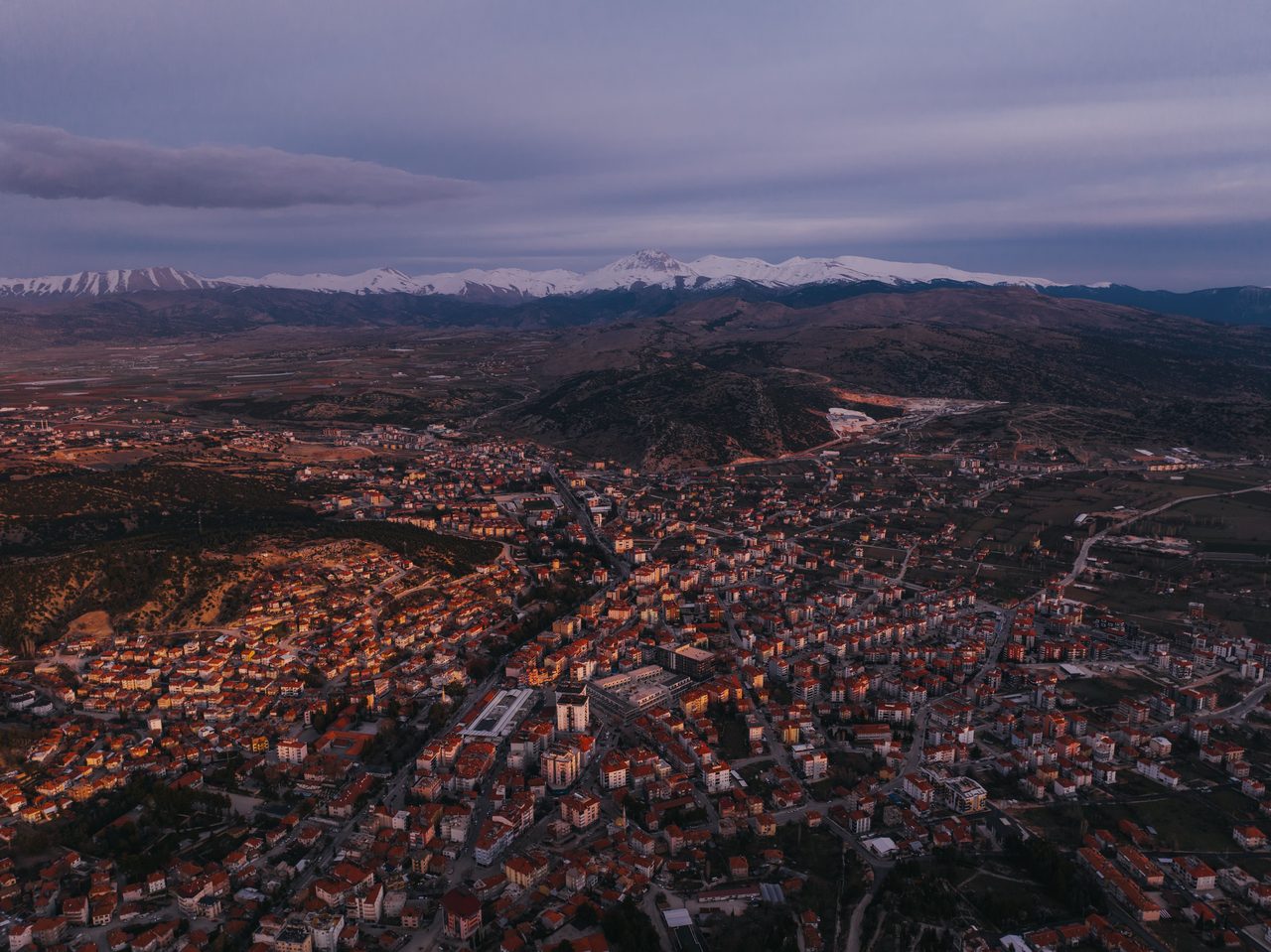
Burdur · 12 Places · Best April–June and September–October
Burdur
Burdur is a province in the Lake District of southwestern Turkey, home to the turquoise Salda Lake (nicknamed the 'Turkish Maldives'), the sprawling ancient Greco-Roman city of Sagalassos, and the soda-rich Lake Burdur teeming with flamingos. Flanked by the Taurus Mountains, the province offers a compelling mix of natural spectacle and deep archaeology in an unhurried setting.
Burdur province sits in southwestern Anatolia where the western Taurus Mountains give way to a series of tectonic lakes. Its centrepiece draws are Salda Lake — a pristine, high-altitude crater lake whose white hydromagnesite shores and blue-green water draw comparisons to the Maldives — and Sagalassos, one of the best-preserved Hellenistic and Roman cities in the world. Lake Burdur itself is a major stop on the flamingo migration route, and the surrounding countryside hides Kremna ruins, thermal springs at Yeşilova, and the fortified Byzantine hilltop of Düzen Tepe. The provincial capital is a relaxed market town with an Archaeology Museum whose Hadrian statues rank among Turkey's finest. Visitors enjoy hiking in the Taurus foothills, watersports on Salda, archaeological walks at Sagalassos, and flamingo-watching at dusk — all without the crowds of the coastal resorts a few hours south.
The 12 destinations our editors recommend — from iconic landmarks to under-the-radar finds.
Salda Lake
Salda is a deep crater lake in the Turkish Lakes Region known for the turquoise color of its water against white mineral shoreline. The white deposits are hydromagnesite, similar in composition to formations NASA studied on Mars, which is why the lake has drawn scientific interest as well as tourists chasing the color contrast.
Sagalassos Ancient City
Sagalassos was a major city of ancient Pisidia, built into the slopes of the Taurus Mountains at roughly 1,500 meters elevation. Belgian archaeological teams have worked the site for decades, uncovering one of the best-preserved Roman-era city centers in Anatolia, including a theatre, monumental fountains, and colonnaded streets.
Salda Lake White Beach
This is the section of Salda's shoreline near Beyaz Ada where the hydromagnesite sand is at its whitest and the water at its shallowest, giving the strongest resemblance to a tropical beach despite being an inland Anatolian lake. It's the most photographed stretch of the lake's shore.
Sagalassos Nymphaeum
The Antonine Nymphaeum at Sagalassos is a monumental Roman fountain structure, restored using largely original stone blocks recovered during excavation. It once distributed water drawn from a spring several kilometers away via the city's aqueduct system, and it has been reconstructed to working order.
Lake Burdur Flamingo Reserve
Lake Burdur is a large saline lake that serves as a wintering ground for greater flamingos and other waterfowl migrating along the route between Europe and Africa. Its brackish, mineral-rich water supports the small crustaceans flamingos feed on, and the lake has Ramsar wetland recognition for its ecological importance.
Burdur Archaeology Museum
This museum in central Burdur holds finds from the region's two major excavation sites: the Neolithic settlement of Hacılar and the ancient city of Sagalassos. Its collection traces an unusually long span of local history, from prehistoric figurines to Roman-era statuary and inscriptions.
Recommended itineraries
Pick a length, follow the route. Each itinerary balances headline sights with breathing room.
5-Day Burdur Explorer
Day 1Arrive in Burdur, explore city center
Day 2Visit top attractions and museums
Day 3Day trip to nearby highlights
Day 4Local markets and hidden gems
Day 5Final sightseeing, departure
7-Day Classic Burdur
Days 1-2Burdur city highlights
Days 3-4Regional exploration
Days 5-6Cultural immersion and local experiences
Day 7Return and departure
14-Day Ultimate Burdur
Days 1-3Burdur comprehensive city tour
Days 4-6Northern region exploration
Days 7-9Eastern highlights
Days 10-12Southern attractions
Days 13-14Return to Burdur, departure
Where to stay in Burdur
Three tiers, every traveller covered — from cost-conscious to flagship hotels.
Budget ₺1,000–₺2,100 (~$29–$61)
Hostels, budget hotels, and guesthouses offer affordable stays without sacrificing experience.
Mid-range ₺2,000–₺4,200 (~$58–$122)
Boutique hotels and well-located accommodations provide comfort and convenience at reasonable prices.
Luxury ₺4,700–₺9,300 (~$136–$270)
World-class resorts and premium hotels deliver unforgettable experiences.
Burdur has no commercial airport; the nearest airports are Isparta Süleyman Demirel Airport (SDV, ~60 km) and Antalya Airport (AYT, ~165 km). METRO Turizm and Kamil Koç run intercity buses from Ankara (7–8 hr), İzmir (4–5 hr), and Antalya (2.5–3 hr). Local dolmuşes connect the city centre to Salda Lake (50 km) and Ağlasun (30 km). Taxis are metered in town; car rental is the most flexible option for exploring Sagalassos and Salda.
Budget breakdown
Daily spend by tier in TRY (Turkish Lira), broken out by category.
Category
Budget
Mid-range
Luxury
Accommodation
₺600–₺1,200 (~$17–$35)
₺1,200–₺2,500 (~$35–$73)
₺3,000–₺6,000 (~$87–$174)
Food (per day)
₺200–₺400 (~$6–$12)
₺400–₺800 (~$12–$23)
₺800–₺1,500 (~$23–$44)
Transportation
₺100–₺200 (~$3–$6)
₺200–₺400 (~$6–$12)
₺400–₺800 (~$12–$23)
Activities
₺100–₺300 (~$3–$9)
₺200–₺500 (~$6–$15)
₺500–₺1,000 (~$15–$29)
Daily total
₺1,000–₺2,100 (~$29–$61)
₺2,000–₺4,200 (~$58–$122)
₺4,700–₺9,300 (~$136–$270)
Best time to visit Burdur
Weather through the year in Turkey
Best timeShoulderWorth avoiding
Average daytime temperature in °C. Figures are for Turkey.
Spring brings wildflowers and migratory flamingos to Lake Burdur. Salda Lake is pleasant from May through October but packed in mid-summer. Sagalassos is best visited in spring and autumn when temperatures are mild.
Essential travel tips
Rent a car in Burdur city or at Isparta airport for maximum flexibility.
Visit Salda Lake on a weekday morning to avoid weekend crowds.
Book Sagalassos Lodge in advance — it is the only accommodation near the ruins.
The Burdur Museum card covers the museum and partial site access — ask at the entrance.
Hidden gems
Off-the-beaten-path corners most travellers miss.
Düzen Tepe Byzantine Hilltop
A little-visited Byzantine fortified hilltop with panoramic views over Lake Burdur.
Yeşilova Thermal Springs
Small thermal complex at Yeşilova district with sulphurous pools, almost entirely used by locals.
Bucak Old Quarter
Quiet Ottoman-era stone lanes and the 18th-century Ulu Mosque in Burdur's second city.
Safety information
INFO
Apply high-SPF sunscreen at Salda Lake — white hydromagnesite reflects UV intensely.
INFO
Use metered taxis from the city centre; agree fare for out-of-town trips.
INFO
Carry cash — many village restaurants and dolmuş operators do not accept cards.
INFO
Sagalassos paths are uneven; wear sturdy shoes and bring water.
Frequently asked questions
Is Burdur safe to visit in 2026?
Burdur is one of Turkey's safer provinces, with low violent crime and a relaxed, rural atmosphere. The main safety concerns are environmental — intense UV at Salda Lake, uneven terrain at Sagalassos, and summer heat. Standard travel precautions apply.
What is the best time to visit Burdur?
The best time to visit Burdur is April–June and September–October. Burdur province has a transitional Mediterranean–Continental climate. Summers are hot and dry (35–40°C in July–August at lake level), winters are cold with occasional snowfall (0–5°C in December–Janua
Do I need a visa to visit Burdur?
Turkey is not part of the Schengen Area. Many EU nationals can enter visa-free for up to 90 days; citizens of most other countries can apply for an e-Visa at evisa.gov.tr before departure. Requirements vary by nationality — confirm current rules with a Turkish consulate or the official e-Visa portal. Requirements vary by nationality, so check with your nearest embassy or the official immigration website before traveling.
What currency is used in Burdur?
The currency in Burdur is the Turkish Lira (TRY). ATMs are widely available in cities and tourist areas. Credit cards are accepted at most hotels and restaurants, but carry cash for markets and smaller establishments.
What language is spoken in Burdur?
The main language(s) spoken in Burdur: Turkish. In tourist areas, English is generally understood. Learning a few basic phrases in the local language is appreciated by locals.
What are the top attractions in Burdur?
The top attractions in Burdur include Salda Lake, Sagalassos Ancient City, Salda Lake White Beach, Sagalassos Nymphaeum, and Lake Burdur Flamingo Reserve. Each offers a unique experience, from historic landmarks to natural wonders.